

Look, I get it. You’re probably tired of hearing about miracle supplements that promise to “melt fat overnight” or “boost your metabolism by 500%.” The wellness industry is full of hype, and it’s hard to know what’s real and what’s just good marketing.
But here’s the thing: some natural ingredients actually do have solid science behind them. Not magic pills that’ll transform your body in a week, but real compounds that can genuinely support your metabolic health when used correctly. Today, I want to walk you through six of them—not as a sales pitch, but as an honest look at what they do, how they work, and what you should actually expect.
Let’s Start With the Basics: What Does “Metabolism” Even Mean?
Before we dive into specific ingredients, let’s talk about what we’re actually trying to support here. Your metabolism isn’t just one thing—it’s this incredibly complex system of chemical reactions that keeps you alive. It’s how your body converts food into energy, how it repairs cells, how it regulates hormones, and honestly, pretty much everything else that happens inside you.
When people talk about “boosting metabolism” they’re usually referring to a few specific things:
How many calories you burn just existing (your basal metabolic rate—basically what you’d burn if you stayed in bed all day)
How efficiently you process food (some foods require more energy to digest than others)
How well your body uses stored fat for energy (instead of holding onto it for dear life)
How stable your blood sugar stays (those crashes after eating candy? That’s your metabolism struggling)
The ingredients we’re going to discuss today influence these processes in different ways. None of them are cure-alls, but each brings something interesting to the table.
Seville Orange Peel: The Bitter Truth About p-Synephrine
Okay, so Seville oranges aren’t the sweet ones you grab for breakfast. They’re bitter, they’re tart, and Mediterranean folks have been using them in traditional medicine for ages. The peel contains this compound called p-synephrine, and it’s gotten a lot of attention from researchers lately.
What Does It Actually Do?
Think of p-synephrine as a gentler cousin to some of the more intense stimulants you might’ve heard about. It works with receptors in your body called beta-3 adrenergic receptors—these are particularly concentrated in your fat tissue. When activated, they can help break down stored fat and increase heat production in your body (that’s the thermogenesis everyone talks about).
Here’s what’s interesting: unlike some other stimulants that can make your heart race or spike your blood pressure, p-synephrine seems to be more selective. It targets fat tissue without necessarily causing those jittery, anxious feelings that come with too much caffeine or stronger stimulants.
Studies have shown it can modestly increase your resting metabolic rate—meaning you burn a few more calories even when you’re not doing anything special. It’s not dramatic (we’re talking maybe 50-100 extra calories per day, not 500), but over time, those small differences can add up.
The Reality Check
Look, if you’re expecting Seville orange peel to give you a six-pack, you’re going to be disappointed. What it might do is give you a slight edge in fat burning, particularly if you’re already eating well and exercising regularly. It’s more like a 5-10% boost, not a 100% transformation.
And here’s something important: if you have any heart issues, high blood pressure, or you’re taking certain medications, you need to talk to your doctor before trying this. Natural doesn’t automatically mean safe for everyone.
Spanish Red Apple Vinegar: Beyond the Internet Hype
Apple cider vinegar became this huge internet trend, with people claiming it could cure everything from diabetes to dandruff. Let’s separate the real benefits from the nonsense.
What Science Actually Says
The main active ingredient in apple vinegar is acetic acid, and it does some genuinely interesting things in your body. The most well-researched benefit? It helps you feel fuller after eating.
Here’s how: when you consume vinegar before or with a meal, it slows down how quickly food leaves your stomach. Your stomach takes longer to empty, so you feel satisfied for a longer period. This isn’t psychological—it’s a measurable physiological effect.
There’s also decent evidence that apple vinegar can help moderate blood sugar spikes after meals. When you eat carbohydrates, your blood sugar rises—that’s normal. But sharp spikes and crashes can leave you tired, hungry, and craving more food. Acetic acid seems to improve insulin sensitivity and slow carbohydrate absorption, leading to more gradual, manageable changes in blood sugar.
Let’s Be Realistic About Claims
Can apple vinegar help with satiety and blood sugar? Yes. Will it make you lose 20 pounds without changing anything else? Absolutely not. It’s a supportive tool, not a miracle cure.
Also, please don’t drink it straight. Undiluted vinegar can damage your tooth enamel and irritate your esophagus. Mix a tablespoon or two in a glass of water, ideally before meals. And if you have acid reflux or ulcers, vinegar might make things worse, not better.
The red apple varieties might have slightly more antioxidants than regular apple cider vinegar, but honestly, the difference is probably pretty minimal. Any quality apple cider vinegar with the “mother” (that cloudy stuff at the bottom) will give you similar benefits.
Andalusian Red Pepper: When Food Literally Makes You Hot
Ever eaten really spicy food and felt yourself start sweating? That’s not just discomfort—that’s thermogenesis in action. And it’s exactly what makes peppers like Andalusian red peppers interesting for metabolic health.
The Capsaicin Effect
Capsaicin is the compound that makes peppers spicy. When you eat it, it activates receptors called TRPV1 channels throughout your body. These receptors are involved in temperature regulation and pain sensation, which is why spicy food literally feels hot and can be uncomfortable if you’re not used to it.
But here’s the cool part: activating these receptors increases your body’s heat production, which requires energy. After eating a meal with capsaicin, your metabolic rate can increase by 10-25% temporarily. Your body is literally burning more calories to process that food.
Capsaicin also seems to increase fat oxidation—meaning your body preferentially uses fat for fuel rather than carbohydrates. Over time, this could theoretically help with body composition, though you’d need to consume it regularly and combine it with other healthy habits.
There’s even some evidence that capsaicin can activate brown fat—a special type of fat tissue that burns calories to generate heat, unlike regular white fat that just stores energy.
Who Should (and Shouldn’t) Use It
If you already love spicy food, great—you might be getting these benefits without even trying. If you have a sensitive stomach or conditions like IBS or GERD, though, capsaicin might cause more problems than it’s worth.
And here’s something nobody talks about: your body adapts. If you eat spicy food regularly, you build up tolerance, and the metabolic effects might become less pronounced over time. This isn’t necessarily bad—it just means you shouldn’t expect the same dramatic response after months of daily hot sauce consumption.
Start slow if you’re new to spicy foods. Digestive distress is not a sign that “it’s working”—it’s a sign you overdid it.
Himalayan Mountain Ginger: More Than Just a Digestive Aid
Ginger is one of those ingredients that’s been used medicinally for thousands of years across multiple cultures. There’s usually a reason when something sticks around that long—and modern science is starting to understand why.
Why Ginger Helps Control Cravings
The claim that ginger can reduce cravings by 54% comes from research looking at how ginger affects appetite and hunger signals. Several mechanisms seem to be at play:
First, like capsaicin, ginger contains compounds that activate TRPV1 receptors and increase thermogenesis. When you consume ginger, you’re literally heating up your metabolism a bit.
Second, ginger influences how quickly your stomach empties. It doesn’t slow digestion to an uncomfortable degree, but it does help maintain steadier feelings of fullness between meals.
But the most important factor might be ginger’s effect on blood sugar. This is huge. When your blood sugar is stable, you don’t experience those intense cravings that hit when your glucose crashes. You know that feeling at 3 PM when you’d kill for something sweet? That’s often a blood sugar issue.
Ginger has been shown to improve insulin sensitivity—meaning your cells respond better to insulin and can take up glucose more efficiently. This leads to more stable blood sugar throughout the day, which naturally reduces cravings and the desire to snack constantly.
Beyond Appetite Control
Ginger is also powerfully anti-inflammatory. Chronic inflammation is increasingly recognized as a major factor in metabolic dysfunction, insulin resistance, and weight gain. By reducing inflammatory markers, ginger might be supporting metabolic health through multiple pathways simultaneously.
Plus, it’s excellent for digestion. If your digestive system isn’t working properly, you’re not absorbing nutrients efficiently, which can mess with your entire metabolism. Ginger helps with nausea, supports healthy gut motility, and may even have positive effects on gut bacteria composition.
The Practical Side
You don’t need some fancy Himalayan mountain ginger specifically (though high-quality ginger does tend to have more active compounds). Regular fresh ginger root works great. Grate it into tea, add it to smoothies, cook with it—however you prefer.
Some people do better with ginger supplements if they don’t like the taste, but fresh ginger also gives you some extra fiber and other beneficial compounds. Just be aware that ginger can act as a mild blood thinner, so if you’re on anticoagulant medications, check with your doctor first.
Ceremonial Green Tea: Calm Energy With Metabolic Benefits
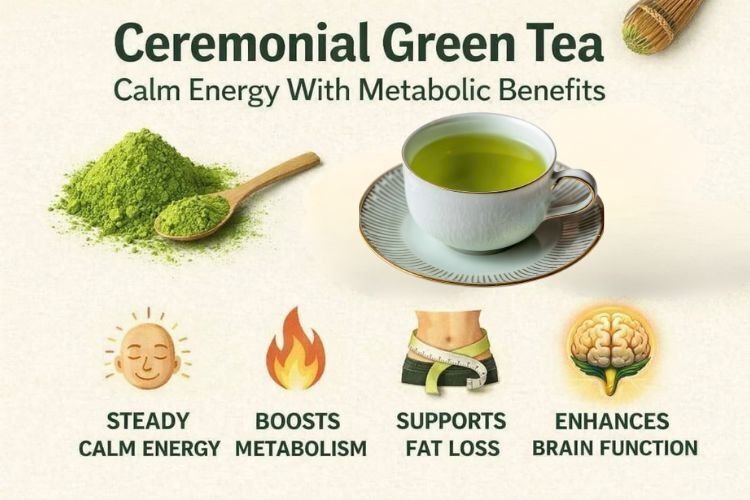
Green tea is another one of those ingredients that’s been hyped to death, but unlike many wellness trends, the science actually backs up a lot of the claims—especially for high-quality ceremonial grade tea.
The EGCG and Caffeine Partnership
Ceremonial green tea contains two compounds that work beautifully together: EGCG (a type of catechin, which is a powerful antioxidant) and caffeine. Separately, they’re interesting. Together, they’re particularly effective.
EGCG does something clever: it inhibits an enzyme that breaks down norepinephrine. Norepinephrine is a hormone that, among other things, signals your fat cells to break down fat. By slowing its breakdown, EGCG essentially extends norepinephrine’s fat-burning signal.
Meanwhile, the caffeine provides that energy boost we all know and love, but in a more moderate amount than coffee (usually about 25-50mg per cup versus 95mg+ in coffee).
Together, these compounds can increase fat oxidation by about 10-16% and boost metabolic rate by roughly 4-5%. This might not sound like much, but remember—metabolic changes are usually incremental, not dramatic.
The L-Theanine Advantage
Here’s what makes ceremonial green tea special compared to regular green tea or just taking caffeine: L-theanine. This amino acid is found almost exclusively in tea plants, and it does something remarkable.
L-theanine promotes relaxation without sedation. It increases alpha brain waves, which are associated with calm, focused alertness. When combined with caffeine, you get energy and focus without the jitters or anxiety that coffee sometimes causes.
Why does this matter for metabolism? Because stress is one of the biggest metabolism killers out there. When you’re chronically stressed, your body releases cortisol, which promotes fat storage (especially around your midsection) and can interfere with insulin sensitivity. L-theanine helps keep you in that calm, focused state rather than wired and anxious.
It also helps with stress-related eating. You know when you eat not because you’re hungry but because you’re stressed or anxious? L-theanine’s calming effects may help reduce that impulse.
Quality Matters Here
Not all green tea is created equal. Ceremonial grade tea comes from the youngest leaves and has the highest concentration of beneficial compounds. It’s also shade-grown, which increases chlorophyll and amino acid content (including L-theanine).
Regular grocery store green tea in bags? It’ll give you some benefits, but nowhere near the same level. If you’re going to invest in one high-quality supplement ingredient, ceremonial grade matcha or ceremonial green tea is a solid choice.
Brew it properly too—water that’s too hot can destroy some of the beneficial compounds and make it taste bitter. Aim for about 160-175°F (70-80°C), not boiling water.
Berberine and Korean Red Ginseng: The Metabolic Power Couple
These two ingredients work so well together that it makes sense to discuss them as a pair. Individually, they’re impressive. Combined, they address metabolic health from multiple angles.
Berberine: The Metabolic Master Switch
Berberine is a yellow compound extracted from various plants, and it’s been used in Chinese and Ayurvedic medicine for centuries. Only recently has Western science started understanding just how powerful it is.
The key thing berberine does is activate an enzyme called AMPK—sometimes called the “metabolic master switch.” When AMPK is activated, a cascade of beneficial effects occurs:
Your cells become more sensitive to insulin and take up glucose more efficiently. Your liver produces less glucose on its own (which is often elevated in people with metabolic issues). Your body increases fat oxidation. Your mitochondria (the powerhouses of your cells) work more efficiently and even create new mitochondria.
The research on berberine for blood sugar management is actually pretty remarkable. Some studies have shown effects comparable to certain diabetes medications, which is why it’s gained attention in both conventional and functional medicine circles.
Berberine also positively affects cholesterol and triglyceride levels, working through multiple mechanisms to support healthy lipid profiles.
The Gut Connection
Here’s something fascinating that’s emerging in recent research: a lot of berberine’s effects might work through the gut microbiome. Berberine changes the composition of gut bacteria, favoring beneficial species that support metabolic health.
This matters because your gut bacteria influence everything from how you extract calories from food to how your immune system functions to how your brain receives signals about hunger and fullness. By improving gut health, berberine might be supporting metabolism through an entirely different pathway than originally thought.
Korean Red Ginseng: The Adaptogenic Balance
Korean red ginseng (Panax ginseng) is different from other types of ginseng. It’s steamed and dried in a specific way that concentrates certain beneficial compounds called ginsenosides and gives it that distinctive red color.
Ginseng is what’s called an adaptogen—a substance that helps your body adapt to stress. This isn’t vague wellness-speak; there are actual mechanisms involved. Ginseng helps modulate your HPA axis (the hypothalamic-pituitary-adrenal axis), which controls your stress response and hormone production.
When you’re chronically stressed, your hormones get out of whack. Cortisol stays elevated, sex hormones can decrease, thyroid function might slow down, and insulin sensitivity decreases. All of this wreaks havoc on your metabolism.
Ginseng helps bring things back into balance. It supports healthy cortisol patterns (higher in the morning, lower at night), helps maintain energy levels without being overly stimulating, and supports immune function.
It also has direct effects on blood sugar regulation, complementing berberine’s actions through slightly different mechanisms.
Why These Two Work So Well Together
Berberine is powerful but can sometimes cause digestive upset, especially when you first start taking it. Ginseng’s adaptogenic properties and digestive support can help offset this.
Both support blood sugar regulation but through different pathways—berberine through AMPK activation and direct insulin sensitization, ginseng through hormonal balance and stress modulation. Together, they provide more comprehensive support than either alone.
Berberine is more directly metabolic, while ginseng addresses the hormonal and stress components that influence metabolism. Since metabolic health isn’t just about calories in versus calories out but involves complex hormonal interplay, addressing both aspects makes sense.
Important Considerations
Berberine is pretty powerful, which means it can interact with medications. It affects how your liver processes certain drugs, so if you’re on medication (especially diabetes medications, blood thinners, or anything metabolized by the liver), you absolutely need to talk to your doctor first.
Start with a lower dose and work up gradually to minimize digestive side effects. Taking it with meals can also help.
Korean red ginseng is generally well-tolerated, but it can be stimulating for some people. If you’re sensitive to stimulants or have trouble sleeping, take it earlier in the day.
Putting It All Together: Reality Check Time
Okay, so we’ve covered six powerful natural ingredients. Before you rush out to buy all of them, let’s have a real talk about what to expect.
These Are Tools, Not Solutions
None of these ingredients—not one—will transform your body or health by themselves. They’re not replacements for the basics:
Eating real, nutritious food most of the time (notice I said “most”—you don’t have to be perfect)
Moving your body regularly in ways you actually enjoy (not torturous exercise you hate)
Getting enough quality sleep (this is huge and often overlooked)
Managing stress in healthy ways (this might be the most underrated factor in metabolic health)
Staying hydrated (boring but true)
What these ingredients can do is support and enhance the effects of those foundational habits. They might give you a 10-20% boost if everything else is dialed in. But if your diet is poor, you’re sedentary, you sleep four hours a night, and you’re chronically stressed? These supplements won’t save you.
Quality and Sourcing Matter
The concentration of active compounds in natural ingredients varies wildly based on how they’re grown, harvested, processed, and stored. Cheap supplements often contain minimal amounts of the actual beneficial compounds, or they’re contaminated with things you don’t want.
This doesn’t mean you need to spend a fortune, but be willing to invest in quality if you’re going to use these ingredients. Look for third-party testing, reputable brands, and transparent sourcing information.
Individual Responses Vary Dramatically
Your genetics, current health status, gut microbiome composition, stress levels, diet, sleep quality, medications, and about a hundred other factors influence how you’ll respond to any of these ingredients.
What works amazingly for your friend might do nothing for you, or vice versa. This isn’t failure—it’s just biology. Our bodies are all different.
This is why it’s worth trying things systematically rather than taking everything at once. Add one ingredient at a time, give it a few weeks, and see how you feel and what changes. Otherwise, you won’t know what’s actually helping.
More Is Not Better
There’s this tendency to think “if some is good, more must be better.” With natural compounds, this is often wrong and can be dangerous.
These ingredients have optimal dose ranges. Going beyond those doesn’t enhance benefits and can increase the risk of side effects. Taking 5000mg of ginger when 1000mg is effective won’t make it work five times better—it’ll just upset your stomach.
The Synergy Factor
One interesting aspect of these ingredients is how they might work together. The thermogenic effects of capsaicin and p-synephrine might be enhanced when combined. Green tea’s compounds work better together than separately. Berberine and ginger both support blood sugar through different mechanisms.
This is actually how traditional medicine systems have always worked—using combinations of ingredients rather than isolated compounds. There might be wisdom in that approach.
However, this also means being thoughtful about what you combine. More isn’t always better, and some combinations might interact in unexpected ways.
Who Should Consider These Ingredients?
These ingredients might be particularly helpful if you:
- Are already eating well and exercising but feel like you’ve hit a plateau
- Struggle with constant cravings and blood sugar crashes
- Have metabolic markers (blood sugar, cholesterol, etc.) that could use some support
- Are looking for natural ways to support your energy and metabolism
- Want to enhance the effects of your already-healthy lifestyle
These ingredients are probably NOT right for you if:
- You’re looking for a quick fix without changing other habits
- You have serious health conditions without medical supervision
- You’re pregnant or nursing (most of these haven’t been adequately studied in pregnancy)
- You’re on multiple medications without checking for interactions
- You’re expecting dramatic, rapid results
The Bottom Line: What Should You Actually Do?
If you’ve made it this far, here’s my honest advice:
Start with the basics first. If your diet, sleep, stress, and movement aren’t in a good place, supplements won’t save you. Fix those first—they’re free and more powerful than any supplement.
Choose one or two ingredients to start. Don’t try everything at once. Maybe start with green tea if you drink coffee anyway, or add ginger to your routine if you struggle with cravings. See how you feel after a few weeks.
Be patient and realistic. You’re not going to see dramatic changes overnight. Look for subtle improvements in energy, appetite control, cravings, or how you feel after meals. These small changes compound over time.
Talk to your doctor, especially if you take medications or have health conditions. I can’t stress this enough. Natural doesn’t mean safe for everyone, and interactions are real.
Pay attention to your body. If something doesn’t feel right, stop taking it. Digestive upset, anxiety, insomnia, or any other negative symptoms aren’t “detox”—they’re signs that something isn’t working for you.
Focus on consistency over perfection. These ingredients work best when used regularly as part of a sustainable, enjoyable lifestyle—not as part of a miserable, restrictive regimen you can only maintain for a few weeks.
Final Thoughts
The natural ingredients we’ve discussed today—Seville orange peel, Spanish red apple vinegar, Andalusian red pepper, Himalayan mountain ginger, ceremonial green tea, berberine, and Korean red ginseng—all have legitimate scientific backing for supporting various aspects of metabolic health.
But they’re not magic. They’re tools that can support and enhance a foundation of healthy habits. They work best when combined with good nutrition, regular movement, adequate sleep, and effective stress management.
The most important thing? Whatever approach you take to your health needs to be sustainable for you. The perfect supplement routine that you can’t stick with is far less effective than the decent routine you can maintain for years.
Your metabolism is complex, influenced by dozens of factors, and unique to you. These ingredients might help support it, but they’re just one piece of a much bigger puzzle. Approach them with realistic expectations, patience, and a willingness to listen to your body, and they might just give you that extra edge you’re looking for.
Stay healthy, stay skeptical of miracle claims, and remember that sustainable health is built through consistency over time, not quick fixes.

Home Healthy Remedy — trusted natural remedies, honest product reviews, and simple wellness tips for skin, eyes, teeth, and overall health.