

When stomach pain, nausea, diarrhea, and vomiting suddenly start, many people ask the same question: is it food poisoning or the stomach flu? Understanding food poisoning vs stomach flu can help you identify the likely cause, manage symptoms safely, and know when medical help may be needed.
Both conditions can cause vomiting and diarrhea, cramps, weakness, and dehydration. However, they are not exactly the same. Food poisoning usually happens after eating contaminated food or drinking unsafe water. Stomach flu, also called viral gastroenteritis, is commonly caused by viruses such as norovirus and spreads from person to person or contaminated surfaces. CDC notes that food poisoning symptoms can become serious if diarrhea is bloody, lasts more than three days, or is accompanied by high fever or dehydration symptoms.
This guide explains food poisoning vs stomach flu in simple words, including symptoms, causes, duration, treatment, prevention, pros and cons, comparison points, and FAQs.
Quick Answer: Food Poisoning vs Stomach Flu
Food poisoning vs stomach flu mainly differs by cause and timing. Food poisoning often starts within a few hours after eating contaminated food, while stomach flu usually appears 12 to 48 hours after exposure to a virus such as norovirus. Cleveland Clinic explains that stomach flu often has a 24–48 hour incubation period, while food poisoning may begin quickly, sometimes two to six hours after eating spoiled food.
In most mild cases, both conditions improve with rest, fluids, and careful eating. The biggest risk is dehydration symptoms, especially in children, older adults, pregnant people, and anyone with a weak immune system.
What Is Food Poisoning?
Food poisoning is a type of foodborne illness caused by eating food or drinking liquids contaminated with bacteria, viruses, parasites, or toxins. Common triggers may include undercooked meat, unwashed produce, raw seafood, spoiled dairy, unsafe water, or food left at unsafe temperatures.
Common food poisoning symptoms include:
- Nausea.
- Vomiting.
- Watery diarrhea.
- Stomach cramps.
- Fever.
- Weakness.
- Loss of appetite.
- Body aches in some cases.
One important sign in food poisoning vs stomach flu is timing. If symptoms begin shortly after eating a specific meal, especially if other people who ate the same food also become sick, food poisoning may be more likely.
What Is Stomach Flu?
Stomach flu is the common name for viral gastroenteritis. It is not the same as influenza, which affects the lungs, nose, and throat. Stomach flu affects the stomach and intestines. CDC explains that norovirus is often called the “stomach flu” or “stomach bug,” but it is not related to influenza.
Common stomach flu symptoms include:
- Watery diarrhea.
- Vomiting.
- Nausea.
- Stomach cramps.
- Low-grade fever.
- Headache.
- Body aches.
- Tiredness.
In the discussion of food poisoning vs stomach flu, stomach flu is usually more contagious. It can spread through close contact, shared food, contaminated surfaces, poor hand hygiene, and exposure to vomit or stool particles.
Food Poisoning vs Stomach Flu: Main Differences
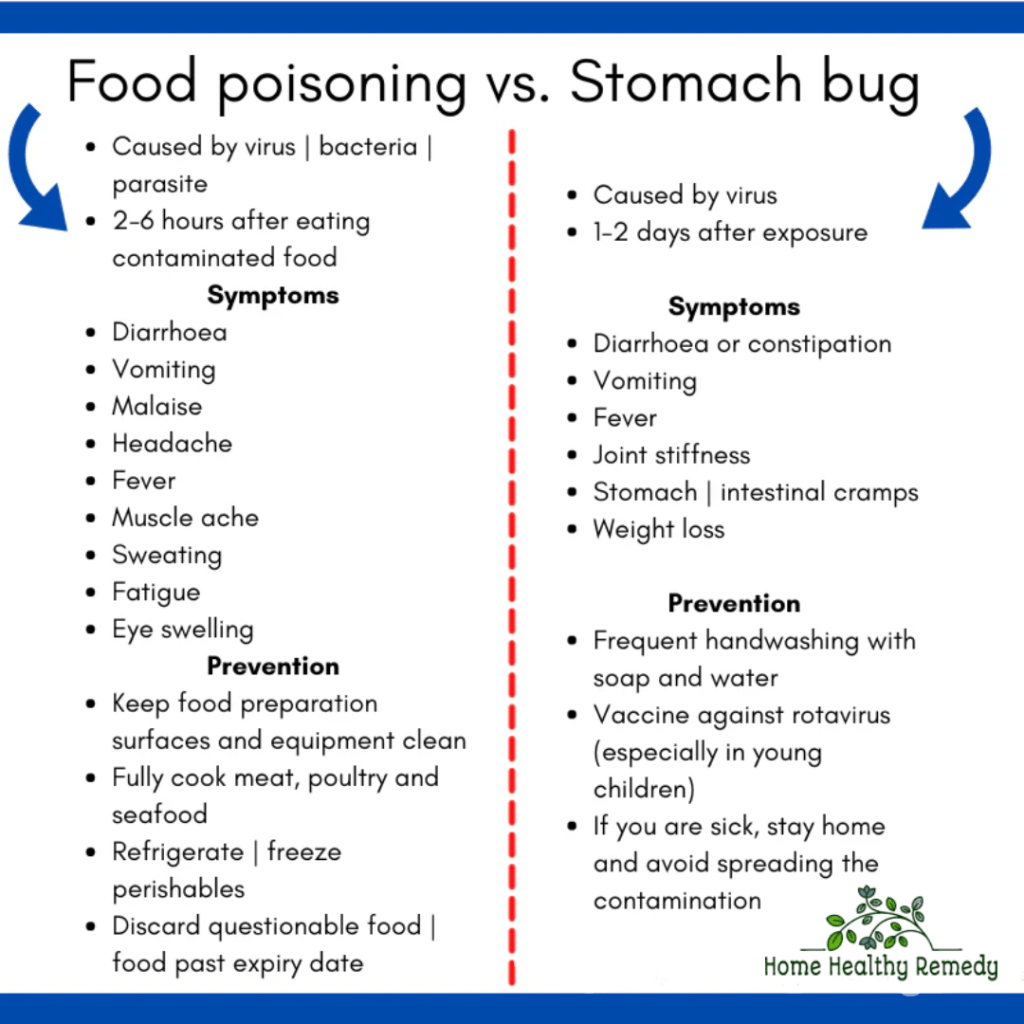
The easiest way to compare food poisoning vs stomach flu is by looking at cause, timing, spread, duration, and symptom pattern.
| Comparison Point | Food Poisoning | Stomach Flu |
|---|---|---|
| Main Cause | Contaminated food, water, or toxins | Viruses such as norovirus |
| Start Time | Often within hours after eating | Usually 12–48 hours after exposure |
| Spread | Usually through contaminated food | Often person-to-person or surfaces |
| Common Symptoms | Nausea, vomiting, diarrhea, cramps | Diarrhea, vomiting, cramps, fever |
| Contagious? | Sometimes, depending on germ | Usually highly contagious |
| Duration | Hours to several days | Often 1–3 days for norovirus |
| Main Risk | Dehydration, severe infection | Dehydration, spreading to others |
CDC states that most people with norovirus recover within 1 to 3 days, but they can still spread the virus for a few days after recovery. This makes hygiene especially important.
Most Searched Symptoms to Compare
When people search food poisoning vs stomach flu, they often want to know which symptoms matter most. Here are the most important symptom clues.
Vomiting
Vomiting can happen in both conditions. Sudden vomiting after a meal may suggest food poisoning. Repeated vomiting after being around someone sick may suggest stomach flu.
Diarrhea
Both conditions can cause watery diarrhea. Bloody diarrhea is more concerning and should not be ignored. CDC advises seeing a doctor for bloody diarrhea or diarrhea lasting more than three days.
Fever
Fever can occur in both, but high fever can be a warning sign. Mayo Clinic lists fever above 104°F or severe dehydration signs as reasons to seek medical care for viral gastroenteritis symptoms.
Stomach Cramps
Cramps are common with gastroenteritis and food poisoning. Severe or worsening abdominal pain needs medical attention, especially if it is sharp, localized, or comes with fever or blood in stool.
Dehydration
Dehydration is the most important risk in food poisoning vs stomach flu. Signs may include dry mouth, dizziness, little or dark urine, weakness, fast heartbeat, and extreme thirst. Mayo Clinic notes dehydration is a common complication of food poisoning because vomiting and loose stools cause loss of water and minerals.
Causes of Food Poisoning
Food poisoning may happen because of:
Bacteria
Common bacteria include Salmonella, E. coli, Campylobacter, and Listeria. These may come from undercooked meat, eggs, raw milk, contaminated vegetables, or unsafe food handling.
Viruses
Some foodborne illness can also be viral. Norovirus can spread through contaminated food, water, surfaces, and infected people.
Parasites
Parasites can enter the body through contaminated water, undercooked food, or poor sanitation.
Toxins
Some bacteria produce toxins in food. In these cases, symptoms may come quickly and strongly.
When comparing food poisoning vs stomach flu, ask: “What did I eat recently?” If symptoms started soon after a risky meal, food poisoning becomes more likely.
Causes of Stomach Flu
Stomach flu is usually caused by viruses. The most common concern is norovirus symptoms, which may include sudden vomiting, diarrhea, cramps, and nausea. Mayo Clinic says norovirus symptoms usually begin 12 to 48 hours after exposure and often last 1 to 3 days.
Common ways stomach flu spreads include:
- Touching contaminated surfaces.
- Close contact with a sick person.
- Sharing utensils or food.
- Poor handwashing.
- Eating food handled by someone infected.
- Being in crowded places like schools, offices, daycare centers, or nursing homes.
In food poisoning vs stomach flu, stomach flu is often suspected when several people around you become sick one after another, even if they did not eat the same food.
How Long Does Each Condition Last?
Duration is another helpful clue in food poisoning vs stomach flu.
Food Poisoning Duration
Food poisoning may last a few hours, one day, or several days depending on the germ or toxin. Some bacterial infections can last longer and may need medical testing or treatment.
Stomach Flu Duration
Stomach flu from norovirus often improves within 1 to 3 days, but the person may remain contagious for a few days after symptoms stop. Mayo Clinic also notes that viral gastroenteritis can spread for days and sometimes longer depending on the virus.
Treatment: What Helps Recovery?
For mild cases of food poisoning vs stomach flu, the treatment is often similar: hydration, rest, and gentle foods. Mayo Clinic notes that antibiotics do not work against viruses, and treatment for viral gastroenteritis focuses mainly on self-care such as staying hydrated.
Drink Fluids Slowly
Sip water, clear broth, diluted juice, or oral rehydration solution. Small frequent sips are better than drinking too much at once.
Use Oral Rehydration
ORS can help replace fluids and minerals lost through vomiting and diarrhea. This is especially helpful for children, older adults, and people who cannot eat normally.
Eat Gentle Foods
Once vomiting slows, try bland foods such as rice, toast, bananas, applesauce, crackers, soup, potatoes, or plain noodles. Many people search for the BRAT diet, but it should not be the only food plan for too long because the body also needs protein and nutrients.
Avoid Certain Foods
Avoid alcohol, greasy meals, spicy foods, heavy dairy, and very sugary drinks until the stomach settles.
Rest
Both conditions can drain energy. Rest helps the body recover and reduces the chance of spreading infection.
When to See a Doctor
This is one of the most important parts of food poisoning vs stomach flu. Seek medical care if you notice:
- Bloody diarrhea.
- Vomiting blood.
- Severe dehydration.
- Diarrhea lasting more than three days.
- High fever.
- Severe stomach pain.
- Confusion.
- Fainting or dizziness.
- Inability to keep fluids down.
- Symptoms in infants, older adults, pregnant people, or people with weak immune systems.
CDC recommends medical care for severe symptoms such as bloody diarrhea, diarrhea lasting over three days, high fever, frequent vomiting, or signs of dehydration. Mayo Clinic also lists vomiting or diarrhea lasting more than two days, blood, dehydration, severe stomach pain, and high fever as warning signs.
Prevention Tips for Food Poisoning
To reduce the risk of food poisoning:
Wash Hands and Surfaces
Wash hands before cooking and eating. Clean cutting boards, counters, knives, and utensils.
Cook Food Properly
Cook meat, poultry, eggs, and seafood to safe temperatures. Avoid undercooked animal products.
Separate Raw and Ready-to-Eat Foods
Do not use the same cutting board for raw meat and fresh vegetables without washing it.
Refrigerate Quickly
Keep cold foods cold and hot foods hot. Do not leave cooked food outside for long periods.
Check Food Quality
Avoid spoiled smell, mold, expired foods, and unsafe water.
Prevention Tips for Stomach Flu
To prevent stomach flu:
Wash Hands With Soap
Hand sanitizer may not work as well against some stomach viruses. Soap and water are important, especially after using the bathroom and before eating.
Disinfect Surfaces
Clean bathroom surfaces, doorknobs, phones, and kitchen counters if someone is sick.
Avoid Preparing Food While Sick
CDC advises people with norovirus symptoms not to prepare or handle food for others and to wait at least 48 hours after symptoms stop.
Wash Laundry Carefully
Wash contaminated clothes, towels, and bedding with care.
Pros and Cons of Self-Care at Home
Pros
- Helpful for mild symptoms.
- Supports hydration and recovery.
- Avoids unnecessary medicines.
- Easy to follow with rest, fluids, and gentle foods.
- Works for many mild cases of food poisoning vs stomach flu.
Cons
- Severe cases may need medical treatment.
- Dehydration can become dangerous.
- Home care cannot identify serious bacteria or parasites.
- Delaying care may worsen symptoms.
- Children, older adults, pregnant people, and weak immune patients need extra caution.
Common Mistakes to Avoid
Taking Antibiotics Without Advice
Antibiotics do not treat viral stomach flu and may not be needed for many food poisoning cases.
Ignoring Dehydration
Dehydration is the biggest danger in both conditions.
Returning to Work Too Soon
If you have stomach flu, you may still spread the virus after symptoms improve.
Eating Heavy Meals Too Early
Greasy, spicy, or heavy foods can make symptoms worse.
Not Tracking Symptoms
Write down when symptoms started, what you ate, fever level, stool changes, and fluid intake. This helps if you need medical care.
Food Poisoning vs Stomach Flu: Which One Do I Have?
You may suspect food poisoning if symptoms started quickly after a meal, especially if others who ate the same food got sick. You may suspect stomach flu if symptoms appeared after contact with someone ill or if people around you become sick over several days.
However, food poisoning vs stomach flu can be difficult to confirm without medical testing because symptoms overlap. The safest approach is to focus on hydration, watch warning signs, avoid spreading germs, and seek medical help when symptoms are severe.
FAQs About Food Poisoning vs Stomach Flu
1. What is the biggest difference between food poisoning and stomach flu?
The biggest difference is the cause. Food poisoning usually comes from contaminated food or water, while stomach flu is usually a viral infection that spreads between people or through contaminated surfaces.
2. Which starts faster, food poisoning or stomach flu?
Food poisoning often starts faster, sometimes within hours after eating contaminated food. Stomach flu often starts 12 to 48 hours after exposure to a virus.
3. Can food poisoning cause fever?
Yes. Food poisoning can cause fever, cramps, vomiting, and diarrhea. High fever or bloody diarrhea should be checked by a doctor.
4. Is stomach flu the same as influenza?
No. Stomach flu is not influenza. Influenza mainly affects the respiratory system, while stomach flu affects the stomach and intestines.
5. Can both cause diarrhea and vomiting?
Yes. Both can cause vomiting and diarrhea, nausea, cramps, weakness, and dehydration.
6. How long does stomach flu last?
Norovirus-related stomach flu often lasts 1 to 3 days, though a person may still spread the virus for a few days after recovery.
7. How long does food poisoning last?
Food poisoning can last a few hours to several days, depending on the germ, toxin, and the person’s health.
8. What should I drink?
Water, clear broth, and oral rehydration solution are good choices. Take small sips if vomiting continues.
9. Should I take anti-diarrhea medicine?
Do not take anti-diarrhea medicine without medical advice if you have bloody stool, high fever, severe pain, or suspected bacterial infection.
10. When should I seek emergency care?
Seek urgent care for severe dehydration, blood in vomit or stool, confusion, fainting, severe abdominal pain, high fever, or inability to keep fluids down.
Conclusion
Understanding food poisoning vs stomach flu helps you respond faster and safer. Food poisoning is often linked to contaminated food and may start quickly after eating. Stomach flu is usually viral, contagious, and may spread from person to person.
Both conditions can usually improve with rest, hydration, and gentle foods, but warning signs should never be ignored. The main priority is preventing dehydration, avoiding spread, and getting medical care when symptoms are severe, prolonged, or unusual.
For mild cases, focus on fluids, rest, hygiene, and simple meals. For severe cases, especially with blood, high fever, dehydration, or symptoms in high-risk people, contact a healthcare professional quickly.
Medical Resources
CDC – Food Poisoning Symptoms : Use for food poisoning symptoms, dehydration warning signs, and when to seek medical help.
CDC – Norovirus Overview : Use for stomach flu/norovirus symptoms, spread, prevention, and handwashing guidance.
Mayo Clinic – Viral Gastroenteritis Symptoms & Causes : Use for stomach flu symptoms, causes, risk factors, and warning signs.
Mayo Clinic – Food Poisoning Symptoms & Causes : Use for food poisoning causes, symptoms, dehydration risks, and complications.
NIDDK – Viral Gastroenteritis Symptoms & Causes : Use for scientifically backed details about viral gastroenteritis, dehydration, and digestive symptoms.
Other Health Blog Source links:
Humidifiers Really Stop Nosebleeds 👈Click & Visit
Coconut Oil for Healthier Teeth 👈Click & Visit
Ear Hurt When I Have a Sore Throat 👈Click & Visit
Cause of Pain at the Back When Breathing 👈Click & Visit

Home Healthy Remedy — trusted natural remedies, honest product reviews, and simple wellness tips for skin, eyes, teeth, and overall health.