

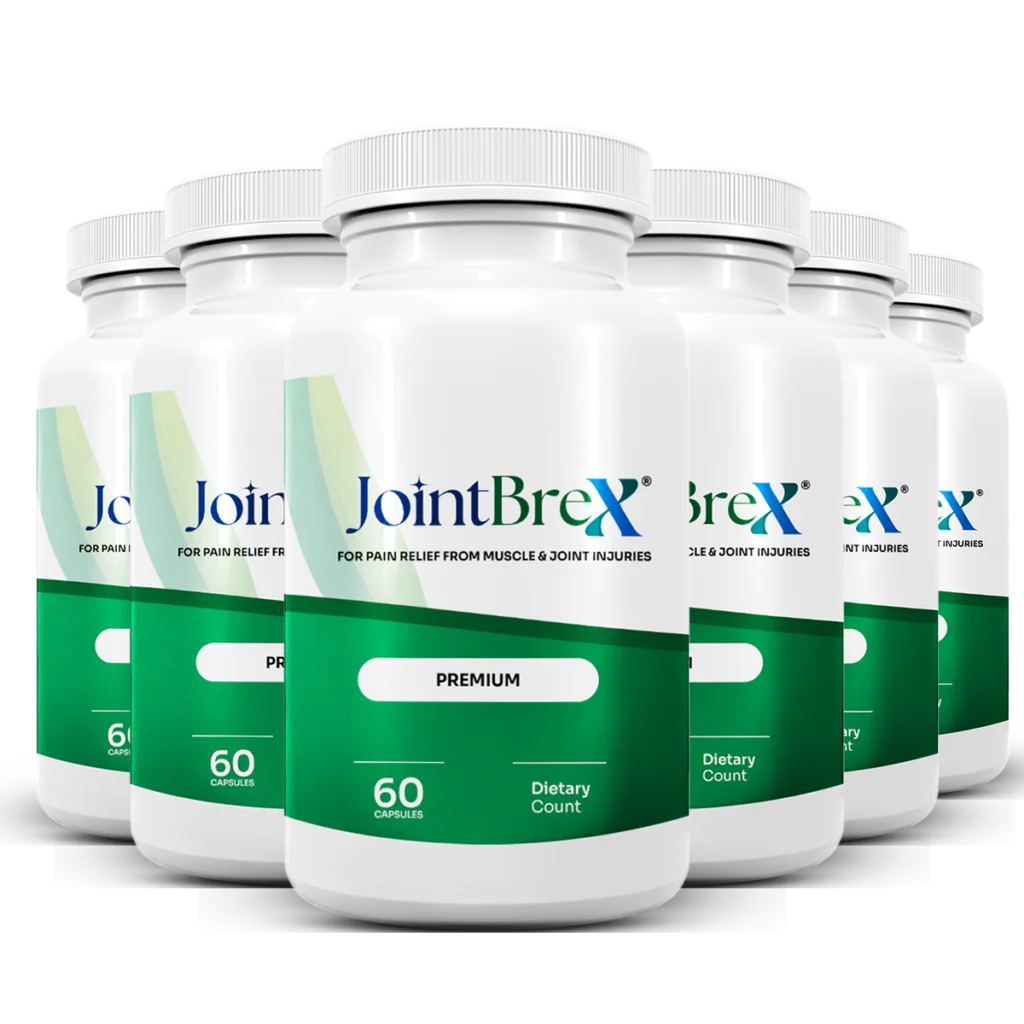
JointBrex: Joint discomfort, morning stiffness, and reduced daily mobility affect millions of people, and the market has responded with hundreds of “joint support” supplements promising relief. JointBrex is one of them — a capsule formula built around a familiar cluster of joint-health ingredients: glucosamine, boswellia, turmeric, MSM, collagen peptides, and black pepper extract.
This review breaks down what JointBrex actually contains, what the manufacturer claims, what independent research says about its individual ingredients, and what you should weigh before buying — without inflated ratings, invented customer testimonials, or citations to studies that have nothing to do with the product.
A note on sourcing: much of what circulates online about JointBrex traces back to the manufacturer’s own marketing copy. Where a claim comes from the company rather than independent testing, this article says so explicitly. Independent, peer-reviewed research exists for several of the individual ingredients — that research is summarized separately from company claims.
What Is JointBrex?
JointBrex is marketed as a daily nutraceutical capsule aimed at supporting joint comfort, flexibility, and general mobility. It falls into a well-established category of over-the-counter joint supplements that combine cartilage-support compounds (like glucosamine and collagen) with anti-inflammatory botanicals (like boswellia and turmeric) and absorption enhancers (like black pepper extract).
It is sold directly through the manufacturer’s website rather than through major third-party retailers, which is common for this category of supplement but also means there’s less independent price and quality tracking available than you’d get from a product sold on, say, Amazon or in pharmacies.
Importantly: JointBrex itself, as a finished formula, has not been through the kind of independent clinical trial that would let anyone say definitively “this specific product reduces joint pain by X%.” What exists is research on some of its individual ingredients, taken in isolation, often at different doses than what’s in this formula. That distinction matters and is easy to lose in typical marketing copy.
Label and Product Specifications
| Specification | Details |
| Product Name | JointBrex |
| Category | Joint health / mobility support supplement |
| Format | Capsules |
| Labeled Dosage | 2 capsules daily (per manufacturer instructions) |
| Key Ingredients | Glucosamine sulfate, boswellia serrata extract, turmeric extract (curcumin), MSM, collagen peptides (Type II), black pepper extract (piperine/BioPerine) |
| Manufacturing Claim | Produced in a GMP-certified, FDA-registered facility |
| Sold Through | Manufacturer’s official website |
A note on the “FDA-registered facility” claim: dietary supplements in the U.S. are not FDA-approved the way drugs are. A facility can be FDA-registered and follow Good Manufacturing Practice (GMP) guidelines without the finished product ever being reviewed by the FDA for safety or effectiveness claims. This is standard across the entire supplement industry, not a red flag specific to JointBrex, but it’s worth understanding clearly rather than reading “FDA-registered” as “FDA-approved.”
Ingredients: What’s Actually Inside
Here’s what the label lists, described plainly:
Glucosamine Sulfate — An amino sugar found naturally in cartilage. It’s one of the most widely used joint-support ingredients on the market and has been studied for decades, primarily in the context of osteoarthritis.
Boswellia Serrata Extract — Derived from the resin of the Boswellia tree, used traditionally in Ayurvedic medicine and now common in modern joint-support formulas for its anti-inflammatory properties.
Turmeric Extract (Curcumin) — The active compound in turmeric root, studied extensively for anti-inflammatory effects, though curcumin has notoriously poor bioavailability on its own (more on that below).
MSM (Methylsulfonylmethane) — An organic sulfur compound sometimes used for joint flexibility and to reduce oxidative stress; often paired with glucosamine and chondroitin in combination formulas.
Collagen Peptides (Type II) — Broken-down collagen intended to support connective tissue and cartilage matrix; Type II collagen specifically is the dominant collagen type in joint cartilage.
Black Pepper Extract (Piperine / BioPerine) — Added specifically to improve the absorption of other compounds in the formula, most relevantly curcumin, which the body otherwise struggles to absorb.
What’s missing from most marketing pages, including the original source material for this article, is exact per-ingredient dosing (how many milligrams of each compound per capsule). This matters more than the ingredient list alone — clinical studies on glucosamine, for example, typically use around 1,500 mg/day, and a formula that includes a much smaller amount would not be expected to replicate those results. If you’re seriously evaluating JointBrex, contacting the company for exact dosing per capsule, or checking the supplement facts panel directly, is a reasonable and fair thing to ask for before buying.
What the Independent Research Says About Each Ingredient
This section separates company claims from what’s been published in peer-reviewed literature. Evidence quality varies a lot by ingredient, and none of it should be read as evidence about JointBrex the finished product specifically.
Glucosamine: Research on glucosamine for osteoarthritis is mixed. Some trials, particularly older European studies using glucosamine sulfate, found modest improvements in pain and joint function over months of use. Other large trials, including U.S.-based ones, found effects no better than placebo. The overall scientific consensus is that glucosamine may help some people, modestly, particularly with knee osteoarthritis, but it is not considered a strong or universally effective intervention.
Boswellia Serrata: Several small-to-moderate clinical trials suggest boswellia extract can reduce pain and improve function in osteoarthritis, particularly of the knee, over periods of 4–8 weeks. Effect sizes are generally modest, and study quality varies; larger, longer-term independent trials are still limited.
Curcumin/Turmeric: Curcumin has reasonably good evidence for anti-inflammatory effects in joint conditions, with several trials showing pain and function improvements comparable to some over-the-counter anti-inflammatory drugs in short-term use. The major caveat is bioavailability — curcumin is poorly absorbed on its own, which is why it’s frequently paired with piperine (black pepper extract) or formulated in enhanced-absorption forms.
MSM: Evidence for MSM is thinner than for glucosamine or curcumin. A handful of small trials suggest modest benefit for osteoarthritis symptoms, but the body of research is smaller and less consistent.
Type II Collagen: Undenatured Type II collagen has some clinical support, particularly in a specific patented form (UC-II) studied in several trials for osteoarthritis. Generic “collagen peptides” without specifying the exact form or processing method have less directly applicable evidence — the collagen research landscape is form-specific, and marketing language doesn’t always distinguish between forms.
Piperine/BioPerine: Well-established in pharmacology as an absorption enhancer, particularly for curcumin. This is one of the more solidly supported inclusions in the formula, functionally speaking — its role is technical (aiding absorption) rather than being a joint-health ingredient itself.
Bottom line on ingredients: the formula draws from a legitimate, commonly researched set of joint-support compounds. None of them are dramatic or fast-acting based on the literature; most studies showing benefit involve weeks to months of consistent use, and effect sizes tend to be modest rather than transformative. This is broadly consistent with how the product describes its own expected timeline, though the specific doses in JointBrex are not published on the pages reviewed for this piece.
How JointBrex Is Claimed to Work
According to the manufacturer’s own description, JointBrex is intended to work gradually rather than as an instant fix. The stated mechanism, per company claims, is:
- Daily uptake: the capsule is taken once or twice daily and is described as easy to build into a routine.
- Biological support: the ingredients are described as supporting “joint wellness pathways” — a vague, non-specific phrase common in supplement marketing that doesn’t correspond to a single measurable biological mechanism.
- Timeline: the company states early changes may be noticed within a few weeks, with more consistent effects described around the 30-day mark.
This general timeline (weeks, not days) is at least consistent with how the individual ingredients perform in clinical research — none of glucosamine, boswellia, or curcumin have strong evidence of rapid, single-dose effects. That’s a point in favor of the company not over-promising on speed, even if the underlying mechanistic language is marketing fluff rather than science.
Claimed Benefits
These are the manufacturer’s stated benefits — presented here as claims, not verified outcomes:
- Supports daily joint comfort and reduced routine irritation
- Encourages better mobility and flexibility balance
- Promotes steadier daily function and movement
- Offers a natural alternative to harsher pharmaceutical approaches
- Simple daily capsule format intended to fit into an existing routine
As discussed above, several of the underlying ingredients have some independent research support for modest improvements in joint comfort and function, particularly over multi-week use. That’s different from confirming these specific claims for this specific product at its specific dose — a distinction worth keeping in mind.
Possible Side Effects and Who Should Avoid It
Dietary supplements built from the ingredients above are generally well tolerated by most healthy adults, but each ingredient carries its own known considerations:
- Glucosamine is often derived from shellfish; people with shellfish allergies should check the source and consult a doctor before use.
- Turmeric/curcumin at high doses can cause digestive upset in some people and may interact with blood thinners.
- Boswellia is generally well tolerated but can occasionally cause mild gastrointestinal discomfort.
- MSM is considered low-risk but, like most supplements, hasn’t been studied extensively in pregnant or breastfeeding populations.
- Collagen peptides are generally well tolerated; those with specific food allergies (depending on the collagen source, often bovine or marine) should check the label.
People who should avoid JointBrex or a similar formula without medical guidance include:
- Anyone pregnant or breastfeeding
- Anyone on blood-thinning medication (given the curcumin content)
- Anyone with shellfish allergies (given the glucosamine content, unless a shellfish-free source is confirmed)
- Anyone under 18
- Anyone already taking other joint supplements, to avoid unintentionally duplicating high doses of the same active ingredients
- Anyone with a diagnosed joint condition who hasn’t discussed supplement use with their treating physician
This is general safety information, not a substitute for individualized medical advice.
How to Take It
Per the manufacturer’s label directions: two capsules daily, taken with water, ideally with a meal. Consistency is emphasized over occasional use, which lines up with how the underlying ingredients perform in research — these are not fast-acting compounds, and skipping days is unlikely to produce meaningful results.
Reasonable general practices that support any joint-supplement regimen, independent of this specific product:
- Take at the same time each day to build a consistent habit
- Pair with regular low-impact movement (walking, swimming, stretching), which has strong independent evidence for joint health
- Maintain adequate hydration
- Discuss with a healthcare provider before starting if you take other medications or supplements
Pricing and Refund Policy
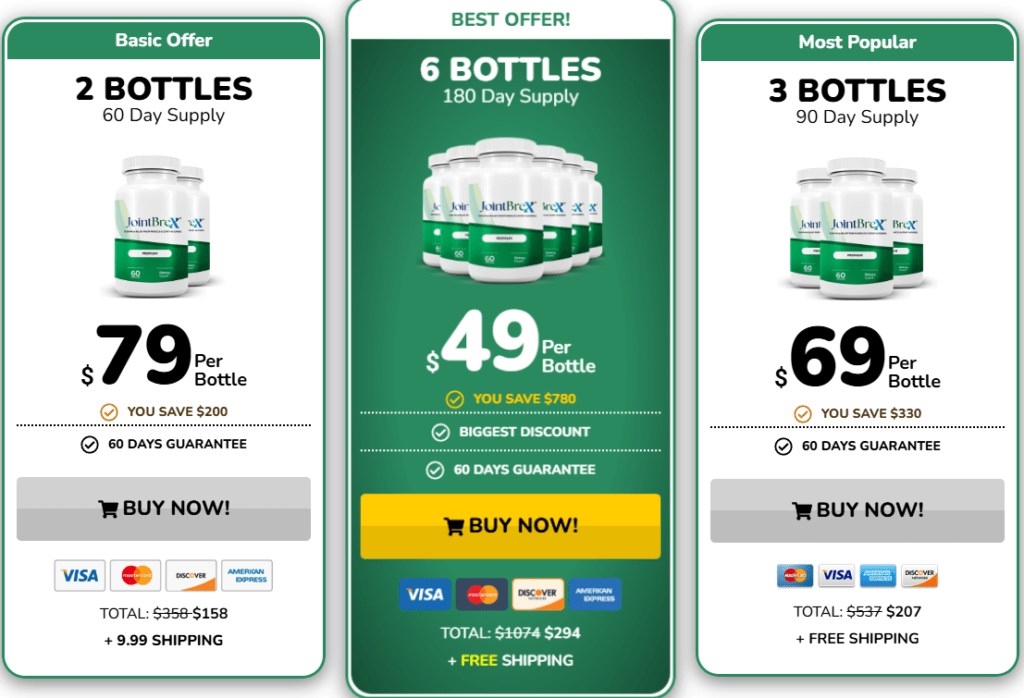
Pricing for JointBrex, like most direct-to-consumer supplement brands, is structured to reward bulk purchases — a single bottle costs more per unit than buying in a 3- or 6-bottle package. This pricing model is standard across the industry and isn’t unique to this product; it does mean the “per-bottle savings” percentages often advertised are relative to the marked-up single-bottle price, not necessarily a market-wide baseline.
The company states a 60-day money-back guarantee. If you’re considering a purchase, it’s worth confirming the current, exact terms directly on the official site before buying, since supplement refund policies (window length, condition of returned bottles, restocking fees) can and do change without much notice, and this article can’t guarantee the terms haven’t shifted since publication.
Is JointBrex Legitimate or a Scam?
Based on what’s publicly available, JointBrex appears to be a real, purchasable product with a disclosed ingredient list drawn from legitimately studied joint-support compounds, sold by a company that lists customer support contact information and a stated refund policy. That’s different from “scam” in the sense of a product that doesn’t exist or ships nothing.
That said, a few things are worth naming clearly:
- The specific clinical claims made about JointBrex as a finished formula are not independently verified — they rely on the general research base for its ingredient category, not trials on this product itself.
- Exact per-ingredient dosing isn’t published in the materials reviewed for this piece, which makes it hard to compare directly to clinical trial doses.
- Marketing materials for products like this often include curated testimonials and platform ratings that can’t be independently verified; treat star ratings and quoted reviews on the sales page with appropriate skepticism, and look for feedback on independent forums if you want a more balanced picture.
None of this makes JointBrex unusual for its category — this is standard practice across the direct-to-consumer supplement industry — but it does mean “legitimate business” and “clinically proven” are two different claims, and only the first one is well supported here.
Who Might Reasonably Consider It — and Who Shouldn’t
Might reasonably consider it:
- Adults with mild, general joint stiffness who want to try a multi-ingredient supplement approach
- People already comfortable with daily supplement routines
- Those who understand the realistic timeline (weeks, not days) and modest expected effect size based on the ingredient research
- People without contraindications (see Section 7)
Should probably skip it, or at least talk to a doctor first:
- Anyone with diagnosed, significant joint disease (like moderate-to-severe osteoarthritis or rheumatoid arthritis) who needs a treatment plan beyond over-the-counter supplements
- Anyone expecting fast or dramatic relief
- Anyone already on relevant medications (blood thinners, in particular)
- Anyone with shellfish allergies who hasn’t confirmed the glucosamine source
- Pregnant or breastfeeding individuals
How JointBrex Compares to Other Joint Supplement Approaches
JointBrex’s ingredient list overlaps heavily with other well-known joint supplement categories:
- Glucosamine/chondroitin combination products (a very common, long-standing category) typically emphasize glucosamine and chondroitin specifically, sometimes without the anti-inflammatory botanicals JointBrex includes.
- Curcumin-focused supplements lean harder into the anti-inflammatory angle, often at higher curcumin doses with dedicated absorption technology.
- Collagen-focused products emphasize connective tissue support, sometimes marketed more toward skin and joints together.
JointBrex’s approach — combining a bit of each category into one capsule — is a “broad coverage” strategy rather than a concentrated, high-dose approach to any single mechanism. That can be reasonable for general maintenance use, but it also means if you’re specifically trying to test whether, say, curcumin at a clinically studied dose helps your joints, a dedicated curcumin supplement with a known milligram amount may be easier to evaluate than a blended formula with undisclosed individual doses.
medical/scientific databases
| Site | What it’s good for |
| PubMed | The main free database of peer-reviewed biomedical literature (run by the U.S. National Library of Medicine). Best single source for individual studies and systematic reviews. |
| Cochrane Library | Gold-standard systematic reviews that pool multiple trials — very citable and hard to argue with. |
| NIH Office of Dietary Supplements | Plain-language, government-vetted fact sheets on individual supplement ingredients, written for consumers but backed by citations. |
| NCCIH (NIH’s complementary/integrative health center) | Specifically covers herbal and alternative-medicine ingredients like boswellia and turmeric. |
| ClinicalTrials.gov | Lets you check whether a specific product or ingredient has any registered clinical trials — useful for calling out when a company claims “clinically studied” without one. |
Frequently Asked Questions
How long until JointBrex might show results? Based on both company claims and the general research timeline for its ingredients, most people who respond at all would likely notice changes gradually over several weeks of consistent use, not within days.
Is JointBrex FDA-approved? No. Dietary supplements in the U.S. are not FDA-approved for effectiveness. Manufacturing in an FDA-registered, GMP-certified facility relates to production standards, not a government endorsement of the product’s claims.
Is JointBrex safe for long-term use? The individual ingredients have reasonably long safety track records in supplement form for most healthy adults, but “long-term” safety for this specific formula, at its specific undisclosed doses, hasn’t been independently studied. Anyone planning extended use should mention it to their doctor, especially if on other medications.
Can I take JointBrex with other joint supplements? Be cautious about stacking supplements that share overlapping ingredients (for example, taking JointBrex alongside a separate glucosamine or curcumin supplement), since you could unintentionally exceed studied dose ranges. Check with a healthcare provider or pharmacist if you’re combining products.
Is JointBrex safe during pregnancy or breastfeeding? This shouldn’t be assumed either way — consult a physician before using any joint supplement during pregnancy or while breastfeeding.
Where should I buy it to avoid counterfeits? Buying directly from the manufacturer’s official website is generally the safer option for any direct-to-consumer supplement brand not sold through major verified retailers, since third-party marketplace listings for such brands carry higher counterfeit risk and less quality assurance.
What should I do if I want to request a refund? Save your order confirmation, review the current refund policy on the official site (terms can change), and contact customer support within the stated window with your order details.
Bottom Line
JointBrex combines several ingredients — glucosamine, boswellia, curcumin, MSM, Type II collagen, and piperine — that each have some level of independent research behind them for joint comfort and mobility, generally showing modest, gradual benefits rather than dramatic or fast ones. The company’s own claims about timeline (weeks, not days) are at least consistent with that research base.
What can’t be verified from public information is how JointBrex performs as a finished, specifically-dosed formula, since no independent clinical trial exists on the product itself and exact per-ingredient amounts aren’t published in the materials reviewed here. Treat marketing claims, sales-page ratings, and quoted testimonials with the skepticism you’d apply to any direct-to-consumer supplement brand, verify exact dosing and current refund terms directly with the company before buying, and loop in a healthcare provider if you have allergies, take other medications, or have a diagnosed joint condition.
Disclaimer: The information provided in this article on HomeHealthyRemedy.com is for general informational purposes only and should not be considered medical advice. Always consult a qualified healthcare professional before starting any new supplement, especially if you are pregnant, nursing, taking medications, or managing a pre-existing health condition.

Natural home remedies, skincare secrets, dental & eye health tips, and real product reviews to help you stay healthy the natural way.