

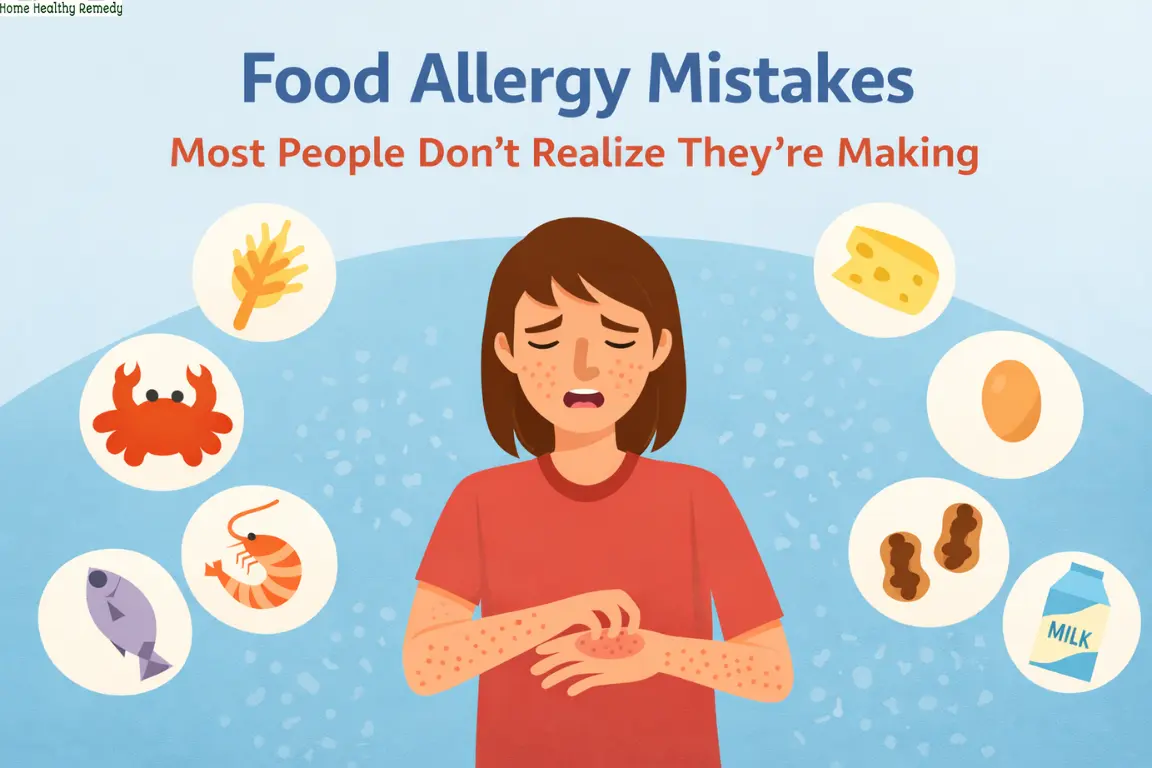
Food Allergy are one of the fastest-growing health concerns affecting children and adults today, and understanding how to prevent reactions is essential for everyday safety. At Home Health Remedy, we focus first on practical food allergy awareness — helping families recognize hidden ingredients, avoid common mistakes, and create safer eating habits at home, school, and while dining out.
Our mission is to provide simple, trustworthy, and easy-to-follow health guidance that supports natural, preventive care. From food allergy safety and label reading tips to digestive health, immunity support, and everyday home wellness strategies, we share information that empowers you to protect your family with confidence.
We believe health doesn’t have to be complicated. Small daily choices, smart prevention, and informed decisions can make a big difference. That’s why every article on Home Health Remedy is written in clear language, focused on real-life solutions, and designed to help you live healthier — naturally.
Why Food Allergies Feel Harder to Manage Than Ever
Living with allergies is like trying to navigate a maze through a hall of mirrors. Everything and everybody keeps changing.
You read labels.
You ask questions.
Avoid obvious trigger foods.
But there are still accidental reactions.
For some individuals and families, this is certainly one of the most frustrating parts of food allergies. You may be doing everything right and still fall victim to unfavorable ingredients.
This is simply because today the food systems are more complicated than ever.
“To illustrate, think of meals today as often including packaged goods, processed foods, restaurant foods, sauces, and factory production lines. With each step, yet another opportunity is introduced to let allergens creep in.”
Therefore, an error with respect to an ingredient, however small, may cause symptoms ranging from itching to shock. Hence, it is prevention that is essential here.
This in-depth guide walks you through:
- How food allergies actually work
- Where allergens hide
- The most common everyday mistakes
- Label reading strategies
- Restaurant safety tips
- Cross-contamination risks
- Smart habits for families
- Long-term prevention techniques
By the end, you’ll understand how to reduce risks dramatically and feel more confident navigating everyday life.
Understanding Food Allergies: What’s Really Happening in Your Body
However, before explaining the mistakes that happened, it’s important to first know the science associated with food allergies.
Food allergy is not only concerned with digestion. Food allergy is an allergy that occurs in the human immune system.
As for the person suffering from a food allergy, if that person has an allergic reaction to something in the food, his body believes the food protein is an enemy. The body does not digest the food protein because it is supposed to fight it off.
Here’s the sequence of events
The first step is the development of the immune system for the specific type of antibody designated immunoglobulin E, or IgE. This type of antibody is bound to mast cells and basophils in every area of the body.
The next time the food enters the system, the antibodies recognize the food instantly. Then, chemicals like histamine are released.
That chemical release triggers symptoms.
These symptoms may include:
- Sneezing
- Itchy skin
- Hives
- Swelling
- Stomach cramps
- Vomiting
- Wheezing
- Tight throat
- Breathing difficulty
For some individuals, symptoms escalate rapidly into anaphylaxis. Blood pressure drops, airways narrow, and emergency medical treatment becomes necessary.
This can happen within minutes.
Unlike food intolerance, which mainly causes digestive discomfort, food allergies can affect the entire body and may become life-threatening even with tiny amounts of exposure.
That’s why careful prevention is critical.
Why Hidden Allergens Are Everywhere Today
Years ago, meals were simpler. Most people cooked from scratch using basic ingredients.
Today’s food environment is very different.
We rely heavily on:
- Frozen meals
- Pre-packaged snacks
- Restaurant food
- Delivery apps
- Processed ingredients
- Global cuisines with complex recipes
While convenient, these foods often contain long ingredient lists and shared production equipment.
This complexity creates opportunities for hidden allergens.
For example:
A sausage may contain nuts as fillers.
A soup base may contain dairy powder.
A seasoning mix may include wheat.
A sauce may contain soy or fish extracts.
The result is that allergens show up in foods you would never suspect.
Even careful people get caught off guard.
That’s why awareness of hidden sources is so important.
Mistake #1: Not Reading Ingredient Labels Every Time
This may sound obvious, but nevertheless, it is the number one cause of accidents.
Many individuals read the labels the first time they are purchasing a certain product. After this first experience, people stop reading food labels primarily because they think everything is safe to eat.
But recipes often vary.
Manufactures change the ingredients without telling anyone. Suppliers change. Formulas change.
A product could be safe for years and then suddenly contain a new allergen.
If you don’t take another look at the label, you’ll never know.
Even foods that appear simple can astound you.
Examples include:
- Plain chips containing milk powder
- Crackers containing soy lecithin
- Deli meats containing casein
- Spice mixes containing wheat starch
- Candy coated with nut oils
The front of the package may look harmless, but the ingredient list tells the real story.
Get into the habit of reading every label every time you shop.
It only takes seconds and can prevent serious consequences.
Mistake #2: Assuming “Plain” Foods Are Safe
A second misconception is that basic food lacks any allergens.
Well, something like ‘plain chicken’ or ‘simple rice’ should be safe, right?
Not always.
Some restaurants or food manufacturers may also be adding certain ingredients, especially for flavor, texture, or preservation purposes, but in secret.
The chicken may be marinated with soy sauce.
The rice would be cooked in broth with dairy products.
The vegetables can be cooked by sautéing in butter
French fries are also cooked in shared oil.
These are not always apparent.
Hence, it is not advisable to simply assume the safety of an object.
Even plain foods may contain complex ingredients.
Mistake #3: Ignoring Sauces, Dressings, and Condiments
One of the biggest “allergen traps” is hidden in the sauces.
They usually have many ingredients blended in, which may not be recognizable, especially concerning their looks.
Some common examples:
Ingredients in pesto which are commonly used are pine nuts.
Soy sauce often contains wheat as well.
Salad dressings may include egg yolks or dairy products.
Marinades, usually derived from soy or fish, are included.
Shellfish or dairy powder might be present in curry pastes.
As the amounts of the ingredients needed for adding the sauce are very small, one may think that the sauce is not an essential ingredient.
Even a teaspoon of the substance may lead to a reaction.
In particular, in restaurants, sauces are particularly hazardous because the recipes differ and people may not be aware of the ingredients.
The best way forward is to order them on the side or completely avoid them.
Mistake #4: Confusing Lactose-Free With Dairy-Free
This misconception causes various avoidable reactions.
Lactose intolerance and dairy allergy are fundamentally different disorders.
Lactose sensitivity impedes digestion. It causes bloating or gas because the body cannot absorb milk sugar.
A dairy allergy develops when the immune system reacts to milk proteins such casein or whey.
Lactose-free products nevertheless contain these proteins.
This means that they are not acceptable for people who are allergic to milk.
Always read labels carefully and choose for truly dairy-free items over lactose-free alternatives.
Mistake #5: Overlooking Cross-Contamination in Factories
Many people focus only on ingredients but forget about manufacturing practices.
Factories often produce different products on shared equipment.
For example:
A machine may process peanut cookies in the morning and chocolate bars in the afternoon.
Even after cleaning, tiny traces can remain.
This is called cross-contamination.
For highly sensitive individuals, even microscopic amounts are enough to cause symptoms.
That’s why you often see warnings like:
- May contain nuts
- Processed in a facility with milk
- Manufactured on shared equipment
These statements are not just legal language. They represent real risks.
Ignoring them can be dangerous.
Mistake #6: Trusting Restaurants Without Asking Questions
Dining out requires extra caution.
Restaurant kitchens are busy environments where cross-contact happens easily.
Ingredients may change daily. Staff may not know every detail. Utensils may be shared between dishes.
Even if a menu item seems safe, preparation methods may introduce allergens.
The solution is clear communication.
Tell staff about your allergy immediately. Ask how dishes are prepared. Request clean utensils.
If they seem unsure, choose something else.
It’s better to be cautious than to risk a reaction.
Mistake #7: Forgetting About Drinks
People often focus only on food and forget beverages.
But drinks can contain allergens too.
Examples include:
Cocktails with egg whites
Smoothies with nut milk
Coffee drinks with soy or dairy
Flavored syrups containing extracts
Because drink menus rarely list ingredients, it’s important to ask questions.
Never assume a beverage is safe.
Mistake #8: Close Contact Exposure
You don’t always have to eat an allergen to react.
Allergens can transfer through saliva, hands, utensils, or shared surfaces.
For example:
Kissing someone who recently ate peanuts
Sharing a straw
Touching contaminated counters
Highly sensitive individuals may react to these exposures.
Simple habits like washing hands and cleaning surfaces reduce these risks.
Building Daily Food Allergy Safety Habits
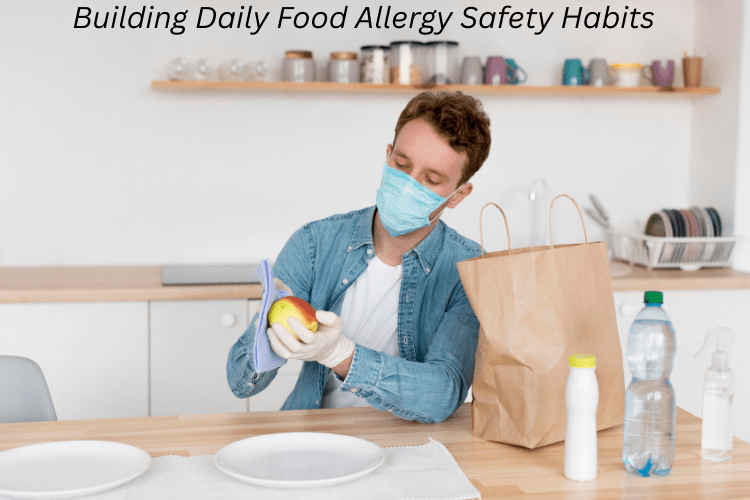
Managing allergies successfully requires consistency.
Helpful habits include:
Reading labels every time
Cooking more meals at home
Packing safe snacks
Avoiding buffets
Carrying emergency medication
Teaching children self-advocacy
Informing friends and coworkers
These small actions create a safer environment.
Long-Term Lifestyle Strategies for Families
Families benefit from structured systems.
Keep separate utensils. Label safe foods clearly. Teach caregivers. Practice emergency plans.
When everyone knows the routine, accidents become less likely.
Preparation builds confidence and reduces stress.
The Golden Rule: When in Doubt, Leave It Out
If you’re uncertain about a food, skip it.
Missing one snack is far safer than risking an emergency reaction.
Trust your instincts.
Frequently Asked Questions (FAQ)
What are the most common food allergens?
Milk, eggs, peanuts, tree nuts, wheat, soy, fish, shellfish, and sesame.
Can tiny traces really cause reactions?
Yes. Even microscopic amounts may trigger symptoms.
Is homemade food safer?
Generally yes, since you control ingredients.
Should I always carry epinephrine?
Yes. It can be life-saving during anaphylaxis.
Do children outgrow allergies?
Some do, but many allergies persist into adulthood.
Are “natural flavors” safe?
Not always. They may hide allergen sources.
Final Thoughts
Food allergies require awareness, but they don’t have to control your life.
With education, smart habits, and careful choices, you can dramatically reduce risk.
Read labels. Ask questions. Stay prepared.
Small daily precautions protect your health — and your peace of mind — for years to come.
How we reviewed this article:
Sources
History
Healthline has strict sourcing guidelines and relies on peer-reviewed studies, academic research institutions, and medical journals and associations. We only use quality, credible sources to ensure content accuracy and integrity. You can learn more about how we ensure our content is accurate and current by reading our editorial policy.
- Bahna SL. (2023). New insights in hidden food allergies.
https://pmc.ncbi.nlm.nih.gov/articles/PMC11250454/ - Food allergies. (2025).
https://www.fda.gov/food/nutrition-food-labeling-and-critical-foods/food-allergies - Food allergies. (n.d.).
https://allergyasthmanetwork.org/food-allergies/ - Hostoffer RW, et al. (2023). Immunoglobulin E.
https://www.ncbi.nlm.nih.gov/books/NBK482212/ - Milk allergy diet for children. (2024).
https://www.nationwidechildrens.org/conditions/health-library/milk-allergy-diet-for-children - Talking to children about their food allergy. (n.d.).
https://www.foodallergy.org/resources/talking-children-about-their-food-allergy - Types of food ingredients. (2023).
https://www.fda.gov/food/food-additives-and-gras-ingredients-information-consumers/types-food-ingredients

I now use home remedies like turmeric tea and ginger every day. These simple, plant-based solutions help my body heal itself. Nature gives us all we need to stay healthy, without complicated formulas.