

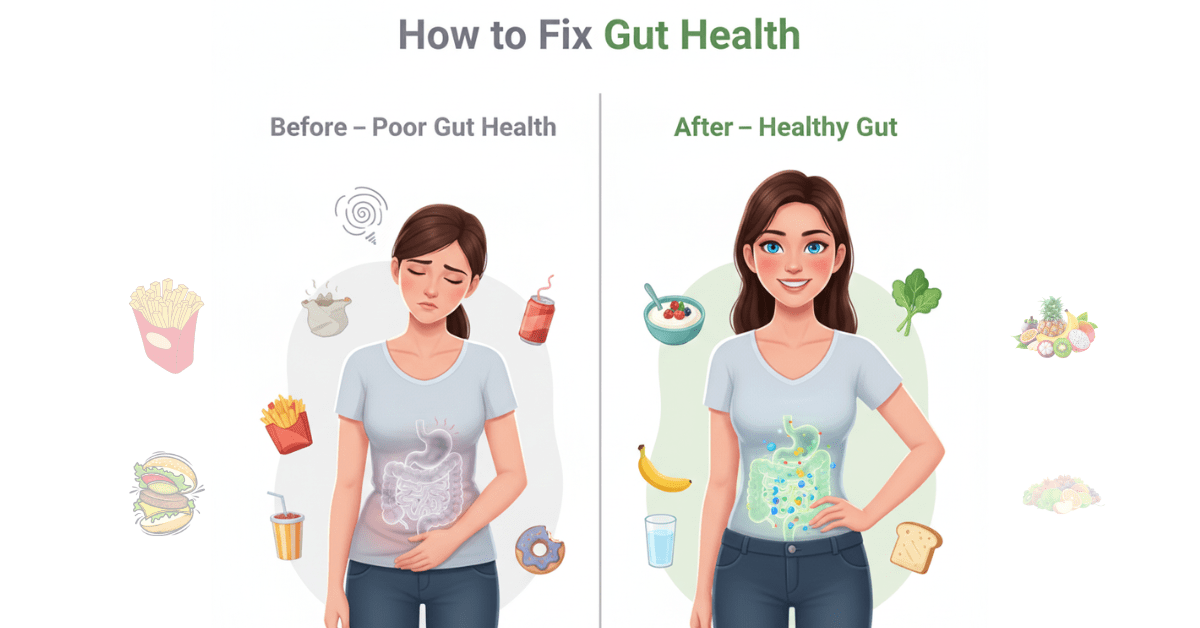
Did you know that your gut is full of small bacteria? Some of them are beneficial, while others are harmful to you. Beneficial bacteria help in the digestion of food, the production of essential vitamins, fighting against threats, and affecting mood and energy.
Many health benefits come from having balanced gut bacteria. You have more energy, your digestion works smoothly, your immune system is stronger, and your mood improves. However, if this balance is unstable, which scientists call dysbiosis, you may experience bloating, tiredness, digestive issues, or even skin problems.
The good news is, you can fix gut health in just a few months. In this blog, we are going to discuss how to fix your gut health.
Recognizing When Your Gut Needs Help
Before talking about solutions, you should know the signs that your digestive system is having problems. The following indications are often signs of dysbiosis, an imbalanced state of gut bacteria:
Common Warning Signs:
- Consistent bloating and extra gas after meals
- Constipation or diarrhea
- Chronic fatigue in spite of ample sleep
- Stomach discomfort or cramps
- Difficulties like concentrating
- Frequent illnesses or weakened immunity
- Skin issues like eczema or acne
If you’re having three or more of these symptoms, your gut is likely to be unhealthy and need support. Importantly, dysbiosis doesn’t happen overnight, and neither does recovery—but the timeline is shorter than you might expect.
Steps for Fixing Your Gut Health
Step 1: Eat Foods That Feed Your Good Bacteria
What helps you keep your gut healthy is a healthy diet. Probiotics (the healthy bacteria) and prebiotics (the food that feeds them) are two crucial parts of your gut. Each of them has a different type of nutritional need. That’s why it’s essential to give the right type of food to keep your overall bacteria healthy and balanced.
Probiotics: Beneficial Bacteria
Probiotics are also known as beneficial bacteria in your gut. Lactobacillus and Bifidobacterium are probiotics known for supporting the digestive system, strengthening the intestinal lining, and lowering inflammation.
Some of the best probiotic foods include:
- Plain yogurt with live cultures
- Kefir (fermented milk drink)
- Sauerkraut (fermented cabbage)
- Kimchi (fermented vegetables)
- Miso (fermented soy paste)
- Kombucha (fermented tea)
- Tempeh (fermented soy)
Prebiotics: The Fertilizer for Your Gut Garden
Prebiotics are food components that help to give health benefits by feeding your beneficial gut bacteria and making them strong. Think of prebiotics as fertilizer that helps beneficial bacteria grow and keeps harmful bacteria from growing.
Some of the best prebiotic foods include:
- Apples (rich in pectin, a soluble fiber that relieves constipation and diarrhea)
- Berries (blueberries, raspberries, blackberries)
- Leafy greens (spinach, kale, arugula)
- Broccoli and cauliflower
- Beans and lentils
- Whole grains
- Asparagus and artichokes
- Carrots and beets
- Nuts and seeds (almonds, walnuts, chia seeds)
Step 2: Drink Adequate Water Daily
Enough water intake is essential for proper gut functioning. Water helps with multiple digestive functions, like dissolving food and activating enzymes; it also helps to maintain a good environment for beneficial bacteria and many more.
You should drink at least 8 glasses of water daily and increase if you are exercising or living in a hot environment. Try to drink water before meals to prepare your digestive system and avoid large amounts during meals because it can dilute stomach acid.
What to Avoid:
- Sodas and sugary drinks
- Diet sodas
- High-fructose juices
- Excessive caffeine
Step 3: Prioritize Quality Sleep for Gut Repair
Gut bacteria are most active during your sleep, and much research shows that sleep quality has a big impact on your gut health. Especially beneficial bacteria, like lactobacillus and bifidobacterium, thrive when you are having consistently proper sleep.
What Happens When You Sleep Enough (7-9 Hours)
- Your bacteria flourish and multiply
- Your intestinal barrier strengthens
- Inflammation in your digestive system lowers
- Your immune system becomes better
- Harmful bacteria remain under control
What Happens With Poor Sleep (Under 7 Hours):
- It decreases your beneficial bacteria
- Your intestinal barrier weakens
- Increases inflammation in your digestive system
- Harmful bacteria increase
To get a more restful sleep, try to go to bed and wake up at the same time every day, especially on weekends. Sleep for at least 7-9 hours. Don’t use screens before bed, don’t drink coffee late at night, and do something calming before bed, like reading.
Step 4: Manage Stress to Protect Your Gut Bacteria
Stress hormones like cortisol are harmful to your beneficial gut bacteria. When you are stressed, bad bacteria increase, your intestinal barrier weakens, inflammation rises in your gut, and beneficial bacteria decrease, which makes the balance of your gut microbiota unstable. When you improve your gut health, it also helps reduce stress and anxiety.
Meditating, yoga, and regular exercise (walking or jogging) are all simple everyday activities that help to manage stress and improve your gut health and overall well-being. The key to better stress management is consistency.
Step 5: Exercise Regularly to Increase Microbial Diversity
Exercise is not only helpful for weight management, but it also helps with gut bacteria. It is said that physical activity increases your beneficial bacteria, reduces inflammation, and supports healthy weight management.
Best Types of Exercise for Gut Health Include:
- Walking
- Cycling
- Sports (anyone you like)
- Dancing
- Yoga
- Swimming
- Playing outdoors
Tip: Try to do any activity for at least 30 minutes a day. Consistency matters more than intensity. Try to be regular with these activities for better gut health.
Foods to Avoid If You Want to Fix Your Gut Health
Some foods quietly harm your beneficial gut bacteria and help harmful bacteria to grow more, which causes an imbalance in your gut microbiota. Some of the foods that are highly recommended to avoid include:
- Sugary drinks and sweets
- Packaged snacks
- Instant noodles
- Fast food and frozen meals
- Diet sodas or soft drinks
- Processed meats
Tip: Simple food swaps can protect your gut and help your beneficial bacteria grow, leading to better digestion and overall health.
4-Week Action Plan for Fixing Gut Health
With small and consistent changes, you can have better long-term benefits for your gut health. Below, I have provided a 4-week action plan that can help you improve your gut health.
1st Week: Foundation Building
- Add one fermented food to your daily routine, whichever you like
- Drink 8 glasses of water daily
- Make a proper sleep schedule and follow it consistently
- Add one fiber-rich food you genuinely enjoy to your meal
- Do one stress-management activity that is easy for you to follow
2-3rd Week: Gradual Expansion
- Change fermented food if the first one didn’t appeal to you
- Replace one processed snack daily with a whole-food alternative
- Start doing a 20-minute daily activity
- Gradually increase fiber intake and use different plant sources
- Be consistent with the sleeping schedule
4th Week and After: Maintenance and Monitoring
- Most people notice more energy and better digestion
- Have better focus and clear thinking
- Improvements in mood
- Improvements in skin
- Makes immunity system better
What Results Should You Expect?
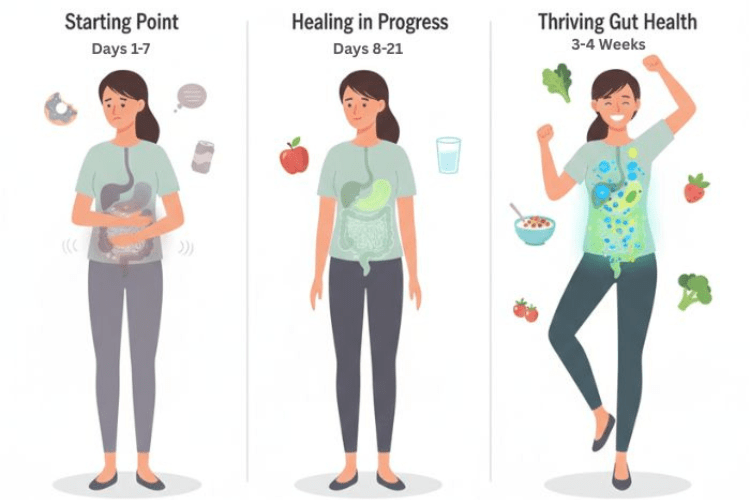
According to studies, you can expect the following results within the time period given.
Days 1-7:
- Reduced bloating after every meal
- Slight increase in energy
- Helps control hunger naturally
Days 8-21:
- Improvement in clearer thinking and better focus
- More stable energy levels throughout the day
- Improved digestion
- Better mood and reduced anxiety
- Little improvements in the skin
3-4 Weeks:
- Long-lasting energy without sudden crashes
- Noticeable improvements in skin
- Stronger immunity system
- Better sleep quality
- Emotional stability and resilience
- Clothes may fit due to reduced bloating
People who continuously follow the above-mentioned changes are more likely to experience these benefits. These outcomes may differ for each individual depending on their efforts, genetics, and gut health status.
Frequently Asked Questions
What are the signs my gut needs help?
Regular bloating after every meal, constipation or diarrhea, stomach discomfort, unexplained fatigue, brain fog, skin problems, and weak immunity are signs that your gut health needs to be fixed.
What foods improve gut health fastest?
Fermented foods like yogurt, sauerkraut, and kimchi work quickly because they contain live bacteria. You should combine these with 25 to 30 grams of daily fiber from whole foods, like fruits, vegetables, and whole grains, and polyphenol-rich foods like berries and leafy greens.
Can supplements replace a healthy diet?
No. Supplements can only support a healthy diet, but cannot replace a balanced and healthy diet. A balanced, fiber-rich diet with fermented foods is always the foundation for improving your gut health for a long period.
What foods should I absolutely avoid?
You should try to avoid processed foods, refined sugar, artificial sweeteners, excess salt, fried foods, and foods containing excessive additives. These are some of the foods that are harmful to your gut health.
How do I know my gut is fixed?
Signs that your gut health is fixed include better digestion, increased energy, improvements in mood, clearer skin, consistent better sleep, and reduced bloating. Most people notice these changes within 2 to 4 weeks of consistent healthy changes in their lifestyle.
Is it safe to eat fermented foods daily?
Yes, fermented foods are safe to eat daily for anyone; just make sure you don’t have any allergies to specific foods. It is also necessary that you ensure they’re prepared hygienically and stored properly in clean storage. If you think you have any issues, just consult your doctor.
Final Thoughts
One of the most important foundations of overall health is a healthy gut. By eating fiber-rich foods, drinking enough water, managing stress, staying active, and getting quality sleep, you help your gut do its job properly. Small daily habits like these can make a big difference in how you feel, both now and in the long run.
The most important thing of all is consistency. It matters far more than perfection. Start with one small change this week. Your gut bacteria will thank you with improved digestion, stronger immunity, a better mood, and more energy.
Stay consistent, trust the process, and give your gut the time it requires to fix and improve.

I now use home remedies like turmeric tea and ginger every day. These simple, plant-based solutions help my body heal itself. Nature gives us all we need to stay healthy, without complicated formulas.