


A gentle beginning for calmer nights
Living well often starts at home. Many of us in the US and Canada juggle busy days, small apartments, shared spaces, and long evenings spent staring at screens. Sleep can start to feel like a luxury instead of a daily comfort. I hear this often from readers who love cozy interiors but struggle to make their bedrooms feel calm and supportive. That is why 10 Evidence Backed Sleep Improvement Tips for Better Wellness matters so much. It is not about strict rules or fancy gear. It is about small thoughtful changes that fit real homes and real lives. When your space feels softer and more intentional, rest follows naturally. Think warm light, clear surfaces, and habits that help your body slow down without effort.
Creating a bedroom that invites rest
Soft light sets the mood
Research shows that gentle lighting helps the body prepare for sleep. In the spirit of 10 Evidence Backed Sleep Improvement Tips for Better Wellness, swap harsh overhead bulbs for table lamps with warm tones. A small lamp on a nightstand or dresser instantly changes how a room feels. The glow feels calmer, almost like evening sunlight. This simple change supports melatonin production and helps you unwind without thinking about it. It also makes a small room feel layered and welcoming instead of flat.
Clear surfaces calm the mind
Clutter quietly adds stress. Studies link visual mess with restless sleep and racing thoughts. One of the most practical ideas within 10 Evidence Backed Sleep Improvement Tips for Better Wellness is keeping surfaces clear. A bedside table with just a book, a lamp, and maybe a ceramic dish feels intentional. When the room looks settled, the mind follows. This habit supports better health and makes your bedroom feel like a pause button at the end of the day.
Working with color and texture
Earthy tones help the body relax
Color psychology suggests that muted shades like soft beige, clay, or pale green encourage calm. In 10 Evidence Backed Sleep Improvement Tips for Better Wellness, color plays a quiet role. You do not need a full repaint. Adding a throw, linen bedding, or a small rug in earthy tones can shift the mood. These colors ground the space and reduce visual noise. They also work beautifully in small rooms, adding warmth without crowding.
Natural fabrics feel better at night
Breathable materials such as cotton and linen help regulate body temperature. This is a key part of 10 Evidence Backed Sleep Improvement Tips for Better Wellness that often gets overlooked. Crisp sheets and soft pillow covers feel cool and light on the skin. This supports deeper sleep and may even help with natural weight loss tip routines by improving nightly recovery. Comfort at this level is quiet but powerful.
Simple habits that support better sleep
A gentle evening routine
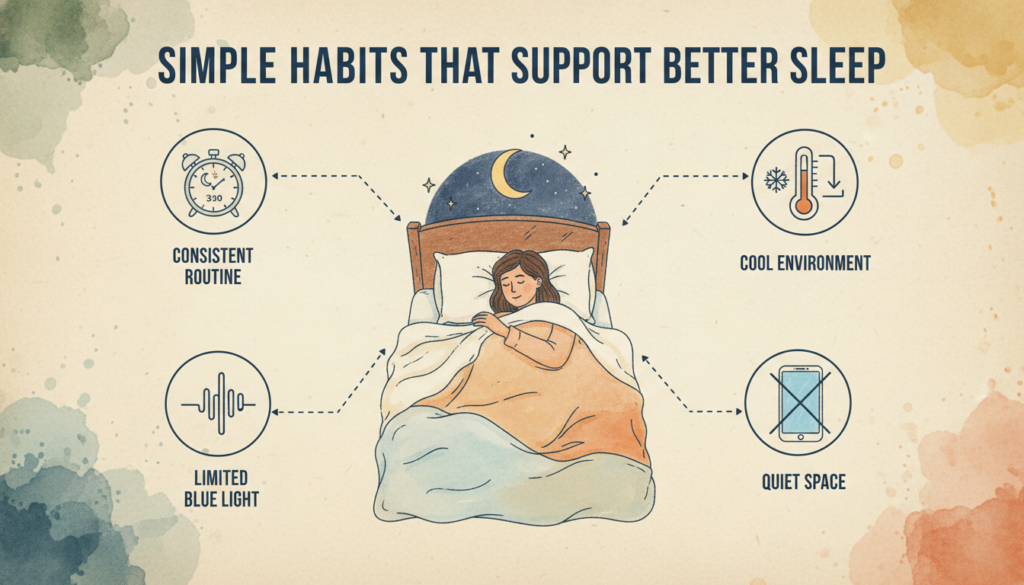
Sleep research consistently highlights the value of routine. Within 10 Evidence Backed Sleep Improvement Tips for Better Wellness, this means repeating small actions each evening. Dim the lights. Tidy one corner. Make tea. These cues tell your body it is time to slow down. Over time, your bedroom becomes associated with rest rather than stimulation. The habit feels comforting rather than strict.
Screens step back at night
Blue light delays sleep signals. One of the clearest findings behind 10 Evidence Backed Sleep Improvement Tips for Better Wellness is reducing screen time before bed. Try placing your phone on a shelf across the room. Add a book or journal on the nightstand instead. The space feels calmer and your mind gets a break. This simple shift often leads to falling asleep faster and waking up feeling steadier.
Making small spaces work harder
Use scent with intention
Certain natural scents like lavender are linked to relaxation. In the context of 10 Evidence Backed Sleep Improvement Tips for Better Wellness, scent works like decor you cannot see. A light spray on bedding or a small diffuser can soften the atmosphere. Keep it subtle. The goal is comfort, not distraction. This sensory layer adds depth to even the smallest bedroom.
Keep the room cool and quiet
Temperature plays a big role in sleep quality. Research suggests slightly cooler rooms support deeper rest. As part of 10 Evidence Backed Sleep Improvement Tips for Better Wellness, try adjusting bedding layers instead of blasting heat. A light quilt and breathable sheets often work better. Soft curtains or a simple rug can also reduce noise and make the room feel more insulated and calm.
Read Also – Fast Metabolism: Facts vs Myths
Supporting the body beyond decor
Movement during the day matters
Good sleep often starts hours earlier. One idea within 10 Evidence Backed Sleep Improvement Tips for Better Wellness is gentle daytime movement. Walking, stretching, or light exercise helps regulate sleep cycles. It also supports better health overall. When the body feels pleasantly tired, rest comes more easily. This does not require intense workouts or gym time. Consistency matters more than effort.
Mindful eating in the evening
Heavy meals late at night can disrupt sleep. Evidence suggests lighter dinners support rest and digestion. Within 10 Evidence Backed Sleep Improvement Tips for Better Wellness, aim for simple evening meals and calming herbal drinks. This approach pairs well with a natural weight loss tip mindset and supports overnight recovery. Your bedroom becomes a place of rest rather than discomfort.
A calm ending to the day
Sleep is deeply personal, shaped by space, habit, and mood. These ideas are meant to feel flexible and kind, not demanding. 10 Evidence Backed Sleep Improvement Tips for Better Wellness is really about listening to your body and shaping your home to support it. Small changes add up. A softer lamp. Clearer surfaces. Better fabrics. Gentle routines. Over time, your bedroom becomes more than a place to sleep. It becomes a quiet partner in your daily rhythm. If you live in a compact space or a busy household, these thoughtful shifts can help you rest better and wake up feeling grounded and ready for the day ahead.
Frequently Asked Questions
How long does it take to see better sleep results after making these changes
Many people notice small improvements within a few nights, especially after adjusting lighting and reducing screen use. Deeper and more consistent sleep usually develops over two to three weeks as your body adapts to the new routine and environment.
Can these sleep improvement tips work in very small bedrooms
Yes. These ideas are especially helpful for small spaces. Simple changes like soft lighting, clear surfaces, and breathable bedding do not require extra room. In fact, smaller bedrooms often feel calmer faster when clutter is reduced and textures are kept simple.
Do I need to buy expensive furniture or decor to sleep better
Not at all. Better sleep comes more from thoughtful choices than from cost. Rearranging what you already have, switching to warmer bulbs, or using natural fabrics can make a noticeable difference without a big budget.
Is it okay to follow these tips if I have a busy work schedule
Absolutely. These tips are designed to fit into real life. Even one or two changes, like a consistent bedtime routine or limiting phone use at night, can support better rest despite a packed schedule.
How does sleep quality affect overall wellness
Good sleep supports mood, focus, digestion, and energy levels. It also plays a role in better health and can support natural weight loss tip efforts by helping the body regulate hormones and recovery.
Should I change my sleep routine every day or keep it the same
Keeping a similar routine each evening helps your body recognize when it is time to rest. Consistency matters more than perfection. Even a short routine done regularly can improve sleep quality.
Are naps during the day bad for nighttime sleep
Short naps earlier in the day are usually fine. Long or late afternoon naps may interfere with falling asleep at night. If nighttime sleep feels difficult, try shortening naps or skipping them for a few days.
Can scent really help with sleep
Yes, when used lightly. Natural scents like lavender have been shown to promote relaxation. The key is subtlety. Strong smells can be distracting rather than calming.
What is the best bedroom temperature for sleep
Most people sleep better in a slightly cool room. You do not need exact numbers. If the room feels fresh and comfortable rather than warm and stuffy, you are likely in a good range.
Do these tips work for people in both the US and Canada
Yes. These sleep improvement ideas are based on widely supported research and everyday habits. They work well across different climates and lifestyles, whether you live in a city apartment or a quieter suburban home.
