

Have you ever scrolled through Instagram or watched a red carpet event and wondered — how do they always look like that? That effortless, lit-from-within glowing skin that makes you pause and do a double take? You’ve probably assumed it’s all down to expensive dermatologists, exclusive clinics, and products with price tags that could pay your rent. But here’s the real secret nobody’s talking about: most of the celebrity glow is achievable — and it’s not nearly as expensive as you think.
Yes, there are the rare laser treatments and high-end facials. But the actual foundation of every celebrity’s radiant, dewy skin? It’s surprisingly basic, shockingly cheap, and completely within your reach. This guide breaks down the science, the home remedies, the diet, and the smart supplementation — everything you need to build a glowing skin routine that delivers real results without destroying your wallet.
The Celebrity Glow: What’s Actually Going On?
Let’s be honest. When Jennifer Lopez walks into a room looking like she was poured from a jar of liquid gold — that’s not magic. It’s not even surgery (she’s said as much). Her entire skin philosophy is stripped back and surprisingly affordable:
“Sleep is my weapon. I try to get eight hours a night. I think what works best is sleep, water, and a good cleanser.” — Jennifer Lopez
Sleep. Water. Cleanser. That’s it. When Lea Michele was asked about her naturally glowing skin and luminous complexion, her answer was equally simple: “Definitely drink a lot of water and get a lot of sleep. I know it’s cliché, but the most I ever see a difference in my skin is when I’m well rested.”
And Christie Brinkley? She’s been exfoliating her face every single morning for 40 years — not with a $300 device, but with a basic washcloth. She noticed that men who shaved daily appeared to have younger-looking skin and simply copied the habit. The pattern across every celebrity with genuinely glowing skin — not just filtered skin — is identical: consistency, hydration, sleep, and sun protection. Every single one of those habits can be replicated at home for almost nothing.
Why Your Skin Stops Glowing (And What Science Says)
Before diving into solutions, it helps to understand the problem. Glowing skin — that healthy, dewy, light-reflecting radiance — is your skin’s natural state when it’s functioning properly. When the glow disappears, something is breaking down internally or externally. Dermatologists consistently point to the same culprits.
Dead skin cell buildup is the number one enemy of skin brightness. Your skin naturally sheds cells, but without regular exfoliation, they pile up on the surface and scatter light unevenly — creating that flat, matte look instead of a healthy luminous one. This is why skin brightening tips almost always start with exfoliation.
Dehydration — both internal and topical — causes skin to look sunken and flat. When skin cells lack water, they can’t plump up and reflect light the way they should for that classic glowing skin effect. Even mild dehydration visibly dulls the complexion within hours.
Chronic inflammation is the silent destroyer. Poor diet, stress, pollution, and inadequate sleep all trigger low-grade inflammation. The gut-skin connection is real — what you eat shows up on your face faster than any topical product can fix it. Anti-inflammatory eating is one of the most underrated glowing skin tips in circulation.
Weakened skin barrier is increasingly recognized as the root cause of most skin concerns. When your barrier is compromised, moisture escapes, irritants enter, and the skin can’t maintain the balance needed for a healthy, radiant complexion. True radiance comes from barrier health — and a damaged barrier shows up as dullness, sensitivity, and uneven texture.
Pollution and UV damage break down collagen, cause hyperpigmentation, and accelerate every visible sign of aging — all working directly against glowing skin. This is why SPF appears non-negotiably in every serious skincare routine, celebrity or otherwise.
The Cheap Habits Behind Celebrity Glowing Skin
Strip away the noise and you’ll find that every celebrity skincare routine is built on the same handful of affordable, repeatable habits. These aren’t secrets — they’re just undervalued.
1. Consistent Hydration — The Free Secret
Water is still the most underrated beauty tool in existence. Proper internal hydration plumps skin cells, improves elasticity, and maintains that soft, supple texture that reads as healthy and naturally glowing. Multiple celebrities — J.Lo, Lea Michele, Priyanka Chopra — cite hydration as their number one skin tip, and the science backs them up completely.
But internal hydration alone isn’t enough. Topical humectants like hyaluronic acid (found in many affordable drugstore serums) pull moisture into the skin and lock it in. For glowing skin that stays dewy and fresh, you need both: drink at least 8 glasses of water daily and layer a hydrating serum under your moisturizer. That tight, papery skin feeling? That’s your barrier asking for help with skin hydration tips — listen to it.
2. Sleep — The Ultimate Skin Repair Cycle
Sleep is when your skin actually repairs itself. During deep sleep, the body produces human growth hormone, increases blood flow to the skin, and regenerates damaged cells. Miss this window consistently and no amount of product can compensate. Research from University Hospitals Case Medical Center confirmed that poor sleepers score significantly worse on intrinsic skin aging assessments — meaning sleep deprivation visibly ages your skin.
Aim for 7–9 hours every night. A silk pillowcase helps reduce friction and prevent sleep creases forming over time — a small, relatively affordable upgrade with genuine results. For glowing skin, sleep is the one non-negotiable that no product can replace.
3. Exfoliation — The 40-Year Secret
Dead skin cells are the enemy of radiance. They create an uneven surface that scatters light rather than reflecting it cleanly. Regular exfoliation — even just 2–3 times a week — reveals the fresher, brighter skin underneath. Tyra Banks made it clear in multiple interviews: her method was “nothing fancy, just a washcloth twice a day.” No expensive device. No dermatologist appointment. Just consistent, gentle removal of dull surface skin.
For those ready to step it up: glycolic acid and mandelic acid (AHA BHA for skin) are affordable chemical exfoliants that dissolve dead skin cells without physical scrubbing. Mandelic acid is gentler and better suited for sensitive or darker skin tones. Lactic acid exfoliation (found in yogurt masks too) is another excellent entry point — mild enough for daily use, effective enough to make a real difference in skin texture improvement.
4. Sunscreen — Every Single Day
Dermatologists unanimously agree: SPF is the most powerful anti-aging and skin-brightening investment available, bar none. Sun exposure breaks down collagen, causes dark spots and hyperpigmentation, and accelerates every sign of aging that works against glowing skin. The rule is non-negotiable — SPF 30 or higher, every morning, rain or shine.
Many affordable, non-comedogenic sunscreens exist at the drugstore level, making this the highest-ROI habit in any skincare routine. Pore minimizing sunscreen formulas are particularly good for oily skin types who worry about clogged pores. Think of SPF for radiant skin not as optional sun protection but as the foundation of your entire anti-aging and brightening strategy.
5. Vitamin C — The Brightening Workhorse
Vitamin C for glowing skin is as close to a proven formula as skincare gets. It inhibits melanin production (fading dark spots and uneven tone), boosts collagen synthesis, and protects against oxidative damage from pollution and UV exposure. When paired with Vitamin E, both compounds become significantly more effective. Many drugstore Vitamin C serums cost under $15 and deliver real, visible results when used consistently. The active ingredient is the same whether you buy it from a luxury brand or a pharmacy shelf.
Home Remedies for Glowing Skin That Actually Work
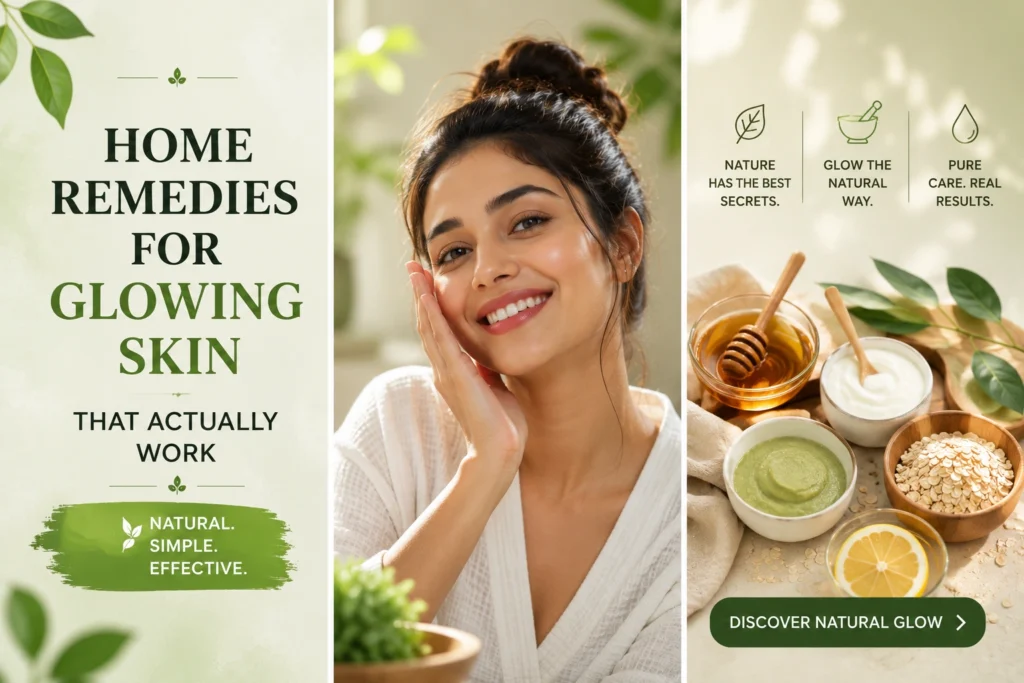
This is where centuries of traditional wisdom and modern dermatological science meet beautifully. The home remedies that have been passed down through Ayurvedic and Asian skincare traditions aren’t just folklore — most have real scientific backing. And every single one costs pennies.
Turmeric + Honey Mask — The Ancient Brightener
Turmeric for glowing skin is rooted in science. Its active compound, curcumin, is a potent antioxidant and anti-inflammatory agent that fights free radicals, reduces pigmentation, and has antiseptic properties beneficial for acne-prone skin. Honey face mask for glow works because raw honey is a natural humectant — it draws moisture into the skin and holds it while its antibacterial properties clear congestion.
How to Make It: Mix ½ tsp turmeric powder with 1 tbsp raw honey into a smooth paste. Apply to a clean face, leave for 15 minutes, rinse with warm water. Use 2–3 times a week.
Note: Turmeric can temporarily stain skin yellow — rinse thoroughly. Always patch test first.
This is the mask Indian brides have used before their weddings for generations to achieve legendary bridal glowing skin — and science confirms exactly why it works so well.
Aloe Vera Overnight Treatment — Nature’s Hydrator
Aloe vera for skin glow is backed by genuine science. The plant is rich in vitamins A, C, and E, amino acids, and antioxidants that support skin repair and regeneration. It hydrates deeply without clogging pores, soothes inflammation, and promotes healthy cell turnover — making it one of the most complete natural home remedies for glowing skin available.
How to Use It: Scoop fresh aloe gel from a leaf (or use pure, additive-free bottled gel). Apply a thin layer to clean skin before bed. Rinse in the morning. Results — softer, more hydrated, subtly more radiant skin — appear within a week of consistent use.
Aloe vera works for every skin type. It hydrates dry skin without heaviness, and its anti-inflammatory properties help regulate oil in oily skin over time. Using it as an overnight treatment makes it one of the most effective tools for glowing skin overnight.
Gram Flour (Besan) + Rose Water Scrub
Gram flour for glowing skin is a staple in South Asian beauty routines for a reason. It acts as a natural cleanser and gentle exfoliant — removing dead cells, absorbing excess oil, and evening skin tone without chemicals. Rose water benefits for skin include pH balancing, inflammation reduction, and a layer of gentle, fragrant hydration. Together, they’re a budget-friendly powerhouse face pack for glowing skin home remedy.
How to Make It: Combine 2 tbsp gram flour with enough rose water to form a paste. Add a pinch of turmeric if desired. Apply in gentle circular motions, leave for 10 minutes, rinse. Use twice a week.
Yogurt + Oat Mask — The Gentle Glow
Yogurt face mask benefits come from its lactic acid — a naturally occurring AHA that gently exfoliates dead skin and promotes cell renewal. Oats contain beta-glucan, which deeply soothes the skin barrier and provides long-lasting hydration. Together, this is an ideal DIY face mask for glowing skin for sensitive skin types who can’t tolerate stronger acids.
How to Make It: Mix 2 tbsp plain yogurt with 1 tbsp finely ground oats. Apply, leave for 15 minutes, rinse gently. Skin feels immediately smoother and more luminous.
Cold Water Face Splash — Jennifer Aniston’s Ice Trick
This is the simplest and cheapest routine in the guide. Jennifer Aniston told Vogue her go-to is to get a bowl of ice water and splash her face 25 times: “It’s an old-school trick that Joan Crawford used to do. It just wakes your skin up.” Cold water causes blood vessels to constrict and then dilate — improving circulation, reducing puffiness, and giving the complexion an instant fresh flush. Free, takes 60 seconds, and works immediately. This is skinimalism for glowing skin at its finest.
Green Tea Ice Cubes — Antioxidant Skin Boost
Brew a strong cup of green tea for skin, let it cool, pour into an ice cube tray, and freeze. Each morning, glide one cube across your face for 30–60 seconds. Green tea is rich in EGCG — a potent antioxidant that fights UV damage and pollution, tightens pores, and calms redness. This is essentially a spa-quality antioxidant treatment that costs pennies per session. For skin cycling for glow, this pairs beautifully with your morning Vitamin C serum as a double-antioxidant layer.
The Inside-Out Approach: Nutrition and Supplements
The most underappreciated truth about glowing skin is that you cannot product your way to radiance if your internal health is working against you. The gut-skin connection is real — what you consume directly affects how your skin looks, behaves, and recovers.
What to Eat for Glowing Skin
Celebrities like Penelope Cruz, Natalie Portman, and Olivia Palermo all credit diet as a core part of their skin strategy. The pattern is consistent: anti-inflammatory, whole-food eating rich in antioxidants for glowing skin.
Omega-3 fatty acids (salmon, walnuts, flaxseeds) reduce inflammation, maintain the skin’s lipid barrier, and give skin that natural supple dewy finish. Vitamin C-rich foods (citrus, bell peppers, kiwi) support collagen synthesis — both essential for youthful, glowing skin. Zinc for skin health (pumpkin seeds, lentils, chickpeas) regulates oil production and accelerates skin repair, making it particularly useful for acne-prone skin glow routines.
Collagen for skin glow is another area where diet genuinely helps. Halle Berry famously drinks bone broth for exactly this reason: “It’s so full of collagen that it’s crazy.” Bone broth is rich in glycine, proline, and hydroxyproline — the amino acids your body uses to build its own collagen. You don’t need a fancy supplement if you’re consuming collagen-boosting foods regularly.
And of course — limiting sugar and skin aging damage is critical. Sugar triggers glycation, a process where sugar molecules bind to collagen and elastin, making them stiff and degraded. This accelerates visible aging and is one of the most direct dietary enemies of bright, firm, glowing skin.
Derma Essential (For Skin Health Supplement) — The Smart Addition
Beyond food, targeted supplementation is where many people find the missing link. Derma Essential (For Skin Health Supplement) is designed to support glowing skin from within — filling the nutritional gaps that diet alone, even a good one, often can’t address. Jennifer Lopez follows what she calls the “five S’s” of great skin: sleep, sunscreen, serums, supplements, and a healthy lifestyle. Supplements are an easy pillar to overlook, but they make a genuine difference when your body is under stress, running a deficit, or simply not absorbing enough nutrients from food.
Derma Essential (For Skin Health Supplement) works best as a complement to the habits in this guide — not a replacement. When your skin is nourished from within, everything else performs better. The home remedies penetrate deeper. The hydration holds longer. The glow lasts through the day. Think of it as the internal support system that makes your entire external routine more effective.
Pros & Cons: Natural Remedies vs. Product-Based Approaches
Both approaches have genuine merit for achieving glowing skin. The smartest strategy combines them. Here’s an honest, side-by-side breakdown:
| Category | Pros | Cons |
| Natural Cost | Extremely affordable — most ingredients cost under ₹50 / $1 per use. A month of turmeric-honey masks costs less than one luxury serum. | Requires ingredient sourcing, mixing time, and fresh batches every few days. |
| Natural Skin Safety | Generally gentle and well-tolerated. Aloe vera, honey, and oats rarely irritate even sensitive skin types. | Not always safe — lemon juice, for instance, can cause photosensitivity and chemical burns. Always patch test first. |
| Natural Ingredients | Free of sulfates, parabens, synthetic fragrances, and preservatives that can irritate or disrupt hormones over time. | No standardized active concentrations — results vary batch to batch and person to person. |
| Natural Speed of Results | Mild, cumulative improvement with very low risk of breakouts, reactions, or purging. | Slow — meaningful skin texture improvement can take 4–8 weeks of consistent use before it’s visible. |
| Natural Eco Impact | Biodegradable, low-waste, no plastic packaging. Sustainable and environmentally responsible. | No shelf life — must be made fresh. Risk of bacterial contamination if stored improperly. |
| Natural Holistic Benefit | Ingredients like turmeric and green tea benefit the whole body — anti-inflammatory, antioxidant, and immune-supporting effects beyond just the skin. | Harder to target specific skin concerns (deep pigmentation, active acne) precisely without clinical-grade ingredients. |
| Product Effectiveness | Clinically standardized concentrations deliver consistent, measurable results. A 10% Niacinamide serum delivers exactly 10% — every use. | Expensive, especially when layering multiple actives (Vitamin C, retinol, AHA BHA for skin, peptides). |
| Product Stability | Formulated with preservatives and packaging designed to keep active ingredients stable and potent throughout shelf life. | Some ingredients (Vitamin C, retinol) degrade quickly once opened, even in commercial formulas. |
| Product Convenience | Ready to use — no mixing, no preparation. Works easily into a busy lifestyle. | Ingredient overwhelm is real — the market is flooded with products making unproven claims. |
| Product Supplements | Supplements like Derma Essential (For Skin Health Supplement) address internal deficiencies that diet alone can’t always fix — particularly for zinc, biotin, and collagen peptides. | No supplement can replace consistent sleep, hydration, SPF, and a balanced diet. It supports — it doesn’t substitute. |
| Product Skin Concerns | Can precisely target specific concerns: retinol for anti-aging, ceramides for barrier repair, glycolic acid for skin texture improvement. | Wrong combinations (e.g., Vitamin C + AHA in the same routine) can cause irritation, redness, and breakouts. |
Bottom Line: The best approach to glowing skin combines both worlds — use natural home remedies for your base routine (they’re gentle, cheap, and genuinely effective), layer in a few targeted science-backed products where needed (Vitamin C, SPF, niacinamide), and support everything from within with smart nutrition and supplementation. That’s exactly what celebrities do, whether they admit it or not.
Your Complete Celebrity-Inspired Glowing Skin Routine
Morning
- Cold water splash (25x — Jennifer Aniston method)
- Gentle cleanser for your skin type
- Vitamin C serum — apply to damp skin
- Hyaluronic acid / ceramide moisturizer
- SPF 30+ — non-negotiable, daily
- Derma Essential — take with breakfast
Evening
- Double cleanse (oil-based then water-based)
- Exfoliate 2–3x/week (AHA toner or washcloth)
- Home remedy mask 2–3x/week (turmeric + honey OR aloe vera overnight)
- Niacinamide serum (optional — reduces pores + redness)
- Richer moisturizer or face oil to seal
Weekly Additions
- Green tea ice cube facial massage (3–5x/week)
- Gram flour + rose water scrub (1–2x/week)
- Yogurt + oat mask for sensitive days
Daily Lifestyle
- 8+ glasses of water (non-negotiable)
- 7–9 hours of sleep
- 30 min movement / exercise
- Anti-inflammatory, whole-food diet
- Stress management (yoga, breathing, rest)
The Lifestyle Pillars of Glowing Skin
Beyond products and masks, the celebrities with the most consistently radiant skin share lifestyle habits that no serum can replace. Regular exercise boosts circulation, oxygenates skin, and supports the lymphatic system’s detox function. As little as 30 minutes of daily movement — walking, yoga, cycling — produces visible differences in skin clarity over time. Exercise for glowing skin isn’t a wellness cliché; it’s a physiological fact.
Stress and skin health are biochemically linked. Chronic stress triggers cortisol, which breaks down collagen, increases sebum production, and worsens inflammatory conditions like eczema and acne. The connection between mental state and glowing skin is not metaphorical — it shows up on your face. Meditation, time outdoors, quality social connection, or any genuine stress-reduction practice is as much a skincare habit as any serum.
Smoking and skin health are diametrically opposed. Smoking constricts blood vessels, starves skin of oxygen, and degrades collagen at an accelerated rate — making it one of the most direct paths to premature dullness, deep wrinkles, and a sallow complexion. No amount of home remedies or supplements can outpace the damage smoking does to skin daily.
Pollution and skin damage are a growing concern, especially in urban environments. Pollution particles penetrate the skin barrier, generate free radicals, and cause oxidative stress that accelerates aging and hyperpigmentation. A daily antioxidant serum (Vitamin C in the morning, niacinamide in the evening) is your best defence. Double cleansing at night to remove pollution residue is equally important.
5 Top Research Resources for Glowing Skin
For those who want to go deeper into the clinical science behind glowing skin — ingredients, treatments, skin biology — these five authoritative sources are where dermatologists, researchers, and beauty editors actually look:
- American Academy of Dermatology (AAD) — aad.org
The definitive authority on dermatology in the US. Offers peer-reviewed, board-certified guidance on skincare routines, ingredient safety, skin conditions, and anti-aging strategies. All public resources are free and evidence-based. Start here for anything clinical. - National Institutes of Health / PubMed — pubmed.ncbi.nlm.nih.gov
The world’s largest index of peer-reviewed biomedical research. Search any ingredient — curcumin, niacinamide, hyaluronic acid, retinol — and read the actual clinical studies behind the claims. This is where dermatologists go when they want the evidence, not the marketing. - Healthline — healthline.com
Skincare and dermatology content medically reviewed by licensed dermatologists. Provides accessible, accurate explanations of skincare science, ingredient comparisons, and routine building. Bridges the gap between clinical research and everyday use beautifully. - Verywell Health — verywellhealth.com
Medically reviewed guides on skin conditions, supplement use, and the lifestyle factors that directly affect skin health. Particularly strong on the nutrition-skin connection — including how deficiencies in zinc, Vitamin C, and omega-3s visibly affect skin appearance and glow. - Harvard Health Publishing — health.harvard.edu
Evidence-based consumer health content from one of the world’s most trusted medical institutions. Excellent coverage of skin aging, the gut-skin axis, diet-skin connections, sleep’s role in skin repair, and the science of SPF. Authoritative, accessible, and free.
Final Word: The Glow Is Already Inside You
The celebrities with the most consistently stunning glowing skin aren’t doing anything you can’t do. They’re sleeping well, drinking water, wearing sunscreen, exfoliating regularly, eating anti-inflammatory foods, and supporting their skin from within — sometimes with targeted supplements like Derma Essential (For Skin Health Supplement) — to fill the gaps their lifestyle can’t fully cover.
The beauty industry profits from making you believe that radiant, dewy, healthy glowing skin is complicated, rare, and expensive. It isn’t. It’s about what you consistently do — not what you occasionally spend. The home remedies in this guide cost pennies. The core habits cost nothing but time and intention. The internal support from a well-chosen supplement bridges whatever gaps remain. And SPF, sleep, and water? Those are free.
Start with one change today. Drink an extra glass of water. Apply aloe vera tonight. Mix a turmeric-honey mask this weekend. Commit to SPF tomorrow morning. Sleep one hour more this week.
Your glowing skin era is not waiting for the perfect $200 serum. It’s waiting for you to simply show up for your skin — consistently, intelligently, and cheaply.
Disclaimer: This article is for informational purposes only and does not constitute medical advice. Always consult a licensed dermatologist before starting any new skincare regimen or supplement routine, particularly if you have a pre-existing skin condition or sensitivity.

Natural home remedies, skincare secrets, dental & eye health tips, and real product reviews to help you stay healthy the natural way.