


FemiCore Reviews 2026 is a topic worth exploring for women who want to learn more about bladder health, urinary wellness, and supplements containing herbal ingredients and probiotics. FemiCore is marketed as a dietary supplement designed to support bladder control, microbiome balance, and a healthy urinary system. Its advertised formula includes cranberry extract, bearberry, Mimosa pudica, berberine, and several Lactobacillus strains.
But does FemiCore really work for women’s bladder health? Are its ingredients supported by scientific research, and are the advertised benefits backed by evidence specific to this product?
FemiCore Reviews 2026: Quick Product Glance
| Product Detail | Information |
|---|---|
| Product name | FemiCore |
| Product category | Women’s bladder and urinary wellness supplement |
| Main advertised purpose | Bladder control support, microbiome balance, and urinary system wellness |
| Product format | Capsules |
| Listed ingredients | Mimosa pudica, bearberry, cranberry extract, granular berberine, and five listed Lactobacillus strains |
| Formula type | Seller describes it as a natural formula |
| Stimulant information | Advertised as containing no stimulants |
| GMO information | Advertised as non-GMO |
| Package options | 2 bottles, 2 + 1 bottles, and 3 + 3 bottles |
| Lowest advertised package price | $158 for 2 bottles, before any applicable shipping |
| Advertised money-back guarantee | 60 days |
| Free shipping | Advertised for the 3-bottle and 6-bottle packages |
| Additional bonuses | Three digital bonuses advertised with the 6-bottle package |
| Intended market | Adults interested in women’s bladder wellness |
| Official purchase route | Check FemiCore package details |
Product information, prices, package contents, and guarantees above are based on the seller details supplied for this review. Confirm current terms at checkout. Independent clinical evidence establishing the effectiveness of the finished FemiCore product has not been provided.
What Is FemiCore?
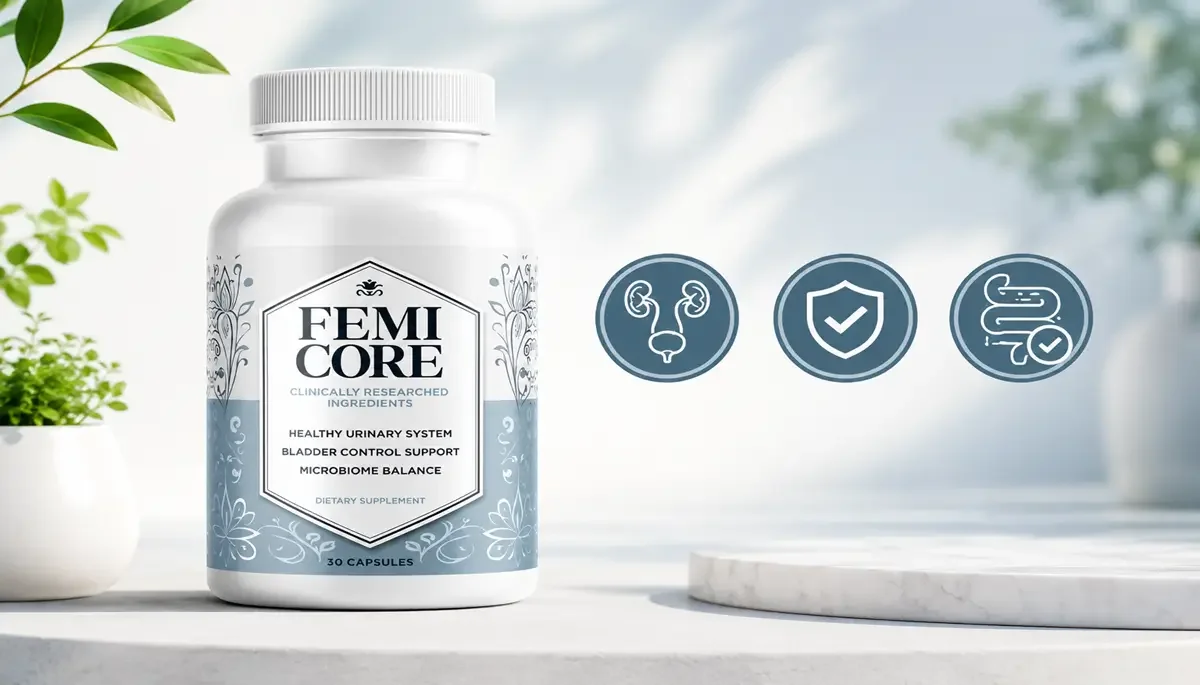
FemiCore is marketed as a women’s bladder health supplement intended to support bladder control and urinary wellness. Its sales material presents the product as a natural formula that combines selected botanical ingredients with probiotic bacteria.
The seller’s central idea is that the urinary microbiome may play a role in women’s urinary health. Based on that idea, FemiCore is promoted as a supplement intended to support microbiome balance alongside bladder function.
The advertised formula contains cranberry extract, bearberry, Mimosa pudica, berberine, and five Lactobacillus strains. These ingredients have been investigated in different areas of health research, including urinary health, microbial balance, and laboratory studies of plant compounds. However, research on an individual ingredient does not automatically prove that a finished supplement produces the same results.
That distinction is important when evaluating FemiCore Bladder Health claims.
Check FemiCore Website Latest Offers
What Does the Seller Claim FemiCore Supports?
According to the supplied sales information, FemiCore is promoted for three main areas:
- Bladder control support: The seller suggests the formula may help women concerned about involuntary urine leakage.
- Microbiome balance: The product is marketed around the potential relationship between beneficial bacteria and urinary wellness.
- Healthy urinary system: The seller presents the formula as a daily supplement for general urinary health support.
These are marketing claims rather than proof of a clinically established treatment effect. The supplied information does not include a published clinical trial demonstrating that FemiCore itself reduces leakage, improves bladder control, or treats a urinary condition.
Women experiencing frequent urgency, nighttime urination, or leakage should therefore avoid assuming that a supplement can identify or correct the underlying cause.
Why Women’s Bladder Health Matters
Bladder symptoms can affect everyday life, including sleep, travel, exercise, work, and social activities. Some women may experience a sudden need to urinate, while others may notice leakage during coughing, laughing, sneezing, or exercise.
There are different types of urinary incontinence, and they do not all have the same causes.
Urgency incontinence involves urine leakage associated with a sudden, difficult-to-delay urge to urinate. Stress incontinence involves leakage during activities that put pressure on the bladder, such as coughing or lifting. Some women experience symptoms of both types.
Other factors can contribute to urinary symptoms, including urinary tract infections, medication effects, pelvic floor changes, pregnancy and childbirth, menopause-related changes, and certain medical conditions.
The urinary microbiome—the community of microorganisms present in the urinary tract—is an area of active research. Studies have reported differences in urinary microbial communities among some groups of women with and without urinary symptoms. However, these findings do not establish that microbiome imbalance is the cause of every case of bladder leakage.
This matters because a supplement designed around microbiome support may not address every cause of urinary symptoms.
FemiCore Supplement Benefits: What Is Advertised?
The phrase FemiCore Supplement Benefits refers to the potential advantages promoted by the seller. The following sections explain those claims without treating them as proven outcomes.
Bladder Control Support
The seller markets FemiCore as a formula for women who want support with bladder control. This may appeal to women who experience occasional leakage or urgency and are looking for nonprescription options.
However, the supplied product information does not include controlled clinical trial results showing that FemiCore improves bladder control. It is not possible to establish the size, reliability, or duration of any benefit from the sales description alone.
Bladder symptoms that interfere with daily activities deserve proper assessment. Depending on the cause, a healthcare professional may recommend bladder training, pelvic floor muscle training, lifestyle adjustments, medication, or other treatment options.
Microbiome Balance
FemiCore’s marketing emphasizes the connection between microorganisms and urinary health. The formula includes several Lactobacillus strains, which are bacteria studied in different microbial environments.
Research into the urinary and vaginal microbiomes has grown over recent years. Some studies suggest that microbial community differences may be associated with urinary symptoms. Nevertheless, an association does not prove that changing the microbiome with a particular oral supplement will improve bladder control.
The exact strains, amounts, viability, and delivery characteristics of probiotics can influence their effects. The supplied FemiCore information does not provide enough detail to assess these characteristics fully.
General Urinary Wellness
Cranberry extract and bearberry are included in the advertised formula. These botanical ingredients have been studied in relation to urinary health, but the research questions vary.
For example, cranberry research has often focused on preventing recurrent UTIs rather than treating urinary leakage. Bearberry research has included investigation of its traditional use for urinary complaints, but evidence for a specific finished product and condition must be evaluated separately.
It would be inaccurate to conclude that these ingredients prove FemiCore treats UTIs or urinary incontinence.
A Capsule-Based Routine
FemiCore comes in capsule form, according to the seller’s information. A capsule may be convenient for people who prefer supplements to powders or liquids.
Convenience, however, is different from effectiveness. The supplied information does not establish the product’s exact recommended daily dose, the quantity of each ingredient, or whether its complete formula has been clinically tested.
Advertised Formula Features
The seller describes FemiCore as natural, easy to use, free of stimulants, and non-GMO. These are seller-provided product descriptions. They do not independently demonstrate that the supplement is effective, suitable for every user, or free from adverse effects.
A natural ingredient can still cause side effects or interact with medication. Buyers should review the complete label and consult a qualified healthcare professional if they have health conditions or take prescription medicines.
Check FemiCore Website Latest Offers
FemiCore Ingredients: What Is Inside the Formula?
The seller lists nine ingredients or ingredient entries in the advertised formula. It describes them as a proprietary blend, but the supplied information does not state the amount of each ingredient.
A proprietary blend can make it difficult for consumers to determine whether the formula contains research-relevant amounts of its individual components. It also makes it harder to compare the supplement with doses studied in scientific trials.
The following overview explains the ingredients and the limits of the available evidence.
Mimosa Pudica
Mimosa pudica is a plant used in traditional herbal practices. Some laboratory research has examined its extracts for antioxidant and antimicrobial activity.
A 2022 study investigated the in-vitro antioxidant and antimicrobial potential of Mimosa pudica from Nepal. Laboratory findings can help researchers decide which compounds merit further investigation, but they do not demonstrate that an oral supplement improves bladder control in women.
The supplied information does not establish the amount or extract specification of Mimosa pudica used in FemiCore.
Bearberry
Bearberry, commonly associated with the botanical name Arctostaphylos uva-ursi, has a history of traditional use for urinary complaints. Researchers have investigated its potential role in urinary health, including studies designed to evaluate its use in uncomplicated cystitis.
A clinical-trial protocol is not the same as a completed trial demonstrating benefit. Evidence about bearberry must also be considered in the context of the preparation, dose, duration, and condition being studied.
The presence of bearberry in FemiCore does not establish that the product treats a UTI or prevents urinary leakage. Bearberry preparations may not be suitable for everyone, so professional advice is important before use.
Cranberry Extract
Cranberry is one of the best-known botanical ingredients associated with urinary health. Research has examined whether cranberry products may help prevent recurrent urinary tract infections in certain populations.
A classic study published in The Journal of Urology investigated cranberry juice and bacterial adherence. This type of research helped develop interest in cranberry’s possible role in urinary health.
However, laboratory findings and research on cranberry juice or other cranberry preparations cannot automatically be applied to every cranberry extract. The formulation, concentration, and amount matter.
Most importantly, UTI prevention and bladder control are different outcomes. Evidence concerning recurrent UTIs does not prove that FemiCore reduces stress incontinence, urgency, or involuntary urine leakage.
Granular Berberine
Berberine is a plant-derived compound investigated in a variety of research settings. The supplied reference list includes a 2013 study examining berberine and bladder detrusor muscle contractile responses in diabetic rats.
That study involved an animal model. Animal findings can provide useful early information, but they cannot establish that an oral supplement improves bladder symptoms in humans.
The term “granular berberine” in the seller’s description does not specify the exact amount, purity, or formulation in FemiCore. Those details would be needed for a more complete assessment.
Berberine can also interact with medicines and may cause digestive side effects. Anyone taking medication or managing a medical condition should consult a healthcare professional before considering a berberine-containing supplement.
Lactobacillus Crispatus
Lactobacillus crispatus is a bacterial species studied in relation to microbial communities in the vaginal and urinary environments. Some research has investigated the role of Lactobacillus species in maintaining microbial balance.
However, the effect of a probiotic depends on its specific strain and formulation. Evidence involving one strain cannot automatically be applied to every product containing the same species.
The supplied FemiCore details do not identify the strain designation, colony-forming units (CFUs), or viability specifications for this ingredient.
Lactobacillus Acidophilus
Lactobacillus acidophilus has been studied in relation to the human microbiome, including research concerning the cervicovaginal environment.
A 2024 publication discussed the emerging role of this species in the cervicovaginal microenvironment. That does not establish that every oral supplement containing L. acidophilus produces a particular urinary benefit.
The precise strain and amount in FemiCore are not provided in the supplied product information.
Lactobacillus Plantarum
Lactobacillus plantarum is another bacterial species studied for potential probiotic applications. Research involving specific strains has explored various health questions, including microbial interactions and urinary tract infection recurrence in particular populations.
A pilot study in children using a specific L. plantarum strain cannot be treated as proof that an unspecified strain in an adult women’s supplement improves bladder control.
The population, strain, dose, and health outcome all matter when interpreting this type of research.
Lactobacillus Gasseri
The seller lists “Lactobacillus Gaseri,” which appears to refer to Lactobacillus gasseri. This species has been discussed in research and educational resources concerning vaginal microbial health.
Nevertheless, vaginal health and bladder control are related but distinct topics. Evidence that a bacterial strain may affect one microbial environment does not automatically establish that it improves urinary incontinence.
The supplied product information does not identify the exact strain or quantity used in FemiCore.
Lactobacillus Casei
Lactobacillus casei is another bacterial species investigated in microbial research. The supplied reference list includes a study examining a particular L. casei strain against certain fungi in laboratory settings.
Laboratory antimicrobial activity is not equivalent to proof that a supplement treats an infection in the human body. The findings also cannot establish that the specific FemiCore formula has the same activity.
The exact strain, dose, and viability details are not available in the supplied description.
Overall Assessment of the Ingredients
The listed ingredients have been investigated in different areas of research, but the evidence varies in strength and relevance. Some studies are laboratory-based, some involve animals, and others focus on different populations or health outcomes.
The most important missing information is a full quantitative label and independent clinical testing of the finished product. Without those details, it is not possible to verify whether FemiCore contains research-supported doses or produces the benefits described in its advertising.
Does Scientific Research Support FemiCore?
The scientific references supplied for FemiCore include publications about the urinary microbiome, Lactobacillus species, cranberry, bearberry, berberine, and other microbial topics.
These references can provide background on the scientific questions behind the formula. They do not, by themselves, establish that FemiCore works.
Research on the Urinary Microbiome
A 2024 study by Carnes and colleagues examined urinary microbiome community types associated with the severity of urinary incontinence in women. This research is relevant because it investigates an association between urinary microbial communities and symptoms.
Another study, published in Frontiers in Cellular and Infection Microbiology in 2017, explored urinary microbiome and psychological factors in women with overactive bladder.
A 2019 review by Govender and colleagues examined the available evidence concerning associations between the urinary microbiome and urinary incontinence.
Together, this research supports the view that the urinary microbiome is a legitimate area of scientific investigation. It does not prove that a particular probiotic supplement can rebalance the microbiome in a way that reliably reduces leakage.
Research on Cranberry and Urinary Health
Research has investigated cranberry products and their potential effects on bacterial adherence and recurrent urinary tract infections. These studies are relevant to the broader topic of urinary wellness.
However, the evidence must be interpreted according to the specific preparation and outcome being studied. A study of cranberry juice, for example, is not direct evidence for a proprietary cranberry extract inside FemiCore.
Cranberry should not be presented as a proven treatment for urinary incontinence based on this research.
Research on Berberine and Bladder Muscle
The supplied reference list includes an animal study examining berberine’s effect on bladder detrusor muscle responses in diabetic rats.
This is an early-stage line of research rather than proof of human clinical effectiveness. Differences between animal models and human conditions limit the conclusions that can be drawn.
A controlled human trial of the finished FemiCore formula would be needed to establish whether it meaningfully improves bladder symptoms.
What Is Missing?
The supplied information does not include an independently published clinical trial testing FemiCore itself. It also does not provide verified clinical outcome data, a complete quantitative ingredient label, or independent testing results establishing its effectiveness for bladder leakage.
For that reason, the most balanced conclusion is that the formula contains ingredients with scientific research behind some of their broader properties, but FemiCore’s specific bladder-health benefits remain unverified.
FemiCore Price 2026: Packages and Available Offers
The seller advertises three package options for FemiCore. The prices below reflect the information provided for this review, not independently verified live checkout prices.
| Package | Advertised Supply | Advertised Price | Listed Regular Total | Shipping |
|---|---|---|---|---|
| Basic | 2 bottles / 60 days | $158 | $358 | $9.99 extra |
| Most Popular | 2 + 1 bottles / 90 days | $207 | $537 | Free shipping |
| Best Value | 3 + 3 bottles / 180 days | $294 | $1,074 | Free shipping |
Important pricing note: The seller’s listed totals and package descriptions have been reproduced as supplied. Confirm the final amount, shipping charges, subscription terms, and any applicable taxes on the checkout page before paying.
Which FemiCore Package Is the Cheapest?
The two-bottle package has the lowest advertised upfront price at $158, with an additional $9.99 shipping charge. Based on the listed prices, the three-bottle package costs $207 and the six-bottle package costs $294.
The six-bottle package has the lowest advertised price per bottle:
- 2 bottles for $158: $79 per bottle, excluding shipping.
- 3 bottles for $207: $69 per bottle.
- 6 bottles for $294: $49 per bottle.
These calculations use the seller-provided prices. They do not establish that a longer supply is necessary or that using FemiCore for a longer period will lead to better results.
Before choosing a larger package, consider whether the product’s ingredients, safety information, and evidence meet your needs. Buying more bottles does not guarantee better results.
What About the Three Free Bonuses?
The seller advertises three digital bonuses with the six-bottle package.
| Bonus | Seller’s Description | Advertised Retail Value |
|---|---|---|
| Bonus #1: 7 Days to Rekindle the Passion in Your Marriage | A relationship-focused guide | $199 |
| Bonus #2: Reset Your Gut | A guide focused on digestion and gut health | $397 |
| Bonus #3: Unlock Painless Hips & Legs | A lower-body mobility guide | $197 |
The seller lists these bonuses as free with the six-bottle order. Their contents and stated retail values have not been independently verified for this review. They are additional digital materials, not evidence that FemiCore itself is effective.
Is the 60-Day Money-Back Guarantee Reliable?
The seller advertises a 60-day, 100% money-back guarantee and states that customers who are dissatisfied can contact the company for a refund.
Before ordering, read the current refund policy carefully. Check how the 60-day period is calculated, whether all bottles must be returned, whether shipping charges are refundable, and whether any other conditions apply.
The supplied information does not establish that every refund request will automatically be approved. Keep your order confirmation and any correspondence with customer support.
You can review the advertised offer here: FemiCore package and purchase information.
How to Use FemiCore
The supplied product information confirms that FemiCore is sold in capsule form, but it does not provide a verified daily serving size or complete label directions.
For this reason, it would not be appropriate to invent a dosage or recommend taking a specific number of capsules.
If you are considering FemiCore:
- Read the full product label before taking the supplement.
- Follow only the serving directions printed on the current packaging.
- Do not take more than the labeled amount in an attempt to obtain faster results.
- Ask a healthcare professional or pharmacist whether the ingredients are appropriate for you, especially if you take medication or have a medical condition.
- Do not use the supplement as a replacement for medical evaluation or prescribed treatment.
If the seller’s website does not clearly disclose the recommended serving, ingredient amounts, and relevant warnings, contact the seller before placing an order.
FemiCore Side Effects and Safety
Although FemiCore is promoted as a natural formula, natural ingredients are not automatically safe for everyone. Herbal ingredients and probiotics can cause adverse effects, and some may interact with medicines.
Because the exact ingredient amounts and full safety data have not been supplied, the product’s overall risk profile cannot be established from the marketing information alone.
Possible Digestive Side Effects
Some herbal supplements and probiotic products may cause digestive discomfort, including gas, bloating, nausea, or changes in bowel habits. Whether these effects occur with FemiCore, and how frequently, has not been established by the supplied information.
Stop taking a supplement and seek medical advice if you experience concerning symptoms after using it.
Berberine and Medication Interactions
Berberine can interact with certain medicines and may affect how the body processes some drugs. It can also cause digestive side effects.
Anyone taking prescription medication, especially medication for blood sugar or other ongoing conditions, should consult a healthcare professional before using a berberine-containing supplement.
Bearberry Considerations
Bearberry preparations have specific safety considerations, and suitability depends on the preparation, dose, and individual circumstances. They should not be assumed to be appropriate for long-term self-treatment of urinary symptoms.
Seek professional advice before using a bearberry-containing product, particularly if you have a kidney or urinary condition or take medication.
Pregnancy and Breastfeeding
The supplied information does not establish that FemiCore is safe during pregnancy or breastfeeding. Women who are pregnant, breastfeeding, or trying to conceive should not use the supplement without guidance from a qualified healthcare professional.
When to Seek Medical Attention
Do not rely on FemiCore to manage symptoms that may require medical assessment. Contact a healthcare professional promptly if you have persistent or worsening urinary symptoms.
Seek urgent medical advice if urinary symptoms occur with fever, chills, pain in the side or back, vomiting, visible blood in the urine, or severe pain. These symptoms may indicate a condition that requires prompt evaluation.
Sudden inability to urinate requires urgent medical attention.
FemiCore vs. Evidence-Based Bladder Care
FemiCore is marketed as a supplement for bladder wellness. Other approaches have more established roles in managing certain types of urinary symptoms, depending on the underlying cause.
| Approach | What It May Offer | Important Limitation |
|---|---|---|
| Pelvic floor muscle training | Can help some women with stress or mixed urinary incontinence | Proper technique and consistent practice matter |
| Bladder training | May help some women manage urgency and frequency | The approach should suit the individual’s symptoms |
| Medical assessment | Helps identify possible causes and suitable treatment options | Requires a qualified healthcare professional |
| Lifestyle adjustments | Changes in fluid timing, caffeine intake, or other habits may help some people | The right changes depend on the person’s circumstances |
| Dietary supplements such as FemiCore | May appeal to people seeking additional wellness support | Product-specific effectiveness may be unproven |
A healthcare professional can help determine whether symptoms are related to stress incontinence, urgency incontinence, an infection, medication effects, or another condition. This is especially important when symptoms are new, persistent, or getting worse.
Pros and Cons of FemiCore
Pros
- Clearly identified product category: FemiCore is marketed specifically for women’s bladder and urinary wellness.
- Multiple listed ingredients: The seller discloses the names of the advertised herbal ingredients and probiotic species.
- Capsule format: The format may be convenient for adults who prefer capsules.
- Several package choices: Buyers can compare the advertised two-, three-, and six-bottle offers.
- Advertised refund period: The seller states that a 60-day money-back guarantee is available.
- Scientific topics worth exploring: Some listed ingredients and the urinary microbiome have been studied, although the relevance of that research varies.
Cons
- No product-specific clinical evidence supplied: The information provided does not include an independent clinical trial demonstrating that FemiCore improves bladder control.
- No exact ingredient quantities provided: The proprietary blend makes it difficult to evaluate the amounts of individual ingredients.
- Probiotic specifications are missing: Strain identifiers, CFU counts, and viability information were not supplied.
- Safety assessment is incomplete: The full label, serving directions, and product-specific adverse-event information have not been provided.
- Marketing testimonials are unverified: The seller’s stated review count and testimonials have not been independently confirmed.
- The six-bottle package requires a larger upfront payment: A lower cost per bottle does not guarantee that buying a larger supply is the right choice.
- Bonuses do not establish product effectiveness: The advertised digital guides are separate from clinical evidence about the supplement.
FemiCore Customer Reviews: What Can Be Verified?
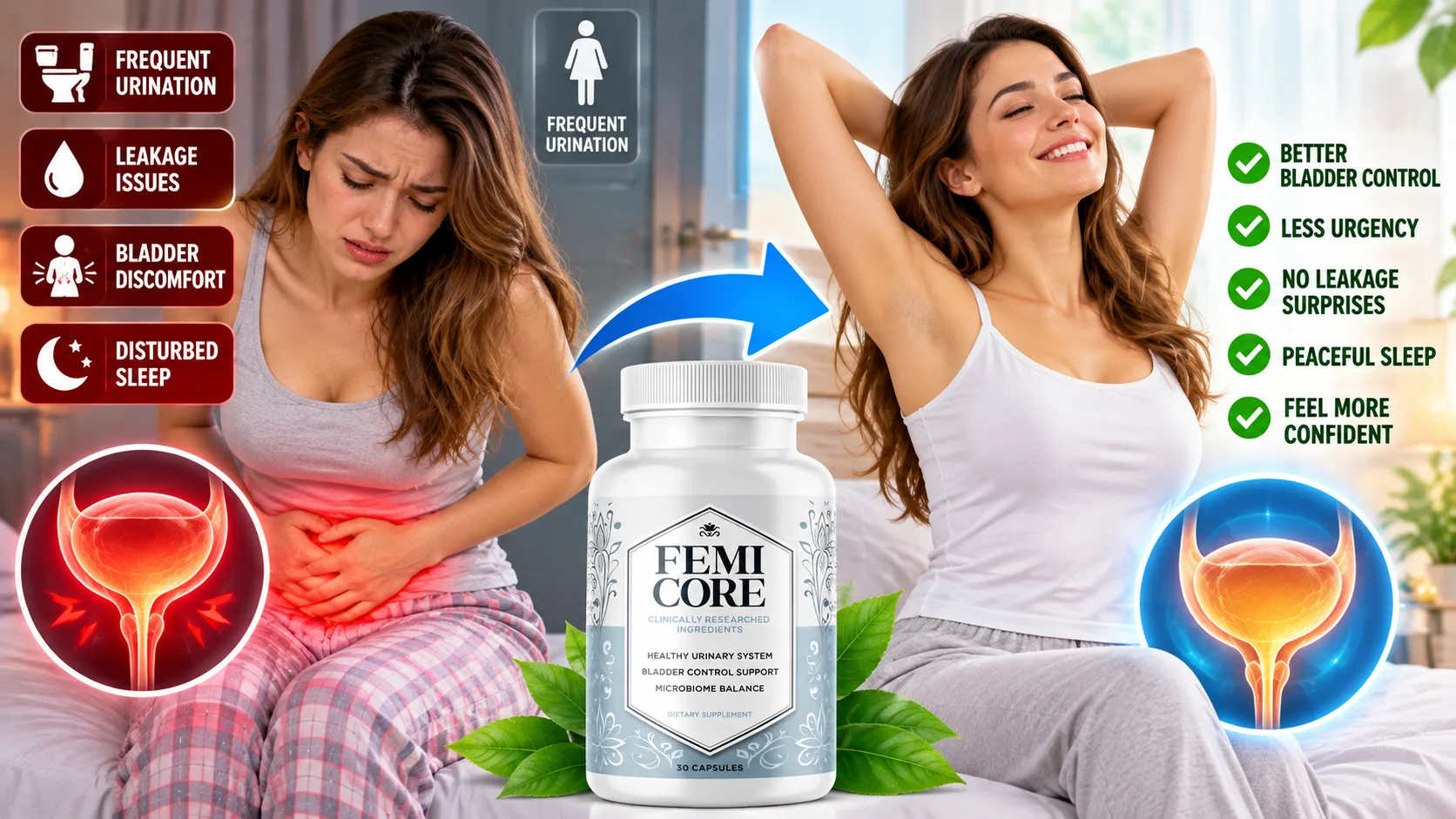
The seller’s material states that FemiCore is associated with 19,263 reviews and includes positive customer testimonials. However, the supplied details do not include an independently verified review dataset, review dates, a sampling method, or evidence that the testimonials represent typical customer experiences.
For that reason, the stated review count should be treated as a seller-provided claim rather than an independently confirmed measure of customer satisfaction.
The supplied information also does not establish how many customers experienced improvements in bladder symptoms, how long they used the product, or whether any changes were caused by FemiCore.
When evaluating reviews, look for details that help establish context:
- Does the reviewer describe the specific symptom they wanted to address?
- Is the length of use clearly stated?
- Are both positive and negative experiences represented?
- Can the review be verified as coming from a genuine purchaser?
- Does the review distinguish personal experience from a medical conclusion?
Customer testimonials can describe individual experiences, but they cannot replace controlled clinical research.
Check FemiCore Website Latest Offers
Who Might Consider FemiCore?
FemiCore may interest adults who are researching supplements marketed for urinary wellness and who want to learn more about the listed ingredients.
However, it is important to separate interest in a product from evidence that the product is appropriate or effective.
It May Interest People Who:
- Want to review a capsule-based supplement marketed for bladder wellness.
- Are comparing products that contain botanical ingredients and probiotic bacteria.
- Want to examine the seller’s price options and refund terms before deciding.
- Are prepared to discuss supplement use with a healthcare professional.
It May Not Be an Appropriate First Step for People Who:
- Have new, unexplained, persistent, or worsening urinary symptoms.
- Suspect a urinary tract infection.
- Need an established treatment for urinary incontinence.
- Are pregnant, breastfeeding, or taking medication that could interact with the listed ingredients.
- Cannot obtain clear label directions or sufficient safety information.
The safest next step for anyone experiencing bladder leakage is to identify the likely cause rather than assuming that all urinary symptoms result from microbiome imbalance.
Frequently Asked Questions About FemiCore
What Is FemiCore Used For?
FemiCore is marketed as a dietary supplement for women’s bladder health, bladder control support, and microbiome balance. These are the seller’s stated purposes. The supplied information does not establish that the finished product treats urinary incontinence, overactive bladder, or UTIs.
Does FemiCore Really Work?
There is not enough product-specific evidence in the supplied information to confirm that FemiCore improves bladder control. Some of its listed ingredients have been investigated in scientific studies, but research on individual ingredients does not prove that the complete supplement works as advertised.
What Are the Main FemiCore Ingredients?
The seller lists Mimosa pudica, bearberry, cranberry extract, granular berberine, Lactobacillus crispatus, Lactobacillus acidophilus, Lactobacillus plantarum, Lactobacillus gasseri, and Lactobacillus casei.
The supplied details do not specify the amount of each ingredient or the exact probiotic strains.
Can FemiCore Stop Urine Leakage?
The available information does not establish that FemiCore stops urine leakage. Leakage can have different causes, and appropriate treatment depends on the type of incontinence and the person’s medical history.
Women experiencing recurring leakage should consider professional assessment rather than relying solely on a supplement.
Does FemiCore Treat Urinary Tract Infections?
No such treatment effect has been established by the supplied evidence. FemiCore should not be used as a substitute for diagnosing or treating a suspected UTI. Symptoms such as painful urination, fever, or back pain warrant medical attention.
How Many FemiCore Capsules Should I Take Each Day?
The supplied information does not provide verified dosage directions. Follow the directions on the current product label and consult a healthcare professional if you are unsure whether the supplement is appropriate for you.
Do not guess the dose based on the number of bottles in a package.
How Much Does FemiCore Cost?
The supplied seller information lists three offers: two bottles for $158 plus $9.99 shipping, three bottles for $207 with free shipping, and six bottles for $294 with free shipping. Prices and terms may change, so confirm the final amount at checkout.
Does FemiCore Come With a Money-Back Guarantee?
The seller advertises a 60-day money-back guarantee. Review the current refund policy to understand the conditions, deadlines, return requirements, and treatment of shipping charges before ordering.
Are the Free Bonuses Included With Every Package?
The supplied offer describes three digital bonuses with the six-bottle package. The information does not establish that the bonuses are included with the two-bottle or three-bottle options. Confirm the package contents on the current checkout page.
Is FemiCore Natural and Non-GMO?
The seller describes FemiCore as a natural, non-GMO formula without stimulants. These are seller-provided descriptions; independent verification of these attributes was not supplied for this review.
Can I Take FemiCore With Prescription Medication?
Do not assume that FemiCore is compatible with every medication. Berberine and other ingredients may create interaction or safety concerns. Ask a healthcare professional or pharmacist to review the complete label before taking it with prescription or over-the-counter medicines.
Where Can I Check FemiCore Offers?
You can review the advertised product and package options through the following link:
Check FemiCore package details
Review the product label, shipping terms, and refund policy before completing an order.
Scientific References
The following publications provide background on the urinary microbiome and certain ingredients mentioned in FemiCore’s marketing. They should not be interpreted as clinical proof that FemiCore itself is effective.
Urinary Microbiome and Bladder Symptoms
Carnes MU, et al. (2024). “Urinary microbiome community types associated with urinary incontinence severity in women.” American Journal of Obstetrics and Gynecology, 230(3), 344.e1.
This study examines associations between urinary microbiome community types and urinary incontinence severity in women. It does not establish that FemiCore changes those communities or improves symptoms.
Wu P, et al. (2017). “Urinary microbiome and psychological factors in women with overactive bladder.” Frontiers in Cellular and Infection Microbiology, 7, 488.
This paper investigates the urinary microbiome and psychological factors in women with overactive bladder. It provides context for ongoing research, not proof of a specific supplement’s effectiveness.
Govender Y, et al. (2019). “The Current Evidence on the Association Between the Urinary Microbiome and Urinary Incontinence in Women.” Frontiers in Cellular and Infection Microbiology, 9, 133.
This review discusses evidence concerning associations between the urinary microbiome and urinary incontinence in women.
Komesu YM, et al. (2018). “The urinary microbiome in women with mixed urinary incontinence compared to similarly aged controls.” International Urogynecology Journal, 29(12), 1785–1795.
This study compares urinary microbiome findings in women with mixed urinary incontinence and similarly aged controls.
Price TK, et al. (2020). “Bladder bacterial diversity differs in continent and incontinent women: a cross-sectional study.” American Journal of Obstetrics and Gynecology, 223(5), 729.e1–729.e10.
This cross-sectional study examines differences in bladder bacterial diversity. Such findings can identify associations but cannot independently establish cause and effect.
Cranberry and Bearberry Research
Sobota AE. (1984). “Inhibition of bacterial adherence by cranberry juice: potential use for the treatment of urinary tract infections.” The Journal of Urology, 131(5), 1013–1016.
This historical study investigated cranberry juice and bacterial adherence. It should not be interpreted as proof that all cranberry extracts have identical effects or that cranberry treats urinary incontinence.
Tóth B, et al. (2022). “Bearberry in the treatment of acute uncomplicated cystitis (BRUMI): protocol of a multicentre, randomised double-blind clinical trial.” BMJ Open, 12(6), e057982.
This publication describes a clinical-trial protocol. A protocol explains a planned study and is not, by itself, evidence of a successful treatment outcome.
Mimosa Pudica and Berberine Research
Mandal AK, et al. (2022). “In Vitro Antioxidant and Antimicrobial Potency of Mimosa pudica of Nepalese Terai Region: Insight into L-Mimosine as an Antibacterial Agent.” Evidence-Based Complementary and Alternative Medicine, 2022, 6790314.
This laboratory study examines antioxidant and antimicrobial properties. Laboratory findings do not demonstrate that an oral supplement improves bladder control in humans.
Ren LM, et al. (2013). “Berberine improves neurogenic contractile response of bladder detrusor muscle in streptozotocin-induced diabetic rats.” Journal of Ethnopharmacology, 150(3), 1128–1136.
This animal study explores berberine and bladder muscle responses in diabetic rats. Its findings cannot be directly treated as evidence of clinical effectiveness in women taking FemiCore.
Probiotic and Lactobacillus Research
Mei Z, Li D. (2022). “The role of probiotics in vaginal health.” Frontiers in Cellular and Infection Microbiology, 12, 963868.
This review discusses probiotics in vaginal health. It does not establish that every probiotic formulation improves bladder control.
Molina MA, et al. (2024). “The emerging role of Lactobacillus acidophilus in the cervicovaginal microenvironment.” The Lancet Microbe, 5(1), e6–e7.
This publication discusses L. acidophilus in the cervicovaginal environment. Its relevance to FemiCore depends on the exact strain, formulation, and intended health outcome.
Wolfe AJ, Brubaker L. (2019). “Urobiome updates: advances in urinary microbiome research.” Nature Reviews Urology, 16, 73–74.
This publication discusses developments in urinary microbiome research and provides background on the evolving scientific understanding of the urobiome.
FemiCore Reviews 2026: Does It Work for Women’s Bladder Health or Not?
Final Verdict: Is FemiCore Worth Considering in 2026?
FemiCore Reviews 2026: the product has an advertised formula that combines botanical ingredients and Lactobacillus species, but its specific effectiveness for women’s bladder control has not been established by the evidence supplied for this review.
The product’s focus on the urinary microbiome reflects a genuine area of scientific research. Studies have examined urinary microbial communities in women with different urinary symptoms, while some of FemiCore’s listed ingredients have been investigated in laboratory, animal, or other human research settings.
The limitation is that these studies do not prove the finished FemiCore formula works. The supplied information does not include an independent clinical trial of the product, exact quantities for each ingredient, or complete probiotic strain and CFU specifications.
The seller advertises packages ranging from $158 for two bottles, plus shipping, to $294 for six bottles with free shipping. It also advertises a 60-day money-back guarantee and three digital bonuses with the six-bottle offer. Buyers should verify current package details and refund conditions before ordering.
For women considering FemiCore, the most sensible approach is to review the full label, understand the limitations of the evidence, and seek medical advice if bladder symptoms are persistent or affecting daily life. Established options such as pelvic floor muscle training, bladder training, and appropriate medical treatment may be more relevant depending on the underlying cause.
Bottom line: FemiCore may interest women researching supplements for urinary wellness, but it should not be presented as a proven solution for urinary leakage or bladder disorders. Make the decision based on transparent ingredient information, safety considerations, credible evidence, and your healthcare needs—not marketing promises alone.
Affiliate Disclosure
This article contains an affiliate link. If you purchase FemiCore through the link below, Home Healthy Remedy may receive a commission at no additional cost to you. This commercial relationship does not change the aim of this review, which is to distinguish seller claims from the available scientific evidence.
Medical Disclaimer
This article is for informational and educational purposes only. It is not medical advice and does not replace consultation with a qualified healthcare professional. Dietary supplements are not intended to diagnose, treat, cure, or prevent disease. Consult a healthcare professional before using FemiCore, particularly if you are pregnant, breastfeeding, taking medication, or managing a medical condition. Do not delay medical evaluation for persistent urinary symptoms or signs of infection.


Natural home remedies, skincare secrets, dental & eye health tips, and real product reviews to help you stay healthy the natural way.