

Introduction
“Your gut is your second brain.” You’ve probably heard this phrase before — and it turns out, there’s a lot of truth to it. The digestive system does far more than process food. It shapes your immune health, mood, energy levels, and even how well you sleep. If your digestion is off, everything else tends to follow. The good news? A few smart daily habits can make a world of difference.
Whether you’re dealing with occasional bloating, irregular bowel movements, acid reflux, or just that general sluggish feeling after meals — this guide is for you. These tips aren’t extreme cleanses or expensive supplements. They’re practical, proven, and honestly something you can start today.
Let’s dive into the top 10 health tips for strong and healthy digestion — explained in plain English, backed by science, and written like advice from someone who genuinely cares about your gut.
Table of Contents
- Eat More Fiber — Your Gut Craves It
- Stay Hydrated Throughout the Day
- Add Probiotics and Fermented Foods to Your Diet
- Don’t Skip Prebiotic Foods
- Chew Your Food Slowly and Mindfully
- Move Your Body Regularly
- Manage Stress — Your Gut Feels It Too
- Limit Ultra-Processed Foods and Sugar
- Get Enough Quality Sleep
- Know When to See a Doctor
1. Eat More Fiber — Your Gut Craves It
Category: Nutrition & Fiber
If there’s one single dietary change that has the most impact on digestive health, it’s getting enough fiber. And most people simply aren’t getting enough of it. According to the Dietary Guidelines for Americans, the average adult should aim for 25–38 grams of fiber per day — yet most people consume only around 15 grams.
Dietary fiber is the indigestible part of plant foods. It doesn’t get broken down by your digestive enzymes — instead, it passes through your gut, adding bulk to your stools, feeding beneficial bacteria, and keeping things moving at a healthy digestion pace. There are two types: soluble fiber (found in oats, beans, apples, and flaxseeds) and insoluble fiber (found in whole grains, nuts, and vegetables like cauliflower and green beans). Both types play important roles.
Soluble fiber dissolves in water and forms a gel-like substance in your gut health, which slows digestion and helps regulate blood sugar and cholesterol. Insoluble fiber is the “roughage” — it speeds up the transit of food through the intestines and is particularly helpful for preventing constipation.
A high-fiber diet has also been linked to a reduced risk of colorectal cancer, type 2 diabetes, and heart disease. And if you’re dealing with hemorrhoids or diverticulosis, fiber is one of the first things gastroenterologists recommend. However, if you’re currently on a low-fiber diet, increase fiber gradually — going too fast can cause bloating and gas as your gut bacteria adjust.
Practical Tip: Start by adding one extra serving of vegetables to each meal. Swap white rice for brown rice. Choose whole grain bread over white bread. These small swaps add up quickly.
Sources:
- Harvard T.H. Chan School of Public Health – Fiber: https://www.hsph.harvard.edu/nutritionsource/carbohydrates/fiber/
- NIDDK – Digestive Diseases: https://www.niddk.nih.gov/health-information/digestive-diseases
2. Stay Hydrated Throughout the Day
Category: Hydration
Water is the unsung hero of digestive health. We talk a lot about food and fiber, but hydration is just as critical — and it’s something many people overlook. Without enough water, even a high-fiber diet can backfire, leading to harder stools and constipation rather than smooth, regular bowel movements.
Water helps break down food so your body can absorb its nutrients. It helps dissolve soluble fiber, producing the gel-like substance that slows digestion and feeds gut bacteria. It also softens stool and keeps the lining of your intestines functioning properly. Dehydration, on the other hand, causes your colon to absorb water from your stool, making it dry, hard, and difficult to pass.
The general recommendation is around 8 cups (64 oz) of water per day, but this varies based on your body size, climate, activity level, and diet. If you eat lots of water-rich fruits and vegetables like cucumbers, watermelon, or oranges, you’re getting some fluid through food too.
Also consider the timing of your water intake. Some people find that drinking large amounts of water during meals can dilute digestive enzymes — though the evidence on this is mixed, sipping water with meals is generally fine. The bigger priority is staying consistently hydrated throughout the day rather than gulping down water all at once.
Practical Tip: Start your morning with a large glass of water before coffee or food. This kick-starts digestion and rehydrates your body after a night of sleep. Carry a reusable water bottle to make sipping throughout the day a natural habit.
Sources:
- Mayo Clinic – Water: How much should you drink? https://www.mayoclinic.org/healthy-lifestyle/nutrition-and-healthy-eating/in-depth/water/art-20044256
- Healthline – Benefits of Drinking Water: https://www.healthline.com/nutrition/7-health-benefits-of-water
3. Add Probiotics and Fermented Foods to Your Diet
Category: Probiotics & Fermented Foods
Your gut is home to trillions of microorganisms — bacteria, fungi, viruses — collectively known as the gut microbiome. These microbes play a crucial role in digesting food, producing vitamins, regulating healthy digestion the immune system, and even influencing mental health through the gut-brain axis. The more diverse and balanced your gut microbiome, the better your digestion tends to be.
Probiotics are live beneficial bacteria that, when consumed in adequate amounts, confer health benefits to the host. They’re found naturally in fermented foods like yogurt, kefir, kimchi, sauerkraut, miso, tempeh, and kombucha. They’re also available in supplement form, though food sources are often considered superior because they come packaged with other nutrients.
Research published in journals like Cell and Nature Medicine has shown that regularly consuming fermented foods can increase gut microbiome diversity, which is a key marker of good digestive and overall health. A 2021 Stanford study found that a high-fermented-food diet outperformed a high-fiber diet in increasing microbiome diversity in the short term.
If you’ve recently taken a course of antibiotics, probiotics become especially important. Antibiotics kill both harmful and beneficial bacteria, and replenishing the good ones is key to restoring healthy digestion digestive balance. Look for probiotic supplements with strains like Lactobacillus rhamnosus, Bifidobacterium longum, or Saccharomyces boulardii — these are among the most studied for digestive health.
Practical Tip: Add a small serving of plain yogurt or kefir to your breakfast. Incorporate kimchi or sauerkraut as a condiment with meals. These don’t need to be huge portions — even a few tablespoons of fermented vegetables regularly makes a meaningful difference.
Sources:
- NIH – Gut Microbiota and Probiotics: https://www.ncbi.nlm.nih.gov/pmc/articles/PMC4191529/
- Cell – Gut-microbiota-targeted diets modulate human immune status: https://www.cell.com/cell/fulltext/S0092-8674(21)00754-6
4. Don’t Skip Prebiotic Foods
Category: Prebiotic Nutrition
We’ve talked about probiotics — the live bacteria themselves — but what about the food those bacteria need to survive and thrive? That’s where prebiotics come in. Prebiotics are a type of healthy digestion dietary fiber that the human body can’t digest, but that serve as nourishment for the beneficial bacteria in your gut.
Think of it this way: probiotics are the seeds, and prebiotics are the fertilizer. Without adequate prebiotic food, even a robust population of beneficial gut bacteria will struggle to flourish. Common prebiotic-rich foods include garlic, onions, leeks, asparagus, bananas (especially slightly underripe ones), artichokes, oats, and chicory root.
Inulin and fructooligosaccharides (FOS) are among the most well-studied prebiotics. They selectively stimulate the growth of Bifidobacterium and Lactobacillus species — two of the most beneficial bacterial genera in the gut healthy digestion. Studies have linked adequate prebiotic intake to improved bowel regularity, reduced bloating, better calcium absorption, and even enhanced mood.
If you find that prebiotic foods cause gas or bloating, that’s actually a sign that your gut bacteria are actively fermenting them — which is mostly a good thing. Start slowly and build up. Cooking prebiotic-rich vegetables can also reduce their fermentability slightly, making them more tolerable if you’re sensitive.
Practical Tip: Add raw garlic or onion to salads and dips. Eat oatmeal for breakfast. Include a banana or artichoke in your weekly meals. These are everyday foods — you don’t need fancy supplements.
Sources:
- ISAPP – What are Prebiotics? https://www.isappscience.org/for-consumers/resources/prebiotics/
- NIH – Dietary fiber and prebiotics: https://www.ncbi.nlm.nih.gov/pmc/articles/PMC6041804/
5. Chew Your Food Slowly and Mindfully
Category: Mindful Eating
Digestion begins in the mouth — not in the stomach. This sounds basic, but it’s one of the most overlooked truths of healthy digestion digestive health. When you chew your food thoroughly, you’re doing several important things: you’re mechanically breaking down food into smaller particles that are easier to digest, and you’re mixing that food with saliva, which contains digestive enzymes like amylase that begin breaking down carbohydrates.
When you rush through meals and swallow large unchewed pieces of food, your stomach and intestines have to work much harder. Inadequate chewing is a common cause of bloating, gas, and indigestion. Some studies suggest that chewing each bite 20–40 times leads to better nutrient absorption and fewer digestive complaints.
Mindful eating goes beyond just chewing. It means being present at meals: sitting down, eliminating distractions (yes, put down your phone), and paying attention to the taste, texture, and smell of your food. Eating mindfully triggers the “rest and digest” response of your parasympathetic nervous system, which helps your digestive organs work at their best.
Practical Tip: Put your fork down between bites. Aim to make meals last at least 20 minutes — that’s how long it takes your brain to receive satiety signals from your stomach. You’ll likely find you eat less, enjoy your food more, and feel significantly better afterward.
Sources:
- Harvard healthy digestion – Mindful Eating: https://www.health.harvard.edu/staying-healthy/mindful-eating
- PubMed – Chewing and digestion: https://pubmed.ncbi.nlm.nih.gov/23671105/
6. Move Your Body Regularly
Category: Physical Activity
Exercise isn’t just for your muscles and cardiovascular system — it has a direct and measurable impact on gut healthy digestion. Physical activity speeds up intestinal transit time, meaning food moves through your digestive tract more quickly. This reduces the time that potentially harmful substances are in contact with your intestinal lining, which is one reason regular exercise is linked to lower rates of colon cancer.
Studies have shown that aerobic exercise in particular — walking, jogging, cycling, swimming — increases the diversity of the gut microbiome. A diverse microbiome is one of the clearest indicators of good digestive and overall health. Research from University College Cork found that professional athletes had significantly higher gut microbiome diversity compared to sedentary individuals.
You don’t need to train like an athlete to see digestive benefits. Even a 20–30 minute brisk walk after a meal can meaningfully aid digestion by stimulating intestinal contractions. This is especially helpful for people who experience postprandial bloating or sluggishness after eating.
For those who sit at a desk all day, set a timer to get up and walk for 5 minutes every hour. Prolonged sitting has been linked to slower gut motility and increased constipation risk. Movement — even gentle, frequent movement — keeps things flowing.
Practical Tip: Take a 15–20 minute walk after dinner instead of sitting on the couch immediately. It’s one of the most evidence-based habits for improving digestion, blood sugar regulation, and sleep quality — all at once.
Sources:
- NIH – Exercise and Gut Microbiota: https://www.ncbi.nlm.nih.gov/pmc/articles/PMC5357536/
- Gastroenterology – Physical activity and colon cancer: https://www.gastrojournal.org/article/S0016-5085(17)36090-7/fulltext
7. Manage Stress — Your Gut Feels It Too
Category: Stress Management
If you’ve ever felt butterflies in your stomach before a big presentation, or had your appetite vanish completely during a stressful period, you’ve experienced the gut-brain connection firsthand. Your gut and your brain are in constant two-way communication via the vagus nerve and a network of neurotransmitters — this is called the gut-brain axis.
Chronic stress has a devastating effect on digestive health. It can slow intestinal transit time (causing constipation), speed it up (causing diarrhea), alter gut microbiome composition, increase intestinal permeability (sometimes called “leaky gut”), and worsen symptoms of conditions like IBS, IBD, and GERD. The gut contains more serotonin receptors than the brain — about 95% of the body’s serotonin is produced in the gut — which is why stress and mood so profoundly affect digestion.
Managing stress isn’t a luxury — for digestive health, it’s a medical necessity. Healthy digestion Strategies that have demonstrated positive effects on gut function include mindfulness meditation, diaphragmatic (belly) breathing, yoga, tai chi, and cognitive behavioral therapy (CBT).
If you’re dealing with significant stress or anxiety, don’t underestimate its impact on your gut. Working with a therapist, practicing regular mindfulness, and carving out genuine downtime aren’t indulgences — they’re among the most evidence-based interventions for digestive conditions.
Practical Tip: Try 5 minutes of deep belly breathing before meals. Inhale for 4 counts, hold for 2, exhale for 6. This activates the parasympathetic “rest and digest” state and prepares your digestive system to function at its best.
Sources:
- American Psychological Association – Stress and the Body: https://www.apa.org/topics/stress/body
- Johns Hopkins Medicine – The Brain-Gut Connection: https://www.hopkinsmedicine.org/health/wellness-and-prevention/the-brain-gut-connection
8. Limit Ultra-Processed Foods and Sugar
Category: Diet Quality
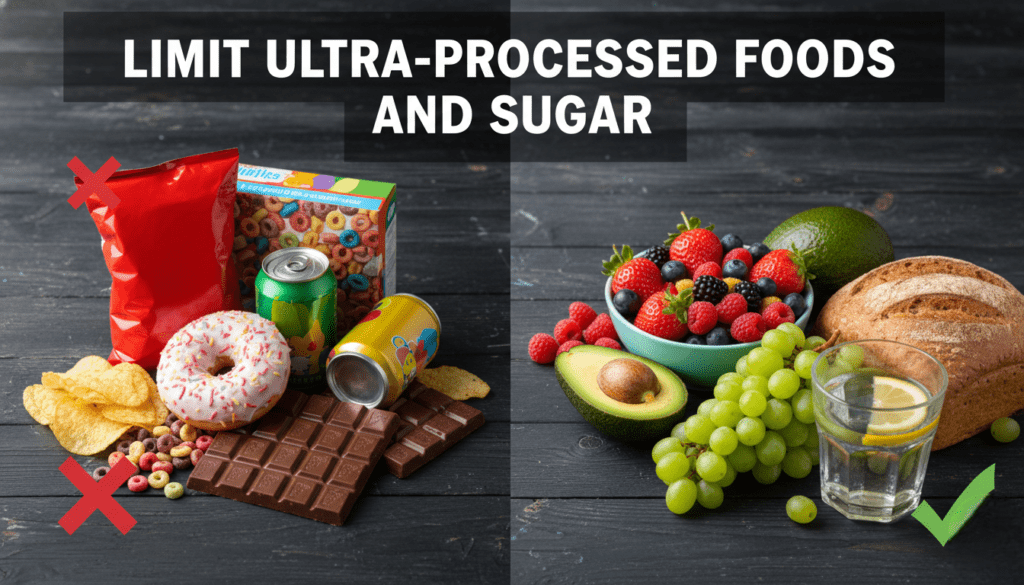
Ultra-processed foods — think packaged snacks, fast food, sugary cereals, carbonated sodas, and ready meals — are among the greatest modern threats to gut health. They’re typically low in fiber, high in refined sugar, and loaded with artificial additives, emulsifiers, and preservatives that have been shown to disrupt the gut microbiome healthy digestion.
A large-scale study published in Cell Host & Microbe found that certain food emulsifiers commonly used in processed foods can degrade the protective mucus layer in the gut, leading to inflammation and increased disease risk. Meanwhile, high sugar intake feeds harmful bacterial species like Candida while suppressing the growth of beneficial bacteria.
The Western diet — high in processed foods, sugar, and saturated fat, but low in fiber and whole foods — is strongly associated with higher rates of IBS, IBD, colorectal cancer, and gut dysbiosis (microbial imbalance). In contrast, traditional diets like the Mediterranean diet, which is rich in vegetables, legumes, whole grains, olive oil, and fermented foods, are consistently linked to better digestive outcomes.
Also be aware of artificial sweeteners. While marketed as healthier sugar alternatives, sweeteners like sucralose and saccharin have been shown in some studies to alter gut healthy digestion microbiome composition negatively. If you’re trying to improve gut health, reach for naturally sweet foods like fresh fruit instead.
Practical Tip: You don’t need to eliminate all processed food overnight. Start by replacing one processed snack per day with a whole food — fruit, nuts, yogurt, or raw vegetables. Cook one more meal at home per week. Progress over perfection healthy digestion.
Sources:
- BMJ – Ultra-processed food consumption and health: https://www.bmj.com/content/365/bmj.l1451
- Cell Host & Microbe – Dietary emulsifiers and gut microbiota: https://www.cell.com/cell-host-microbe/fulltext/S1931-3128(15)00376-7
9. Get Enough Quality Sleep
Category: Sleep & Recovery
The connection between sleep and gut health runs both ways. Poor sleep disrupts your gut microbiome healthy digestion, and an imbalanced gut microbiome can disrupt your sleep. It’s a cycle that’s easy to fall into — and hard to break — but improving one often improves the other.
During sleep, your healthy digestion system undergoes important maintenance processes. The migrating motor complex (MMC) — a series of electrical waves that sweep through the stomach and small intestine — is most active during fasting and overnight sleep. This sweeping action clears out leftover food, bacteria, and debris, preventing small intestinal bacterial overgrowth (SIBO). When sleep is consistently disrupted, so is this crucial cleansing process.
Research has shown that even partial sleep deprivation (under 6 hours per night) significantly alters gut healthy digestion microbiome composition, reducing diversity and increasing levels of inflammation-associated bacterial species. Poor sleep also elevates cortisol levels, which as we’ve discussed, negatively impacts digestive function.
If you’re struggling with sleep, consider your evening routine. Limiting blue light exposure before bed, keeping your room cool and dark, and avoiding caffeine after 2pm are all evidence-based strategies. And interestingly, improving your diet and gut health through the other tips in this article may itself improve your sleep quality over time.
Practical Tip: Aim for 7–9 hours of quality sleep per night. Avoid large, heavy meals within 2–3 hours of bedtime — your digestive system performs better when it’s not trying to process a big dinner late at night. A consistent sleep schedule matters more than most people realize.
Sources:
- Sleep Foundation – Gut Health and Sleep: https://www.sleepfoundation.org/physical-health/gut-health-and-sleep
- NIH – Sleep disturbances and gut microbiota: https://www.ncbi.nlm.nih.gov/pmc/articles/PMC6779243/
10. Know When to See a Doctor
Category: Medical Awareness
This might be the most important tip of all: listen to your body. Most digestive healthy digestion discomfort — occasional bloating, gas, mild constipation — is normal and usually responds well to the lifestyle changes covered in this guide. But some symptoms are warning signs that need professional evaluation, not a new probiotic.
You should see a doctor or gastroenterologist if you experience any of the following: persistent or worsening abdominal pain, blood in your stool, unexplained weight loss, healthy digestion difficulty swallowing, chronic diarrhea or constipation that doesn’t respond to dietary changes, persistent heartburn despite medication, or any symptom that is new, severe, or significantly affecting your quality of life.
Conditions like celiac disease, inflammatory bowel disease (Crohn’s disease and ulcerative colitis), irritable bowel syndrome (IBS), gastroesophageal reflux disease (GERD), small intestinal bacterial overgrowth (SIBO), and colorectal cancer all have overlapping symptoms with “ordinary” digestive upset. Early diagnosis makes an enormous difference in outcomes healthy digestion.
Also be open with your doctor about your symptoms. Many people are embarrassed to discuss bowel habits, but gastroenterologists discuss these things every single day. Providing complete, honest information is the fastest path to an accurate diagnosis and effective treatment. Your gut healthy digestion is too important to leave to guesswork.
Practical Tip: If you’ve made consistent lifestyle changes — better diet, more water, less stress, regular exercise — for 4–6 weeks and still have significant digestive symptoms, book an appointment with your doctor. A stool test, blood panel, or endoscopy can reveal exactly what’s going on.
Sources:
- NIDDK – Digestive Diseases Overview: https://www.niddk.nih.gov/health-information/digestive-diseases
- American College of Gastroenterology – Patient Center: https://www.gastro.org/practice-guidance/gi-patient-center
Final Thoughts: Building a Gut-Friendly Life
Strong, healthy digestion isn’t something that happens by accident. It’s the result of dozens of small, consistent choices made every single day — what you eat, how much you move, how you manage stress, how well you sleep. None of these tips requires you to overhaul your entire life overnight.
Think of your gut healthy digestion as a garden. It needs the right food (fiber, whole foods, prebiotics), the right inhabitants (probiotics from fermented foods), water, movement, rest, and protection from harm (avoiding processed food, managing stress). Neglect any one of these, and the garden suffers. Tend to them all, and it thrives.
The science on gut healthy digestion is exploding — researchers are finding new links between the microbiome and conditions ranging from Alzheimer’s disease to autoimmune disorders to mental health. We are only at the beginning of understanding how profoundly our gut shapes our overall health. What we do know, right now, is that the habits in this guide work. They’re backed by decades of research and the clinical experience of thousands of gastroenterologists worldwide healthy digestion.
So start today. Drink that extra glass of water. Add a spoonful of kimchi to your lunch. Take a walk after dinner. Breathe deeply before you eat. These are small acts — but over weeks and months, they add up to something genuinely powerful: a healthy, resilient gut that supports every other system in your body.
Your gut health journey starts with a single step. Take it today.
Full Reference List
- Harvard T.H. Chan School of Public Health – Fiber: https://www.hsph.harvard.edu/nutritionsource/carbohydrates/fiber/
- National Institute of Diabetes and Digestive and Kidney Diseases (NIDDK): https://www.niddk.nih.gov/health-information/digestive-diseases
- Mayo Clinic – Water intake: https://www.mayoclinic.org/healthy-lifestyle/nutrition-and-healthy-eating/in-depth/water/art-20044256
- Healthline – Benefits of drinking water: https://www.healthline.com/nutrition/7-health-benefits-of-water
- Sonnenburg JL et al. (2021). Gut-microbiota-targeted diets modulate human immune status. Cell. https://www.cell.com/cell/fulltext/S0092-8674(21)00754-6
- NIH – Gut Microbiota and Probiotics: https://www.ncbi.nlm.nih.gov/pmc/articles/PMC4191529/
- ISAPP – What are Prebiotics? https://www.isappscience.org/for-consumers/resources/prebiotics/
- NIH – Dietary fiber and prebiotics: https://www.ncbi.nlm.nih.gov/pmc/articles/PMC6041804/
- Harvard Health Publishing – Mindful Eating: https://www.health.harvard.edu/staying-healthy/mindful-eating
- PubMed – Chewing and digestion: https://pubmed.ncbi.nlm.nih.gov/23671105/
- NIH – Exercise and Gut Microbiota: https://www.ncbi.nlm.nih.gov/pmc/articles/PMC5357536/
- Gastroenterology healthy digestion – Physical activity and colon cancer: https://www.gastrojournal.org/article/S0016-5085(17)36090-7/fulltext
- American Psychological Association – Stress and the Body: https://www.apa.org/topics/stress/body
- Johns Hopkins Medicine – The Brain-Gut Connection: https://www.hopkinsmedicine.org/health/wellness-and-prevention/the-brain-gut-connection
- BMJ – Ultra-processed food: https://www.bmj.com/content/365/bmj.l1451
- Cell Host & Microbe – Emulsifiers: https://www.cell.com/cell-host-microbe/fulltext/S1931-3128(15)00376-7
- Sleep Foundation – Gut Health and Sleep: https://www.sleepfoundation.org/physical-health/gut-health-and-sleep
- NIH – Sleep and gut microbiota: https://www.ncbi.nlm.nih.gov/pmc/articles/PMC6779243/
- American College of Gastroenterology: https://www.gastro.org/practice-guidance/gi-patient-center

Natural home remedies, skincare secrets, dental & eye health tips, and real product reviews to help you stay healthy the natural way.