

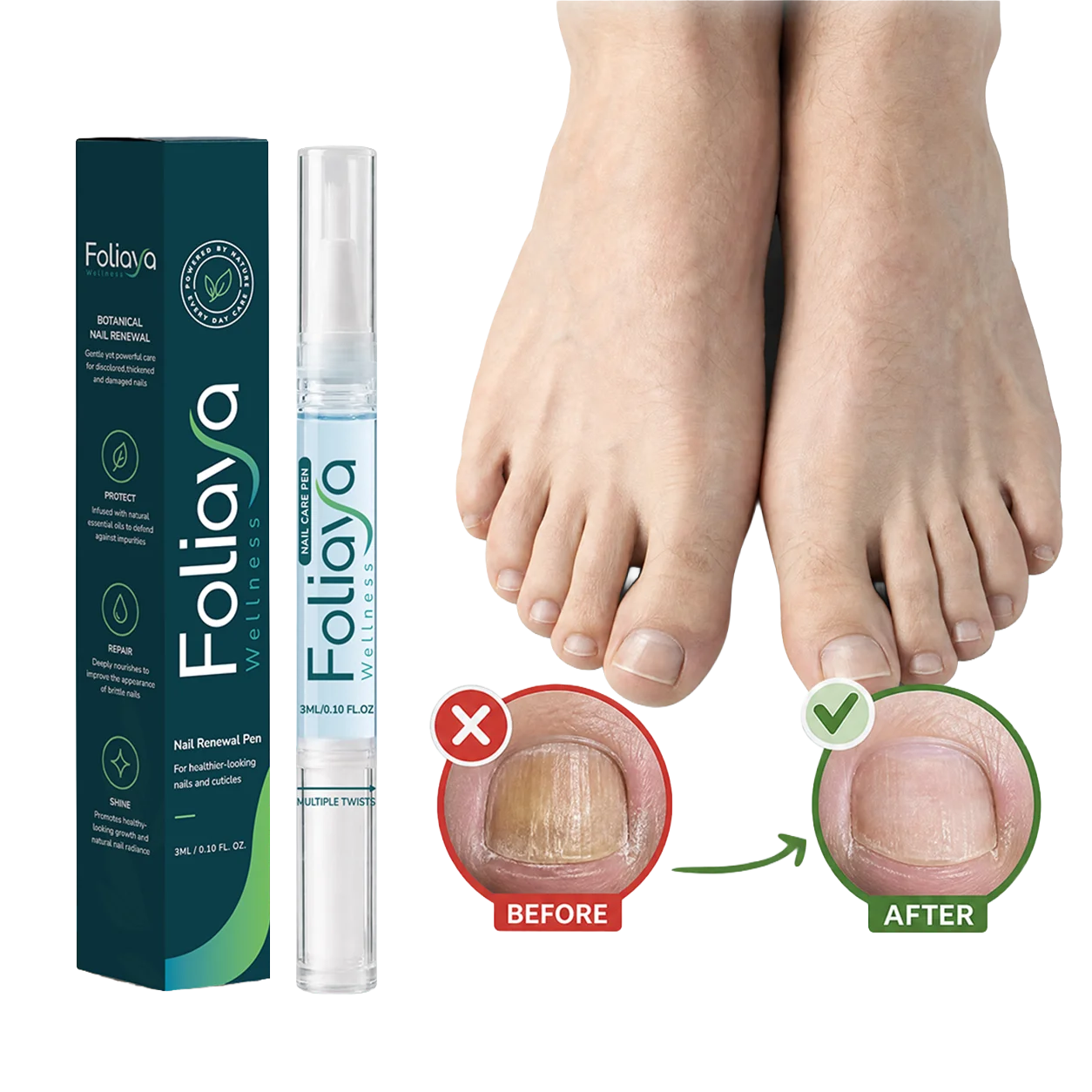
Nail fungus — medically known as onychomycosis — is one of those conditions that’s stubborn, slow-moving, and often embarrassing to deal with. It doesn’t hurt much in the early stages, so it’s easy to ignore, but left untreated it can spread, discolor the nail, thicken it, and make the nail brittle or crumbly. That’s why targeted, easy-to-apply solutions like the Foliaya anti-fungal pen have become so popular with people who want a simple, mess-free way to fight fungal nail infections at home.
In this guide, we’ll break down everything you need to know about Foliaya: what it is, how anti-fungal pens like Foliaya work, how to use one properly, who it’s best suited for, and — most importantly — a balanced, no-hype look at the pros and cons. We’ll finish with a detailed FAQ section addressing the most common questions people search for before buying a product like Foliaya.
What Is Foliaya?
Foliaya belongs to a category of over-the-counter topical treatments sold in a pen-style applicator, designed to deliver an anti-fungal solution directly onto and around the affected nail, cuticle, and surrounding skin. Instead of a bottle and a brush or a tube of cream, the pen format uses a twist-to-dispense mechanism with a built-in brush or felt tip, so the liquid solution flows out only when needed.
Products in this category — including Foliaya — are typically marketed toward people dealing with:
- Toenail fungus (the most common target)
- Fingernail fungus
- Discoloration (yellow, white, or brown nail staining)
- Thickened or crumbling nails
- Mild athlete’s foot that has spread near the nail bed
The appeal of a pen-style anti-fungal product like Foliaya is precision. Traditional anti-fungal creams or liquids can be messy, hard to apply exactly where needed, and easy to over- or under-apply. A pen applicator narrows that margin of error considerably.
How Anti-Fungal Pens Like Foliaya Typically Work
Most over-the-counter anti-fungal pens on the market rely on one of two well-established active ingredients:
- Tolnaftate (typically around 1%) — an anti-fungal that works by inhibiting an enzyme fungi need to build their cell membranes, effectively stopping the fungus from growing and spreading.
- Undecylenic acid — a fatty-acid-derived compound that creates an environment on the skin and nail surface that’s inhospitable to fungal growth.
Products positioned like Foliaya often pair one of these active ingredients with supporting “skin conditioning” ingredients such as tea tree oil, aloe vera, vitamin E, or eucalyptus oil — added primarily to soothe the skin around the nail, reduce itching, and moisturize an area that can get dry and irritated during treatment.
It’s worth being clear-eyed here: the FDA has approved ingredients like tolnaftate for treating fungal infections of the skin (such as athlete’s foot), but topical treatments — pens included — are generally understood to be far less effective at penetrating the hard nail plate itself to cure fungus living underneath or within the nail. This is why most pen-style products, Foliaya-type products included, are labeled for use on the skin around the nail and cuticle rather than as a guaranteed cure for deep nail bed infections.
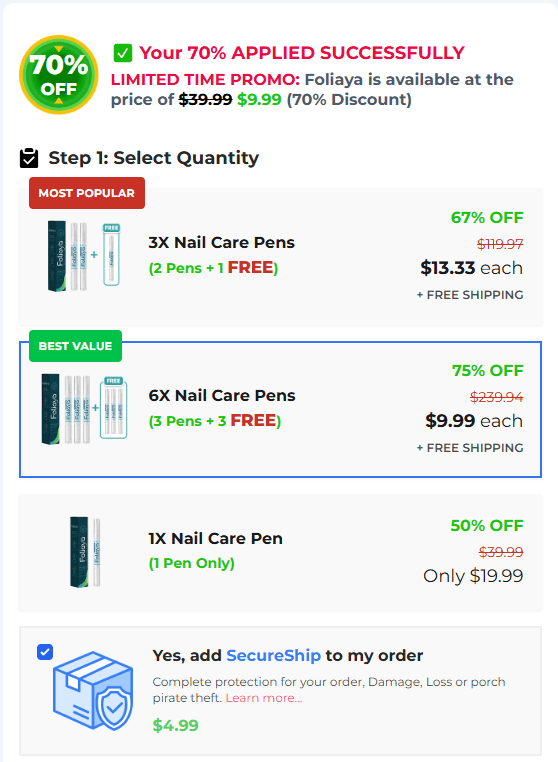
Foliaya Pricing
How to Use Foliaya (General Application Guidelines)
While you should always follow the specific instructions printed on your product’s packaging, most anti-fungal pens in this category — including how Foliaya is generally intended to be used — follow a similar process:
- Wash and dry the affected area thoroughly. Fungus thrives in moisture, so this step matters more than people think.
- Twist or click the pen to dispense a small amount of solution onto the brush or felt tip.
- Apply a thin layer directly to the nail, cuticle, and the skin surrounding the affected area.
- Let it air-dry completely before putting on socks or shoes.
- Repeat twice daily (morning and night) or as directed on the label.
- Use consistently for several weeks — most products recommend at least 4 weeks of continuous use, and visible nail improvement (since nails grow slowly) can take months.
- Pair with good foot hygiene — breathable shoes, moisture-wicking socks, and changing socks daily all improve results significantly.
Consistency is the single biggest factor in whether any anti-fungal pen, Foliaya or otherwise, produces visible results.
Foliaya: Pros
1. Targeted, Mess-Free Application
The biggest advantage of the pen format is precision. You’re not dabbing a cotton ball in a bottle or squeezing out more cream than you need — Foliaya-style pens let you apply solution exactly where the fungus is, which reduces waste and mess.
2. Portable and Travel-Friendly
Because it’s pen-sized, Foliaya can easily slip into a bag, purse, or dopp kit. For people who need to apply treatment twice a day, including while traveling or at work, this convenience matters.
3. No Prescription Required
As an over-the-counter option, Foliaya doesn’t require a doctor’s visit or prescription, which makes it accessible and low-friction for people who want to start treatment immediately.
4. Supports Skin Around the Nail
Beyond the active anti-fungal ingredient, many formulations in this category (again, common in Foliaya-type pens) include soothing agents like aloe vera or tea tree oil, which can help calm itching, redness, or irritated skin that often accompanies fungal infections.
5. Fast, Simple Routine
The twice-daily application takes seconds. There’s no soaking, no filing, no complicated multi-step regimen — just clean, apply, dry.
6. Affordable Compared to Prescription Treatments
Oral anti-fungal medications and prescription lacquers can be expensive and may require liver-function monitoring in some cases. A pen-style product like Foliaya is typically a fraction of that cost and carries a lower risk profile for most healthy adults.
Foliaya: Cons
1. Limited Nail-Penetration
This is the most important limitation to understand. Topical solutions — including pens like Foliaya — generally treat the skin around the nail more effectively than they treat fungus that has already established itself deep under or within the nail plate. Severe or long-standing infections often need a dermatologist’s help, oral anti-fungal medication, or in some cases, a prescription-strength nail lacquer.
2. Requires Long-Term Consistency
Results are not overnight. Because nails grow slowly, it can take 4 weeks to several months of twice-daily use before you see a fully clear nail — and inconsistent use can significantly extend that timeline or prevent results altogether.
3. Not a Guaranteed Cure
No over-the-counter anti-fungal pen, Foliaya included, can promise a 100% cure rate, especially for moderate-to-severe infections. Manufacturers’ marketing language should be read with healthy skepticism.
4. Possible Skin Irritation
Some users experience redness, dryness, burning, or stinging, especially with ingredients like tea tree oil or higher concentrations of active anti-fungal compounds. Anyone with sensitive skin should patch-test first.
5. Not Suitable for Everyone
Pregnant or breastfeeding individuals, young children, and people with certain skin conditions or allergies should consult a doctor before use. Diabetics in particular are often advised to seek medical care for foot and nail infections rather than self-treating, due to a higher risk of complications.
6. Small Applicator Can Be Awkward for Some Users
People with limited hand dexterity, arthritis, or tremors have reported that twist-style pen applicators can be fiddly compared to a simple brush-on bottle.
Who Is Foliaya Best Suited For?
Foliaya-style anti-fungal pens tend to work best for:
- Mild to moderate nail fungus caught in its early stages
- Fungal irritation on the skin around the nail and cuticle
- People who want a low-cost, no-prescription first step before seeing a doctor
- Preventing fungus from spreading after gym, pool, or shared-shower exposure
- Ongoing maintenance after a fungal infection has mostly cleared, to prevent recurrence
It’s less likely to fully resolve:
- Nails that are severely thickened, crumbling, or lifted from the nail bed
- Infections that have been present for a year or more
- Cases where multiple nails are deeply affected
If you fall into the second category, a podiatrist or dermatologist visit is generally the better first move — they can prescribe oral anti-fungals or stronger topical lacquers, or in some cases recommend laser treatment, none of which an over-the-counter pen can replicate.
Foliaya vs. Other Anti-Fungal Treatment Formats
| Treatment Type | Application | Best For | Typical Timeline |
| Foliaya-style pen | Twice-daily brush application | Mild fungus, skin around nail, prevention | 4–12+ weeks |
| Anti-fungal cream | Rubbed in by hand | Athlete’s foot, broader skin coverage | 2–4 weeks (skin only) |
| Medicated nail lacquer (OTC or Rx) | Painted on like nail polish | Nail plate penetration | Several months |
| Oral anti-fungal medication (Rx) | Daily pill | Moderate to severe nail infections | 6–12 weeks (with liver monitoring) |
| Laser treatment | In-clinic procedure | Stubborn, long-term infections | Multiple sessions |
This comparison highlights where Foliaya fits: it’s a strong, convenient first-line option, but it sits at the milder end of the treatment spectrum compared to prescription lacquers, oral medication, or laser therapy.
Tips to Get the Best Results from Foliaya
- Trim and file nails regularly to reduce fungal surface area and help the solution reach affected tissue.
- Disinfect nail clippers and files after each use to avoid reinfecting the nail.
- Wear moisture-wicking socks and breathable shoes, and rotate shoes so they fully dry between wears.
- Avoid nail polish over treated nails, since polish can trap moisture and block the solution from working.
- Don’t share pens, files, or clippers with others to avoid spreading the infection.
- Track your progress with photos every couple of weeks — fungal nail improvement is gradual, and photos make it easier to notice real change.
- Be patient — stopping treatment too early, right when things start looking better, is one of the most common reasons fungal infections come back.
Safety Considerations
Before starting Foliaya or any similar anti-fungal pen:
- Do a small patch test on unaffected skin first if you have sensitive skin or known allergies.
- Avoid contact with eyes, mouth, and open wounds.
- Discontinue use and consult a doctor if you notice increased redness, swelling, blistering, or pain.
- Keep out of reach of children, and seek medical advice before use during pregnancy or breastfeeding.
- If you have diabetes or poor circulation, check with your doctor before self-treating any foot or nail infection, since complications can be more serious.
This article is for general informational purposes and is not a substitute for professional medical advice. If you have a persistent, painful, or worsening nail infection, please consult a doctor, podiatrist, or dermatologist.
Frequently Asked Questions (FAQ) About Foliaya
1. How long does it take for Foliaya to work? Most users won’t see full results for at least 4 weeks, and it commonly takes several months for a fully clear, healthy-looking nail to grow in, since nails grow slowly and a treated nail has to grow out the previously infected portion.
2. Can Foliaya completely cure toenail fungus? It can help reduce and manage fungus on the skin around the nail and may improve mild cases, but topical pens are generally less effective against fungus that’s deeply embedded under the nail plate. Severe cases often need prescription treatment.
3. Is Foliaya safe to use every day? Yes, most products in this category are formulated for twice-daily use (morning and night) as part of a normal routine, but you should always follow the specific directions on your product’s label.
4. Can I apply nail polish over Foliaya? It’s generally not recommended. Nail polish can seal in moisture and block the anti-fungal solution from penetrating properly, which can slow down treatment.
5. Does Foliaya sting or burn when applied? Some users report mild tingling, especially on irritated or broken skin. If you experience significant burning, redness, or swelling, stop use and consult a doctor.
6. Can Foliaya be used on fingernails as well as toenails? Many pen-style anti-fungal products are formulated for both, but application to fingernails can be trickier due to their smaller surface area and the pen’s angle. Check your product’s specific label for guidance.
7. Is a prescription needed to buy Foliaya? No — anti-fungal pens like Foliaya are typically sold over the counter, without a prescription requirement.
8. What should I do if Foliaya isn’t working after a few months? If you’ve used it consistently for 8–12 weeks with no visible improvement, it’s a good idea to see a podiatrist or dermatologist. They can evaluate whether you need an oral anti-fungal medication, a prescription-strength lacquer, or another treatment approach entirely.
9. Can I use Foliaya alongside other treatments, like oral medication? In many cases, doctors do recommend combining a topical treatment with oral anti-fungals for tougher infections, but you should confirm this combination with your doctor rather than assuming it’s safe to layer treatments on your own.
10. Is Foliaya suitable for children? Most anti-fungal pen products advise against use in young children unless directed by a doctor. Always check the age recommendations on your specific product’s packaging.
11. How do I store Foliaya properly? Like most topical liquid solutions, Foliaya-style pens should generally be stored at room temperature, away from direct heat, moisture, and out of reach of children.
12. Will Foliaya prevent fungus from coming back after it clears? Continued, lighter use (once daily or a few times a week) after visible improvement is commonly recommended as a maintenance step to reduce the risk of recurrence, especially if you’re regularly exposed to communal showers, gyms, or pools.
Final Thoughts
Foliaya represents a broader, genuinely useful category of over-the-counter anti-fungal pens: convenient, precise, affordable, and easy to fit into a daily routine. For mild-to-moderate nail fungus or fungal irritation around the nail bed, it can be a smart first step — especially when paired with good foot hygiene, patience, and realistic expectations.
That said, it’s not a miracle cure. If your infection is severe, has lasted for a long time, or isn’t improving after consistent use, don’t hesitate to see a healthcare professional. Nail fungus is very treatable, but the right approach depends on how advanced the infection is — and sometimes, an OTC pen like Foliaya is exactly the right tool, while other times it’s simply the first step toward getting proper medical care.
Disclaimer: Product names, ingredient lists, and specific claims can vary by manufacturer and retailer. Always read the actual label of the product you purchase and consult a healthcare provider for diagnosis and treatment of any nail or skin condition.
Previous Post- https://homehealthyremedy.com/neck-balance-reset-review/
Previous Post- https://homehealthyremedy.com/quiet-tone-review-ingredients-pricing-policy/

Natural home remedies, skincare secrets, dental & eye health tips, and real product reviews to help you stay healthy the natural way.