

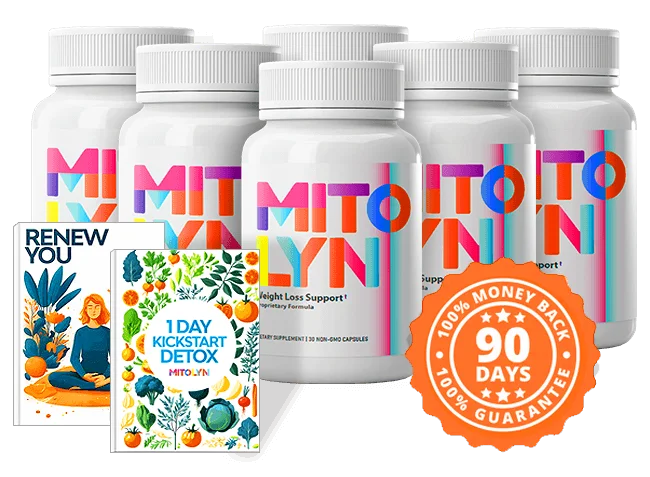
You saw an ad for Mitolyn somewhere — a video promising to “fix your sluggish mitochondria,” a testimonial about steady, gradual weight loss, or a headline number like “4.9 out of 5 stars.” Before spending anything, it’s worth slowing down and checking what’s actually documented against what’s simply marketing framing. That’s the job of this review: walk through the ingredients, the pricing, the refund terms, and the ratings exactly as they appear in the source material, correcting the record where it’s inaccurate and flagging the gaps where it’s incomplete, rather than repeating brand copy at face value.
Mitolyn at a Glance
| Feature | Details |
| Product name | Mitolyn |
| Purpose | Marketed for weight management and metabolic support |
| Key ingredients | Maqui Berry, Rhodiola Rosea, Haematococcus Pluvialis (astaxanthin), Amla, Schisandra, Cacao Extract |
| Form | Dietary capsule |
| Labeled dosage | See dosage section — source materials give conflicting figures (1 vs. 2 capsules daily) |
| Manufacturer | Mitolyn Labs (brand name as listed in materials reviewed) |
| Manufacturing claim | Manufactured in an FDA-registered, GMP-certified facility (facility registration, not FDA product approval) |
| Money-back guarantee | 90 days, per official site |
| Customer support | contact@mitolyn.com |
| Pricing | $59–$69 per bottle depending on package size |
| Availability | Official website (brand recommends against third-party sellers) |
Worth Flagging: The materials reviewed describe Mitolyn as “FDA-approved” in one place. Dietary supplements as a category are not FDA-approved products — only drugs and certain medical devices go through FDA approval. What can actually be confirmed is that Mitolyn is stated to be manufactured in an FDA-registered facility, which is a federal recordkeeping requirement, not an FDA endorsement of the finished product. This review uses the accurate phrasing throughout rather than repeating the approval claim.
What Is Mitolyn?
Mitolyn is marketed as a dietary supplement built around mitochondrial health, metabolism, and energy production. Rather than positioning itself primarily around appetite suppression, the brand frames Mitolyn around cellular energy — targeting mitochondria, sometimes called the “powerhouses” of the cell. The brand’s pitch is that better mitochondrial function supports metabolic efficiency, sustained energy, and, as a downstream effect, weight management.
As the brand describes it, Mitolyn is meant to offer:
• Mitochondrial support — positioned to enhance cellular energy production
• A metabolism boost — aimed at a sluggish metabolism, which the brand links to weight gain
• Natural ingredients — plant-based compounds and nutrients associated in general wellness marketing with vitality and metabolic health
• Convenience — capsule form for daily use
In short, the brand positions Mitolyn as going beyond a quick fix, aiming at broader support for weight management, energy, and general wellness — positioning language that this review treats as the brand’s own framing, not an independently confirmed outcome.
Understanding Mitochondrial Health and Metabolism
Mitolyn’s entire marketing angle rests on mitochondria, so it’s worth understanding what that term actually refers to before evaluating whether a supplement can meaningfully affect it. Mitochondria are structures inside nearly every cell in the body, responsible for converting nutrients from food into adenosine triphosphate (ATP) — the molecule cells use as their primary energy currency. This process, broadly called cellular respiration, is why mitochondria are commonly nicknamed the “powerhouses of the cell” in biology textbooks and general health writing alike.
Mitochondrial function is a legitimate and active area of research, particularly in connection with aging, exercise physiology, and metabolic conditions like type 2 diabetes. Researchers have studied mitochondrial density, efficiency, and biogenesis (the process of creating new mitochondria) in relation to endurance training, caloric restriction, and certain nutrients and compounds. That research is real and ongoing — the question this review focuses on is narrower: does that general science translate into a specific, evidence-backed effect for Mitolyn’s actual formula, at the doses it actually contains? On that narrower question, the materials reviewed don’t provide a clear answer, since no finished-product trial on Mitolyn itself was identified.
It’s also worth being cautious about the causal chain implied in a lot of mitochondria-focused marketing: fatigue and weight gain are influenced by many overlapping factors — sleep, thyroid function, physical activity, diet composition, medications, and underlying health conditions among them. Mitochondrial efficiency is one piece of a much larger picture, and general audiences shouldn’t read “supports mitochondrial health” as a stand-in for “will resolve fatigue or drive weight loss.” The brand itself doesn’t make that stronger claim either — it uses qualified language throughout, which this review preserves rather than sharpening into something bolder.
Buyer Takeaway: Mitochondrial science is a real, active research field — but that’s a statement about the field in general, not a confirmed statement about what Mitolyn’s specific formula does for any individual user.
Claimed Health Benefits
The brand lists a range of potential benefits tied to mitochondrial health, energy, and metabolism. As with any supplement marketing copy, these are brand-stated benefits rather than benefits this review independently confirms:
• Supports mitochondrial function
• May boost energy levels and reduce fatigue
• Positioned to increase metabolism and fat burning
• Marketed for cognitive function and focus support
• Positioned around cellular health and longevity
• General vitality support
Buyer Takeaway: These are the brand’s stated benefits, consistent with how the product is marketed. None of them are backed, in the materials reviewed, by a finished-product clinical trial on Mitolyn itself — see the Science section below for what is and isn’t documented.
Mitolyn Ingredients
Mitolyn’s formula, per the materials reviewed, is built from a blend of plant-based compounds and antioxidants:
Maqui Berry
An antioxidant-rich fruit native to South America, associated in general nutrition literature with reducing oxidative stress and inflammation, and sometimes discussed in connection with blood sugar regulation and fat metabolism. Maqui berry is particularly high in anthocyanins, a class of polyphenol pigments also found in blueberries and blackberries, which are a common subject of general antioxidant research.
Rhodiola Rosea
Classified as an adaptogen — a botanical category studied in relation to the body’s stress response — and associated with endurance, mental clarity, and cellular energy production in general wellness literature. Rhodiola has a longer history of use in traditional medicine across Scandinavia and parts of Asia, and modern interest tends to focus on its rosavin and salidroside compounds, though standardization of those compounds varies significantly between commercial products.
Haematococcus Pluvialis
A microalgae source of astaxanthin, one of the more potent antioxidants studied in nutrition science. Astaxanthin is generally discussed in connection with cellular protection from free-radical damage, exercise recovery, skin health, and eye health. It’s a common ingredient across the general antioxidant-supplement category, independent of Mitolyn specifically.
Amla (Indian Gooseberry)
A fruit rich in vitamin C and polyphenols, generally associated with immune and digestive support in Ayurvedic and general nutrition traditions, and discussed in some literature in connection with metabolic efficiency and cholesterol levels. Amla is also a common ingredient in general multivitamin and immune-support formulations outside the weight-management category.
Schisandra
A berry-producing vine used traditionally in Chinese and Russian herbal medicine, generally associated with liver function and endurance, and discussed in some literature in relation to energy metabolism, oxidative stress, and stress resilience. Schisandra is sometimes grouped alongside Rhodiola as an adaptogen, though the two have distinct traditional use histories.
Cacao Extract
A source of natural polyphenols and theobromine, generally discussed in connection with mood, cardiovascular health, fat metabolism, and mild stimulant effects. Theobromine is chemically related to caffeine but generally regarded as milder; anyone sensitive to caffeine-like stimulants may want to note its presence here.
Worth Flagging: Anyone with known sensitivities to berries, herbs, or plant extracts should review this list carefully before use, and anyone sensitive to caffeine-like stimulants should note the theobromine content from the cacao extract specifically.
How Mitolyn Is Said to Work
The brand frames Mitolyn’s mechanism around mitochondrial health rather than stimulants or appetite suppression — targeting, as the brand describes it, inefficient mitochondria as a root cause of fatigue and slow metabolism. The brand describes four mechanisms:
• Mitochondrial biogenesis — the brand states that ingredients such as PQQ and CoQ10 stimulate new mitochondria, increasing energy-production capacity
• ATP production — improved mitochondrial efficiency is said to increase ATP output, the cell’s energy currency
• Metabolic flexibility — the formula is said to support switching between carbohydrate and fat burning for sustained metabolism
• Fat oxidation — compounds such as Maqui Berry and Berberine are said to reduce oxidative stress and improve fat metabolism
Worth Flagging: This mechanism description names PQQ, CoQ10, and Berberine as active contributors, but none of those three appear in the ingredient panel listed elsewhere in the materials reviewed (Maqui Berry, Rhodiola, Haematococcus Pluvialis, Amla, Schisandra, and Cacao Extract). That’s a mismatch between the “how it works” explanation and the disclosed ingredient list — worth asking the brand directly to reconcile before assuming either version is complete.
The Science Behind Mitolyn
Mitolyn is marketed as a mitochondrial health supplement, with claims around energy, metabolism, and cellular rejuvenation. The finished formula itself doesn’t have a large-scale clinical trial in the materials reviewed; what exists is ingredient-level research on some of the compounds associated with the product’s positioning — not necessarily the exact ingredients or doses in Mitolyn’s own panel:
• Research on compounds like Coenzyme Q10 and alpha-lipoic acid has looked at mitochondrial function and ATP production in connection with energy metabolism
• Studies on green tea extract (EGCG) and probiotics have examined fat oxidation and metabolic regulation
• Resveratrol and curcumin have been studied for antioxidant and anti-inflammatory effects relevant to mitochondrial protection and cognitive function
Worth Flagging: The source citations behind these claims are given only as general domain names (a research database, a health agency site, an academic repository) rather than specific study titles, authors, or publication dates. That level of citation can’t be independently checked. It’s also worth noting that CoQ10, alpha-lipoic acid, green tea extract, and probiotics aren’t listed among Mitolyn’s own disclosed ingredients — so this research describes the general category of mitochondrial and metabolic science, not necessarily Mitolyn’s specific formula. No finished-product clinical trial on Mitolyn itself was identified in the materials reviewed.
Buyer Takeaway: Ingredient-category research exists for several compounds associated with Mitolyn’s positioning, but much of it doesn’t map cleanly onto Mitolyn’s actual disclosed ingredient list, and none of it is finished-product testing on Mitolyn itself.
Pros and Cons
Pros (as marketed)
• Positioned around mitochondrial and cellular health
• Uses plant-based, natural-sourced ingredients
• Marketed for energy and vitality support
• Manufactured in an FDA-registered, GMP-certified facility
• 90-day money-back guarantee
Cons and open questions
• No finished-product clinical testing identified for the full formula
• Results are reported to vary between individuals
• Sold only through the official website, per brand guidance
• Not positioned by the brand as a guaranteed or miracle result
• The brand itself warns about counterfeit product sold outside official channels
• The disclosed ingredient panel and the “how it works” mechanism section name different active compounds — worth clarifying with the brand
How to Take Mitolyn
Worth Flagging: The materials reviewed give two different dosage instructions in different places: a summary table lists “1 capsule daily,” while the usage-instructions section elsewhere states “two capsules daily, one before breakfast and one before dinner.” This review can’t resolve that discrepancy from the source material alone — check the dosage printed on your actual bottle and label, or confirm directly with the brand, before starting.
• Take with a full glass of water for better absorption
• Take at the same time each day for consistency
• The brand suggests pairing use with a balanced diet and regular exercise for best results
Side Effects
Mitolyn is described as generally well tolerated by healthy adults, given its plant-based ingredient list. As with any supplement, some individual reactions are reported:
• Digestive discomfort — mild bloating, nausea, or stomach upset, particularly when starting the supplement
• Headaches or dizziness — reported in rare cases, often attributed to individual sensitivity to herbal compounds
• Allergic reactions — a risk for anyone with known sensitivities to berries, herbs, or plant extracts
• Medication interactions — Rhodiola and Schisandra are flagged as potentially interacting with certain medications, including blood-pressure medication and antidepressants
Buyer Takeaway: Most users are reported to tolerate Mitolyn without issue, but individual reactions vary. Anyone on prescription medication, especially blood-pressure or antidepressant medication, should talk to a healthcare provider before starting.
Customer Reviews and Complaints
Customer sentiment in the materials reviewed is mixed rather than uniformly positive. Some users report improved energy and metabolic support; others report limited weight-loss results, premium pricing frustration, or digestive discomfort.
Worth Flagging: The individual customer accounts below are drawn from the source material’s citations and attributed to a third-party review platform. This review has not independently verified these individual accounts, their authenticity, or that they reflect typical outcomes; treat them as illustrative claims rather than confirmed data points, and see the Ratings section below for a broader (and, in places, contradictory) picture.
Positive accounts cited
One reviewer described in the source material cautions about counterfeit Mitolyn websites, noting a family member’s order that shipped from outside the US, and recommends buying only from the official site — where that family member reportedly did lose weight using the product.
A second reviewer described in the source material reported no results after roughly six weeks of use, but noted the company issued a refund, which the reviewer took as evidence the brand isn’t a scam; they advised keeping packaging and invoices in case a return is needed.
Complaints cited
One reviewer described losing weight in the first month, but reported no further progress afterward, concluding the product may only work for some users.
Another reviewer described nine months of use with no weight loss, citing financial loss from product costs and import duties, and reported not receiving a refund for a final order.
Buyer Takeaway: The pattern across these accounts — some satisfaction, some disappointment — lines up with the broader ratings picture below rather than pointing to a single clear verdict.
Is Mitolyn Legit?
Whether Mitolyn is a “scam” is a common question in the materials reviewed, and it’s worth answering with specifics rather than a blanket yes or no.
What supports credibility: the brand states Mitolyn is manufactured in FDA-registered facilities and uses natural, research-associated ingredients (with the caveat, noted above, that some ingredients named in the “how it works” section don’t appear on the disclosed ingredient panel). Some user feedback describes improved energy, metabolism, and general wellness.
What tempers that: pricing is positioned at a premium relative to some category alternatives, availability is limited to the official site, and results are reported to vary meaningfully between users — including some reports of no results after extended use. The ratings breakdown below also shows a meaningful gap between marketplace listings and dedicated review-site listings.
Worth Flagging: Correction to the source claim: Mitolyn is not, and cannot be, “FDA-approved” as a dietary supplement — that classification doesn’t exist for this product category. What’s documented is manufacture in an FDA-registered facility, a recordkeeping status rather than a safety or efficacy endorsement.
Buyer Takeaway: Mitolyn appears to be a legitimately sold, currently available product rather than a fabricated storefront — but it is not positioned, even by the brand, as a guaranteed or dramatic result. Effectiveness is reported to depend on the individual.
Mitolyn Ratings Across Platforms
Ratings in the materials reviewed vary substantially depending on platform, which is itself worth noting as a data point:
| Platform | Rating (as cited) | Note |
| TrustPilot | 1.3 / 5 (98 reviews) | Most cited reviews report dissatisfaction, citing results and support concerns |
| BBB | Listed, not accredited | No BBB accreditation status; limited independent trust data available |
| Amazon | 3.3 / 5 (331 reviews) | Cited reviews describe moderate, inconsistent outcomes |
| eBay | 99.3% positive (44.3K) | Marketplace seller-feedback score — reflects transaction/shipping satisfaction more than product efficacy |
Worth Flagging: These figures, as cited in the source material, sit in real tension with the “4.9 out of 5 stars” overall rating and “553 votes” figure shown elsewhere in the same materials. A 1.3/5 TrustPilot score and a 4.9/5 headline rating describing the same product are difficult to reconcile from the source material alone; this review presents both figures rather than resolving the discrepancy, and would treat the platform-specific breakdown as the more informative number for comparison purposes. eBay’s percentage in particular reflects general seller/marketplace feedback rather than a product-specific efficacy rating, and shouldn’t be read as equivalent to the other three.
Who Should Consider Mitolyn — and Who Shouldn’t
May be worth considering for:
• Adults looking for general weight-management support
• Those interested in metabolic support as part of a broader routine
• People looking for a general wellness supplement rather than a targeted treatment
• Those wanting a capsule format they can pair with diet and exercise changes
Worth avoiding or checking with a doctor first if you are:
• Pregnant or breastfeeding
• Managing a chronic health condition
• Taking prescription medication, especially blood-pressure medication or antidepressants
• Expecting fast, dramatic results — the brand itself doesn’t position the product that way
Pricing and Package Options
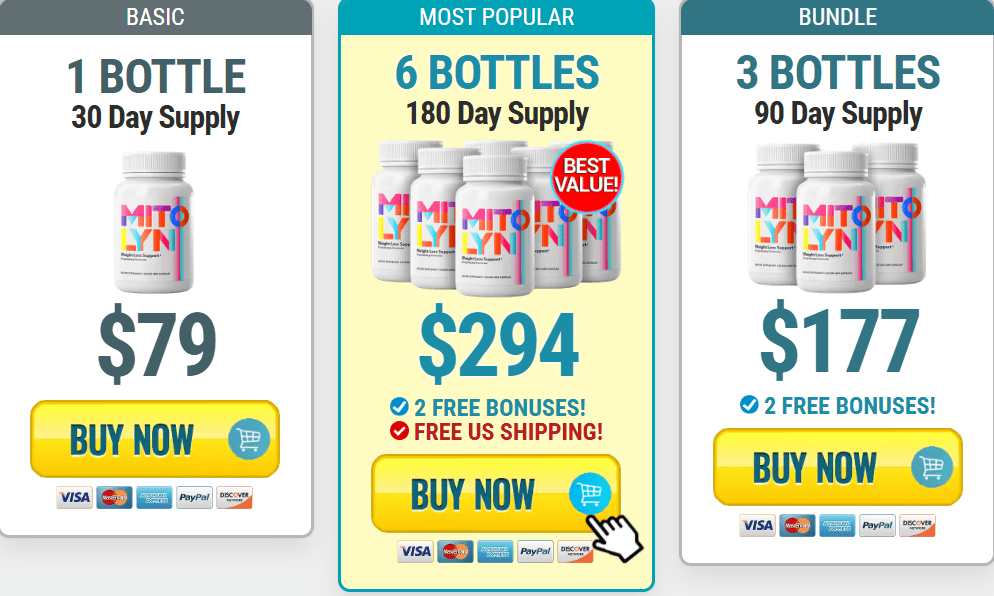
Per the official site, Mitolyn is sold in three package tiers:
| Tier | Supply | Total Price | Per Bottle | Savings | Shipping | Bonus |
| Basic | 30 days | $59 | $59 | None | Extra | None |
| Bundle | 90 days | $147 | $49 | $30 | Extra | 2 eBooks |
| Most Popular | 180 days | $234 | $39 | $120 | Free | 2 eBooks |
The brand recommends buying only through the official website to ensure authenticity, secure payment, and access to any current promotional pricing. Manufacturing is stated to occur in the USA under FDA-registered, GMP-certified facilities.
Buyer Takeaway: Larger packages lower the per-bottle price and add free shipping and bonus eBooks. The smallest tier has no savings and pays shipping separately.
Refund Policy
Mitolyn is backed by a 90-day money-back guarantee on purchases made through the official website. Customers have up to 90 days from the order date to try the product and, if unsatisfied, request a full refund. Individual customer accounts cited above describe mixed experiences with this process — including at least one report of a refund honored and one report of a refund not received on a later order — so keeping packaging, invoices, and order confirmations is a reasonable precaution regardless of what the policy states.
Concluding Remark
Across the materials reviewed, Mitolyn reads as a legitimately sold supplement with a mixed track record rather than either a proven solution or a fabricated scam. Marketplace ratings (Amazon, eBay) run notably higher than dedicated review-site ratings (TrustPilot), and that gap is worth factoring into any purchase decision alongside the ingredient-list-versus-mechanism mismatch and the dosage inconsistency flagged above.
Best for: adults looking for gradual, general metabolic and energy support who are comfortable with mixed individual results and want to verify label details against their own bottle before starting.
Worth pausing on if: you expect fast, dramatic results, weigh trust-site ratings heavily, or want a fully reconciled ingredient list before ordering.
How to Evaluate Any Metabolism or Mitochondria Supplement
Rather than compare Mitolyn to other named products without independently verified data on those products, it’s more useful to walk through the same questions worth asking of any supplement in this category — applied here to what’s actually confirmed about Mitolyn.
• Ingredient transparency — does the label disclose individual amounts, or only a blend total? Mitolyn’s materials don’t specify individual milligram amounts per ingredient in what was reviewed here, only the ingredient names themselves.
• Mechanism-to-ingredient consistency — do the compounds named in the “how it works” explanation match the disclosed ingredient panel? As flagged above, Mitolyn’s materials show a mismatch on this point (PQQ, CoQ10, and Berberine appear in the mechanism section but not the ingredient list).
• Finished-product evidence — has the actual formula been clinically tested, versus individual ingredients studied in isolation? No finished-product trial on Mitolyn was identified.
• Citation specificity — are sources named precisely (study, author, journal, year) or only as general domain names? Mitolyn’s cited sources fall into the latter category in the materials reviewed.
• Rating consistency across platforms — do marketplace ratings and independent review-site ratings roughly agree? Mitolyn’s materials show a substantial gap between the two.
• Refund and return clarity — is the guarantee window and process clearly and consistently described? Mitolyn’s 90-day guarantee is stated fairly clearly, though individual customer accounts describe mixed outcomes when actually requesting a refund.
• Regulatory claim accuracy — does the brand accurately describe its own regulatory status? Mitolyn’s materials overstate this point by describing the product as “FDA-approved,” which isn’t an accurate description of a dietary supplement’s regulatory status.
Buyer Takeaway: Running any metabolism or mitochondria supplement through these seven questions — not just Mitolyn — is a more reliable way to evaluate fit than relying on marketing copy or a single headline rating alone.
Scientific Resources for Further Reading
Rather than rely on brand marketing copy or unspecified citations, readers who want to look further into the general science behind mitochondrial health, weight management, and Mitolyn’s ingredient categories can consult the primary and government-run research sources below:
NIH Office of Dietary Supplements — fact sheets on individual vitamins, minerals, and botanicals, including safety and interaction data relevant to ingredients like vitamin C (from Amla) and antioxidant compounds.
NIH National Center for Complementary and Integrative Health (NCCIH) — research summaries on adaptogenic herbs such as Rhodiola and Schisandra, and general guidance on evaluating dietary supplement claims.
PubMed / PubMed Central (PMC) — the National Library of Medicine’s searchable database of peer-reviewed studies, useful for looking up any specific ingredient (astaxanthin, maqui berry, CoQ10, PQQ) by name rather than relying on a general domain citation.
U.S. Food & Drug Administration (FDA) — Dietary Supplements — explains how dietary supplements are regulated, why they are not “FDA-approved” in the way drugs are, and what facility registration does and doesn’t mean.
National Institute of Diabetes and Digestive and Kidney Diseases (NIDDK) — general, evidence-based information on metabolism, weight management, and the factors that influence both, useful context against any single-ingredient or single-supplement claim.
Federal Trade Commission (FTC) — Health Claims — general consumer guidance on evaluating supplement advertising claims, testimonials, and “results may vary” disclosures like the ones found throughout Mitolyn’s own marketing materials.
Frequently Asked Questions
What is Mitolyn?
A dietary supplement marketed to support mitochondrial health, energy, and metabolism, using a blend of plant-based ingredients including Maqui Berry, Rhodiola Rosea, astaxanthin (from Haematococcus Pluvialis), Amla, Schisandra, and Cacao Extract.
How do you take Mitolyn?
Source materials give conflicting instructions — one section states one capsule daily, another states two capsules daily (one before breakfast, one before dinner) with water. Check your product label directly, or confirm with the brand, before starting.
Is Mitolyn safe?
It’s stated to be manufactured in FDA-registered, GMP-certified facilities in the USA — a recordkeeping status, not an FDA approval of the product itself. Mild digestive discomfort, headaches, and medication interactions (notably with Rhodiola and Schisandra) are reported by some users. Pregnant or nursing individuals and anyone with a chronic health condition or on prescription medication should consult a healthcare provider before use.
Where can I buy Mitolyn?
Primarily through the official Mitolyn website, which the brand states is the only way to guarantee authenticity, access current pricing, and qualify for the refund policy.
What is the refund policy?
A 90-day money-back guarantee on orders placed through the official website. Individual reports of the refund process vary — confirm current terms directly with the brand and keep your order records.
Is Mitolyn a scam or legit?
The materials reviewed point to a legitimately sold, currently available product rather than a fabricated storefront, but with meaningfully mixed results and a real gap between marketplace and review-site ratings. It is not positioned by the brand as a guaranteed or miracle result, and it is not FDA-approved — no dietary supplement is.
Why do the ingredient list and the “how it works” section mention different compounds?
This is a genuine inconsistency in the materials reviewed rather than something this review can resolve. The mechanism explanation credits PQQ, CoQ10, and Berberine with specific roles in mitochondrial biogenesis and fat oxidation, but none of those three compounds appear on the disclosed ingredient panel (Maqui Berry, Rhodiola Rosea, Haematococcus Pluvialis, Amla, Schisandra, and Cacao Extract). It’s possible the mechanism section describes the broader category of mitochondrial-support ingredients rather than Mitolyn’s specific formula, but that isn’t stated outright anywhere in the materials reviewed. Contacting the brand directly for a reconciled ingredient-to-mechanism breakdown is the most reliable way to close this gap before ordering.
Why is the overall star rating so different from the TrustPilot score?
The materials reviewed show a headline rating of 4.9 out of 5 (553 votes) alongside a cited TrustPilot score of 1.3 out of 5 across 98 reviews — a substantial gap that isn’t explained or reconciled anywhere in the source material. It’s possible these numbers come from different rating systems measuring different things (an on-site engagement widget versus an independent third-party review platform), but that distinction isn’t spelled out. This review presents both figures rather than picking one as more authoritative, and would treat the platform-specific breakdown in the Ratings section as more informative than the single headline number for comparison purposes.
Does Mitolyn actually cause weight loss?
The materials reviewed don’t include a finished-product clinical trial establishing that Mitolyn causes weight loss for a general population. Individual customer accounts cited in the source material describe a range of outcomes — from meaningful weight loss to no change at all after extended use — which is consistent with a product whose ingredient-level research exists but whose finished-formula efficacy hasn’t been independently tested. This review doesn’t conclude that Mitolyn does or doesn’t cause weight loss; it reports what is and isn’t documented.
Disclaimer
The information in this article is provided for general informational purposes only and should not be taken as medical advice or a personal recommendation. Always consult a physician before starting any new supplement, particularly if you are pregnant, breastfeeding, managing an existing health condition, or taking prescription medication. This article contains affiliate links, and a commission may be earned from qualifying purchases at no additional cost to you.

Natural home remedies, skincare secrets, dental & eye health tips, and real product reviews to help you stay healthy the natural way.