

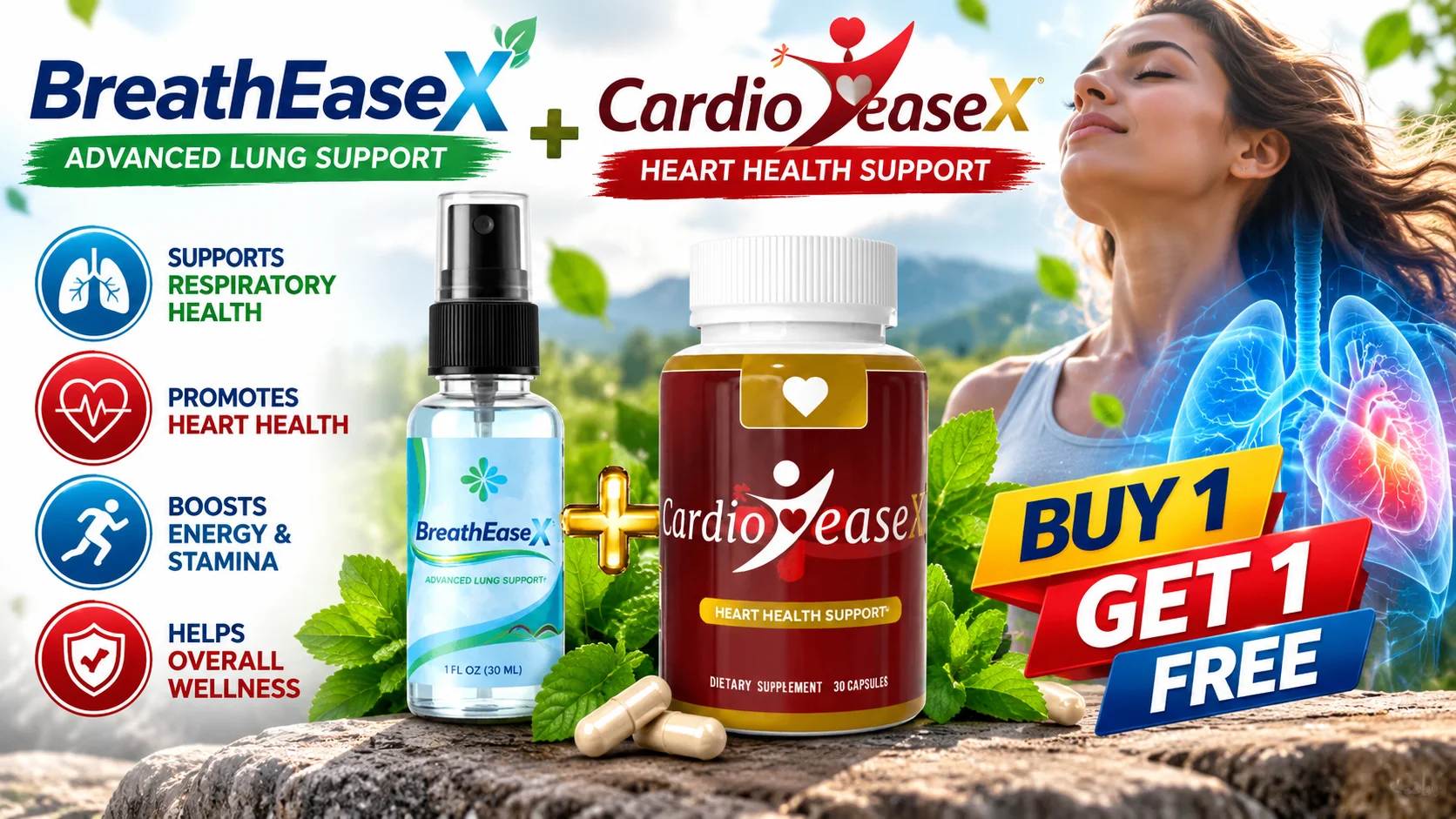
Respiratory discomfort and cardiovascular strain rarely show up in isolation. The lungs and the heart share a working relationship — one moves oxygen in, the other pushes it everywhere else — which is why a growing number of wellness brands are pairing lung-support and heart-support formulas instead of selling them separately. BreathEaseX, a sublingual spray, and CardioEaseX, a companion capsule, are one example of this two-part approach.
This guide breaks down exactly what’s in both formulas, what the underlying ingredient research shows (and doesn’t show), how the products are meant to be used, current pricing tiers, the refund policy, and the questions people most often ask before ordering. Every ingredient claim below is tied to publicly available research or the brand’s own published product information — not invented statistics.
Quick disclaimer before we start: These statements have not been evaluated by the Food and Drug Administration. BreathEaseX and CardioEaseX are not intended to diagnose, treat, cure, or prevent any disease. This article is educational information, not medical advice — talk to a qualified healthcare provider before starting any new supplement, especially if you take prescription medication or manage a cardiovascular or respiratory condition.
See Which BreathEaseX Offer You’d Actually Be Ordering
What Are BreathEaseX and CardioEaseX?
BreathEaseX is an oral spray positioned as a daily respiratory wellness product. It’s taken as four sprays directly into the mouth once per day, and the sublingual delivery format is designed so the liquid contacts the mucous membranes of the mouth and throat immediately, rather than passing through digestion first, the way a capsule would.
CardioEaseX is the companion capsule formula, taken as two capsules daily with water. Where BreathEaseX focuses on the airway and lung-support side of the pairing, CardioEaseX is built around ingredients more commonly associated with heart muscle function, circulation, and cellular energy production.
Together, the two products are marketed as a combined “breathing and heart” system rather than two unrelated supplements — the idea being that easier breathing and steady cardiovascular function are linked outcomes for a lot of people, particularly as they get older or spend time in polluted or high-altitude environments.
Both products are sold direct-to-consumer through the official website and fulfilled through BuyGoods, a third-party retailer, which is common for direct-response supplement brands. That’s worth knowing because it affects how refunds, billing, and customer service are routed — details we’ll cover further down.
The Two-Part System: Why Pair a Lung Formula With a Heart Formula?
It’s a fair question, and one worth answering honestly rather than glossing over. The lungs and cardiovascular system are physiologically tied together through pulmonary circulation — deoxygenated blood travels from the heart to the lungs to pick up oxygen, then returns to be pumped throughout the body. Reduced airway efficiency can make the heart work harder to maintain oxygen delivery, and reduced cardiovascular efficiency can make breathing feel more labored during exertion.
That connection is real physiology, but it’s important to separate physiology from marketing. Pairing a respiratory-support formula with a cardiovascular-support formula doesn’t mean the two products fix each other’s problems, and neither is designed to replace treatment for a diagnosed lung or heart condition. What the ingredient science below generally supports is a narrower, more modest claim: several of the compounds in each formula have documented roles in antioxidant activity, inflammation modulation, and normal physiological function relevant to breathing comfort and heart muscle energy — not disease reversal.
See Which BreathEaseX Offer You’d Actually Be Ordering
BreathEaseX Ingredient Breakdown
BreathEaseX’s spray formula is built around six named actives: N-Acetylcysteine (NAC), Quercetin, Manuka Honey MGO-400+, Vitamin D3, Olive Leaf Extract, and L-Theanine. The brand’s checkout page doesn’t list per-ingredient milligram amounts — that information (where published) comes from the brand’s own expanded product pages rather than the order form itself, so if exact dosing matters to your decision, that’s worth confirming directly with the brand before ordering.
N-Acetylcysteine (NAC)
NAC is the N-acetyl derivative of the amino acid cysteine and functions as a precursor to glutathione, often described as the body’s primary intracellular antioxidant. It’s one of the most heavily studied compounds in this formula, with a research history that spans decades, mostly in clinical rather than direct-to-consumer contexts.
NAC has been investigated for treatment of a range of conditions, and research has specifically examined its role in pulmonary diseases including COPD and idiopathic pulmonary fibrosis, largely because inflammation and oxidative stress are central to the way these chronic lung disorders progress. Its mucolytic properties — meaning its ability to thin and loosen mucus — have been used to support airway clearance in conditions like COPD, bronchitis, and cystic fibrosis.
The clinical evidence is genuinely mixed, and it’s worth being upfront about that rather than cherry-picking only the favorable studies. A randomized, placebo-controlled trial published in the International Journal of COPD found that high-dose oral NAC failed to improve respiratory health status in patients with COPD and chronic bronchitis — a notably negative result. On the other side, a separate study investigating high-dose NAC’s effect on airway geometry, inflammation, and oxidative stress in COPD patients used functional respiratory imaging combined with CT scanning to evaluate whether NAC produced measurable structural changes in the airways, and earlier pooled data has shown more favorable exacerbation-frequency outcomes in some COPD populations.
See Which BreathEaseX Offer You’d Actually Be Ordering
The honest takeaway: NAC has plausible, mechanistically-grounded reasons to support airway function through its antioxidant and mucolytic activity, and some trials back that up, but results across the research base are inconsistent, dose-dependent, and population-specific. It is not a guaranteed fix for any diagnosed respiratory condition.
Quercetin
Quercetin is a plant flavonoid — the kind of compound naturally found in onions, apples, berries, and a range of everyday produce. In supplement form, it’s typically included for its antioxidant and anti-inflammatory activity, and more specifically for its interaction with histamine and inflammatory signaling pathways in the airway.
Quercetin has previously been characterized as having antiviral, antibacterial, antioxidant, and anti-inflammatory activity, and preclinical research has explored whether it can interfere with viral entry and modulate the release of pro-inflammatory cytokines during respiratory infection. Broader pharmacological research on quercetin has also examined its antiplatelet, antihypertensive, cardioprotective, and natural antihistamine properties — which is one reason it shows up in both respiratory and cardiovascular formulas across the supplement industry.
Where quercetin’s evidence base is strongest is in human trials on allergy-type respiratory discomfort. A randomized, placebo-controlled, double-blind study of Japanese adults with eye and nose discomfort found that participants taking 200 mg per day of a quercetin phytosome formulation experienced significant subjective improvements over four weeks in symptoms like sneezing, ocular itching, and runny nose compared with placebo. That’s a meaningfully different use case than chronic lung disease, and it’s the kind of everyday airway-comfort application quercetin is realistically suited for.
Manuka Honey MGO-400+
Manuka honey is graded New Zealand monofloral honey sourced from Leptospermum scoparium flowers, and the “MGO-400+” designation refers to a quality standard indicating a minimum of 400 mg/kg of methylglyoxal, its primary bioactive compound. In BreathEaseX’s sublingual spray, the honey makes direct contact with oral and throat mucosa with each dose, which is the delivery rationale for including it in a spray rather than a swallowed capsule.
Manuka honey has an established research base in wound care, and more recent studies have examined its potential role in respiratory health specifically. One in vitro study looked at Manuka honey combined with the antibiotic azithromycin against Mycobacterium abscessus, a pathogen responsible for both pulmonary and skin infections, and found improved growth inhibition when Manuka honey was paired with azithromycin compared with controls — an antibiotic-adjuvant effect, not a standalone antimicrobial replacement. Separately, Manuka honey contains methylglyoxal, a compound associated with antimicrobial activity that may help reduce respiratory tract bacteria, and research indicates it carries anti-inflammatory properties that may help soothe irritated airways.
It’s worth being precise here: this research generally frames Manuka honey as a complementary, soothing addition to a wellness routine — not a substitute for prescribed respiratory treatment, and the in vitro antibiotic-pairing data doesn’t translate directly to daily oral-spray use.
See Which BreathEaseX Offer You’d Actually Be Ordering
Vitamin D3
Vitamin D3 is included primarily for its role in immune function, including immune defense relevant to the respiratory tract. A 2017 systematic review and meta-analysis published in the BMJ analyzed data from more than 10,000 participants across 25 randomized controlled trials and found associations between vitamin D supplementation and reduced respiratory infection risk, particularly in individuals who were vitamin D deficient to begin with. Vitamin D’s broader role in bone health, calcium absorption, and general immune regulation is well-established in the nutrition literature independent of this specific formula.
Olive Leaf Extract
Olive leaf extract contains bioactive compounds — oleuropein, oleuropein-aglycone, and related polyphenols — studied largely for antioxidant and anti-inflammatory activity. Research on these compounds suggests they may be useful in controlling or preventing inflammatory responses, particularly those associated with viral respiratory infections and aging. As with several other ingredients in this formula, this is early-to-moderate-stage research rather than large, definitive human outcome trials, so it’s best understood as a supportive antioxidant ingredient rather than a primary active.
L-Theanine
L-Theanine is an amino acid most commonly associated with calming, non-drowsy relaxation effects, typically studied in the context of stress and focus rather than respiratory function directly. In a combination formula like BreathEaseX, its practical role appears to be smoothing out the experience of taking the product — some users report a same-day calming effect, which is a different kind of benefit than the slower-building antioxidant and mucolytic activity of ingredients like NAC or quercetin, and it’s the one ingredient in the blend most likely to be noticeable in the short term rather than after weeks of consistent use.
CardioEaseX Ingredient Breakdown
CardioEaseX combines four ingredients — CoQ10, Hawthorn Berry, L-Carnitine, and Magnesium — taken as two capsules daily with water. This is a fairly standard combination in the heart-support supplement category, and each ingredient has a distinct, well-documented mechanism.
Coenzyme Q10 (CoQ10)
CoQ10 is a vitamin-like compound also known as ubiquinone that plays a central role in cellular energy production and is found throughout the body, but is especially concentrated in the heart, liver, and kidney, with natural production known to decline with age. It also functions as a free radical scavenger in cell membranes and within blood vessels. nowfoodsnowfoods
The rationale for including CoQ10 in a cardiovascular formula is primarily bioenergetic: heart muscle tissue has extremely high energy demands, and CoQ10 supports the mitochondrial processes that generate that energy. CoQ10 has been described as offering nutritional support for arrhythmias or cardiac muscular dysfunction, and may be helpful for improving energy production in heart muscle cells specifically.
Hawthorn Berry
Hawthorn (Crataegus oxyacantha) is a traditional botanical with a long history of use in European herbal medicine for heart support, and it’s one of the more extensively studied plant-based cardiovascular ingredients. It has traditionally been used for diseases of the heart and blood vessels such as congestive heart failure, chest pain, and irregular heartbeat, and has also been used for both low and high blood pressure and atherosclerosis. Importantly, research suggests hawthorn might be effective for supporting congestive heart failure specifically, but there hasn’t been enough research on its other proposed heart-related uses to confirm effectiveness for those applications. Its flavonoid compounds are generally understood to support normal blood pressure and healthy cholesterol metabolism in the arterial wall while improving heart contraction strength.
L-Carnitine
L-Carnitine’s primary role in cardiovascular formulas relates to fat metabolism within heart muscle tissue. It transports fat to the heart for energy use — functioning something like fuel delivery for the heart’s engine — and is associated with lowering triglycerides and raising HDL (“good”) cholesterol, which in turn gives the heart more available energy. More broadly, L-carnitine is understood to enhance oxygen utilization, heart muscle stamina, and normal heart contraction.
Magnesium
Magnesium is one of the most extensively validated minerals for cardiovascular function, independent of any single supplement brand. It’s essential for heart health, helping regulate blood pressure, support normal heart rhythms, and improve circulation, with research showing adequate magnesium levels are associated with reduced cardiovascular disease risk and better overall metabolic function. Magnesium deficiency is also relatively common in Western diets, which is part of why it’s a near-universal inclusion in heart-support formulations.
How to Use BreathEaseX and CardioEaseX
- BreathEaseX: Four sprays directly into the mouth, once per day. As a sublingual product, it’s generally recommended to avoid eating or drinking immediately afterward so the active compounds have time to be absorbed through the oral mucosa rather than swallowed straight down.
- CardioEaseX: Two capsules daily, taken with water.
- Consistency matters more than timing. Because several of the key actives — NAC, CoQ10, hawthorn, magnesium — work through gradual antioxidant, inflammatory, and cellular-energy pathways rather than acute effects, daily consistency over weeks is what the underlying research is generally built around, not single-dose results.
What Kind of Benefits Can Realistically Be Expected?
Based strictly on the ingredient research above, a reasonable, non-exaggerated summary of potential support areas includes:
- Antioxidant support relevant to airway and cardiovascular oxidative stress (NAC, quercetin, olive leaf, CoQ10)
- Support for normal mucous membrane comfort and occasional airway irritation (Manuka honey, quercetin)
- Respiratory immune support (Vitamin D3)
- Support for normal heart rhythm, blood pressure, and circulation (magnesium, hawthorn, CoQ10)
- Support for heart muscle energy metabolism (CoQ10, L-carnitine)
- A calming, non-drowsy component that may be noticeable in the short term (L-theanine)
What this is not: a treatment for diagnosed COPD, asthma, congestive heart failure, arrhythmia, or any other medical condition. Anyone managing a diagnosed respiratory or cardiac condition should treat this as a potential complementary addition to discuss with their physician — not a replacement for prescribed care.
A Realistic Timeline: What to Expect Week by Week
Direct-response supplement pages often lean on dramatic before/after framing. A more grounded way to think about a formula built on ingredients like these:
- First few days: L-theanine is the one ingredient in this blend most likely to produce a same-day, subtle calming effect. Nothing else in the formula is designed to work this fast.
- Around the 30-day mark: This is typically the point where people can reasonably judge whether a daily supplement fits into their routine and whether they’re noticing any subtle shifts. Not everyone will notice something distinct by this point — that’s a normal outcome for a general wellness product, not a sign the product isn’t working as intended.
- 60 days and beyond: The antioxidant, anti-inflammatory, and mitochondrial-support mechanisms behind ingredients like NAC, CoQ10, and hawthorn are generally studied over multi-week to multi-month periods in the clinical literature, which is consistent with why the brand’s refund window is set at 60 days rather than 30.
Safety, Side Effects, and Who Should Avoid These Products
Several ingredients in this two-part system are known to interact with common medications, so this section deserves careful attention rather than a quick skim.
- Not intended for individuals under 18, pregnant or nursing women, or anyone with known sensitivities to the listed ingredients, without prior consultation with a healthcare professional.
- Blood thinners and anticoagulants: NAC and several botanical extracts in these formulas may interact with anticoagulant medications.
- Blood pressure medication: Hawthorn and CoQ10 are both associated with blood-pressure-lowering effects, which means combining them with prescription antihypertensives could compound the effect. Products combining CoQ10 and hawthorn commonly carry cautions for people on blood pressure medication or with a history of low blood pressure or hypotension-related conditions.
- Cardiac glycosides (digitalis/digoxin): Hawthorn specifically carries a caution around use with digoxin and similar cardiac glycoside medications — this combination should always be cleared with a physician first.
- Thyroid medication: Some heart-support formulas containing similar ingredient profiles carry warnings about potential interaction with thyroid medications.
- General advice: Consult a qualified healthcare professional before use, especially if you’re currently taking prescription medications or managing an existing cardiovascular, respiratory, or metabolic condition. Discontinue use and consult a healthcare professional if you experience any adverse reaction.
BreathEaseX + CardioEaseX Pricing and Package Options

Both products are sold together as a bundled system through the official website, with three package tiers structured around bulk-pricing discounts — a standard model in the direct-response supplement space:
| Package | Supply | Bottles | Price Per Bottle | Total |
|---|---|---|---|---|
| Starter | 60-day supply | 2 bottles | $89/bottle | $178 |
| Most Popular | 120-day supply | 4 bottles | $54/bottle | $216 (free shipping) |
| Best Value | 180-day supply | 6 bottles | $49/bottle | $294 (free shipping) |
The per-bottle price drops meaningfully at higher quantities, which is consistent with the “60+ day consistency” framing discussed above — the pricing structure itself nudges buyers toward the longer supply windows where the ingredient research is more applicable anyway.
Refund Policy
The official offer includes a 60-day money-back guarantee. As with any direct-response supplement purchase, it’s worth reviewing the refund terms on the official site directly before ordering, since specific conditions (return shipping responsibility, timeframes for initiating a claim, and partial-bottle-usage policies) are set and updated by the brand rather than by any third-party review source. Order fulfillment and billing for this product runs through BuyGoods, a Delaware-registered third-party retailer, so refund and billing inquiries are typically routed through their customer service system rather than the brand directly.
How BreathEaseX/CardioEaseX Compares to Buying Ingredients Separately
A fair question anyone doing due diligence should ask: could you get similar ingredients from a general nutrition retailer? Largely, yes — NAC, quercetin, CoQ10, hawthorn, magnesium, and L-carnitine are all individually available as standalone supplements. What a combined formula like this offers is convenience (one spray, one capsule, instead of managing six to ten separate bottles) and a delivery-format choice (sublingual spray for the respiratory blend specifically, which some people find easier to stick with than swallowing multiple capsules). What it does not automatically offer is superior potency or absorption — since the brand’s checkout page doesn’t publish exact per-ingredient milligram amounts, there’s no way to directly verify how the doses compare to the clinical studies referenced throughout this article. That’s a legitimate limitation worth factoring into any purchase decision.
Frequently Asked Questions
Is BreathEaseX the same as CardioEaseX?
No. BreathEaseX is a sublingual oral spray focused on respiratory-support ingredients (NAC, quercetin, Manuka honey, vitamin D3, olive leaf, L-theanine). CardioEaseX is a capsule formula focused on cardiovascular-support ingredients (CoQ10, hawthorn berry, L-carnitine, magnesium). They’re sold as a paired two-product system.
How long before I notice a difference?
Most of the ingredients in both formulas work through gradual antioxidant, anti-inflammatory, or cellular-energy mechanisms studied over weeks to months, not days. L-theanine is the exception and may produce a subtle same-day calming effect. A realistic evaluation point is 30 to 60 days of consistent daily use.
Can I take BreathEaseX and CardioEaseX if I’m on blood pressure or blood-thinning medication?
Talk to your doctor first. Several ingredients — hawthorn, CoQ10, and NAC in particular — have documented interaction potential with blood pressure medications, anticoagulants, and cardiac glycosides like digoxin.
Are these products FDA-approved?
No. Like all dietary supplements in the U.S., BreathEaseX and CardioEaseX are not evaluated or approved by the FDA for treating, curing, or preventing disease. Dietary supplements are regulated differently than prescription medications.
What’s the refund window?
The official offer includes a 60-day money-back guarantee; specific terms should be confirmed on the official order page.
Is Manuka honey in the spray safe for daily use?
Manuka honey is generally recognized as safe for most adults in food and supplement contexts, though anyone with a bee product allergy, or infants under 12 months (due to general honey/botulism guidance for infants), should avoid it. As always, confirm with a healthcare provider if you have specific allergy concerns.
See Which BreathEaseX Offer You’d Actually Be Ordering
Final Takeaway
BreathEaseX and CardioEaseX combine a reasonably well-researched set of respiratory and cardiovascular ingredients — NAC, quercetin, Manuka honey, vitamin D3, olive leaf extract, and L-theanine on the breathing side; CoQ10, hawthorn berry, L-carnitine, and magnesium on the heart side. Individually, each ingredient has real, citable research behind at least one plausible mechanism of support, though the strength of that evidence varies considerably by ingredient, and none of it amounts to a treatment for diagnosed lung or heart disease. The biggest transparency gap is the lack of published per-ingredient dosing on the checkout page itself, which makes it hard to compare this formula directly against the clinical studies cited above. Anyone considering the purchase — particularly people currently on cardiovascular or respiratory medication — should read the full ingredient and interaction information on the official site and loop in a healthcare provider before starting.
These statements have not been evaluated by the Food and Drug Administration. This product is not intended to diagnose, treat, cure, or prevent any disease. Consult a healthcare professional before starting any new supplement, particularly if pregnant, nursing, under 18, or taking prescription medication.

Natural home remedies, skincare secrets, dental & eye health tips, and real product reviews to help you stay healthy the natural way.