

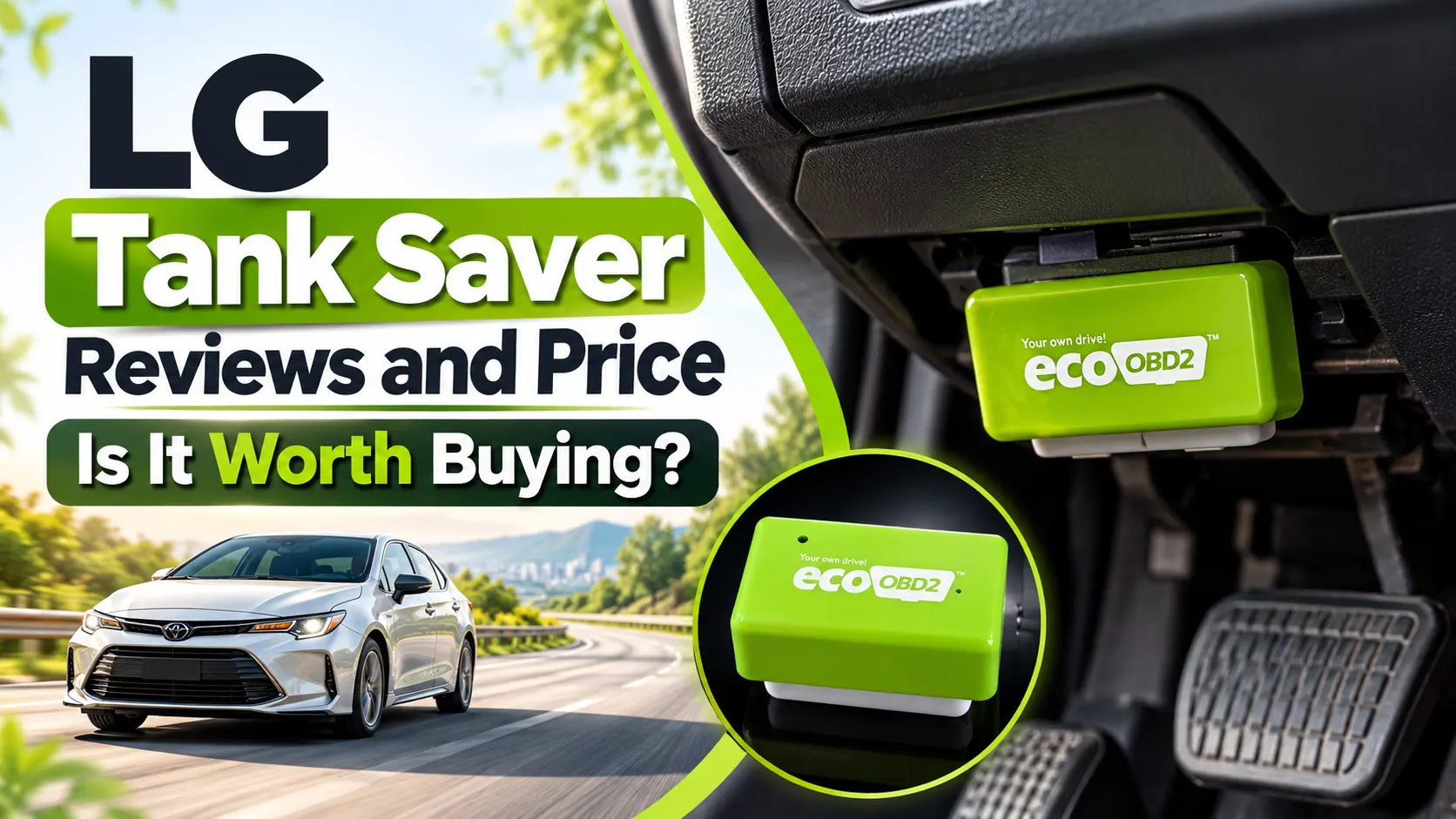
If rising gas prices are affecting your budget, a compact device that claims to improve fuel efficiency may sound appealing. The LG Tank Saver is marketed as an OBD-II fuel-saving device that plugs into a vehicle’s diagnostic port and claims to reduce fuel consumption by up to 15%, improve engine performance, and operate without complicated installation.
But before you buy, it is important to distinguish between the seller’s advertised benefits and results supported by independent testing. This LG Tank Saver review examines the product’s stated features, available package prices, installation process, compatibility questions, customer feedback presented by the seller, and important limitations.
You can check the product and current offers through the LG Tank Saver product page. Promotional prices and package availability may change, so confirm the final order total before paying.
LG Tank Saver at a Glance
| Feature | Details |
|---|---|
| Product name | LG Tank Saver |
| Product category | OBD-II plug-in fuel-saving device |
| Main purpose | Marketed to support fuel efficiency and engine performance |
| Connection | Vehicle OBD-II diagnostic port |
| Installation | Advertised as plug-and-play |
| Claimed fuel savings | Up to 15%, according to the seller; not independently verified |
| Claimed horsepower improvement | Average increase of 10%, according to the seller; not independently verified |
| Claimed calibration period | Approximately 200 km (about 124 miles), according to the seller |
| Compatibility | Advertised for multiple vehicle brands, including gas and diesel vehicles; exact compatibility requires confirmation |
| Single-unit price | $39.99 |
| Two-pack price | $69.98 total |
| Three-pack price | $82.95 total |
| Four-pack price | $99.40 total |
| Shipping displayed | $9.95; confirm the final shipping charge at checkout |
| Return policy | 30-day money-back guarantee advertised by the seller |
| Official product link | Visit the LG Tank Saver product page |
Important: The prices above reflect the package options you provided. Fuel savings, horsepower improvements, and compatibility claims are marketing statements rather than independently confirmed results. The displayed checkout also includes an optional-looking Vitality Club trial toggle, so review all selections and recurring-payment terms carefully before completing an order.
What Is LG Tank Saver?
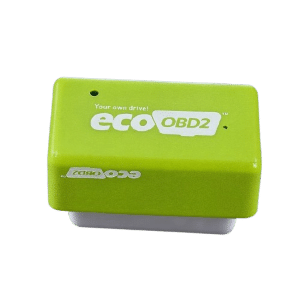
LG Tank Saver is marketed as a small electronic accessory designed to connect to a vehicle’s OBD-II port. OBD-II stands for On-Board Diagnostics II, a standardized system used by modern vehicles to provide diagnostic information and help identify certain engine or emissions-related problems.
The seller presents Tank Saver as a fuel-efficiency device that communicates with the vehicle’s electronic control unit, or ECU. According to the product description, it learns about the vehicle as you drive and adjusts engine-related data to improve fuel economy.
The product page promotes several potential advantages:
- A plug-and-play installation process.
- No mechanic or special installation tools required.
- No separate app or wireless setup.
- Compatibility across multiple vehicle brands.
- Claimed fuel savings of up to 15%.
- Claimed improvement in engine responsiveness.
- A 30-day money-back guarantee.
These are the seller’s stated features and promises. The presence of an OBD-II connector does not, by itself, establish that a device can safely modify engine settings or deliver measurable fuel savings.
Drivers considering the product should therefore evaluate both the advertised convenience and the evidence supporting its main performance claims.
How Does LG Tank Saver Claim to Work?
The seller describes Tank Saver as a device that connects to the OBD-II port and works with the vehicle’s engine control system.
Understanding the OBD-II connection
The OBD-II port is commonly located beneath the dashboard, often near the steering column. Mechanics and vehicle owners use compatible diagnostic equipment to read fault codes, inspect certain sensor information, and troubleshoot vehicle problems.
Some professional automotive tools can also support specialized vehicle configuration or tuning functions. However, those capabilities depend on the tool, software, vehicle model, engine type, and security restrictions.
A generic plug-in accessory should not automatically be assumed to have the same capabilities as professional tuning equipment.
The seller’s claimed calibration process
According to the product description, Tank Saver begins adapting to the vehicle after installation and is fully calibrated after approximately 200 km of driving.
The seller suggests that drivers may then notice improvements in fuel consumption and engine response. However, no independent test report for this specific device was identified in the research used for this review that confirms the calibration process or establishes that it produces the advertised results.
A dashboard fuel-economy reading can also change because of driving conditions, trip length, traffic, weather, and driving style. A change in the displayed number alone does not prove that the device caused an improvement.
LG Tank Saver Features Explained
The following table separates the product’s advertised features from what buyers should verify before relying on them.
| Feature | Seller’s description | What buyers should know |
|---|---|---|
| OBD-II connection | Plugs into the diagnostic port | The connection type does not prove fuel-saving performance |
| Plug-and-play setup | No tools or mechanic required | Confirm the device fits your vehicle and does not obstruct nearby controls |
| Fuel-efficiency support | Claims savings of up to 15% | No independent, product-specific test confirming this figure was identified |
| Engine performance | Claims an average 10% horsepower increase | No independent horsepower test was identified |
| Multi-brand compatibility | Advertised for multiple makes and gas or diesel vehicles | Confirm compatibility with your exact year, make, model, and engine |
| Calibration | Seller claims approximately 200 km | The time and method required to evaluate real-world results are not independently established |
| No app required | Advertised as operating without an app or wireless setup | Verify the current product documentation and instructions |
| Money-back offer | 30-day guarantee advertised | Read the complete return policy and eligibility conditions before purchasing |
The most important consideration is not simply whether Tank Saver can be plugged in. It is whether it demonstrably delivers worthwhile results in your particular vehicle without causing diagnostic, electrical, emissions, or warranty-related concerns.
LG Tank Saver Price: All Packages Explained
The LG Tank Saver checkout information you provided lists four package options. The four-pack has the lowest advertised cost per unit, while the single pack has the lowest upfront product price.
1-Pack
$39.99
One device · $39.99 each
2-Pack
$69.98
$34.99 per device
3-Pack
$82.95
$27.65 per device
4-Pack
$99.40
$24.85 per device
Full LG Tank Saver pricing table
| Package | Price per unit | Package total | Advertised savings |
|---|---|---|---|
| 1 device | $39.99 | $39.99 | $39.99 |
| 2 devices | $34.99 | $69.98 | $89.98 |
| 3 devices | $27.65 | $82.95 | $156.99 |
| 4 devices | $24.85 | $99.40 | $220.52 |
The advertised savings are calculated against the crossed-out reference prices shown in the supplied checkout details. Those reference prices have not been independently verified and should not be treated as proof of market value.
Additional charges to check: The checkout details display shipping of $9.95. If that charge applies to your order, the product total plus shipping would be:
| Package | Product total | Shipping shown | Total before any other charges |
|---|---|---|---|
| 1 device | $39.99 | $9.95 | $49.94 |
| 2 devices | $69.98 | $9.95 | $79.93 |
| 3 devices | $82.95 | $9.95 | $92.90 |
| 4 devices | $99.40 | $9.95 | $109.35 |
These totals assume the same $9.95 shipping charge applies to each package. The final shipping charge, taxes, and any other fees should be confirmed at checkout.
Which package offers the best value?
The four-pack has the lowest displayed price per device, at $24.85. That is only a financial advantage if you actually need four devices and each one is compatible with the intended vehicle.
For a first-time buyer, purchasing one unit may limit the upfront expense while allowing you to assess the product’s documentation, installation, and return terms. However, even the single-unit purchase should not be treated as a guaranteed way to reduce fuel costs.
Check for optional subscriptions
The supplied checkout page displays a Vitality Club 21-day free trial toggle. Its full terms and subsequent charges are not established by the information provided here.
Before paying:
- Check whether the toggle is enabled.
- Read the club’s terms, including any recurring membership fees.
- Confirm that the selected package matches your intention.
- Review the final amount before submitting payment.
- Save your order confirmation and the applicable return policy.
You can visit the LG Tank Saver product page to check the latest available packages and order terms.
Does LG Tank Saver Really Save Fuel?
This is the central question for anyone considering the product. Tank Saver is advertised as reducing fuel consumption by up to 15%, but that figure should be treated as an unverified marketing claim unless the seller provides credible, independently reproducible test results.
Research into similar plug-in fuel-saving devices provides a reason for caution. In July 2026, the German automobile association ADAC reported on tests of other OBD plug-in devices marketed for fuel savings. In the specific device examined with the computer publication c’t, the testers found no communication through the diagnostic connector that could influence fuel consumption. These findings concern the tested devices, not Tank Saver itself, but they demonstrate why a product’s claimed mechanism needs to be checked rather than assumed.
The US Federal Trade Commission has also warned consumers about products that promise dramatic improvements in gas mileage without reliable supporting evidence. Historical testing of purported fuel-saving devices has not established that such add-ons reliably deliver the substantial improvements commonly advertised.
This does not prove that every device in this category is ineffective. It means that buyers should look for independent evidence specific to the exact product before relying on a percentage claim.
What evidence would help establish whether it works?
A convincing assessment would ideally include:
- Independent testing on identified vehicle makes, models, and engine types.
- A clear description of the test method and driving conditions.
- Fuel-consumption measurements before and after installation.
- Repeated tests under comparable conditions.
- Details about whether the device actually communicates with the ECU.
- Information about emissions, diagnostic codes, and potential side effects.
- Results from a qualified, independent automotive testing organization.
No product-specific independent test report establishing the advertised 15% fuel savings or 10% horsepower increase was identified in the sources consulted for this article.
Why advertised fuel savings can be misleading
Real-world fuel economy is affected by many variables, including:
- Tire pressure and tire condition.
- Engine maintenance and air-filter condition.
- Traffic, idling, and stop-and-go driving.
- Highway speed and acceleration habits.
- Weather and air-conditioning use.
- Vehicle weight and cargo.
- Road gradients and trip length.
- Fuel type and the condition of the engine.
For example, a driver who begins taking longer highway trips after installing a device may observe better fuel economy even if the device itself has no measurable effect. A fair comparison requires similar conditions over multiple fill-ups.
LG Tank Saver Reviews and Complaints: What Should Buyers Know?
The product information you provided displays a 4.7-star rating from 2,830 reviews, with a breakdown of 74% five-star, 14% four-star, 6% three-star, 4% two-star, and 2% one-star ratings.
These figures should be described as seller-displayed ratings, not independently audited customer feedback. The review platform and the process used to verify purchases have not been independently established here.
The product page also presents individual testimonials describing improvements in fuel use, engine response, or ease of installation. Those testimonials are claims presented by the seller; they should not be treated as independent proof of typical results.
What do the displayed complaints suggest?
The lower ratings and mixed comments on the seller’s page point to questions that buyers should investigate, rather than proving a particular failure rate.
Potential concerns to evaluate include:
- Whether fuel savings are noticeable in ordinary driving.
- Whether the results differ by vehicle or engine type.
- Whether the device provides clear installation instructions.
- Whether the advertised calibration period is useful in practice.
- Whether the return process is straightforward if the product disappoints.
- Whether the seller provides adequate technical documentation.
The product information includes a three-star review from a driver who had not yet completed the stated calibration distance and a lower-rated review describing little change in a hybrid vehicle. These are seller-presented examples, not independently verified findings, and they do not establish how the device performs across the wider market.
Are there independent complaints?
The research used for this review did not establish a comprehensive, independently verified complaint record specific to LG Tank Saver. That is not proof that complaints do not exist. It simply means buyers should not infer the product’s overall reliability from the seller’s review section alone.
Before ordering, look for independent automotive testing, detailed owner reports that identify the exact vehicle, and a clear return process. Give more weight to repeatable measurements than to testimonials that do not explain how fuel savings were calculated.
How to Install LG Tank Saver
The seller describes the installation as a simple four-step process. These instructions summarize the advertised process; they are not a substitute for the device’s official manual or your vehicle manufacturer’s guidance.
Step 1: Locate the OBD-II port
The diagnostic port is commonly positioned beneath the dashboard, often near the steering column. Its exact location varies by vehicle.
Consult your owner’s manual if you are unsure where it is located.
Step 2: Check compatibility before connecting it
Confirm that the product is compatible with your exact vehicle year, make, model, engine, and fuel type. Do not assume that a standard connector guarantees functional compatibility.
Inspect the connector and port for visible damage. Never force a plug into a port that does not fit properly.
Step 3: Follow the manufacturer’s instructions
The seller says Tank Saver is designed to plug in without wiring, a mobile app, or special tools. Follow the supplied instructions and avoid changing vehicle settings unless the manufacturer specifically directs you to do so.
If a warning light appears, unusual behavior develops, or you are unsure whether the device is functioning correctly, disconnecting it and consulting a qualified mechanic may be appropriate.
Step 4: Evaluate fuel economy carefully
The seller states that the device may take approximately 200 km to calibrate. This is a product-specific claim that has not been independently verified.
If you decide to evaluate it, record fuel use over several comparable trips and fill-ups. Do not rely solely on one dashboard reading or one tank of fuel. If the device causes warning lights or unusual engine behavior, prioritize vehicle safety over continued testing.
Vehicle Compatibility: Is LG Tank Saver Suitable for Your Car?
Tank Saver is advertised as compatible with multiple vehicle brands and both gasoline and diesel vehicles. However, a universal compatibility claim needs more detail before it can be relied on.
What to confirm before ordering
| Compatibility question | Why it matters |
|---|---|
| Does your vehicle have an OBD-II port? | The product is designed to connect through this port |
| Is your exact model supported? | Connector availability does not prove that the device works with every engine |
| Is your vehicle gasoline, diesel, or hybrid? | Different powertrains use different control strategies |
| Does the seller provide a compatibility list? | A specific list is more useful than a general multi-brand claim |
| Can the device alter ECU settings? | The technical capability should be documented, not merely implied |
| Could it affect emissions systems or warranty coverage? | Aftermarket modifications can have vehicle-specific consequences |
In the United States, most light-duty vehicles manufactured from the 1996 model year onward use OBD-II, but that does not mean every OBD-II accessory is suitable for every vehicle.
Hybrid vehicles deserve particular care because their fuel consumption depends on how the gasoline engine and electric motor work together. A device advertised for conventional gasoline vehicles should not automatically be assumed to improve hybrid efficiency.
Before buying, ask the seller for written compatibility confirmation. If your vehicle is under warranty, check the manufacturer’s terms or consult an authorized dealer about any potential implications of connecting an aftermarket device.
Safety and Potential Risks
LG Tank Saver is an automotive electronic accessory, not a fuel additive. Its main safety considerations relate to the vehicle’s electronic systems, diagnostic port, installation, and the accuracy of its performance claims.
The information supplied for this review does not establish the device’s internal design, electrical specifications, or independent safety-test results. Consequently, it would be inappropriate to declare it universally safe or unsafe.
Possible issues to consider
Diagnostic and electrical compatibility: An accessory that connects to a vehicle’s diagnostic port should have clear technical documentation. Buyers should confirm that it is designed for their vehicle and that the connector does not interfere with nearby components.
Warning lights and fault codes: If warning lights appear or the vehicle begins behaving differently after installation, do not ignore them. Follow your vehicle’s manual and seek qualified diagnostic assistance when needed.
Emissions compliance: Engine-control changes can affect emissions performance. Before using a tuning-related accessory, confirm that it complies with applicable federal and state requirements, particularly if your vehicle must pass an emissions inspection.
Warranty concerns: The effect of an aftermarket accessory depends on the vehicle, the nature of any modification, and the applicable warranty terms. Do not assume that a seller’s compatibility claim guarantees that your manufacturer will accept every related warranty claim.
Battery and parked-vehicle use: The product information provided does not establish its electrical consumption while the vehicle is parked. Ask the manufacturer whether the device should remain connected when the engine is off and whether there are any battery-related precautions.
Is LG Tank Saver a diagnostic scanner?
The seller markets Tank Saver as a fuel-saving accessory rather than a conventional diagnostic scanner. The available information does not establish that it can reliably read and explain fault codes, repair engine problems, or replace professional diagnostic equipment.
Do not use it as a substitute for proper vehicle maintenance or professional troubleshooting.
Pros and Cons of LG Tank Saver
Potential advantages
- Simple advertised installation: The seller describes a plug-and-play setup without special tools.
- Compact design: A small accessory may be convenient compared with larger automotive equipment.
- No separate app advertised: The product is promoted as operating without an app or wireless setup.
- Multiple package choices: Buyers can select one, two, three, or four units.
- Published package pricing: The supplied checkout information provides specific totals for each bundle.
- Advertised return window: The seller promotes a 30-day money-back guarantee, subject to its current terms.
Limitations and concerns
- Fuel-saving claims remain unverified: The advertised improvement of up to 15% has not been independently established for this specific product.
- Horsepower claims lack independent confirmation: The stated average increase of 10% should not be treated as a proven result.
- Technical documentation is limited: The available information does not independently establish how the device communicates with or modifies the ECU.
- Compatibility requires confirmation: A multi-brand claim does not guarantee support for every vehicle.
- Seller reviews are not independent evidence: Displayed ratings and testimonials have not been independently audited for this review.
- Extra checkout costs may apply: The supplied page displays a $9.95 shipping charge and a Vitality Club trial toggle that deserves careful review.
- Results may vary: Fuel economy depends on vehicle condition, route, driving habits, and many other factors.
- Return terms should be checked: A guarantee is useful only if the buyer understands the deadline, eligibility conditions, and return process.
Better Ways to Improve Fuel Economy

Before spending money on a device with unverified savings, consider several established ways to reduce fuel consumption.
Keep tires properly inflated
Check tire pressure using the specifications provided by the vehicle manufacturer, generally found on the driver-side door label or in the owner’s manual. Avoid using the maximum pressure printed on the tire sidewall as a substitute for the vehicle’s recommended pressure.
Maintain the engine
Follow the maintenance schedule for engine oil, air filters, spark plugs, and other service items. A poorly maintained vehicle may use more fuel or perform less efficiently than expected.
Drive smoothly
Rapid acceleration, hard braking, and excessive speeds can increase fuel consumption. Smooth acceleration, maintaining a reasonable speed, and anticipating traffic can help reduce unnecessary fuel use.
Reduce unnecessary weight and idling
Remove heavy items that you do not need to carry. Avoid prolonged idling when it is safe and appropriate to switch off the engine, following your vehicle’s guidance.
Track fuel use over time
Use the same method to record miles driven and fuel purchased. Compare several fill-ups under similar conditions rather than drawing conclusions from a single journey.
These measures will not guarantee a particular percentage of savings, but they address known factors affecting fuel economy without relying on an unverified electronic accessory.
Frequently Asked Questions About LG Tank Saver
What is LG Tank Saver?
LG Tank Saver is marketed as an OBD-II plug-in device intended to improve fuel efficiency and engine performance. The seller claims it communicates with the vehicle’s electronic control unit, but the advertised performance benefits have not been independently confirmed for this specific product.
How much does LG Tank Saver cost?
The supplied checkout information lists one device for $39.99, two for $69.98, three for $82.95, and four for $99.40. Shipping of $9.95 is displayed separately. Confirm the final price and any additional charges before ordering.
Does LG Tank Saver really save 15% on fuel?
The seller advertises fuel savings of up to 15%. However, no independent test report confirming that result for LG Tank Saver was identified in the research for this article. Actual fuel economy also depends on vehicle condition, driving habits, traffic, weather, and other factors.
How long does Tank Saver take to work?
According to the seller, the device takes approximately 200 km, or about 124 miles, to calibrate. This timing has not been independently verified, and the available evidence does not establish that completing this distance will result in measurable fuel savings.
Is LG Tank Saver compatible with diesel vehicles?
The seller advertises compatibility with gasoline and diesel vehicles across multiple brands. However, compatibility with every diesel model has not been independently established. Confirm support for your exact vehicle before ordering.
Can I use LG Tank Saver in a hybrid car?
The supplied product description does not establish compatibility with every hybrid system. Because hybrid powertrains operate differently from conventional gasoline engines, ask the seller for written confirmation of compatibility with your specific make, model, year, and powertrain.
Does LG Tank Saver require professional installation?
The seller describes the device as plug-and-play and says that no mechanic or special tools are required. You should still read the product instructions, confirm compatibility, and avoid forcing the connector into the diagnostic port.
What is the LG Tank Saver return policy?
The seller advertises a 30-day money-back guarantee. The complete eligibility conditions, return shipping requirements, and refund procedure should be checked in the current policy before purchase. Do not assume every order automatically qualifies for a full refund without reviewing those terms.
Are the LG Tank Saver reviews trustworthy?
The product page displays a 4.7-star rating from 2,830 reviews, along with individual customer testimonials. These figures are seller-displayed information and have not been independently audited for this review. Independent testing and repeatable fuel-economy measurements provide stronger evidence of performance than testimonials alone.
Is LG Tank Saver a scam?
The available information does not establish that LG Tank Saver is fraudulent, but it also does not independently substantiate its central fuel-saving and horsepower claims. The most accurate conclusion is that its advertised performance remains unverified. Buyers should evaluate the technical documentation, compatibility, return terms, and independent evidence before spending money.
Where can I buy LG Tank Saver?
You can review the product details and package options through the LG Tank Saver product page. Confirm the selected package, shipping charges, any optional membership enrollment, and the current return policy before completing checkout.
LG Tank Saver Reviews and Price: Is It Worth Buying?
Final Verdict: Is LG Tank Saver Worth Buying?
LG Tank Saver is marketed as a convenient way to pursue better fuel economy through a small OBD-II accessory. The seller emphasizes straightforward installation, multi-brand compatibility, a claimed calibration period of approximately 200 km, and potential fuel savings of up to 15%.
The supplied pricing is clear enough to compare the four packages: $39.99 for one device, $69.98 for two, $82.95 for three, and $99.40 for four. A 30-day money-back guarantee is also advertised, although buyers should read the current terms and confirm the return procedure.
The main concern is evidence. The advertised fuel savings and horsepower improvements have not been independently established for this specific product in the research used for this review. Testing of other OBD plug-in fuel-saving devices has also raised questions about whether similar products can deliver the large improvements their marketing promises. Those findings do not prove that Tank Saver itself fails, but they are a reason to be cautious.
My balanced recommendation: Do not purchase LG Tank Saver solely because you expect a guaranteed 15% reduction in fuel consumption. First, request independent test results, confirm compatibility with your exact vehicle, and examine the technical and return documentation. If your primary goal is to save money on fuel, start with regular maintenance, correct tire pressure, smoother driving, and consistent fuel-use tracking.
If you still decide to consider the device, use the official LG Tank Saver product page to check current package pricing and terms. Make the decision based on verifiable information rather than the advertised discount or promised savings alone.
Reference Sources
The following sources provide additional information about OBD-II fuel-saving devices, consumer protection, and fuel-economy claims. They discuss the broader product category and do not constitute independent certification or testing of LG Tank Saver.
- LG Tank Saver product and checkout page — Product description, advertised features, package pricing, and stated guarantee.
- ADAC: Fuel-saving dongles examined — Independent automotive association reporting on tests of other plug-in fuel-saving devices.
- Federal Trade Commission: Gas-Saving Products — Consumer guidance for evaluating products that promise better gas mileage.
- U.S. Environmental Protection Agency: Aftermarket Retrofit Device Evaluation Program — Information about the EPA’s program and its scope.
- U.S. Department of Energy: Fuel Economy — Official information and practical guidance on vehicle fuel economy.


Natural home remedies, skincare secrets, dental & eye health tips, and real product reviews to help you stay healthy the natural way.