

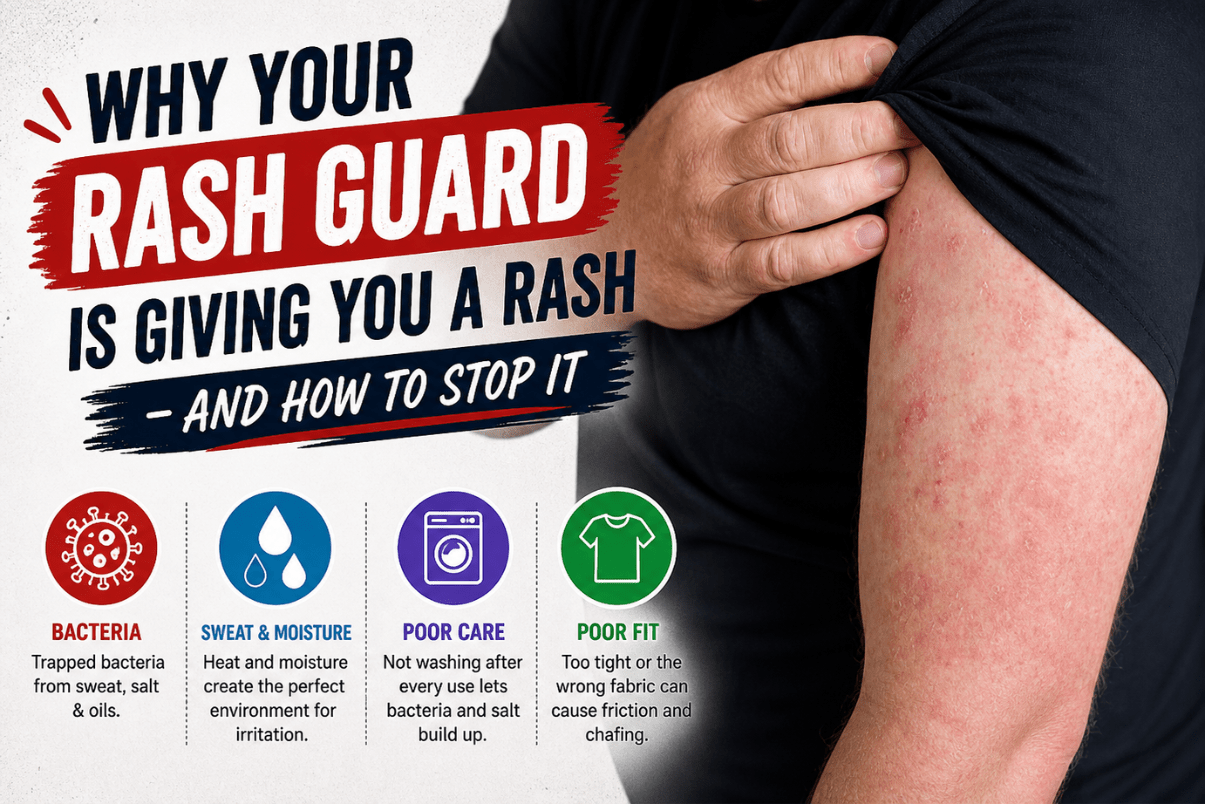
You bought a rash guard to protect your skin — not to cause more problems. Yet here you are, dealing with an itchy, red, and irritated patch of skin right where your rash guard sat. If you are wondering whether your rash guard can actually give you a rash, the answer is yes, and it happens more often than most people realize.
A rash from a rash guard is a frustrating experience, especially when you are trying to enjoy water sports, surfing, snorkeling, or swimming. Whether you develop redness after wearing it for the first time or notice irritation building up over many uses, understanding the root cause is the first step toward fixing the problem.
In this guide, we will cover everything you need to know: what causes a rash from a rash guard, how to recognize different types of reactions, how to treat them effectively at home, and most importantly, how to prevent them from coming back.
What Is a Rash Guard and Why Would It Cause a Rash?
A rash guard is a close-fitting athletic shirt typically made from synthetic materials like spandex, nylon, polyester, or neoprene. Originally designed to protect surfers and divers from UV rays, saltwater abrasion, and jellyfish stings, these garments are now widely used in swimming, paddleboarding, snorkeling, and fitness activities.
Because rash guards are tight-fitting and worn directly against the skin — often during intense physical activity or prolonged water exposure — they create ideal conditions for skin reactions. The friction, heat, moisture, and chemical exposure that come with wearing a rash guard can all contribute to skin irritation.
There is an irony in the name: “rash guard” implies it protects against rashes, and it does guard against some types (like jellyfish contact). But the material itself, the fit, and the conditions of use can cause a completely different kind of rash — one triggered by the garment rather than prevented by it.
Common Causes of a Rash from a Rash Guard
1. Contact Dermatitis from Synthetic Materials
One of the most common culprits behind a rash from a rash guard is contact dermatitis — an inflammatory skin reaction caused when an allergen or irritant touches the skin. The synthetic fibers in rash guards, especially neoprene, spandex (elastane), and certain dyes used in bright-colored garments, are known triggers.
Neoprene contact dermatitis is particularly well-documented. Studies have found that some people are allergic to the chemicals used in neoprene processing, such as thiuram and mercaptobenzothiazole. If you develop a rash precisely in the shape of your rash guard, contact dermatitis is likely the cause.
It is worth noting that contact dermatitis can sometimes overlap with broader skin sensitivities. If you already deal with seasonal allergies or environmental triggers, your immune system may be primed to react more aggressively to synthetic fabric contact, making your skin more reactive than average.
2. Chafing and Friction Rash
A rash from a rash guard is not always allergic in nature. Mechanical friction is another very common cause. During physical activity, the tight fabric rubs repeatedly against your skin — particularly in high-movement areas like the armpits, chest, neck, and waistline.
This type of rash looks different from an allergic reaction. Rather than hives or welts, friction rash typically appears as red, raw, slightly swollen skin that may feel burning or sore rather than itchy. Swimmers, surfers, and athletes who wear rash guards for extended periods are most at risk, especially when the garment has poorly finished seams or is the wrong size.
3. Heat and Sweat Rash (Miliaria)
Rash guards trap heat against the body, especially when worn during vigorous exercise or in warm weather. This can cause sweat glands to become blocked, leading to a condition called miliaria — commonly known as heat rash or prickly heat.
Heat rash from rash guards usually appears as small, red bumps or blisters concentrated in covered areas. The sensation is often described as prickling or stinging. Children are especially susceptible, but adults can experience this too, particularly in humid coastal environments.
4. Chlorine and Chemical Sensitivity
If you wear your rash guard in a chlorinated pool, the chemicals absorbed by the fabric can irritate your skin. Chlorine is a powerful oxidizer that strips the skin of its natural oils and can disrupt the skin barrier. When a chlorine-saturated rash guard sits against your skin for an extended swim session, the exposure is prolonged and concentrated.
Similarly, saltwater and sunscreen residues trapped in the fabric can react with your skin over time. People who have food allergies or other immune sensitivities may find that their skin is more reactive to these chemical exposures, since an already-activated immune system can lower the threshold for skin reactions.
5. Fungal or Bacterial Infections
Rash guards worn for long periods in warm, moist conditions create a perfect environment for microorganisms. If you do not wash your rash guard promptly after use — or if you re-wear it while still damp — bacteria or fungi can colonize the fabric and subsequently infect your skin.
Tinea versicolor (a fungal overgrowth), folliculitis (bacterial infection of hair follicles), and intertrigo (a rash that develops in skin folds) can all be worsened or triggered by prolonged damp fabric contact. These infections require specific treatment and will not resolve simply by switching garments.
6. Latex Allergy
Some rash guards, particularly older models or budget options, include natural rubber latex in their elastic components. If you have a latex allergy, even minimal contact can trigger a significant allergic reaction, ranging from localized hives to, in severe cases, systemic symptoms. Always check the fabric content label if you suspect latex sensitivity.
How to Identify the Type of Rash You Have
Not all rashes look or feel the same. Identifying the specific type of rash from your rash guard helps you choose the right treatment and figure out whether you should see a doctor.
• Contact Dermatitis: Red, itchy, possibly blistering rash shaped exactly like the rash guard. May appear 12–72 hours after contact. Skin may be dry, scaly, or weeping.
• Friction/Chafing Rash: Raw, red, and sore skin localized to high-friction zones (underarms, neck, waistband). Painful to touch rather than itchy.
• Heat Rash: Small red bumps or clear blisters spread across covered areas. Prickling or stinging sensation. Appears during or shortly after wearing in hot conditions.
• Fungal Infection: Circular, scaly patches that may appear lighter or darker than surrounding skin. Can be itchy. Appears days to weeks after exposure to damp fabric.
• Bacterial Folliculitis: Small, pus-filled bumps centered on hair follicles. Often tender to touch. More common in areas covered by tight fabric.
If you are unsure, take a photo of the rash and note when it first appeared, where on your body it is located, and what activities you were doing while wearing the rash guard. This information is helpful for both self-assessment and medical consultations.
Treatment: How to Soothe and Heal a Rash from a Rash Guard
Immediate Steps (First 24–48 Hours)
• Remove the rash guard immediately and gently rinse the affected area with cool, clean water.
• Pat the skin dry — do not rub, as this worsens irritation.
• Apply a cool, damp cloth to the rash for 10–15 minutes to reduce inflammation and discomfort.
• Avoid scratching, which can introduce bacteria and worsen the reaction.
Over-the-Counter Treatments
For most mild to moderate cases of rash from a rash guard, over-the-counter treatments are effective:
• Hydrocortisone cream (1%): Reduces inflammation and itching for contact dermatitis and general skin irritation. Apply a thin layer 1–2 times daily.
• Calamine lotion: Soothes itching and has mild antiseptic properties. Useful for heat rash and mild contact reactions.
• Antihistamine tablets: Oral antihistamines like cetirizine or loratadine help control itching from allergic reactions and reduce the immune response.
• Aloe vera gel: Pure aloe vera has anti-inflammatory properties and helps cool and moisturize irritated skin.
• Antifungal cream: If a fungal infection is suspected (circular, scaly patches), an OTC antifungal like clotrimazole is the appropriate treatment.
Natural Remedies
In addition to pharmaceutical options, several natural approaches can soothe a rash from a rash guard:
• Oatmeal baths: Colloidal oatmeal has proven anti-inflammatory and skin-barrier-restoring properties. Soak the affected area for 15–20 minutes.
• Coconut oil: Has antimicrobial and moisturizing properties that help with dry, irritated skin.
• Tea tree oil (diluted): A natural antifungal and antibacterial agent. Always dilute with a carrier oil — never apply undiluted to irritated skin.
• Cold compress: Reduces swelling, soothes burning, and provides immediate relief from itching.
When to See a Doctor
Some rashes require professional medical evaluation. Seek medical attention if:
• The rash covers a large area of your body or spreads rapidly.
• You develop swelling of the lips, tongue, or throat (signs of anaphylaxis — call emergency services immediately).
• The rash is accompanied by fever, chills, or joint pain.
• The skin is cracked, weeping, or shows signs of secondary infection.
• OTC treatments have not improved the rash after 7–10 days.
A dermatologist can perform patch testing to identify specific allergens, prescribe stronger topical or oral medications, and rule out underlying skin conditions like eczema or psoriasis that may be exacerbating your reaction.
How to Prevent a Rash from a Rash Guard
Prevention is far more comfortable than treatment. The good news is that most cases of rash from a rash guard are entirely avoidable with the right precautions.
Choose the Right Material
Not all rash guards are created equal. If you have had skin reactions before, look for:
• UPF-rated polyester or nylon blends: Generally less irritating than neoprene for most people.
• Neoprene-free options: If you suspect neoprene allergy, specifically look for garments labeled neoprene-free.
• Natural or organic fabric blends: Some brands offer bamboo or Tencel-blend rash guards that are gentler on sensitive skin.
• Seamless or flatlock seam construction: Reduces friction points that cause chafing rash.
Ensure Proper Fit
A rash guard that is too tight creates excessive friction and cuts off airflow, increasing heat rash risk. One that is too loose bunches and rubs. Choose a size that is snug and streamlined but allows comfortable movement without pulling.
Wash Your Rash Guard Correctly
Always wash your rash guard after every single use. Saltwater, chlorine, sunscreen, and sweat all degrade the fabric and accumulate on the skin-facing surface, increasing irritation risk with each wear.
• Rinse in cold fresh water immediately after use.
• Wash with a gentle, fragrance-free detergent.
• Avoid fabric softeners and dryer sheets, which can leave chemical residues that irritate skin.
• Air dry rather than machine dry — heat damages elastic fibers and can cause the fabric to shrink and tighten further.
Apply a Barrier Before Wearing
For people prone to friction rash or chafing, applying a thin layer of anti-chafe balm, petroleum jelly, or zinc oxide cream to high-friction areas (underarms, collar line, waistband area) before putting on the rash guard creates a physical barrier between fabric and skin.
Do Not Wear Your Rash Guard for Too Long
Extended wear — particularly in warm water or during vigorous activity — increases every risk factor simultaneously. Aim to remove your rash guard within a reasonable time after your activity, and avoid wearing it outside of water activities if possible.
Test New Garments Before Full Use
Before committing to a new rash guard for a full day of surfing or snorkeling, do a patch test. Wear it for 30–60 minutes during a low-intensity activity and check for any early signs of irritation. This is especially important if you have previously experienced reactions to synthetic fabrics or have a history of spring allergy symptoms or environmental sensitivities that suggest a reactive immune system.
Keep Skin Moisturized and Healthy
Well-hydrated skin with an intact barrier is less susceptible to both friction damage and allergic reactions. Use a fragrance-free moisturizer daily, especially if you swim frequently. Chlorinated water and saltwater both dehydrate and irritate skin, so moisturizing after every swim session is essential.
Rash Guard Rash in Children: Special Considerations
Children have thinner, more sensitive skin than adults, making them more vulnerable to a rash from a rash guard. Parents should look for rash guards specifically labeled as hypoallergenic, made from soft polyester rather than neoprene, and with minimal seaming around the neck and arms.
Apply a thin layer of zinc oxide sunscreen or barrier cream to your child’s skin before putting on a rash guard, particularly around the collar, armpits, and waistband. After swimming, rinse your child thoroughly with fresh water and inspect their skin before dressing them again.
If your child develops hives or a rash shortly after wearing a new rash guard, remove it immediately, rinse the skin, and consult a pediatrician before using the garment again.
Frequently Asked Questions About Rash from Rash Guard
Can a rash guard cause hives?
Yes. Hives (urticaria) can develop as part of an allergic reaction to the fabric materials, dyes, or chemical treatments used in rash guards. Neoprene, spandex, and certain colorant chemicals are known allergens. If you develop raised, itchy welts in the shape of your garment, remove it immediately and take an oral antihistamine.
How long does a rash guard rash last?
With proper treatment and no further exposure, most mild cases of rash from a rash guard resolve within 3–7 days. Contact dermatitis can take up to 2–3 weeks to fully clear, especially if you have had repeated exposure. Fungal infections may take longer and require consistent antifungal treatment.
Is a rash from a rash guard contagious?
No. Contact dermatitis, friction rash, and heat rash are not contagious. However, if the rash is caused by a secondary bacterial or fungal infection, those organisms can potentially spread to other people through direct skin contact or shared towels.
Can I be allergic to my rash guard?
Yes. Fabric allergies, while not as commonly discussed as food or pollen allergies, are real. Neoprene allergy is the most documented in the context of rash guards and wetsuits. If patch testing by a dermatologist confirms a fabric allergy, you will need to choose alternative materials for your water activities.
Should I keep wearing my rash guard if I get a rash?
No. Stop wearing the garment until you have identified the cause and treated the rash. If the rash returns every time you wear the same garment, that garment is likely the direct cause. Consider replacing it with a different material.
Choosing a Rash Guard If You Have Sensitive Skin
If you have a history of skin sensitivity, it is worth investing in a higher-quality rash guard made with skin-health in mind. Here are the key factors to prioritize:
• Material: Look for 100% polyester or nylon rather than neoprene blends. Some brands offer certified skin-safe fabrics.
• Dye type: Opt for garments with Oeko-Tex Standard 100 certification, which means the fabric has been tested for harmful chemicals including skin-sensitizing dyes.
• Seam construction: Flatlock seams lie flat against the skin rather than creating raised ridges, dramatically reducing friction.
• UPF rating: A high UPF rating is not just about sun protection — it indicates a tighter, more consistent weave that tends to be less abrasive.
• Brand transparency: Choose brands that clearly disclose full material content and certifications.
The Bottom Line on Rash from Rash Guard
A rash from a rash guard is a common, manageable condition with several distinct causes — from contact dermatitis and allergic reactions to friction, heat, and microbial overgrowth. Knowing the type of reaction you are experiencing helps you choose the right treatment and take the most targeted preventive steps.
Most cases can be handled effectively at home with over-the-counter remedies, proper skincare, and simple adjustments to your garment choice and hygiene routine. However, persistent or severe reactions warrant medical attention, as they may signal a significant fabric allergy or secondary infection that needs professional treatment.
The goal is not to stop wearing rash guards — they remain an excellent protective layer for water sports and sun protection. The goal is to wear them smarter: choosing the right material, keeping them clean, fitting them properly, and giving your skin the care it needs before and after use.
Your skin is your largest organ, and it deserves the same attention and care you give to the rest of your body. With the right knowledge and habits, you can enjoy your time in the water rash-free.
Resources and Further Reading
For more information on skin reactions, allergies, and related conditions, refer to these authoritative sources:
• American Academy of Dermatology (AAD) — aad.org
• Mayo Clinic — mayoclinic.org
• PubMed Central / NIH — ncbi.nlm.nih.gov
Related Articles on HomeHealthyRemedy.com
• Seasonal Allergies: Everything You Need to Know
• Food Allergy: Causes, Symptoms, and Treatment
• Spring Allergies Symptoms: What to Watch For

Natural home remedies, skincare secrets, dental & eye health tips, and real product reviews to help you stay healthy the natural way.