

Let’s be real for a second. Every day, millions of Americans open their phones and type something like “how do I eat healthier” or “best workout for beginners” into a search bar. And what do they get? An overwhelming flood of contradictory advice, expensive supplement ads, and one-size-fits-all programs that feel impossible to follow.
The truth is, better health isn’t complicated — but it does require the right foundation. Nutrition, fitness, and personal care are not separate boxes to check. They are deeply connected systems that work together inside your body every single day. When one of them is off, the others suffer. When all three are aligned, you feel the difference — in your energy, your mood, your sleep, and your long-term resilience.
Section 1: Understanding Nutrition — The Foundation of Everything
What Does Good Nutrition Actually Look Like?
Most Americans have heard the basics: eat more vegetables, drink more water, cut back on sugar. But knowing and doing are two very different things. Nutrition science has come a long way, and the modern understanding of a healthy diet is far more nuanced than the food pyramids of the 1990s.
Good nutrition is about giving your body the fuel and building blocks it needs to function well — today and decades from now. That means a balance of macronutrients (proteins, carbohydrates, and fats) along with a rich supply of micronutrients (vitamins, minerals, antioxidants).
According to the Dietary Guidelines for Americans 2020–2025, published by the U.S. Department of Health and Human Services and the USDA, a healthy dietary pattern includes:
- A variety of vegetables from all subgroups — dark green, red and orange, beans, peas, legumes, starchy, and others
- Fruits, especially whole fruits
- Grains, at least half of which are whole grains
- Fat-free or low-fat dairy, including milk, yogurt, cheese, and fortified soy beverages
- A variety of protein foods including seafood, lean meats, poultry, eggs, legumes, nuts, seeds, and soy products
- Oils, including vegetable oils and oils in food
What’s often missing from public conversation is how individualized good nutrition can be. A 25-year-old endurance athlete has wildly different needs than a 60-year-old managing blood pressure. Context matters enormously.
The Big Three: Proteins, Carbs, and Fats
Protein is your body’s repair system. It builds and maintains muscle tissue, supports immune function, produces enzymes and hormones, and keeps you feeling full. The average adult needs roughly 0.8 grams of protein per kilogram of body weight per day, though active individuals and older adults often benefit from more — sometimes as high as 1.2 to 2.0 grams per kilogram.
Good protein sources include chicken breast, eggs, Greek yogurt, lentils, quinoa, tuna, cottage cheese, and tofu. You don’t have to eat meat to meet your protein needs — but you do have to be intentional about variety if you’re eating plant-based.
Carbohydrates have gotten a bad reputation, largely because of the low-carb and keto diet craze. But carbs are your body’s preferred source of energy, especially for your brain and during exercise. The key is choosing complex carbohydrates — oats, sweet potatoes, brown rice, legumes, and whole grains — over refined options like white bread, pastries, and sugary drinks.
Fats are equally misunderstood. Dietary fat is essential for absorbing fat-soluble vitamins (A, D, E, and K), supporting brain health, producing hormones, and protecting your organs. Focus on unsaturated fats from sources like avocados, olive oil, nuts, and fatty fish like salmon. Limit saturated fats from red meat and full-fat dairy, and avoid trans fats entirely.
Micronutrients: The Unsung Heroes
Vitamins and minerals don’t provide calories, but they power virtually every process in your body. Deficiencies — even subtle ones — can cause fatigue, brain fog, poor immunity, and long-term health problems.
Some commonly under-consumed nutrients in the U.S. include:
- Vitamin D — Critical for bone health, immune function, and mood. Many Americans are deficient, especially in northern states with limited sun exposure.
- Magnesium — Involved in over 300 enzymatic reactions. Deficiency is linked to poor sleep, muscle cramps, and anxiety.
- Iron — Essential for oxygen transport in the blood. Women of reproductive age are especially at risk for deficiency.
- Omega-3 fatty acids — Anti-inflammatory and important for brain and heart health. Found primarily in fatty fish, flaxseed, and walnuts.
- Fiber — Technically not a vitamin or mineral, but most Americans get far less than the recommended 25–38 grams per day.
Hydration: The Element Most People Ignore
Water is involved in every single function in your body — digestion, temperature regulation, joint lubrication, nutrient transport, and waste removal. Yet most Americans are chronically mildly dehydrated. The National Academies of Sciences, Engineering, and Medicine recommends about 3.7 liters (125 ounces) of total water per day for men and 2.7 liters (91 ounces) for women, including water from all foods and beverages.
Coffee and tea count. Fruits and vegetables count. But sugary drinks, alcohol, and excessive caffeine can work against hydration. The easiest signal? Your urine should be pale yellow — not dark, not colorless.
Section 2: Fitness — Moving Your Body for a Lifetime
Why Exercise Is Non-Negotiable
Here’s something no one disputes: regular physical activity is one of the most powerful things you can do for your health. The evidence is overwhelming and consistent across decades of research. Exercise reduces the risk of heart disease, type 2 diabetes, certain cancers, depression, anxiety, cognitive decline, and premature death.
The Physical Activity Guidelines for Americans, 2nd Edition from the U.S. Department of Health and Human Services recommends:
- 150 to 300 minutes per week of moderate-intensity aerobic activity (like brisk walking, cycling, or water aerobics)
- OR 75 to 150 minutes per week of vigorous-intensity aerobic activity (like running, swimming laps, or hiking uphill)
- Muscle-strengthening activities on two or more days per week, working all major muscle groups
The good news? You don’t have to do it all at once. Even short bouts of movement throughout the day add up meaningfully.
Types of Exercise and What They Do
Cardiovascular (aerobic) exercise strengthens your heart and lungs, improves circulation, burns calories, and has significant mental health benefits. Think walking, jogging, cycling, dancing, rowing, swimming, or jumping rope.
Strength training (resistance exercise) builds and maintains muscle mass, increases bone density, boosts metabolism, improves posture, and reduces injury risk. This includes weight lifting, bodyweight exercises like push-ups and squats, resistance bands, and yoga.
Flexibility and mobility work — stretching, yoga, and dynamic movement — improve range of motion, reduce stiffness, and help prevent injury. This is especially important as you age.
Balance training becomes increasingly critical after age 40. Falls are a leading cause of injury in older Americans. Simple exercises like single-leg stands, balance boards, and tai chi can dramatically reduce this risk.
Building a Fitness Routine That Actually Sticks
The biggest reason people quit exercise programs is that they pick something they hate doing. There is no universally “best” workout. The best workout is the one you’ll actually show up for consistently.
Start by asking yourself:
- Do I prefer working out alone or with others?
- Do I like being outdoors or indoors?
- Do I enjoy competition, or does it stress me out?
- What time of day do I have the most energy?
- What have I enjoyed in the past, even briefly?
Building consistency matters far more than intensity at the start. Three 20-minute walks every week beats one brutal gym session followed by three weeks of soreness and avoidance.
Tracking helps too. Whether it’s a fitness app, a wearable, or a simple notebook, seeing your progress builds motivation over time.
Rest and Recovery: The Missing Piece
Many people think more exercise always means better health results. It doesn’t. Recovery is where your body actually repairs, adapts, and gets stronger. Inadequate rest leads to overtraining syndrome — a state of chronic fatigue, increased injury risk, hormonal disruption, and performance decline.
Sleep is the most powerful recovery tool available. The American Academy of Sleep Medicine recommends 7 to 9 hours of sleep per night for adults. During sleep, your body releases growth hormone, repairs muscle tissue, consolidates memories, and regulates metabolism.
Active recovery — light walking, stretching, or gentle yoga on rest days — can also improve blood flow to tired muscles and reduce soreness.
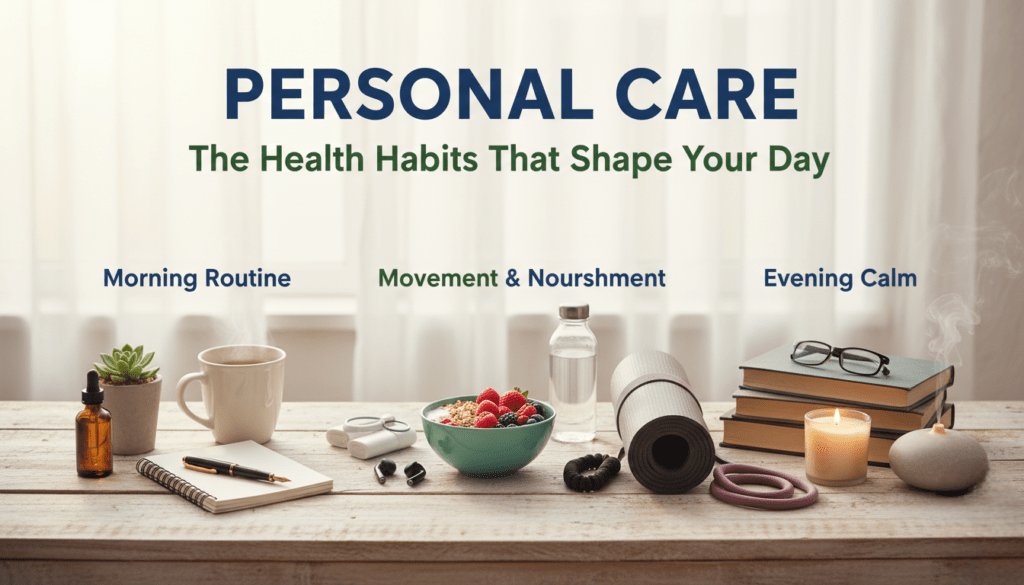
Section 3: Personal Care — The Health Habits That Shape Your Day
Mental Health Is Physical Health
For too long, mental and physical better health were treated as separate domains. We now know they are inseparable. Chronic stress, anxiety, and depression have measurable effects on inflammation, immune function, cardiovascular health, gut health, and hormonal balance.
The Centers for Disease Control and Prevention (CDC) estimates that 1 in 5 Americans experiences a mental health condition in a given year. Yet millions go undiagnosed and untreated.
Practical mental health care includes:
- Stress management techniques — deep breathing, meditation, journaling, time in nature
- Social connection — loneliness has been shown in research to be as harmful as smoking 15 cigarettes per day
- Professional support — therapy, counseling, and psychiatry when needed
- Limiting alcohol and substance use, which worsen anxiety and depression over time
- Digital boundaries — reducing doom-scrolling and setting phone-free periods during the day
Apps like Calm, Headspace, and Woebot have made mental wellness tools more accessible. The Substance Abuse and Mental Health Services Administration (SAMHSA) national helpline (1-800-662-4357) is free and available 24/7 for those in crisis.
Sleep: The Non-Negotiable Health Habit
Sleep is not a luxury. It is a biological necessity. Chronic sleep deprivation is linked to obesity, heart disease, diabetes, cognitive impairment, accidents, and weakened immunity. Yet according to the CDC, about 1 in 3 American adults reports not getting enough sleep regularly.
Building a sleep-supportive routine involves:
- Going to bed and waking at the same time daily — even on weekends
- Keeping your bedroom cool, dark, and quiet
- Avoiding screens for 30 to 60 minutes before bed (blue light suppresses melatonin)
- Cutting off caffeine by early afternoon
- Avoiding large meals or alcohol close to bedtime
If you’re doing everything right and still struggling with sleep, talk to a better healthcare provider about possible sleep disorders like insomnia or sleep apnea.
Preventive Care: Don’t Wait Until You’re Sick
One of the most neglected aspects of better health in America is preventive care. Millions of people only visit a doctor when something is already wrong. But regular checkups, screenings, and vaccinations are among the most cost-effective health investments you can make.
Key preventive care milestones for American adults include:
- Annual physical exam with your primary care physician
- Blood pressure screening — every 1 to 2 years if normal, more frequently if elevated
- Cholesterol screening — starting at age 20, repeated every 4 to 6 years or more frequently based on risk
- Blood glucose/diabetes screening — for adults 35 to 70 who are overweight or obese
- Colorectal cancer screening — beginning at age 45
- Mammogram and cervical cancer screening — per guidelines for women
- Dental cleanings and eye exams — typically annually
The U.S. Preventive Services Task Force (USPSTF) publishes evidence-based screening recommendations that your doctor can help you apply to your individual situation.
Gut Health: The Second Brain
Research into the gut microbiome — the trillions of bacteria, fungi, and other microorganisms living in your digestive tract — has exploded in recent years. We now understand that gut health influences digestion, immunity, mental health, inflammation, and even weight regulation.
Supporting gut health involves:
- Eating a diverse, plant-rich diet with plenty of fiber
- Including fermented foods like yogurt, kefir, sauerkraut, kimchi, and kombucha
- Limiting ultra-processed foods, artificial sweeteners, and alcohol
- Staying hydrated
- Managing stress (the gut-brain connection is real and powerful)
- Taking antibiotics only when truly necessary
Skin and Body Care
Your skin is your largest organ and your first line of defense against the environment. Basic skin better health doesn’t require an expensive 12-step routine — but it does require a few fundamentals:
- Daily SPF — Sun damage is the leading cause of premature skin aging and skin cancer. The Skin Cancer Foundation recommends SPF 15 or higher for daily use, SPF 30+ for time outdoors.
- Moisturization — Keeping your skin barrier intact reduces inflammation and sensitivity.
- Staying hydrated and eating antioxidant-rich foods — Your skin reflects what you eat.
- Annual skin checks — Especially if you have a history of sun exposure or a family history of skin cancer.
Section 4: Navigating Health Information in the USA
Where to Find Trustworthy Health Information
The internet is full of better health misinformation. Knowing which sources to trust is itself a health skill.
Reliable, evidence-based sources include:
- Centers for Disease Control and Prevention (CDC) — cdc.gov
- National Institutes of better Health (NIH) — nih.gov
- MedlinePlus (NIH) — medlineplus.gov
- U.S. Department of Agriculture (USDA) — Nutrition — myplate.gov
- U.S. Department of Health and Human Services — health.gov
- Mayo Clinic — mayoclinic.org
- Harvard T.H. Chan School of Public better Health — hsph.harvard.edu
- Cleveland Clinic — clevelandclinic.org
- American Heart Association — heart.org
- American Diabetes Association — diabetes.org
Be cautious with better health advice from social media influencers, supplement brands, and websites that prioritize selling products over evidence.
Accessing Affordable Healthcare in the USA
One of the biggest barriers to better health in America is cost. Not everyone has comprehensive insurance, and even those who do often face significant out-of-pocket expenses.
Options to explore include:
- HealthCare.gov — The official marketplace for better health insurance, with subsidies available based on income
- Medicaid — Free or low-cost coverage for eligible low-income individuals and families
- Community Health Centers — Federally qualified health centers offer sliding-scale care regardless of insurance status. Find one at findahealthcenter.hrsa.gov
- Free or low-cost clinics — Many nonprofit and faith-based organizations run free clinics
- Telehealth services — Remote doctor visits are often cheaper and more accessible, especially for routine care
Section 5: Building Your Personal Health Plan
The 5 Pillars of a Sustainable Health Lifestyle
After everything we’ve covered, here’s the simplest possible framework:
- Eat mostly whole, minimally processed foods. Fill your plate with vegetables, fruits, whole grains, lean proteins, and healthy fats. Drink plenty of water.
- Move your body every day. You don’t have to be an athlete. Walk, dance, stretch, lift — whatever you enjoy and will keep doing.
- Prioritize sleep. Protect 7 to 9 hours of sleep as a non-negotiable. Everything else improves when you sleep well.
- Manage stress actively. Stress won’t disappear, but you can build real tools to prevent it from damaging your better health.
- See your doctor regularly. Preventive care catches problems early. Don’t wait until symptoms force you in.
Small Steps, Big Results
You don’t have to overhaul your entire life overnight. Research consistently shows that small, sustainable changes compound over time into major better health transformations.
Start with one thing. Add a 10-minute walk after dinner. Swap soda for sparkling water. Go to bed 30 minutes earlier. Cook one meal at home that you’d normally order out. These small wins build confidence and momentum.
Better Health is not a destination. It’s a practice — a series of daily decisions that, over time, add up to a longer, fuller, more energetic life.
Frequently Asked Questions (FAQ)
Q1: What is the most important thing I can do for my health right now?
If you had to pick just one thing, sleep is arguably the highest-leverage habit. Almost every other better health outcome — weight, mood, immune function, cognitive performance, heart btter health — improves when you consistently get 7 to 9 hours of quality sleep per night. If sleep isn’t an issue, the next most impactful change for most Americans is reducing ultra-processed food consumption and replacing it with whole foods.
Q2: How much water should I drink every day?
General guidance is about 8 cups (64 ounces) of water per day as a baseline, but actual needs vary based on your body size, activity level, climate, and health status. The National Academies recommend around 125 ounces total fluid intake for men and 91 ounces for women, including water in food. If your urine is pale yellow, you’re likely well hydrated.
Q3: Do I need to take supplements?
For most healthy adults eating a varied diet, supplements are unnecessary. However, a few are commonly recommended based on widespread deficiencies in the U.S.: Vitamin D (especially in northern climates or limited sun exposure), Omega-3 fatty acids (if you don’t eat fatty fish regularly), and a prenatal vitamin for women who are pregnant or planning to become pregnant. Always talk to your healthcare provider before starting any supplement regimen.
Q4: How do I lose weight in a healthy, sustainable way?
Sustainable weight loss comes from a modest caloric deficit combined with nutrient-dense eating and regular physical activity — not extreme restriction. Crash diets cause muscle loss, metabolic adaptation, and almost always result in weight regain. Aim for a loss of 0.5 to 1 pound per week. Focus on whole foods, adequate protein, and building an active lifestyle you enjoy. The CDC’s weight management resources (cdc.gov/healthyweight) are a good starting point.
Q5: How do I stay motivated to exercise consistently?
Motivation is unreliable — habit and structure are more powerful. Schedule workouts like appointments. Find activities you genuinely enjoy. Start smaller than you think you need to and build gradually. Enlist a workout partner or community for accountability. Track your progress visually. And give yourself permission to have off days — what matters is the pattern over weeks and months, not perfection on any given day.
Q6: Is it too late to get healthy if I’m already middle-aged or older?
Absolutely not. Research consistently shows that health improvements — including starting an exercise program, improving diet, quitting smoking, or losing weight — produce measurable benefits at any age. The body is remarkably adaptive. People who begin regular exercise in their 60s still gain significant cardiovascular and muscular benefits. It’s never too late to start.
Q7: What’s the difference between a dietitian and a nutritionist?
A Registered Dietitian Nutritionist (RDN) has completed accredited academic and clinical training and passed a national exam. They are licensed healthcare professionals. The term “nutritionist” is not legally protected in most states — anyone can call themselves a nutritionist without formal training. For personalized, evidence-based dietary guidance, look for a Registered Dietitian.
Q8: How do I find a good primary care doctor in the USA?
Start by checking your insurance plan’s provider directory. Healthgrades.com, Zocdoc.com, and the HRSA Health Center Finder (findahealthcenter.hrsa.gov) are helpful tools. Ask for referrals from people you trust. When meeting a new doctor, pay attention to whether they listen, explain things clearly, and treat you as a partner in your care — not just a set of symptoms.
Sources and References
The information in this article draws from the following authoritative sources:
- National Institutes of Health (NIH) – Vitamin D Fact Sheet
- https://ods.od.nih.govNational Academies of Sciences – Dietary Reference Intakes
- https://www.nationalacademies.orgAmerican Academy of Sleep Medicine – Healthy Sleep Habits
- https://sleepeducation.orgSAMHSA – National Helpline
- https://www.samhsa.govU.S. Preventive Services Task Force (USPSTF)
- https://www.uspreventiveservicestaskforce.orgThe Skin Cancer Foundation – Sun Protection
- https://www.skincancer.orgMayo Clinic – Nutrition and Healthy Eating
- https://www.mayoclinic.orgHarvard T.H. Chan – The Nutrition Source
- https://hsph.harvard.edu/nutritionsourceAmerican Heart Association – Healthy Living
- https://www.heart.orgMedlinePlus – Health Information
- https://medlineplus.govHRSA – Find a Health Center
- https://findahealthcenter.hrsa.gov
Final Thoughts
Better health isn’t a product you buy or a program you follow for 30 days. It’s a lifelong relationship with your own body — one built on knowledge, consistency, and self-compassion.
The USA has some of the world’s leading health institutions, research, and care options. But all the resources in the world only matter if you take the first step — and then keep taking it, one day at a time.
You don’t have to be perfect. You just have to keep trying. Your body is worth it.

Natural home remedies, skincare secrets, dental & eye health tips, and real product reviews to help you stay healthy the natural way.