


Quick Answer: The fastest way to calm a migraine is to combine five things at once: retreat to a dark, quiet room; apply a cold compress to your forehead or neck; press the LI4 acupressure point between your thumb and index finger; sip water or a small amount of caffeine within the first 30 minutes of onset; and use slow, diaphragmatic breathing to calm your nervous system. None of these replace medical treatment, but together they can shorten an attack and reduce its intensity while you wait for medication to work or for the episode to pass.
If you have ever searched how to get rid of a headache in the middle of an attack, you already know the feeling: throbbing pain behind one eye, light that suddenly feels like a spotlight, and a wave of nausea that makes it hard to think straight. Migraine is not “just a bad headache.” It is a neurological condition that affects roughly 1 in 7 people worldwide, and it is one of the leading causes of disability for people under 50, according to global health data cited by the Mayo Clinic. When an attack hits, most people do not want a long lecture on triggers and prevention — they want migraine relief right now, in whatever form works fastest.
This guide breaks down five practical, evidence-informed tips for instant migraine relief, explains the science behind why each one works, rounds up natural remedies for migraine headache that people swear by, and shares what real patients are saying about migraine relief at home across Reddit threads, health forums, and patient communities. We’ll also cover migraine treatment at home options you can combine for faster results, and we’ll answer the question everyone asks mid-attack: what gets rid of a headache fast, when you don’t have time to wait it out.
Migraine vs. Headache: Why It Matters for Treatment
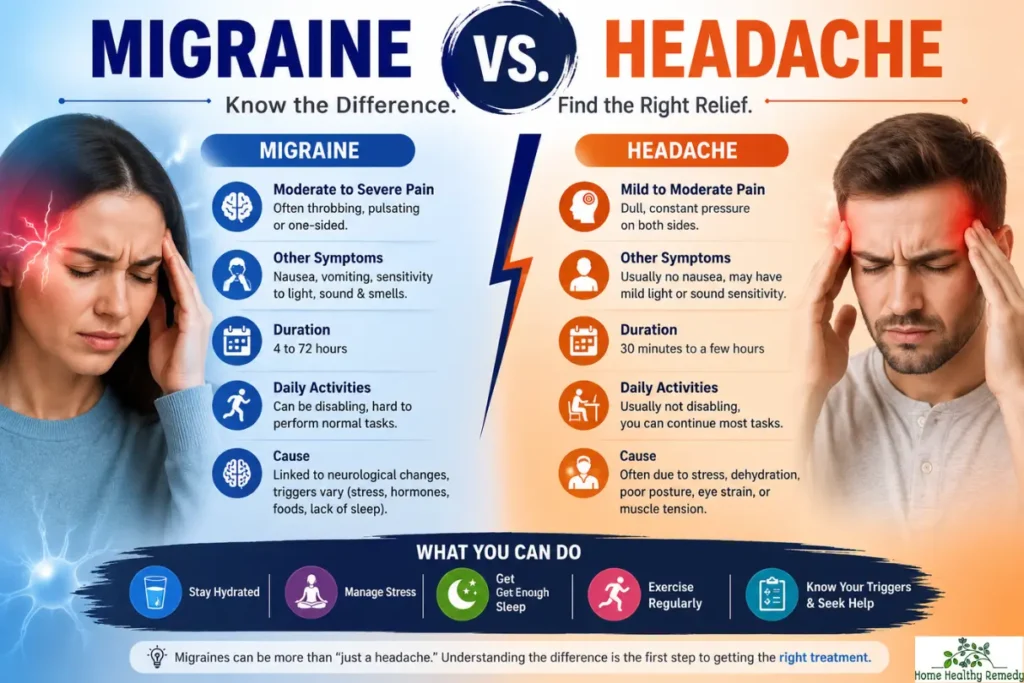
Before diving into relief techniques, it helps to understand what you’re actually treating. A tension headache is usually a dull, band-like pressure around the head, often caused by stress or muscle tension. A migraine is a distinct neurological event involving changes in brain activity, blood vessel behavior, and nerve signaling — specifically the trigeminal nerve pathway, which carries pain signals to the brain. That’s why generic advice on how to get rid of a headache doesn’t always translate to migraine relief; migraines often need a more targeted, multi-pronged approach that addresses inflammation, blood flow, and sensory overload simultaneously.
Common migraine symptoms include:
- Throbbing or pulsing pain, usually on one side of the head
- Sensitivity to light (photophobia) and sound (phonophobia)
- Nausea or vomiting
- Visual disturbances or “aura” before the pain starts
- Neck stiffness or tension in the days leading up to an attack
Understanding this distinction is the first step toward effective migraine treatment at home, because it tells you which remedies are worth trying first.
Tip 1: Use Temperature Therapy — Cold, Heat, or Both
Cold and heat therapy remain some of the most accessible tools for migraine relief at home, and they’re backed by decades of clinical observation. Cold compresses work by numbing the area, reducing local inflammation, and constricting dilated blood vessels — one of the physiological changes believed to drive migraine pain. Simply wrap ice or a gel pack in a thin towel and apply it to your forehead, temples, or the back of your neck for 15–20 minutes at a time.
Heat, on the other hand, is often more effective when a migraine is linked to muscle tension in the neck and shoulders. A warm compress or heating pad placed at the base of the skull can relax tight muscles and improve local circulation. Some people find that alternating cold and heat — cold on the forehead, heat on the neck — offers a more complete response by addressing both the vascular and muscular components of the pain at the same time.
Quick tip: Keep a reusable gel pack in the freezer at all times. When you’re searching for what gets rid of a headache fast, not having to wait for ice to form can save precious minutes.
Tip 2: Try Acupressure — Especially the LI4 Point
Acupressure is one of the most searched natural remedies for migraine headache, and for good reason: it’s free, requires no equipment, and can be done anywhere. The most commonly recommended point is LI4 (Hegu), located in the fleshy webbing between your thumb and index finger.
To use it:
- Locate the highest point of the muscle bulge when you press your thumb and index finger together.
- Use the thumb of your opposite hand to apply firm, steady pressure.
- Hold for 30 seconds to 2 minutes, breathing slowly and deeply.
- Repeat on the other hand, and reapply every few hours if needed.
Other points people use for fast relief include GB20, at the base of the skull where the neck muscles attach, and the temples, gently massaged in small circles. A systematic review published in the journal Advances in Traditional Medicine found that acupressure showed measurable benefit for migraine-related pain and nausea, although researchers note that larger, higher-quality trials are still needed to confirm exactly how much relief it provides compared to standard care.
Acupressure should be avoided at the LI4 point during pregnancy, since it has traditionally been associated with stimulating uterine contractions.
Tip 3: Hydrate Immediately — Water, Electrolytes, and a Pinch of Salt
Dehydration is one of the most common and most overlooked migraine triggers. Even mild fluid loss can reduce blood volume and trigger the kind of vascular changes associated with migraine onset. If you feel an attack building, don’t wait — start drinking water immediately.
For faster absorption, add a pinch of salt or an electrolyte tablet to your water, especially if you’ve been sweating, vomiting, or haven’t eaten in a while. This is one of the simplest forms of migraine relief at home, and it costs nothing.
A few hydration tips that consistently show up in both clinical guidance and patient discussions:
- Keep a reusable water bottle within reach throughout the day, not just during an attack.
- Add a slice of lemon, cucumber, or a few berries if plain water is hard to get down during nausea.
- Avoid excess alcohol and diuretic beverages when you’re prone to frequent migraines, since they accelerate fluid loss.
Tip 4: Use Caffeine Strategically — But Watch the Rebound Effect
Caffeine has a complicated relationship with migraines: it can be both a trigger and a treatment, depending on timing and dose. Taken within the first 30 minutes of an attack, a small amount of caffeine can help constrict dilated blood vessels and may even boost the effectiveness of over-the-counter pain relievers like acetaminophen or aspirin — this is actually why many combination migraine medications include caffeine as an active ingredient.
The catch: overusing caffeine, or relying on it every single time, can lead to withdrawal headaches and make future attacks harder to manage. A general rule that shows up across medical guidance is to treat caffeine as an occasional, early-stage tool for migraine relief, not a daily habit.
Tip 5: Create a Sensory Reset — Dark Room, Silence, and Breathing
Migraines amplify your sensitivity to light, sound, and even smell. Research referenced by Harvard Medical School has pointed to a direct neurological pathway connecting the eyes to the brain regions that become overactive during a migraine — which explains why bright light can make the pain noticeably worse within minutes.
The fix is straightforward but powerful: move to a dark, quiet room as soon as symptoms start. Close the curtains, turn off screens, and if you can’t fully darken the room, use a sleep mask and earplugs. Pair this environment with slow, diaphragmatic breathing — inhaling for four counts, holding briefly, and exhaling for six — to lower your heart rate and reduce the stress hormones that tend to intensify migraine pain.
This single step is consistently mentioned across patient forums as the fastest form of migraine relief at home, largely because it removes the sensory input that keeps feeding the pain cycle.
Natural Remedies for Migraine Headache Worth Adding to Your Toolkit
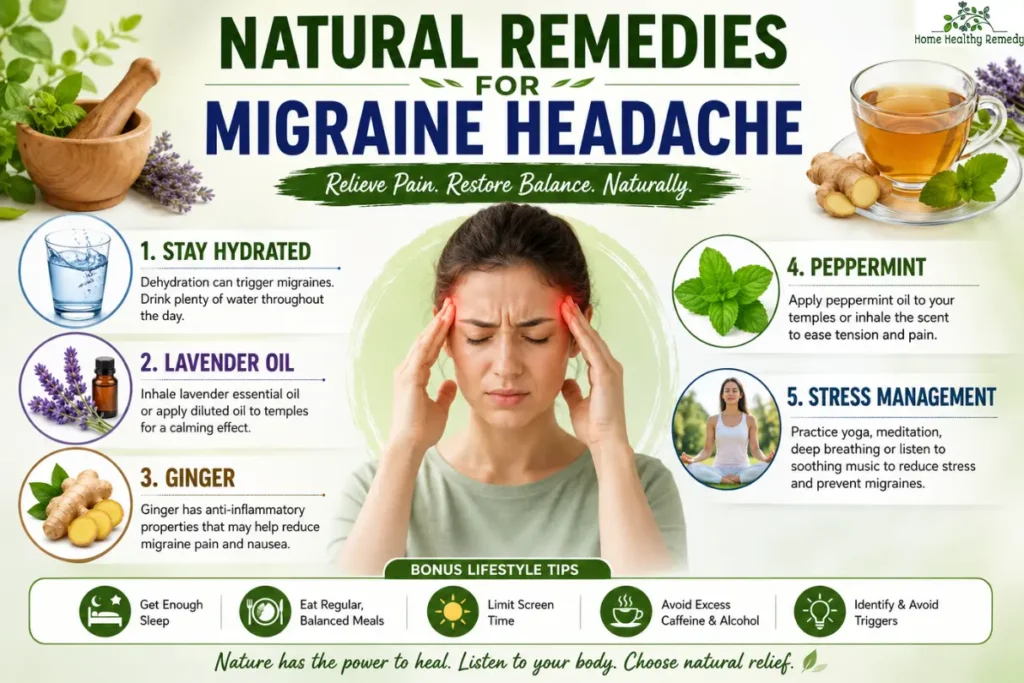
Beyond the five core tips above, there’s a wider set of natural remedies for migraine headache that people use as part of a broader migraine treatment at home routine. These aren’t instant fixes for every attack, but many have research behind them.
Magnesium
Magnesium deficiency has been linked to migraine frequency and severity in multiple studies. Research reviews note that magnesium may help regulate the nerve excitability and vascular changes involved in migraine attacks, and some randomized trials have shown a meaningful reduction in migraine symptoms and disease burden when magnesium is combined with riboflavin and CoQ10. That said, results across individual magnesium trials have been mixed, so it’s best viewed as a possible preventive supplement rather than a guaranteed rescue treatment — and it’s worth discussing with a doctor before starting, especially at higher doses.
Peppermint Oil
Topical peppermint oil, diluted in a carrier oil and applied to the temples and forehead, has shown effectiveness comparable to standard pain relievers in some placebo-controlled studies of tension-type headache. Its active compound, menthol, is thought to affect pain receptors and improve local blood flow. A double-blind clinical trial comparing peppermint essential oil drops to intranasal lidocaine found a similarly high rate of headache reduction in both groups, suggesting peppermint oil may be a legitimate drug-free option worth trying at the first sign of pain.
Ginger
Ginger has a long track record as a natural remedy for migraine-related nausea, and some research suggests its active compounds — gingerol and zingerone — may also have anti-inflammatory and neuroprotective effects that support migraine relief more broadly. A warm cup of ginger tea at the onset of symptoms is a low-risk option many people include in their migraine relief at home routine.
Riboflavin (Vitamin B2)
Several clinical guidelines list riboflavin as a well-tolerated option for reducing migraine frequency over time, particularly as part of a combination supplement approach alongside magnesium and CoQ10.
Lavender Oil
Inhaled lavender oil has been studied for its calming, sedative properties. Short inhalation sessions — around 15 minutes — have shown reductions in headache severity in small clinical trials, likely by lowering stress and anxiety levels that can otherwise intensify pain.
What Real People Say Works: Migraine Relief Discussions Across Social Media and Patient Communities
Beyond clinical research, some of the most practical insight on migraine relief at home comes from the lived experience shared across Reddit’s migraine communities, patient forums, and Facebook support groups. A few patterns show up again and again in these discussions:
- Combining techniques beats relying on one fix. People consistently report that no single remedy works every time, but stacking a dark room, a cold compress, hydration, and an early dose of medication or caffeine tends to shorten attacks more reliably than any one method alone.
- Speed matters more than the specific remedy. Across patient discussions, the most repeated piece of advice is to act at the very first sign of an aura or warning symptom, rather than waiting to see if the pain will pass on its own. Early intervention consistently comes up as the difference between a short, manageable episode and a multi-day attack.
- Tracking triggers changes outcomes over time. Many long-time migraine sufferers describe headache diaries or tracking apps as the single most useful long-term habit, since patterns around food, sleep, hormones, and stress often aren’t obvious until they’re written down.
- Sensory overload is a universal trigger. Whether the conversation is about screen time, fluorescent office lighting, or loud environments, sensory overstimulation is one of the most frequently cited factors that turns a mild headache into a full migraine attack.
- People want realistic expectations, not miracle cures. A recurring theme in online discussions is frustration with remedies marketed as guaranteed fixes. Most experienced patients describe relief as incremental — each step reduces the pain a little, rather than one tip eliminating it entirely.
This kind of real-world, crowd-sourced insight is a useful complement to clinical research, because it reflects what actually happens when people try these strategies during a live attack, not just in a controlled study setting.
Diet and Food Triggers: A Hidden Piece of the Migraine Puzzle
Many people searching for migraine relief at home overlook how much diet influences attack frequency. Certain foods are well-documented migraine triggers for a large subset of people, including aged cheeses, processed and cured meats, chocolate, alcohol (especially red wine), and foods containing MSG or artificial sweeteners. That doesn’t mean everyone needs to avoid these foods — triggers are highly individual — but keeping a simple food diary alongside a headache log can help you spot patterns that are otherwise easy to miss.
Skipping meals is another underrated trigger. Blood sugar drops can bring on a migraine just as reliably as a known food sensitivity. Eating at consistent times, with a mix of protein, complex carbohydrates, and healthy fats, helps keep blood sugar stable throughout the day. Some people also find that increasing omega-3 intake — through fatty fish, walnuts, or flaxseed — modestly reduces headache frequency and severity over time, based on dietary research reviewed by major health institutions.
If you’re building a long-term migraine treatment at home plan, treat diet as a slow-burn strategy rather than an instant fix. It won’t stop an attack that’s already underway, but it can reduce how often you need emergency relief tactics in the first place.
Sleep, Stress, and the Migraine-Prevention Connection
Poor sleep is one of the most consistent migraine triggers reported across both clinical research and patient communities. Irregular sleep schedules, too little sleep, and even oversleeping on weekends can all set off an attack. Keeping a consistent bedtime and wake time — even on days off — helps regulate the body’s internal clock and appears to reduce how frequently migraines occur.
A few habits that support better sleep and, by extension, fewer migraines:
- Keep the bedroom cool, dark, and quiet, using blackout curtains or a sleep mask if needed
- Avoid screens for at least 30–60 minutes before bed, since blue light can disrupt melatonin production
- Limit caffeine intake in the afternoon and evening, since it can both disrupt sleep and set up a rebound headache
- Use a white noise machine if outside noise is inconsistent
Stress management deserves equal attention. Deep breathing, progressive muscle relaxation, and even short walks outside can lower the cortisol spikes that often precede an attack. Some patients also find that structured relaxation practices, like guided meditation apps or short yoga sessions, reduce both the frequency and intensity of migraines over several weeks of consistent use. None of these are instant fixes for how to get rid of a headache in the moment, but they meaningfully shrink how often you need one.
Gentle Movement and Yoga for Migraine Support
While intense exercise can sometimes trigger a migraine, gentle movement — particularly yoga — has shown promise as a complementary approach. Some research comparing yoga practice alongside standard migraine care found reductions in headache frequency, intensity, and duration compared to standard care alone. The proposed mechanism involves improved blood flow, reduced muscle tension in the neck and shoulders, and lower overall stress levels.
Simple, low-impact poses that focus on the neck, shoulders, and upper back tend to be the most relevant for migraine sufferers, since tension in these areas is a frequent contributor to attacks. As with most natural remedies for migraine headache, yoga works best as a preventive habit practiced regularly, rather than something to start mid-attack.
Tracking Your Migraines: Turning Data Into Faster Relief
One habit that keeps coming up in both clinical guidance and patient discussions is the migraine diary. Recording the date, time, duration, intensity, and possible triggers of each attack — along with what actually provided relief — gives you (and your doctor) a clearer picture over time. Several smartphone apps are built specifically for this, letting you log symptoms and treatments in seconds and spot patterns you might otherwise miss.
Interestingly, some researchers now suggest that trying to avoid every possible trigger isn’t always the best long-term strategy, since constant avoidance may actually increase sensitivity to those triggers. A more balanced approach involves gradual, manageable exposure combined with stress-reduction techniques, ideally guided by a healthcare professional. Either way, the data from a few weeks of tracking often reveals faster paths to migraine relief than guesswork alone.
Building a Simple Migraine Treatment at Home Routine
If you experience migraines regularly, it helps to have a step-by-step routine ready before an attack starts, rather than figuring it out in the moment. Here’s a simple sequence that draws on the tips above:
- At the first sign of symptoms: Move to a dim, quiet space and drink a full glass of water.
- Within 5 minutes: Apply a cold compress to your forehead or neck, and begin slow breathing.
- Within 10 minutes: Apply acupressure to LI4 and your temples for 1–2 minutes each.
- Within 15–30 minutes: If appropriate for you, take a small amount of caffeine or your prescribed medication.
- If nausea is present: Sip ginger tea slowly, in small amounts.
- Throughout: Continue resting in the dark, quiet environment until symptoms ease.
This layered approach reflects how most successful migraine treatment at home strategies actually work — not as a single silver bullet, but as a combination of small interventions that each chip away at the pain from a different angle.
When Home Remedies Aren’t Enough: Red Flags to Watch For
While most migraines can be managed with the strategies above, some symptoms require urgent medical attention. According to guidance echoed by the Mayo Clinic and other major health institutions, you should seek emergency care if you experience:
- A sudden, severe headache described as “the worst headache of your life”
- A headache accompanied by fever, stiff neck, confusion, or seizures
- Sudden vision changes, difficulty speaking, weakness, or numbness unrelated to your usual migraine aura
- A headache following a recent head injury
- A migraine that lasts longer than 72 hours without relief
If your migraines are becoming more frequent, more severe, or resistant to your usual migraine relief strategies, it’s worth talking to a doctor or neurologist about preventive treatment options rather than continuing to manage each attack in isolation.
Frequently Asked Questions
What gets rid of a headache fast?
For most people, the fastest relief comes from combining a few simple actions at once: retreating to a dark, quiet room, applying a cold compress, hydrating immediately, and using acupressure on the LI4 point. Over-the-counter pain relievers can also help when taken early, ideally within the first 30 minutes of symptoms starting.
How to get rid of a headache without medication?
Non-medication options include cold or heat therapy, acupressure, hydration, caffeine in small amounts, breathing exercises, and resting in a dark, quiet room. These techniques won’t work identically for everyone, but combining two or three at once tends to produce better results than relying on just one.
What are the best natural remedies for migraine headache?
Some of the most commonly used natural remedies include magnesium, peppermint oil applied topically, ginger tea for nausea, riboflavin, and lavender oil for its calming effect. These work best as part of an ongoing routine rather than a single emergency fix.
Can migraine relief at home really replace medication?
For mild to moderate attacks, home strategies can meaningfully reduce pain and duration. For moderate to severe migraines, they typically work best alongside prescribed or over-the-counter medication rather than as a full replacement.
How long does it take for migraine treatment at home to work?
Cold therapy and acupressure can offer noticeable relief within 15–30 minutes for some people. Hydration and dietary fixes tend to help more gradually, over 30 minutes to a few hours. Consistency and early intervention both make a significant difference in how quickly relief arrives.
Is caffeine good or bad for migraines?
Both, depending on how it’s used. A small amount early in an attack can help relieve pain, but frequent or excessive caffeine intake can trigger rebound headaches and make migraines harder to manage long term.
Final Thoughts
Migraines can feel unpredictable, but the response doesn’t have to be. Whether you’re focused on how to get rid of a headache the moment it starts, or building a long-term plan for migraine relief at home, the most effective approach almost always combines several small, low-risk techniques rather than depending on one single remedy. Cold therapy, acupressure, hydration, careful caffeine use, and a calm, dark environment form a solid foundation — and natural remedies like magnesium, peppermint oil, and ginger can round out a more complete migraine treatment at home routine over time.
If migraines are a frequent part of your life, treat these tips as your first line of defense, but don’t hesitate to loop in a healthcare provider for a long-term prevention plan. The goal isn’t just surviving the next attack — it’s reducing how often you have to ask what gets rid of a headache fast in the first place.
Scientific Sources and References
- Mayo Clinic — Migraines: Simple Steps to Head Off the Pain — mayoclinic.org
- National Center for Complementary and Integrative Health (NCCIH) — Research on peppermint oil and headache management — nccih.nih.gov
- PubMed / National Library of Medicine — Magnesium and Migraine, systematic evidence review — pubmed.ncbi.nlm.nih.gov
- PubMed / NCBI — Improvement of Migraine Symptoms with a Proprietary Supplement Containing Riboflavin, Magnesium, and Q10 — ncbi.nlm.nih.gov/pmc
- PubMed — Effectiveness of Oleum Menthae Piperitae and Paracetamol in Therapy of Tension-Type Headache — pubmed.ncbi.nlm.nih.gov
- PMC / National Institutes of Health — Comparing Intranasal Lidocaine with Peppermint Essential Oil Drops on Migraine Attacks — pmc.ncbi.nlm.nih.gov
- Cleveland Clinic — Guidance on acupressure and reflexology for headache and migraine relief — my.clevelandclinic.org
This article is for informational purposes only and does not replace professional medical advice. If you experience severe, sudden, or worsening migraine symptoms, seek medical attention promptly.

Natural home remedies, skincare secrets, dental & eye health tips, and real product reviews to help you stay healthy the natural way.