

If you’ve ever had a routine blood test and seen “ALP” listed on your results, you might have wondered what it means and why it matters. Alkaline phosphatase (ALP) is one of those medical terms that sounds complicated but is actually something your doctor checks regularly to get a picture of your overall health. Whether your levels came back normal, slightly elevated, or unusually low, understanding alkaline phosphatase (ALP) can help you have a much more informed conversation with your healthcare provider.
In this article, we’re going to break everything down in plain language — what alkaline phosphatase (ALP) actually is, how it works inside your body, what normal and abnormal levels look like, what causes them to go up or down, and what you can do about it. Let’s get into it.
What Is Alkaline Phosphatase (ALP)?
Alkaline phosphatase (ALP) is an enzyme — and if you don’t remember your biology classes, an enzyme is basically a type of protein that acts like a worker inside your cells. It speeds up chemical reactions and helps your body carry out all sorts of processes that keep you alive and functioning. There are literally thousands of enzymes in your body, each with their own specific job.
Alkaline phosphatase (ALP) specifically is a phosphatase, which means its main job involves a process called dephosphorylation — essentially removing phosphate groups from molecules. This sounds incredibly technical, but the bottom line is that this process is important for a range of functions involving your liver, bones, kidneys, and digestive system.
What makes alkaline phosphatase (ALP) interesting is that it’s not found in just one place. It’s literally found throughout your entire body. However, the highest concentrations show up in your liver, bile ducts, bones, kidneys, and intestines. Because it’s so widespread, when your ALP levels in the bloodstream are off, it can point to issues in any one of these areas.
The “alkaline” in the name refers to the pH environment where the enzyme works best. Alkaline phosphatase (ALP) is most active at a higher pH (around 8–10), which is why it’s called “alkaline.” This is in contrast to acid phosphatase, which works in more acidic environments.
The Different Types of Alkaline Phosphatase (ALP): Isoenzymes
Here’s something most people don’t realize: not all alkaline phosphatase (ALP) is the same. There are actually four distinct isoenzymes of ALP, and each one comes from a different part of your body. Understanding these isoenzymes is important because when your doctor needs to figure out why your ALP is high, identifying which type of alkaline phosphatase is elevated can point them directly to the problem.
The four isoenzymes of alkaline phosphatase (ALP) are:
1. Liver/Bone/Kidney ALP (Tissue Non-Specific ALP or TNALP) This is the most common form of alkaline phosphatase (ALP) found in blood tests. As the name suggests, it comes from your liver, bones, and kidneys. When you get a standard ALP test, this is usually the predominant type being measured. Liver disease and bone disorders both elevate this isoenzyme, which is why further testing is often needed to figure out which organ is causing the elevation.
2. Intestinal ALP This type of alkaline phosphatase (ALP) is produced in your intestines and plays a role in fat digestion and nutrient transport. Its levels in the blood can rise after a fatty meal, which is one reason why fasting is sometimes recommended before an ALP test.
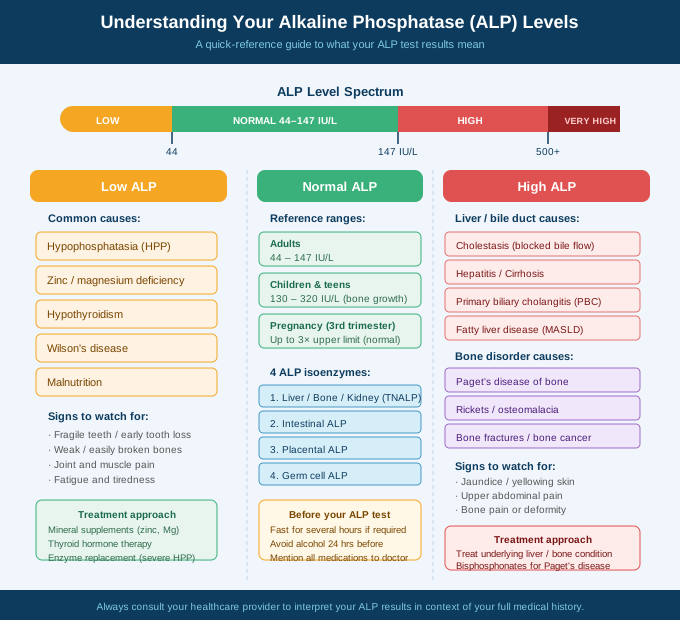
3. Placental ALP Produced by the placenta during pregnancy, this isoenzyme is a completely normal and expected rise in alkaline phosphatase (ALP) levels in pregnant women. Levels can rise up to three times the normal limit by the third trimester and are typically not a cause for concern.
4. Germ Cell ALP This isoenzyme is associated with germ cells and can sometimes be elevated in certain types of cancer, making it a potential cancer biomarker in some clinical settings.
When a doctor orders an ALP isoenzyme test — which is a more specialized (and expensive) follow-up to the standard ALP test — they can identify exactly which type of alkaline phosphatase (ALP) is elevated, which significantly narrows down the diagnosis.
What Does Alkaline Phosphatase (ALP) Actually Do in Your Body?
This is where it gets interesting. Despite decades of scientific research, the full range of alkaline phosphatase (ALP) functions is still not completely understood. However, researchers have identified several key roles this enzyme plays:
Bone Mineralization One of the most well-understood roles of alkaline phosphatase (ALP) is its involvement in bone formation. The bone isoenzyme of ALP, produced by osteoblasts (the cells responsible for building bone), helps regulate the mineralization process. It does this by increasing the ratio of inorganic phosphate to pyrophosphate, which facilitates the deposition of calcium phosphate crystals into bone tissue. Essentially, alkaline phosphatase (ALP) helps your bones harden and develop properly. This is why children and teenagers — whose bones are still growing — naturally have much higher ALP levels than adults.
Liver Function and Bile Duct Support In the liver, alkaline phosphatase (ALP) plays a supportive role in transporting nutrients and other enzymes. It’s also closely associated with the bile ducts — the tubes that carry bile from your liver to your gallbladder and small intestine. When bile flow is blocked (a condition called cholestasis), the liver cells release more alkaline phosphatase (ALP) into the bloodstream, which is why blocked bile ducts are one of the classic causes of elevated ALP.
Intestinal Functions In the gut, alkaline phosphatase (ALP) contributes to the digestion of fats and the transport of fatty acids, calcium, and phosphates. It may also play a role in maintaining a healthy intestinal environment, potentially helping to neutralize bacterial toxins that could otherwise cause inflammation.
Kidney Support The kidneys contain alkaline phosphatase (ALP) as well, where it assists in various metabolic processes. Kidney disease can sometimes affect ALP levels, though this is less commonly the primary driver of abnormal results compared to liver and bone conditions.
Normal Alkaline Phosphatase (ALP) Levels: What Should Your Numbers Be?
One of the most confusing things about alkaline phosphatase (ALP) results is that “normal” isn’t just one number — it varies depending on where you get tested, your age, your sex, and even whether you’re pregnant.
Here’s a general breakdown:
Adults (General Range) The most commonly cited reference range for alkaline phosphatase (ALP) in adults is 44–147 IU/L (international units per liter), though some organizations suggest a slightly different range of 30–120 IU/L. The UK’s National Health Service (NHS) uses a reference range of 30–130 IU/L for adults aged 18 and over. Because labs use different methods and equipment, it’s always important to look at the specific reference range provided on your own lab report rather than relying on a general number.
Children and Adolescents This is where people are often surprised. Alkaline phosphatase (ALP) levels in children and teenagers are significantly higher than in adults — often in the range of 130–320 IU/L. This is completely normal and expected because their bones are actively growing and developing. During puberty especially, ALP levels spike because bone activity is at its highest. So if you see a high number on a child’s blood test, it doesn’t automatically mean something is wrong.
Adult Women Women generally have ALP levels similar to men, roughly in the 20–140 IU/L range. However, during pregnancy, alkaline phosphatase (ALP) levels rise substantially — sometimes up to three times the upper limit of normal — because the placenta produces its own form of the enzyme. This is a normal and expected physiological change.
Older Adults ALP levels tend to creep up a bit with age, so slightly higher readings in elderly individuals are not necessarily a red flag.
The key takeaway here is that context matters enormously with alkaline phosphatase (ALP) levels. A number that looks alarming on paper might be completely normal for your age, sex, or life stage.
What Causes High Alkaline Phosphatase (ALP) Levels?
Elevated alkaline phosphatase (ALP) is the more common abnormality seen in routine blood work, and the causes are diverse. Broadly, high ALP tends to come from either the liver/bile ducts or from the bones — though other causes exist too.
Liver and Bile Duct Causes
Cholestasis This refers to impaired or blocked bile flow, and it’s one of the most classic causes of elevated alkaline phosphatase (ALP). When bile can’t flow properly through the ducts, liver cells release large amounts of ALP into the bloodstream. Cholestasis can result from gallstones, tumors compressing the bile ducts, or inflammatory conditions.
Primary Biliary Cholangitis (PBC) and Primary Sclerosing Cholangitis (PSC) These are chronic inflammatory conditions that progressively damage the bile ducts inside and outside the liver. Both conditions cause persistently elevated alkaline phosphatase (ALP) and require long-term medical management.
Hepatitis Inflammation of the liver — whether from viral hepatitis (A, B, or C), alcoholic hepatitis, or autoimmune hepatitis — can elevate ALP levels. Alkaline phosphatase (ALP) elevation tends to be moderate in hepatitis, while other liver enzymes like ALT and AST are more dramatically elevated.
Cirrhosis This is advanced, scarred liver tissue resulting from chronic liver damage. Alkaline phosphatase (ALP) is often elevated in cirrhosis, alongside many other liver markers.
Fatty Liver Disease Metabolic-associated steatotic liver disease (MASLD), previously known as non-alcoholic fatty liver disease (NAFLD), involves fat accumulation in the liver. ALP is one of the markers used in the diagnostic process for fatty liver, though it’s not the only one.
Biliary Atresia A rare but serious condition in newborns where the bile ducts are blocked or absent, leading to dramatically elevated alkaline phosphatase (ALP) levels and liver damage if not treated.
Bone-Related Causes
Paget’s Disease of Bone This is one of the most significant bone-related causes of very high alkaline phosphatase (ALP). In Paget’s disease, the normal cycle of bone breakdown and rebuilding goes haywire, causing bones to become enlarged, weakened, and deformed. Because osteoblast activity is massively increased, ALP production skyrockets — sometimes to ten or more times the normal level.
Bone Fractures Even a straightforward bone fracture temporarily raises alkaline phosphatase (ALP) as bone cells work to heal and rebuild the damaged tissue.
Rickets and Osteomalacia These conditions involve softening of the bones, typically due to vitamin D deficiency. In both rickets (in children) and osteomalacia (in adults), alkaline phosphatase (ALP) levels are elevated because the body is desperately trying to mineralize bone tissue that isn’t hardening properly.
Bone Cancers and Metastases Cancers that either originate in bone or spread to bone from other organs (such as breast, prostate, or lung cancer) can cause significant elevation in alkaline phosphatase (ALP) as the bone tissue becomes disrupted.
Other Causes of High ALP
- Pregnancy: As mentioned, this is a normal physiological cause due to placental ALP production.
- Hodgkin Lymphoma: This type of cancer can elevate alkaline phosphatase (ALP) levels.
- Overactive Parathyroid (Hyperparathyroidism): Excess parathyroid hormone stimulates bone turnover, which increases ALP.
- Certain Medications: Some drugs — including certain antibiotics, anti-seizure medications, and birth control pills — can raise alkaline phosphatase (ALP) levels.
- Infection/Sepsis: Severe infections and sepsis can sometimes drive ALP levels extremely high (above 1,000 IU/L in some cases).
- Eating Before the Test: For some individuals, eating a fatty meal before the blood draw can temporarily raise intestinal ALP levels.
What Causes Low Alkaline Phosphatase (ALP) Levels?
Low alkaline phosphatase (ALP) is less commonly discussed, but it can be just as medically significant as elevated levels. Doctors sometimes overlook low ALP because it doesn’t generate as much attention as high values, but persistently low alkaline phosphatase (ALP) absolutely warrants investigation.
Hypophosphatasia (HPP) This is the most well-known and clinically significant cause of chronically low alkaline phosphatase (ALP). Hypophosphatasia is a rare inherited metabolic disorder caused by mutations in the ALPL gene, which is responsible for producing the tissue non-specific form of alkaline phosphatase (ALP). Because this enzyme plays a crucial role in bone mineralization, people with hypophosphatasia often experience fragile teeth (which may fall out in early childhood), weak and easily fractured bones, joint pain, and muscle weakness. In severe cases, especially in newborns, the condition can be life-threatening. Treatment for severe hypophosphatasia involves enzyme replacement therapy with a drug called asfotase alfa.
Malnutrition and Nutritional Deficiencies Low alkaline phosphatase (ALP) can result from deficiencies in zinc, magnesium, vitamin B12, or vitamin C. Zinc and magnesium, in particular, are important cofactors that alkaline phosphatase (ALP) needs to function properly. Without adequate levels of these minerals, the enzyme activity drops.
Hypothyroidism An underactive thyroid gland can slow down bone turnover and metabolic activity, leading to lower-than-normal alkaline phosphatase (ALP) levels.
Wilson’s Disease This rare genetic condition causes copper to build up in the liver, brain, and other organs. It is associated with low alkaline phosphatase (ALP) levels and can be a diagnostic clue for the condition.
Pernicious Anemia Severe vitamin B12 deficiency leading to pernicious anemia can also reduce alkaline phosphatase (ALP) levels.
The Alkaline Phosphatase (ALP) Test: What to Expect
If your doctor orders an alkaline phosphatase (ALP) test, there’s no need to stress. It’s a simple blood test that’s typically included as part of either a comprehensive metabolic panel (CMP) or a liver function panel (LFT/HFP). Here’s what the process looks like:
Preparation In many cases, alkaline phosphatase (ALP) is tested alongside other liver enzymes that require fasting. Your doctor may instruct you to fast (avoid eating or drinking anything except water) for several hours before the test. This is especially relevant if you tend to have elevated intestinal ALP after fatty meals. You should also let your doctor know about any medications or supplements you’re taking, as some can affect ALP levels.
The Blood Draw The test itself involves a simple blood draw from a vein, usually in your arm. The process takes just a few minutes and involves minimal discomfort. As with any blood test, minor side effects like bruising or slight soreness at the needle site can occur, but these typically resolve quickly.
Getting Your Results Results are usually available within one to two days. The lab report will show your ALP value alongside the reference range used by that specific lab. Keep in mind, as we discussed earlier, that normal ranges vary by laboratory and should be interpreted in the context of your age, sex, and overall health.
Follow-Up Testing If your alkaline phosphatase (ALP) is abnormal, your doctor may order additional tests to pinpoint the cause. These might include:
- ALP isoenzyme test — to identify which organ is producing the excess ALP
- Liver function tests (LFTs) — including ALT, AST, GGT, and bilirubin
- Bone-specific ALP — a targeted test for bone isoenzyme activity
- Imaging studies — such as ultrasound, CT scan, MRI, or bone scan
- Liver biopsy — in cases of suspected serious liver disease
How Doctors Interpret Alkaline Phosphatase (ALP) Results
Interpreting alkaline phosphatase (ALP) results is never done in isolation. Your doctor will look at the whole picture — your symptoms, medical history, other blood test results, and lifestyle factors. Here’s a general guide to how different patterns of elevation are typically interpreted:
Mildly Elevated ALP (up to 3× the upper limit of normal) This can often be a non-specific finding. It might be due to medications, a recent fatty meal, age-related changes, or mild liver conditions. Your doctor might simply repeat the test in a few weeks to see if it normalizes.
Moderately Elevated ALP (3–10× the upper limit of normal) This level of elevation usually triggers further investigation. If liver tests are also elevated, the problem is likely in the liver or bile ducts. If other liver tests are normal, a bone disorder is more likely.
Severely Elevated ALP (10× or more above normal) This is a significant red flag. Very high alkaline phosphatase (ALP) levels are often associated with serious liver disease, advanced bone disease like Paget’s disease, or in some cases, sepsis or cancer. Urgent evaluation is warranted.
The GGT (gamma-glutamyl transferase) test is frequently used alongside alkaline phosphatase (ALP) because GGT is rarely elevated in bone disease. So if both ALP and GGT are high, the liver is almost certainly involved. If ALP is high but GGT is normal, a bone disorder is more likely.
Managing Abnormal Alkaline Phosphatase (ALP) Levels
Because alkaline phosphatase (ALP) is a marker rather than a condition itself, “treating ALP” isn’t really the right framing. Instead, treatment is always directed at the underlying cause. Here’s a general overview:
For Liver-Related High ALP
- Liver disease: Depending on the cause (viral hepatitis, fatty liver, cirrhosis), treatment may involve antiviral medications, lifestyle changes like diet improvement and alcohol reduction, or in advanced cases, liver transplant evaluation.
- Blocked bile ducts: Surgery, endoscopic procedures, or medications to remove the blockage or dissolve stones may be used.
- PBC and PSC: Long-term medications like ursodeoxycholic acid are commonly used to manage these chronic conditions.
For Bone-Related High ALP
- Paget’s disease: Bisphosphonate medications help reduce abnormal bone cell activity and bring alkaline phosphatase (ALP) levels down.
- Rickets/Osteomalacia: Vitamin D and calcium supplementation typically correct the underlying deficiency and normalize ALP over time.
- Bone cancers: Treatment depends on the type and stage but may include surgery, chemotherapy, radiation, or targeted therapies.
For Low ALP
- Nutritional deficiencies: Supplementing with zinc, magnesium, vitamin B12, or vitamin C as appropriate can help restore alkaline phosphatase (ALP) activity.
- Hypophosphatasia: Mild cases may be managed symptomatically. Severe cases, especially in children with life-threatening complications, can be treated with asfotase alfa (enzyme replacement therapy).
- Hypothyroidism: Proper thyroid hormone replacement therapy can normalize alkaline phosphatase (ALP) levels over time.
Dietary Considerations
Some research suggests that dietary choices can influence alkaline phosphatase (ALP) levels. A diet rich in phosphorus, healthy fats, zinc, vitamin B12, and vitamin A may help support healthy ALP activity, particularly if levels are low due to nutritional deficiencies. Interestingly, some small studies have found that omega-3 fatty acids can modestly reduce elevated ALP levels in people with fatty liver disease, and coffee consumption has also been linked to lower ALP levels in some research. However, the evidence here is limited, and dietary changes should always be discussed with a doctor rather than used as a replacement for medical treatment.
Alkaline Phosphatase (ALP) During Pregnancy: A Special Case
Pregnancy is one of the most common and completely normal reasons for elevated alkaline phosphatase (ALP). Because the placenta actively produces its own isoenzyme of ALP, levels in pregnant women naturally rise — often reaching two to three times the normal upper limit by the third trimester. Doctors generally don’t panic about this.
However, if alkaline phosphatase (ALP) levels are abnormally elevated beyond the expected pregnancy range, or if they’re rising rapidly, this can sometimes signal a liver condition specific to pregnancy, such as intrahepatic cholestasis of pregnancy (ICP). This condition requires medical attention as it can affect both the mother and baby. Monitoring ALP levels during pregnancy, especially if there are symptoms like severe itching, can be an important part of prenatal care.
Frequently Asked Questions About Alkaline Phosphatase (ALP)
Can alkaline phosphatase (ALP) be high without any serious condition? Yes, absolutely. Moderately elevated alkaline phosphatase (ALP) can result from non-serious causes like pregnancy, active bone growth in teenagers, a recent fatty meal, certain medications, or even a temporary bone fracture. A slightly elevated result alone is rarely cause for alarm, especially when other tests are normal.
Does high ALP always mean liver damage? No. While the liver is a common source of elevated alkaline phosphatase (ALP), bone disorders, intestinal conditions, and even certain cancers can also drive up levels. An ALP isoenzyme test helps clarify the source.
How quickly do ALP levels change after treatment? This varies depending on the condition. In acute situations, ALP may normalize within weeks of treating the underlying cause. In chronic conditions like Paget’s disease treated with bisphosphonates, it can take several months to see significant improvement.
Should I avoid anything before an ALP test? Tell your doctor about all medications and supplements you’re taking. Fasting may be recommended, depending on what other tests are included. Avoid alcohol for at least 24 hours before the test if possible.
Why Alkaline Phosphatase (ALP) Monitoring Matters
Keeping tabs on alkaline phosphatase (ALP) over time can be genuinely useful for your health management. It’s not just about catching disease early — it’s also about monitoring the progress of treatment. If you’re being treated for liver disease, for example, watching ALP trends over serial blood tests can tell both you and your doctor whether the treatment is working.
Alkaline phosphatase (ALP) is a humble but remarkably informative enzyme. It doesn’t scream for attention the way some biomarkers do, but when it’s off — either too high or too low — it tells a story about what’s happening in your body. Understanding that story is the first step toward addressing it.
Final Thoughts
Alkaline phosphatase (ALP) might be just three letters on a blood test report, but what those three letters represent is a complex, fascinating enzyme that touches nearly every major organ system in your body. From building your bones to supporting your liver and digesting your food, alkaline phosphatase (ALP) is quietly essential to your everyday health.
When levels are abnormal, they rarely tell the whole story on their own — but they do tell you that something is worth paying attention to. The key is working with your healthcare provider to understand what your specific alkaline phosphatase (ALP) result means in the full context of your age, health history, symptoms, and other lab values.
Don’t ignore unusual ALP results, but don’t catastrophize them either. Get informed, ask questions, and take the right next steps. Your health is always worth that effort.
References
- Cleveland Clinic — Alkaline Phosphatase (ALP): What It Is, Causes & Treatment https://my.clevelandclinic.org/health/diagnostics/22029-alkaline-phosphatase-alp
- MedlinePlus (U.S. National Library of Medicine) — Alkaline Phosphatase Medical Test https://medlineplus.gov/lab-tests/alkaline-phosphatase/
- National Center for Biotechnology Information (NCBI) / StatPearls — Serum Alkaline Phosphatase: Clinical and Laboratory Perspectives https://www.ncbi.nlm.nih.gov/books/NBK459201/
- Medical News Today — Alkaline Phosphatase (ALP) Level Test: High and Low Levels https://www.medicalnewstoday.com/articles/321984
- Healthline — An Alkaline Phosphatase (ALP) Test: Levels and More https://www.healthline.com/health/alp

Natural home remedies, skincare secrets, dental & eye health tips, and real product reviews to help you stay healthy the natural way.