

Why does my ear hurt when I have a sore throat? It’s one of the most common questions people ask when a scratchy, painful throat is suddenly joined by a dull ache or pressure in the ear. It’s a strange but incredibly common combination. Because the throat and ears don’t seem directly connected on the surface, this pairing can feel confusing or even alarming. The good news is that in most cases, there’s a simple anatomical explanation. This article breaks down why does my ear hurt when I have a sore throat, what’s actually happening inside your body, and when the combination is worth a call to your doctor.
Quick Overview
If you’re asking why your ear hurts when you have a sore throat — or searching “ear hurt when I have a sore throat” — the short answer is referred pain. The throat and middle ear share nerve pathways and are physically connected by a narrow channel called the Eustachian tube. When your throat becomes inflamed or infected, nearby nerves and structures can send pain signals that your brain interprets as coming from the ear, even when the ear itself isn’t infected.
In other cases, an infection actually spreads from the throat into the ear, causing a true ear infection alongside the sore throat — but either way, the root of why does my ear hurt when I have a sore throat almost always starts in the throat.
Key Takeaways
- The main answer to why does my ear hurt when I have a sore throat is usually “referred pain,” not a separate ear problem.
- The throat and middle ear are physically linked through the Eustachian tube and share overlapping nerve supply.
- Common causes behind why does my ear hurt when I have a sore throat include viral infections, strep throat, tonsillitis, sinus infections, allergies, and acid reflux.
- Most cases resolve within a week to ten days with rest, hydration, and basic symptom relief.
- Pain lasting more than two to three weeks, one-sided pain, or pain with high fever, drainage, or trouble breathing needs medical evaluation.
What Is Referred Ear Pain?
To understand why does my ear hurt when I have a sore throat, you first need to understand referred pain. Referred pain happens when discomfort is felt in a location different from where the actual problem is occurring. In the case of a sore throat, the pain doesn’t start in the ear at all. Instead, irritation or inflammation in the throat activates nerves that also supply sensation to the ear, so your brain registers the pain as coming from your ear canal or middle ear.
According to otolaryngologists, when someone has pain in both the ear and throat at the same time, the source is usually the throat, not the ear. This is different from a standalone ear infection, where the problem genuinely originates inside the ear itself.
Why Does This Connection Matter?
If you’ve been asking yourself “why does my ear hurt when I have a sore throat,” understanding the answer matters because it changes how you approach treatment. If you assume your ear pain means you have a separate ear infection, you might reach for ear drops or worry about hearing damage when the real issue is throat inflammation that needs its own care.
Recognizing the throat-ear connection also helps you watch for warning signs that suggest something more serious, like a true secondary ear infection or a condition that needs antibiotics. Knowing the difference can save you an unnecessary trip to the pharmacy for the wrong remedy, or help you realize when a doctor’s visit really is warranted — which is exactly why “why does my ear hurt when I have a sore throat” is worth understanding properly.
How Does It Work?
To answer “why does my ear hurt when I have a sore throat,” it helps to look at the anatomy involved. The throat and ears are linked by the glossopharyngeal nerve, along with other cranial nerves that share sensory pathways between the throat, tonsils, and ears. When tissue in the throat becomes inflamed, irritated nerve endings can trigger signals that travel along these shared pathways and register in the brain as ear pain, a process sometimes described by the medical community as otalgia.
There’s also a direct physical connection. The Eustachian tube runs from the middle ear down to the back of the throat, helping regulate air pressure and drain fluid. This tube sits close to the tonsils. When the throat or tonsils swell from infection, that swelling can block or irritate the Eustachian tube opening. This can cause pressure to build in the middle ear, or in some cases let bacteria or viruses travel upward from the throat into the ear itself, causing an actual infection rather than just referred discomfort — the physical explanation behind why does my ear hurt when I have a sore throat.
Main Causes or Contributing Factors
There are several reasons your ear hurts when you have a sore throat, ranging from everyday viruses to less obvious triggers like reflux. Here’s a closer look at each one.
Viral Infections
One of the most common answers to why does my ear hurt when I have a sore throat is a simple virus. The common cold, flu, and other everyday viruses are among the most frequent culprits behind a sore throat that comes with ear discomfort. These viral infections typically cause inflammation throughout the throat and ears, resulting in soreness alongside referred pain. As the infection lingers, fluid can sometimes build up behind the eardrum, a condition doctors call serous otitis media, which adds a feeling of fullness or muffled hearing to the mix.
Bacterial Infections Like Strep Throat and Tonsillitis
Another common reason behind why does my ear hurt when I have a sore throat is a bacterial infection. Strep throat, caused by Streptococcus bacteria, often brings on a sudden, severe sore throat that can radiate into the ears. Tonsillitis, an inflammation of the tonsils that sit close to the Eustachian tube openings, works similarly. Bacteria from a throat infection can sometimes travel into the eustachian tubes and middle ear, leading to an actual ear infection rather than just referred pain. This is one reason bacterial throat infections are taken more seriously than mild viral ones — left untreated, they can genuinely spread.
Sinus Issues, Allergies, and Reflux
Congestion and reflux are less obvious answers to why does my ear hurt when I have a sore throat, but they’re just as common. Sinus infections and seasonal allergies cause postnasal drip, where mucus drains down the back of the throat, irritating it and clogging the Eustachian tubes at the same time. Allergens like pollen and dust can trigger inflammation of the membranes lining the nasal cavities and ears, and the resulting postnasal drip can lead to throat irritation and ear pressure. Separately, acid reflux and GERD can send stomach acid up into the throat, irritating tissue there and, for some people, triggering referred pain that reaches the ears too.
Common Signs or Effects
Recognizing the signs helps confirm why does my ear hurt when I have a sore throat. When the answer to “why does my ear hurt when I have a sore throat” applies to you, several other symptoms tend to show up alongside the pain. You may notice a scratchy or burning throat sensation, difficulty or pain when swallowing, a feeling of pressure or fullness in one or both ears, mild hearing changes, swollen glands in the neck, low-grade fever, headache, and general fatigue.
The intensity and exact pattern of symptoms depend heavily on the underlying cause behind why does my ear hurt when I have a sore throat, so it’s worth paying attention to what accompanies the pain rather than focusing on the ear and throat alone.
Referred Ear Pain vs. True Ear Infection
If your ear hurts when you have a sore throat, it’s worth knowing whether it’s referred pain or a true infection, since the two can feel almost identical but aren’t the same thing — and one sometimes leads to the other. This table breaks down the answer to why does my ear hurt when I have a sore throat side by side with a true ear infection.
| Feature | Referred Pain (Throat-Related) | True Ear Infection (Otitis Media) |
|---|---|---|
| Meaning | Ear pain caused by irritation elsewhere, usually the throat | Infection or fluid buildup directly inside the middle ear |
| Common Causes | Viral pharyngitis, tonsillitis, sinusitis, GERD | Bacteria or viruses trapped behind the eardrum, often following a cold |
| Main Signs | Ear discomfort that tracks with sore throat and swallowing | Ear pain, muffled hearing, sometimes fluid drainage or fever |
| Duration | Improves as the throat heals, usually within a week | Can last several days to two weeks; may need antibiotics |
| Key Difference | No active infection inside the ear itself | Active infection or trapped fluid in the middle ear |
| When to Seek Help | If pain persists beyond 7–10 days despite throat improving | If there’s fever, drainage, sudden hearing changes, or symptoms in a young child |
Viral vs. Bacterial Sore Throat
Since the right treatment depends on which type you’re dealing with, it helps to know the general differences before deciding whether why does my ear hurt when I have a sore throat needs antibiotics or just time.
| Feature | Viral Sore Throat | Bacterial Sore Throat (e.g., Strep) |
|---|---|---|
| Meaning | Caused by viruses such as cold or flu viruses | Caused by bacteria, most often Streptococcus |
| Common Causes | Common cold, flu, mononucleosis | Strep throat, less commonly other bacteria |
| Main Signs | Gradual onset, runny nose, cough, mild fever | Sudden onset, white patches on tonsils, high fever, usually no cough |
| Duration | Usually resolves in 5–7 days on its own | Improves within 24–48 hours of starting antibiotics |
| Key Difference | Antibiotics don’t help; rest and fluids do | Requires antibiotics to clear and avoid complications |
| When to Seek Help | If symptoms worsen or last beyond a week | Anytime strep is suspected, to confirm with a rapid test |
What Does Current Research Suggest?
Medical research offers a clear, consistent answer to why does my ear hurt when I have a sore throat. Clinical guidance from otolaryngology specialists consistently points to referred pain as the dominant explanation when ear and throat pain occur together, particularly because of the shared nerve supply running through the throat and middle ear. Research and clinical observation also back up the idea that upper respiratory viral infections are the single most common trigger, since colds and flu are far more frequent than bacterial throat infections in the general population.
At the same time, medical sources are consistent in flagging that persistent, one-sided pain lasting several weeks deserves closer investigation, since in rare cases lingering throat and ear pain can signal something more serious that needs a specialist’s evaluation rather than home care.
Practical Steps to Consider
If your ear hurts when you have a sore throat right now, these steps can help ease both symptoms at once.
Step One: Manage the Underlying Throat Irritation
If why does my ear hurt when I have a sore throat is the question on your mind, this step matters most, since ear pain in this situation usually traces back to the throat. Treating the throat directly often eases both symptoms. Gargling warm salt water, sipping tea with honey, using throat lozenges, and staying well hydrated can calm inflammation. Running a humidifier or taking a warm shower to add moisture to the air may also help loosen mucus and soothe irritated tissue.
Step Two: Address Ear Pressure and Discomfort
A warm compress held against the outer ear can ease aching without needing to put anything inside the ear canal. Over-the-counter pain relievers like ibuprofen or acetaminophen can reduce both throat pain and the referred ear discomfort at the same time, since they work on inflammation broadly rather than treating why does my ear hurt when I have a sore throat as two separate problems.
Step Three: Watch, Rest, and Reassess
Give your body time, since most viral causes resolve within about a week on their own. Track your symptoms day to day, noting whether pain is improving, staying the same, or getting worse, and whether new symptoms like fever, drainage, or facial swelling appear. If nothing improves within seven to ten days, or if symptoms escalate quickly, it’s time to move from home care to a medical evaluation.
Common Mistakes
When the answer to why does my ear hurt when I have a sore throat applies to you, a few common mistakes can slow down recovery. One frequent mistake is treating the ear pain as its own isolated problem and using ear drops when the real issue is inflammation in the throat. Another is putting cotton swabs or other objects into the ear canal to try to relieve pressure, which can push earwax deeper or damage the eardrum.
People also sometimes wait too long to seek care for a suspected bacterial infection like strep throat, which can lead to complications if antibiotics aren’t started when needed. Finally, many people ignore persistent one-sided pain because they assume it’s “just” a cold, when lingering unilateral symptoms are exactly the kind of pattern that warrants a professional look at why does my ear hurt when I have a sore throat.
Myths and Facts
Myth: Ear pain during a sore throat always means you have an ear infection. Fact: Most of the time it’s referred pain from the throat, not a true infection inside the ear itself — this is the real answer to why does my ear hurt when I have a sore throat for most people.
Myth: If your ear hurts, you need antibiotics right away. Fact: Many causes, including the common cold, are viral and resolve without antibiotics; these are only useful for confirmed bacterial infections behind why does my ear hurt when I have a sore throat.
Myth: Ear pain in this context means you’re going deaf or damaging your hearing. Fact: Temporary muffled hearing or fullness can occur from fluid or pressure, but this typically resolves once the underlying cause of why does my ear hurt when I have a sore throat clears.
Myth: Cotton swabs help relieve the pressure or discomfort. Fact: Swabs and other objects can push wax deeper and even injure the eardrum; they should be avoided entirely.
When to Seek Professional Advice
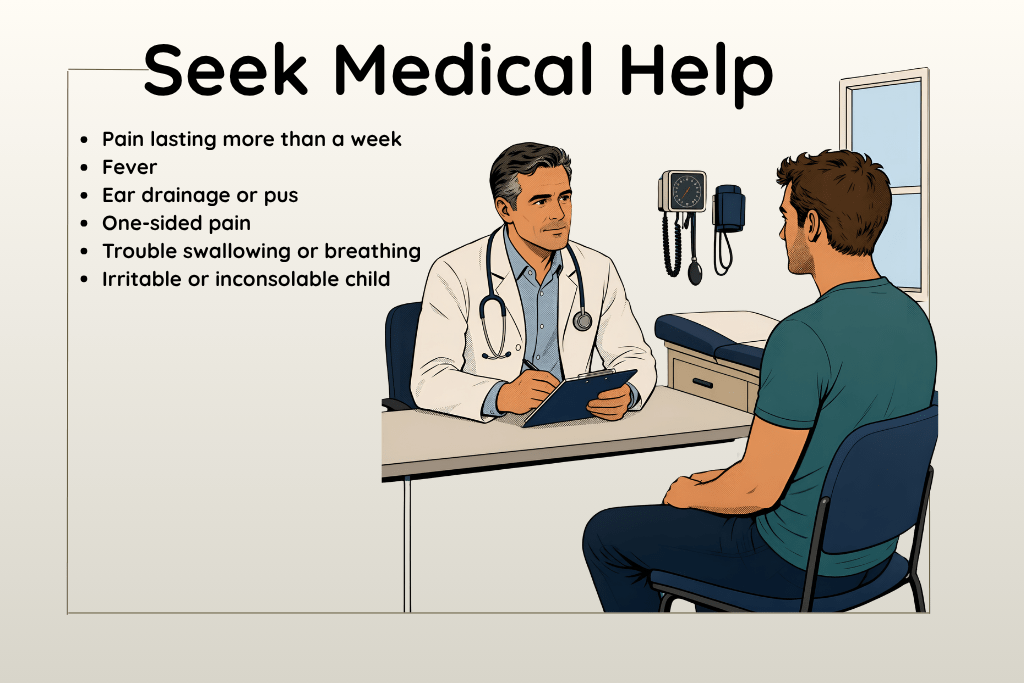
If you’re wondering why does my ear hurt when I have a sore throat and it’s not improving, most cases still clear up with rest and basic home care within a week or so. However, you should contact a healthcare provider if pain is severe or doesn’t improve after several days, if it’s clearly worse on one side only, or if symptoms last beyond two to three weeks.
Seek care as well if you develop a high fever, notice drainage or pus from the ear, have significant trouble swallowing or breathing, notice a new rash, or if a young child becomes unusually irritable or inconsolable. Persistent one-sided throat and ear pain in adults, especially those with a history of smoking or heavy alcohol use, deserves a specialist evaluation, since it can occasionally signal a more serious underlying condition behind why does my ear hurt when I have a sore throat.
FAQs
Why does my ear hurt when I have a sore throat, even without an ear infection? This is referred pain, caused by shared nerves between the throat and ear, and it’s actually the most common answer to why does my ear hurt when I have a sore throat.
Why does swallowing make the ear pain worse? Swallowing engages muscles and nerves near the Eustachian tube and throat, which can intensify referred pain signals reaching the ear — another piece of why does my ear hurt when I have a sore throat during meals.
Is it strep throat if my ear hurts too? Not necessarily, but strep throat is a well-known cause of this combination, especially when paired with sudden fever, painful swallowing, and swollen tonsils. A rapid strep test from a doctor is the only way to confirm it.
How long should I wait before seeing a doctor if why does my ear hurt when I have a sore throat keeps bothering me? Give home care about seven to ten days for viral causes. Seek care sooner if pain is severe, one-sided, or paired with high fever, drainage, or breathing trouble.
Can allergies alone cause both a sore throat and ear pain? Yes. Postnasal drip from allergies irritates the throat, while the same inflammation can clog the Eustachian tubes and create ear pressure or pain — yet another explanation for why does my ear hurt when I have a sore throat.
Final Thoughts
If you were searching for why does my ear hurt when I have a sore throat, it can feel worrying, but in most cases it comes down to the close anatomical relationship between your throat and ears rather than two separate problems. Understanding referred pain can help you treat the actual source of discomfort instead of chasing symptoms individually, and knowing the warning signs helps you recognize when it’s time to move beyond home remedies. Listen to your body, give straightforward viral causes time to resolve, and don’t hesitate to reach out to a healthcare provider when why does my ear hurt when I have a sore throat feels severe, one-sided, or lingering.
Quick Recap: Why Does My Ear Hurt When I Have a Sore Throat?
To sum up why does my ear hurt when I have a sore throat, here’s the short version:
- Referred pain is the top reason why does my ear hurt when I have a sore throat — nerves shared between the throat and ear carry the signal to the wrong place.
- Viral infections like colds and flu are the most common trigger behind why does my ear hurt when I have a sore throat.
- Bacterial infections such as strep throat and tonsillitis are another frequent answer to why does my ear hurt when I have a sore throat.
- Sinus issues, allergies, and reflux round out the list of common reasons why does my ear hurt when I have a sore throat.
- Most people who ask why does my ear hurt when I have a sore throat find relief within a week using simple home care.
- If why does my ear hurt when I have a sore throat persists beyond two to three weeks, it’s time to see a doctor.
- Understanding why does my ear hurt when I have a sore throat helps you treat the real source of the discomfort instead of just the symptom.
References
These sources were used to research why does my ear hurt when I have a sore throat for this article:
- Home Healthy Remedy: Ear Infection – How to Get Fast Relief
- Verywell Health: Throat and Ear Pain Causes
- Healthline: Sore Throat and Ears
- MD Now Urgent Care: What to Do When You Have a Sore Throat and an Earache
- Cleveland Clinic: Why You Shouldn’t Ignore Ear and Throat Pain
- The Well by Northwell: Why Does My Ear Hurt When I Swallow?

Home Healthy Remedy — trusted natural remedies, honest product reviews, and simple wellness tips for skin, eyes, teeth, and overall health.