


A humidifier for nosebleeds is one of the most commonly recommended home remedies for people who wake up with dried blood on their pillow or deal with random nosebleeds every winter. But does it actually work, or is it just something we’ve all heard secondhand without any real evidence behind it?
The short answer: yes, a humidifier for nosebleeds can genuinely help — but only if you understand why it works and how to use one correctly. In this guide, we’ll break down what’s actually happening inside your nose when it bleeds, what doctors and ENT specialists say about humidifiers, and the exact humidity level you should be aiming for.
Before we get into product recommendations or settings, it’s worth walking through exactly how a humidifier for nosebleeds fits into your daily routine, what the research says, and where it falls short — so you know exactly what to expect.
What Causes Nosebleeds in the First Place?
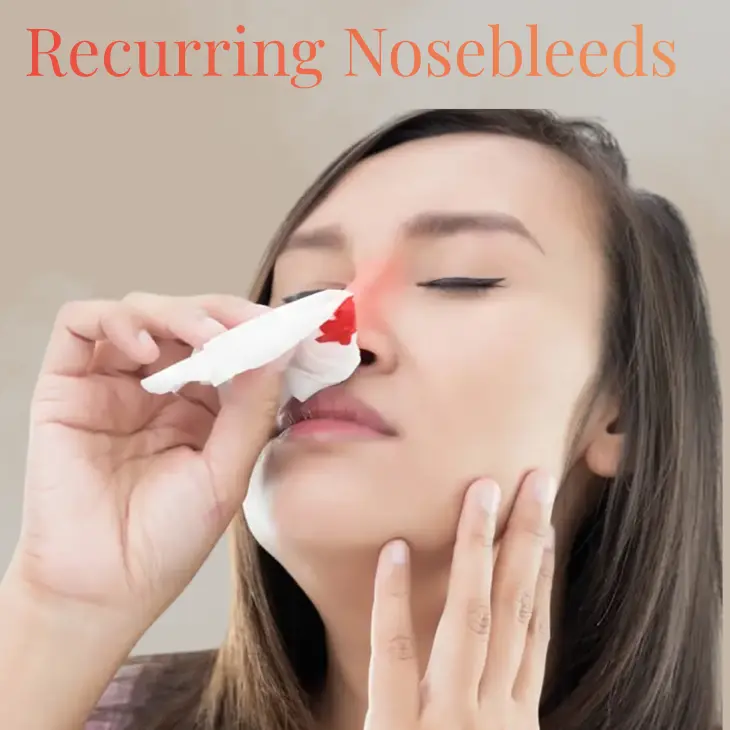
Before we can talk about whether a humidifier for nosebleeds actually helps, it’s worth understanding what’s going on inside your nose.
Your nasal passages are lined with a thin, delicate membrane packed with tiny blood vessels. These vessels sit very close to the surface, which helps warm and moisten the air you breathe. But it also means they’re extremely easy to damage.
When the air around you is dry — from winter heating, air conditioning, high altitude, or a heated bedroom — that membrane loses moisture quickly. It becomes stiff, cracked, and brittle. Once that happens, even mild irritation like nose-picking, blowing your nose, or dry airflow can cause a vessel to rupture. That’s a nosebleed.
Cleveland Clinic explains that dry air causes nosebleeds and that there are simple steps you can take to treat and prevent them. Other common triggers include allergies, colds, certain medications like blood thinners, and forceful nose blowing. Understanding these triggers is exactly why a humidifier for nosebleeds is often the first thing doctors suggest — it targets the dry-air root cause rather than just the symptom.
How Does a Humidifier for Nosebleeds Actually Work?
A humidifier doesn’t treat a nosebleed directly — it addresses the root environmental cause. By adding moisture back into the air, it helps keep your nasal membrane soft, flexible, and less likely to crack in the first place.
Think of it the same way you’d think about chapped lips or dry, cracked hands in winter. The skin (or in this case, the nasal lining) dries out, loses elasticity, and eventually splits. Reintroducing moisture into the environment gives that tissue a chance to stay intact instead of breaking down.
This is exactly why a humidifier for nosebleeds tends to work best as a prevention tool rather than a cure for an active nosebleed. It won’t stop bleeding that’s already happening, but consistent use can meaningfully reduce how often nosebleeds occur.
What Do Doctors Say About Using a Humidifier for Nosebleeds?
This is where things get interesting — because doctors don’t oversell humidifiers as a miracle fix, but they do consistently recommend them as part of a broader prevention plan.
According to the Mayo Clinic, dry sinuses, bloody noses, and cracked lips are familiar problems often soothed by humidifiers, which are used to ease issues caused by dry indoor air. That’s a fairly direct endorsement from one of the most respected medical institutions in the country.
Ear, nose, and throat specialist Dr. Swathi Appachi of Cleveland Clinic goes a step further, specifically addressing nighttime nosebleeds. She notes that running a vaporizer in the bedroom while sleeping may help limit nighttime nosebleeds by adding more moisture to the air, and recommends pairing a humidifier with a nasal moisturizer for extra protection.
Dr. David A. Gudis, Chief of Rhinology at Columbia University’s Department of Otolaryngology, offers a similarly balanced take. He confirms that humidifiers in the bedroom or office can be very helpful for preventing cold, dry air from irritating the nasal lining — while also being clear that not every home remedy people swear by (like the old “copper penny on the forehead” trick) actually holds up.
The consensus among doctors is consistent: a humidifier for nosebleeds is a legitimate, evidence-supported prevention strategy — not a guaranteed cure, but a genuinely useful tool. In fact, most ENT specialists recommend a humidifier for nosebleeds as a first-line, low-risk step before trying anything more involved.
Cool Mist vs. Warm Mist Humidifier for Nosebleeds: Which Is Better?
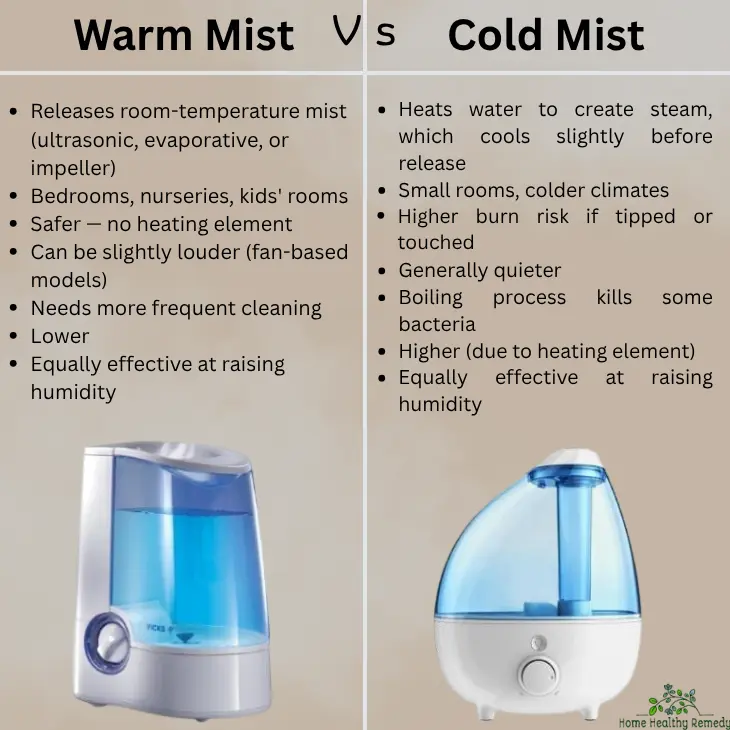
One of the most common questions people ask once they’ve decided to buy a humidifier for nosebleeds is which type actually works best. Here’s a side-by-side comparison to help you decide.
| Feature | Cool Mist Humidifier | Warm Mist Humidifier |
|---|---|---|
| How it works | Releases room-temperature mist (ultrasonic, evaporative, or impeller) | Heats water to create steam, which cools slightly before release |
| Best for | Bedrooms, nurseries, kids’ rooms | Small rooms, colder climates |
| Safety around children | Safer — no heating element | Higher burn risk if tipped or touched |
| Noise level | Can be slightly louder (fan-based models) | Generally quieter |
| Germ/bacteria control | Needs more frequent cleaning | Boiling process kills some bacteria |
| Energy use | Lower | Higher (due to heating element) |
| Effect on nosebleeds | Equally effective at raising humidity | Equally effective at raising humidity |
The good news: both types are equally capable of raising humidity and easing dry-air nosebleeds. The choice mostly comes down to your household — cool mist is generally the safer pick if you have young children, while warm mist may be preferable for a quiet bedroom in a cold climate.
The Ideal Humidity Level to Prevent Nosebleeds
Not all humidity levels are created equal. Too little moisture and your nasal lining stays dry and vulnerable. Too much, and you risk creating an environment for mold, dust mites, and bacteria — which can trigger their own respiratory issues.
The Mayo Clinic recommends keeping the humidity in your home between 30% and 50% for the best balance between comfort and safety. Below that range, your nasal membrane and throat can dry out and become irritated. Above it, you risk condensation and allergen growth.
A simple hygrometer (available for $10–$20 at most hardware stores) can help you track your actual indoor humidity instead of guessing. Many modern humidifiers also come with a built-in humidistat that automatically maintains your chosen level, which makes running a humidifier for nosebleeds far more effective than simply switching it on and hoping for the best.
How to Use a Humidifier for Nosebleeds Safely
Simply owning a humidifier for nosebleeds isn’t enough — how you use and maintain it matters just as much as which one you buy. Here are a few doctor-backed best practices:
- Run it overnight in your bedroom. Most dry-air nosebleeds happen while you sleep, when nasal tissue has hours of exposure to dry air with no relief.
- Use distilled or filtered water. Tap water can leave mineral deposits (“white dust”) in the air and inside the unit.
- Clean it every few days. The Mayo Clinic warns that humidifiers can make you sick if they aren’t maintained properly, since mold or bacteria can grow in dirty units.
- Keep humidity between 30–50%. Use a hygrometer if your unit doesn’t have a built-in humidistat.
- Pair it with a nasal moisturizer. Saline spray or a nasal gel before bed adds an extra layer of protection on top of ambient humidity.
For more natural, at-home approaches to dry nasal passages and everyday wellness fixes, you can check out additional home remedies and wellness tips that pair well with humidifier use.
Other Ways to Prevent Nosebleeds
A humidifier for nosebleeds works best as part of a broader routine rather than a standalone fix. WebMD recommends a few additional habits alongside humidifier use, including using a saline nasal product to keep the inside of your nose moist, and avoiding smoking, since it can irritate and dry out the nasal lining. None of these habits replace a humidifier for nosebleeds — they simply reinforce what it’s already doing for your nasal tissue.
A few other simple habits worth adding:
- Apply a thin layer of petroleum jelly or a nasal gel inside your nostrils before bed
- Avoid picking or forcefully blowing your nose
- Stay hydrated throughout the day
- Limit use of decongestants and antihistamines, which can dry out nasal tissue
- Talk to your doctor if you’re on blood thinners and notice more frequent nosebleeds
When to See a Doctor
Most nosebleeds caused by dry air are harmless and resolve with simple home care. But there are times when a humidifier for nosebleeds isn’t enough on its own, and professional care is necessary.
Dr. Gudis advises seeking medical attention if a nosebleed feels like a leaky faucet that won’t stop, since occasionally these can turn into life-threatening emergencies requiring urgent care. He also notes that frequent, unexplained nosebleeds can sometimes point to an underlying condition that needs evaluation by a specialist.
You should see a doctor if:
- Bleeding lasts longer than 20–30 minutes despite direct pressure
- Nosebleeds happen more than once or twice a week
- You feel faint, dizzy, or lightheaded during a nosebleed
- The nosebleed follows a fall, injury, or blow to the face
- You’re on blood thinners and bleeding seems unusually heavy
- You notice unexplained bruising or bleeding gums alongside the nosebleeds
FAQs About Humidifiers and Nosebleeds
Does a humidifier stop a nosebleed that’s already happening?
No. A humidifier for nosebleeds is a prevention tool, not an emergency treatment. To stop an active nosebleed, sit up, lean slightly forward, and pinch the soft part of your nose for 10–15 minutes.
How long does it take for a humidifier to reduce nosebleeds?
Most people notice fewer nosebleeds within a few days to about a week of consistent humidifier use, once the nasal membrane has time to rehydrate and heal.
Is cool mist or warm mist better for nosebleeds?
Both are equally effective choices for a humidifier for nosebleeds, since either type raises ambient humidity the same way. Cool mist is generally considered safer for children, while warm mist may feel more comfortable in colder climates.
Can too much humidity cause problems too?
Yes. Humidity above 50% can encourage mold, dust mites, and bacteria growth, which can trigger allergies or respiratory irritation — so more isn’t always better, even with a humidifier for nosebleeds running constantly.
Do humidifiers help with nosebleeds in children?
Yes. A cool-mist humidifier for nosebleeds is typically the safer choice for kids’ rooms, since it eliminates the burn risk associated with the heating element in warm-mist units.
Final Thoughts
So, do humidifiers really stop nosebleeds? Based on what doctors, ENT specialists, and major medical institutions consistently say, the answer is a well-supported yes — with one caveat. A humidifier for nosebleeds works best as a preventive habit, not a quick fix for bleeding that’s already started.
Keep your home’s humidity between 30% and 50%, clean your unit regularly, pair it with a saline spray or nasal gel, and give your nasal tissue time to heal. If nosebleeds continue despite doing everything right, it’s worth checking in with a doctor to rule out an underlying cause.
References
ColumbiaDoctors — Nosebleeds: When to Get Medical Attention
Cleveland Clinic — Why You’re Getting Nosebleeds at Night
Mayo Clinic — Humidifiers: Ease Skin, Breathing Symptoms
WebMD — How To Stop & Prevent Nosebleeds
Previous Blogs
How to Use Coconut Oil for Healthier Teeth in 2026
Why Does My Ear Hurt When I Have a Sore Throat? Causes Explained
How to Identify the Cause of Pain at the Back When Breathing
Food Poisoning vs Stomach Flu: Symptoms & Treatment

Home Healthy Remedy — trusted natural remedies, honest product reviews, and simple wellness tips for skin, eyes, teeth, and overall health.