

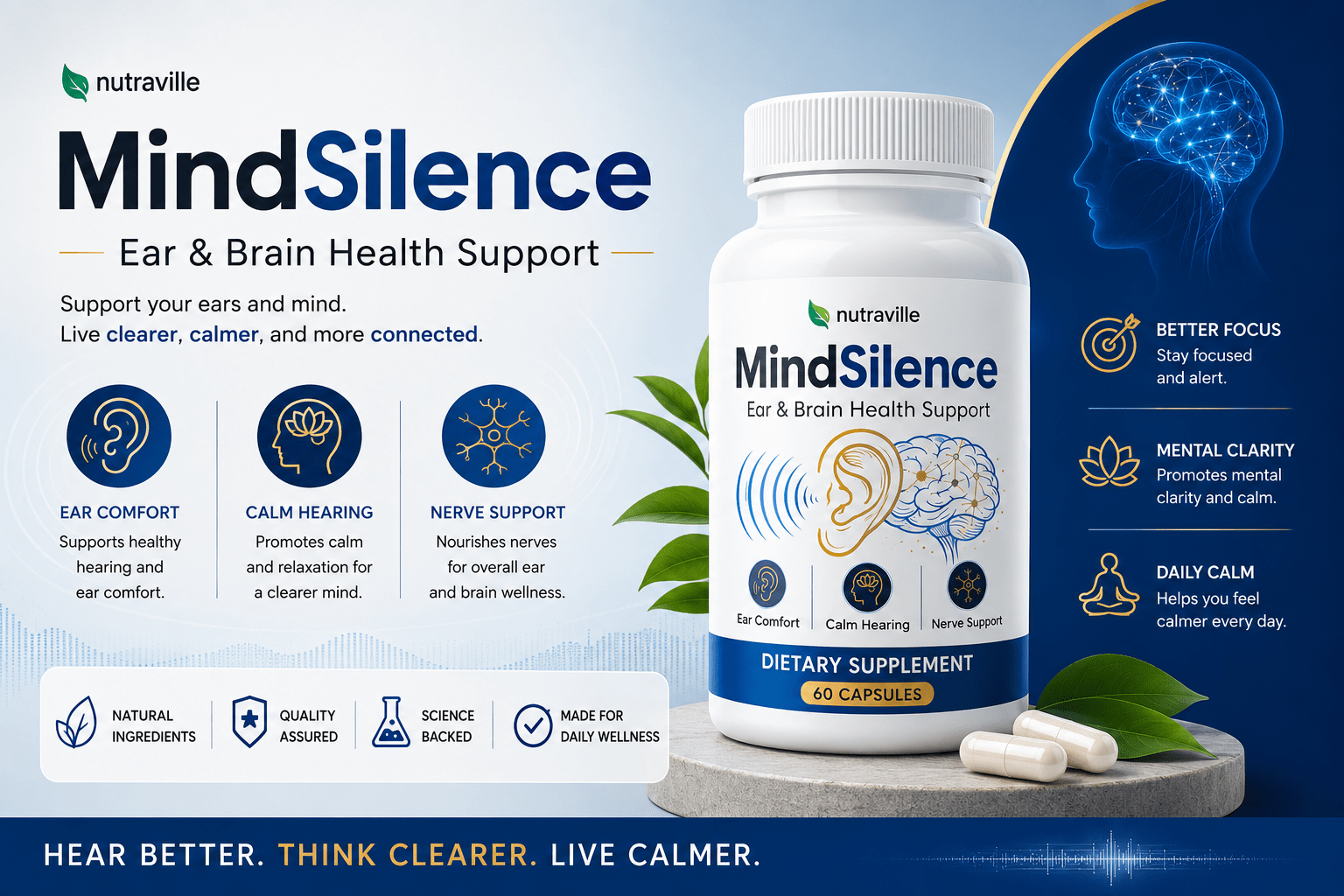
Quick Answer: Mind Silence is a daily brain and ear-support supplement formulated to help “quiet” mental noise — racing thoughts, brain fog, and overstimulation — while supporting long-term cognitive health. It typically combines calming adaptogens (like Ashwagandha or Rhodiola), neuro-protective antioxidants, and focus-supporting nutrients (like L-Theanine and B-vitamins) in a stimulant-free capsule. It’s positioned differently from classic “memory booster” nootropics like Synaptril: where Synaptril leans into sharpening memory and focus, Mind Silence leans into calming an overactive mind first, on the theory that a calmer nervous system supports clearer thinking. Below, we break down how it works, the ingredient science, and a full side-by-side comparison with Synaptril.
What Is Mind Silence?
Mind Silence belongs to a newer wave of brain and ear-health supplements built around a simple idea: before you can sharpen focus or memory, you often need to calm the underlying mental “noise” — racing thoughts, low-grade anxiety, overstimulation from screens, and nervous system fatigue — that gets in the way of clear thinking.
Rather than positioning itself purely as a “smart pill,” Mind Silence is generally marketed as a calming, restorative brain and ear formula for adults who feel mentally overstimulated, easily distracted, or stuck in a loop of racing thoughts, especially at the end of a long workday or before bed. It’s typically taken as a daily capsule and is marketed as non-habit-forming and free of synthetic sedatives.
This “calm first, clarity second” approach reflects a broader trend in the wellness industry. Consumer interest in stress-and-focus hybrid supplements has grown alongside rising awareness of the connection between chronic stress, cortisol, and cognitive performance — the idea being that a nervous system stuck in “fight or flight” struggles to focus or retain information efficiently.
Important note: This article is for informational and educational purposes only and is not medical advice. Consult a licensed healthcare provider before starting any new supplement, especially if pregnant, nursing, on medication, or managing a health condition.
How Does Mind Silence Work?
Formulas positioned like Mind Silence generally target cognitive clarity through a calming-first mechanism rather than a stimulating one:
- Modulating the stress response — Adaptogens such as Ashwagandha and Rhodiola are studied for their potential role in helping the body regulate cortisol, the primary stress hormone linked to mental fatigue and poor concentration.
- Supporting GABAergic activity — Ingredients like L-Theanine are studied for promoting alpha brain wave activity, associated with a relaxed-but-alert mental state, without sedation.
- Reducing neuroinflammation — Antioxidant-rich botanicals may help protect neurons from the oxidative stress associated with chronic mental fatigue.
- Supporting healthy sleep-wake cycles — Because racing thoughts often interfere with restorative sleep, some formulas include ingredients that support relaxation in the evening, indirectly supporting next-day cognitive performance.
As with any dietary supplement, individual results vary, and these mechanisms represent general research on the ingredient categories rather than guaranteed outcomes from any single product.
Key Ingredients Commonly Found in Mind Silence—Style Formulas
(Always verify against the actual supplement facts panel on your product’s label, since formulations vary between brands and batches.)
Ashwagandha (Withania somnifera)
Ashwagandha is one of the most studied adaptogens for stress support. A randomized controlled trial published in the Journal of Clinical Medicine found that Ashwagandha root extract was associated with significant reductions in perceived stress and cortisol levels compared to placebo over an 8-week period.
L-Theanine
L-Theanine, an amino acid naturally found in green tea, has been studied for its ability to promote calm alertness. Research published in Nutrients found that L-Theanine supplementation was associated with increased alpha brain wave activity, a marker linked to relaxed focus.
Rhodiola Rosea
Rhodiola is frequently included in stress-focused nootropic blends. A review in Phytomedicine found associations between Rhodiola supplementation and reduced mental fatigue during demanding cognitive tasks.
Magnesium (often as Magnesium Glycinate or Threonate)
Magnesium plays a well-documented role in nervous system regulation. The NIH Office of Dietary Supplements notes that magnesium is involved in over 300 enzymatic reactions, including those related to nerve transmission and stress regulation, and that many adults fall short of recommended intake.
B-Complex Vitamins
B-vitamins, particularly B6, B9 (folate), and B12, are well established as cofactors in neurotransmitter synthesis, and deficiencies have been linked in research to fatigue and impaired concentration.
GABA (Gamma-Aminobutyric Acid)
GABA is the brain’s primary inhibitory neurotransmitter. While oral GABA’s ability to cross the blood-brain barrier is debated in the scientific literature, it remains a common inclusion in calming nootropic blends.
Mind Silence Benefits
Based on the ingredient categories typically used in this style of formula, Mind Silence is generally marketed to support:
- A calmer, quieter mental state (less “noise” or racing thoughts)
- Reduced perceived stress and mental fatigue
- Improved sleep quality, which indirectly supports next-day focus
- Balanced mood during high-pressure periods
- Gentle, non-jittery mental clarity (as opposed to stimulant-driven focus)
Mind Silence vs. Synaptril: Full Comparison
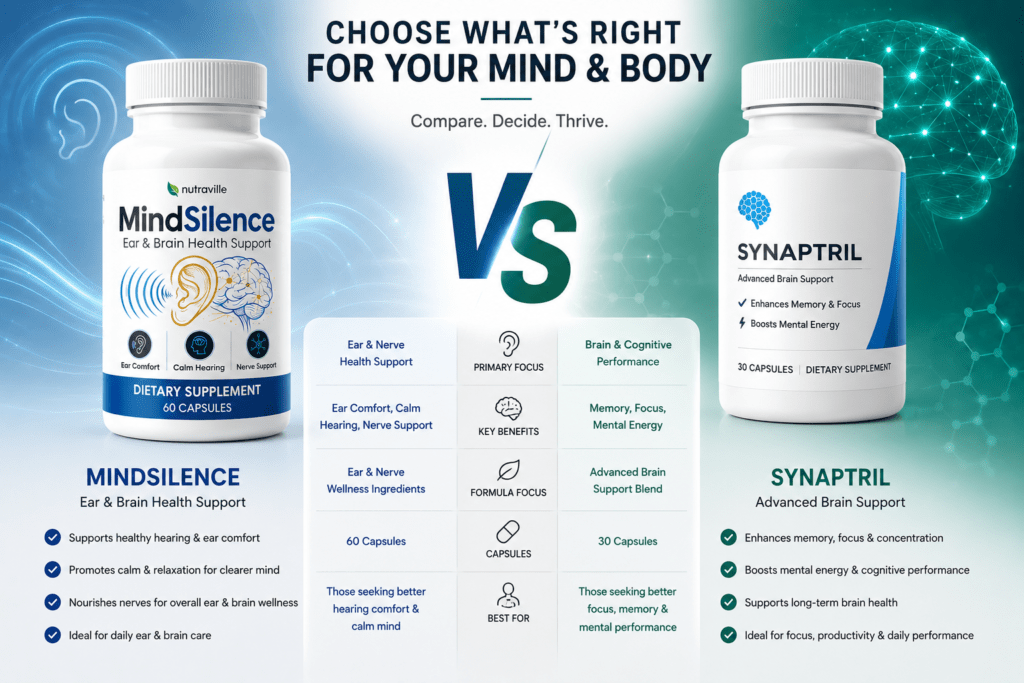
Synaptril and Mind Silence both sit in the brain-health supplement category, but they approach cognitive support from genuinely different angles — one leans into memory/focus nootropics, the other leans into a calm-first nervous system approach.
| Feature | Mind Silence | Synaptril |
|---|---|---|
| Core approach | Calm-first: adaptogens + calming amino acids (Ashwagandha, L-Theanine, Rhodiola, Magnesium) | Memory-first: classic nootropic herbs (Bacopa monnieri, Lion’s Mane, Ginkgo biloba, Phosphatidylserine) |
| Primary goal | Quiet racing thoughts, reduce stress-driven mental fatigue | Sharpen memory recall and focus |
| Best time to take | Often recommended in the evening or split AM/PM for stress support | Typically taken in the morning with a meal for daytime focus |
| Stimulant-free | Yes | Yes |
| Sleep support angle | Yes — many formulations double as a wind-down aid | Not typically positioned as a sleep aid |
| Ideal user | Someone with racing thoughts, stress-driven brain fog, or difficulty “switching off” | Someone wanting to actively improve memory recall and mental sharpness during the day |
| Onset expectations | Some calming effects may be noticed within days; full adaptogen benefits build over weeks | Nootropic benefits typically build gradually over 4–8 weeks |
Bottom line: These two supplements aren’t really direct competitors so much as two different strategies for the same broader goal — a clearer, better-functioning mind. If your main issue is an overstimulated, anxious, or racing mind that makes it hard to focus in the first place, Mind Silence’s calm-first approach may be the more logical starting point. If your mind is generally calm but you specifically want to sharpen memory retention and mental sharpness, Synaptril’s classic nootropic-herb approach is more directly aligned with that goal. Some users in this category even use a calming formula in the evening alongside a nootropic-style formula in the morning — though you should always check with a healthcare provider before combining supplements.
Pros and Cons of Mind Silence
Pros
- Addresses the stress/overstimulation root cause many people overlook
- Stimulant-free and non-habit-forming positioning
- May support both daytime calm and nighttime wind-down
- Built on well-researched adaptogens and calming amino acids
- Complements — rather than directly competes with — memory-focused nootropics
Cons
- Not primarily designed for active memory enhancement
- Calming ingredients can cause mild drowsiness in some users, especially at higher doses
- Requires consistent use over several weeks for adaptogenic effects to build
- Oral GABA’s brain-barrier penetration is scientifically debated
- Not a substitute for treatment of diagnosed anxiety disorders or clinical insomnia
Who Should Consider Mind Silence?
This style of formula is generally most relevant to:
- Adults who feel mentally “overstimulated” or can’t switch off racing thoughts
- People whose brain fog seems stress-related rather than memory-related
- Those looking for a stimulant-free evening wind-down that also supports next-day clarity
- Anyone wanting a gentler, calming entry point into brain-health supplementation
Who should be cautious: Pregnant or nursing individuals, people on sedatives, anti-anxiety medication, or thyroid medication (Ashwagandha can interact with thyroid drugs), and anyone with a diagnosed anxiety or sleep disorder should consult a doctor before use.
How to Take Mind Silence (General Usage Guidance)
Most formulas in this category recommend:
- 1–2 capsules daily, often with an evening dose to support wind-down
- 4–6 weeks of consistent use to evaluate adaptogen-related benefits, since herbs like Ashwagandha and Rhodiola build up gradually
- Pairing supplementation with stress-management habits: reduced screen time before bed, consistent sleep schedule, and mindfulness or breathing exercises
Always follow the exact dosage on the actual Mind Silence label, as serving sizes vary between manufacturers.
Potential Side Effects and Safety Considerations
Reported mild side effects associated with similar adaptogen-based formulas can include:
- Mild drowsiness, especially when taken in higher doses
- Digestive discomfort if taken without food
- Interaction risk with thyroid medication or sedatives
- Rare allergic reactions to specific botanical extracts
Because dietary supplements aren’t regulated with the same rigor as pharmaceuticals, buy only from a reputable, verified seller and check for third-party testing where available.
Frequently Asked Questions
What does Mind Silence actually “silence”?
It’s marketed to help calm mental noise — racing thoughts, overstimulation, and stress-driven mental chatter — rather than literally silencing tinnitus or physical sounds. Always check the specific product description, since names in this supplement category can vary by brand.
Is Mind Silence better than Synaptril?
Neither is objectively “better” — they solve different problems. Mind Silence focuses on calming an overstimulated mind; Synaptril focuses on sharpening memory and focus. Many users choose based on which symptom (racing thoughts vs. forgetfulness) bothers them more.
Can I take Mind Silence and Synaptril together?
Some users combine a calming formula with a memory-focused nootropic, but you should always check ingredient overlap and consult a healthcare provider before stacking two supplements, particularly regarding shared ingredients or dosage limits.
Will Mind Silence make me drowsy during the day?
Calming adaptogens are generally designed to promote relaxed alertness rather than sedation, but individual sensitivity varies — some users prefer taking it in the evening for this reason.
How long before Mind Silence works?
Most adaptogen-based formulas suggest 4 to 6 weeks of consistent daily use before evaluating results, as these ingredients work cumulatively rather than instantly.
Where can I buy Mind Silence?
To avoid counterfeit or mislabeled products, purchase directly from the official Mind Silence website rather than unverified third-party marketplace listings.
Final Verdict: Is Mind Silence Worth Trying?
Mind Silence represents a “calm-first” philosophy within the crowded brain and ear-health supplement market, built on genuinely well-studied adaptogens and calming amino acids — Ashwagandha, L-Theanine, Rhodiola, and Magnesium all have real research behind their roles in stress regulation and nervous system support. Compared to a memory-first formula like Synaptril, it’s solving a different piece of the cognitive puzzle: reducing the mental noise that gets in the way of focus, rather than actively sharpening memory recall.
If racing thoughts, overstimulation, or stress-driven brain fog are your main concern, Mind Silence’s approach may make more sense as a starting point. If your priority is specifically memory and daytime mental sharpness, Synaptril’s nootropic-herb formula is more directly aligned with that goal. As always, read the full label, verify the current ingredient panel on the official website, and set realistic expectations — supplements work best as part of a broader routine that includes sleep, stress management, and a balanced diet.
Scientific References
- National Center for Complementary and Integrative Health (NCCIH) — Ginkgo: nccih.nih.gov/health/ginkgo
- NIH Office of Dietary Supplements: ods.od.nih.gov
- National Library of Medicine / PubMed: pubmed.ncbi.nlm.nih.gov
Disclaimer: The information provided in this article on Home Healthy Remedy (homehealthyremedy.com) is intended for educational and informational purposes only and should not be considered medical advice. Statements regarding dietary supplements have not been evaluated by the U.S. Food and Drug Administration (FDA). The supplements discussed are not intended to diagnose, treat, cure, or prevent any disease. Always consult a qualified healthcare professional before starting any new supplement, medication, or health program, especially if you have an existing medical condition, are pregnant or nursing, or are taking prescription medications.

Natural home remedies, skincare secrets, dental & eye health tips, and real product reviews to help you stay healthy the natural way.