

If you’ve ever stood in a candy aisle squinting at an ingredients label, you know the struggle. Gluten hides in weird places — sauces, seasonings, even some candies you’d never suspect. So when your kid dumps their trick-or-treat bucket on the table, or you’re just craving something sweet and chewy, one question pops up fast: is Swedish Fish gluten-free, or is the Swedish Fish gluten-free label just marketing hype?
The short answer is yes — Swedish Fish gluten-free status checks out. But “considered gluten free” is doing some work in that sentence, and if you or someone in your house has celiac disease or a gluten sensitivity, you deserve the full story, not just a quick yes. So let’s dig into the ingredients, the manufacturing side, what the FDA actually requires, and how Swedish Fish stacks up against other Halloween-bag regulars like Snickers and Trolli Sour Brite Crawlers.
What You Need to Know: Is Swedish Fish Gluten Free?
Yes. Swedish Fish’s gluten-free status comes down to one simple fact—none of the ingredients used to make them contain wheat, barley, rye, or malt. This makes Swedish Fish naturally gluten-free, making them a popular choice for many people following a gluten-free diet or healthy eating plan. Although the package doesn’t carry an official “gluten-free” certification label, many consumers include them as an occasional treat while focusing on balanced nutrition and overall wellness. As with any packaged food, checking the ingredient list and allergen statement before eating is a smart step for maintaining good health and dietary safety.
Here’s the ingredient list behind the Swedish Fish gluten-free claim, straight from the classic bag made by Mondelez International:
- Sugar
- Invert sugar
- Corn syrup
- Modified corn starch
- Citric acid (less than 2%)
- White mineral oil
- Natural and artificial flavor
- Red 40
- Carnauba wax
Not a single item on that list comes from a gluten-containing grain. The “modified corn starch” that trips people up is exactly what it sounds like — starch from corn, not wheat. So when people ask, “Is Swedish Fish gluten free,” the ingredient panel backs up a confident yes, and it’s the main reason the Swedish Fish gluten-free reputation has stuck for so long.
Why “Not Certified” Doesn’t Mean “Not Safe”
This is where things get a little nuanced, and it’s worth slowing down before you settle on a final answer to the Swedish Fish gluten-free question. Under FDA rules, a product can only carry a “gluten-free” label in the U.S. if it contains fewer than 20 parts per million of gluten. Swedish Fish easily meets that bar based on ingredients — but Mondelez has never pursued the official certification. That’s a business decision, not a red flag.
So Swedish Fish gluten-free status is what’s sometimes called “accidentally gluten-free.” The company didn’t design the candy to earn a Swedish Fish gluten-free label — it just happens to be gluten-free, because none of its building blocks contain gluten. Plenty of gf candy on the market falls into this same bucket.
What the Swedish Fish gluten-free label really means in practice:
- For most people avoiding gluten by choice or mild sensitivity: Swedish Fish are a safe, easy option.
- For people with celiac disease: The Swedish Fish gluten-free reputation holds up here too, since the manufacturer discloses top allergens (including wheat) on the label, and wheat is not among them.
- For the extremely gluten-sensitive: Cross-contamination during manufacturing is technically possible, even if unlikely, since the product isn’t certified. If you’re highly reactive, it’s worth reaching out to Mondelez directly or sticking to certified gf candy brands.
What About Different Swedish Fish Varieties?
Not all Swedish Fish products are created equal, and formulations can shift by region or seasonal release, which matters if you’re double-checking the Swedish Fish gluten-free status of a specific bag. If you’re building a Swedish Fish gluten-free shopping list, here’s what the most recent packaging checks show:
- Original Swedish Fish (red)
- Swedish Fish Assorted Flavors
- Swedish Fish Mini
- Swedish Fish Tropical
- Swedish Fish Candy Go-Paks
- Swedish Fish Jelly Beans
- Swedish Fish Candy Canes (seasonal)
Even so, formulations can change without much warning, so it’s smart to double-check the current bag rather than rely purely on memory or an old blog post — including this one- whenever you’re confirming Swedish Fish gluten-free status for a specific variety.
Swedish Fish vs. Other Popular Candies: A Gluten Comparison
One of the easiest ways to understand the Swedish Fish gluten-free question is to compare it with other candy-aisle staples people search for constantly. Here’s how some of the most popular treats stack up.
| Candy | Gluten-Containing Ingredients? | Certified Gluten-Free? | General Verdict |
|---|---|---|---|
| Swedish Fish | None found | No | Swedish Fish gluten free |
| Snickers | None found (allergens: peanuts, milk, egg, soy) | No | Considered gluten free by ingredients |
| Trolli Sour Brite Crawlers | None found | No | Considered gluten free, shared-facility risk |
| Most milk/dark chocolate bars | Varies — depends on mix-ins | Rarely | Check label every time |
| Candy with cookie/wafer pieces (e.g., Twix, Kit Kat) | Yes — contains wheat | No | Not gluten free |
Is Chocolate Gluten Free?
This one trips people up constantly. Pure chocolate—made from cocoa solids, cocoa butter, and sugar—is naturally gluten-free. But is all chocolate gluten-free? Not always. Many candy bars contain cookie pieces, wafers, or barley malt flavoring, which can introduce gluten. Barley malt, in particular, is a hidden source of gluten because it isn’t always recognized as a grain ingredient. For anyone following a gluten-free diet, managing celiac disease, or avoiding gluten due to gluten sensitivity, reading the ingredient label is essential. While enjoying an occasional treat can fit into a healthy lifestyle, most chocolate bars are also high in added sugar and calories, so moderation is important for weight management, blood sugar balance, and overall wellness. The same advice applies to Swedish Fish—always check the ingredient list and allergen statement before eating, because recipes and manufacturing processes can change over time.
Are Snickers Gluten-Free?
Snickers bars are made from milk chocolate, peanuts, caramel, corn syrup, sugar, and nougat — none of which are gluten sources. So are Snickers gluten-free? By ingredients, yes. Mars, the manufacturer, doesn’t add wheat, barley, or rye to the recipe, and the allergen statement lists peanuts, milk, egg, and soy — not wheat. That said, like Swedish Fish, Snickers isn’t certified gluten-free, and it’s produced in facilities that also process wheat-containing products — the same caveat that applies to the Swedish Fish gluten-free status. If you’re highly sensitive, that’s worth knowing before you unwrap one.
Are Trolli Sour Brite Crawlers Gluten-Free?
Yes, generally. When people ask, “are Trolli Sour Brite Crawlers gluten free,” the ingredient list backs it up: corn syrup, sugar, water, gelatin, modified corn starch, and a handful of acids and flavorings — no wheat, barley, or rye anywhere in sight. As with Swedish Fish and Snickers, there’s no official certification, and shared manufacturing equipment means a small risk of cross-contamination for the ultra-sensitive. For most people managing a gluten-free lifestyle, though, Trolli’s sour gummy worms are considered a safe bet, right alongside the Swedish Fish gluten-free classic.
Building a Gluten-Free Halloween Candy List
Halloween is probably the single biggest stress test for anyone managing a gluten-free household. Between mixed bags, mini packaging, and constantly rotating seasonal formulas, it’s easy to feel like you need a spreadsheet just to hand out candy safely. A solid gluten-free Halloween candy list makes life so much easier — and the Swedish Fish gluten-free reputation earns it a spot near the top of it.
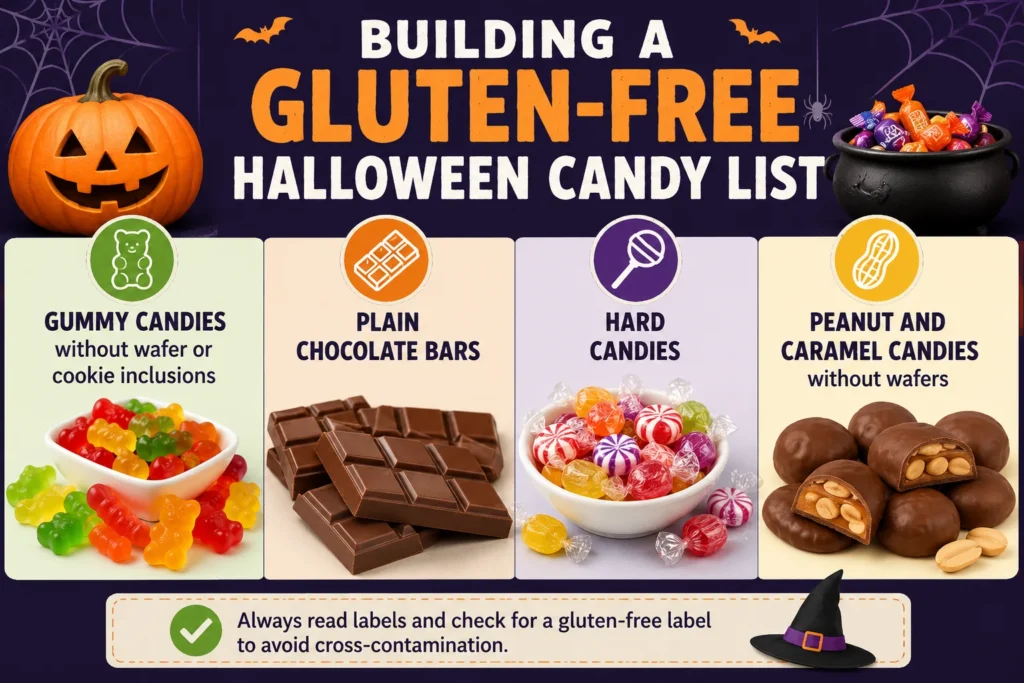
Some general categories that tend to be safer bets for a gluten-free Halloween candy stash, beyond the Swedish Fish gluten-free classic itself:
- Gummy candies without wafer or cookie inclusions — Swedish Fish gluten-free gummies, Sour Patch Kids, Trolli Sour Brite Crawlers, and most gummy bears fall here.
- Plain chocolate bars — think plain milk or dark chocolate without cookie bits, wafers, or malt.
- Hard candies — Jolly Ranchers, Lifesavers, and most lollipops are typically gluten-free by ingredients.
- Peanut and caramel candies without wafers — Snickers and similar bars usually qualify.
What to steer clear of at the Halloween bowl:
- Anything with cookie, cracker, wafer, or pretzel pieces (Twix, Kit Kat, pretzel-based candy)
- Candy corn from certain brands that use gluten-containing anti-dusting agents (check labels — some are fine, some aren’t)
- Licorice, which is very often made with wheat flour despite looking harmless
- Bulk candy bins, where a shared scoop can cross-contaminate an otherwise safe treat
Case Study: How U.S. Families Navigate Gluten-Free Candy Shopping
To understand how this plays out in real life, it helps to look at how American households actually navigate the Swedish Fish gluten-free question and dozens like it. Celiac disease affects roughly 1 in 100 people in the United States, and the Celiac Disease Foundation estimates millions more manage non-celiac gluten sensitivity. That’s a lot of families reading candy labels every single week, not just around Halloween.
Take a fairly typical scenario: a parent in Ohio with a child recently diagnosed with celiac disease. Halloween used to mean handing over the entire pillowcase of candy for inspection, ingredient by ingredient, often late at night after trick-or-treating. After confirming the Swedish Fish gluten-free status and building a reliable gluten-free candy list — Swedish Fish, Skittles, most Starburst, Sour Patch Kids, and plain Hershey’s bars among them — that process shrank from an hour of label-checking to a five-minute sort.
Online communities echo this pattern constantly. On celiac-focused forums and subreddits, the Swedish Fish gluten-free question comes up again and again, with the candy recommended as one of the “safe defaults” for newly diagnosed families, alongside Skittles and most fruit-based gummies. It’s not an official medical recommendation — it’s crowdsourced, real-world confidence built from years of people checking labels and comparing notes. That kind of community knowledge, paired with actually reading the ingredient panel yourself, tends to be the most practical approach U.S. households land on.
The bigger takeaway from this pattern: gluten-free candy shopping in the U.S. isn’t really about memorizing one master list, though the Swedish Fish gluten-free reputation is a great place to start. It’s about knowing which categories of candy (gummies without wafer pieces, plain chocolate, hard candy) are statistically safer, then double-checking the specific brand and variety before buying, since formulations shift more often than people expect.
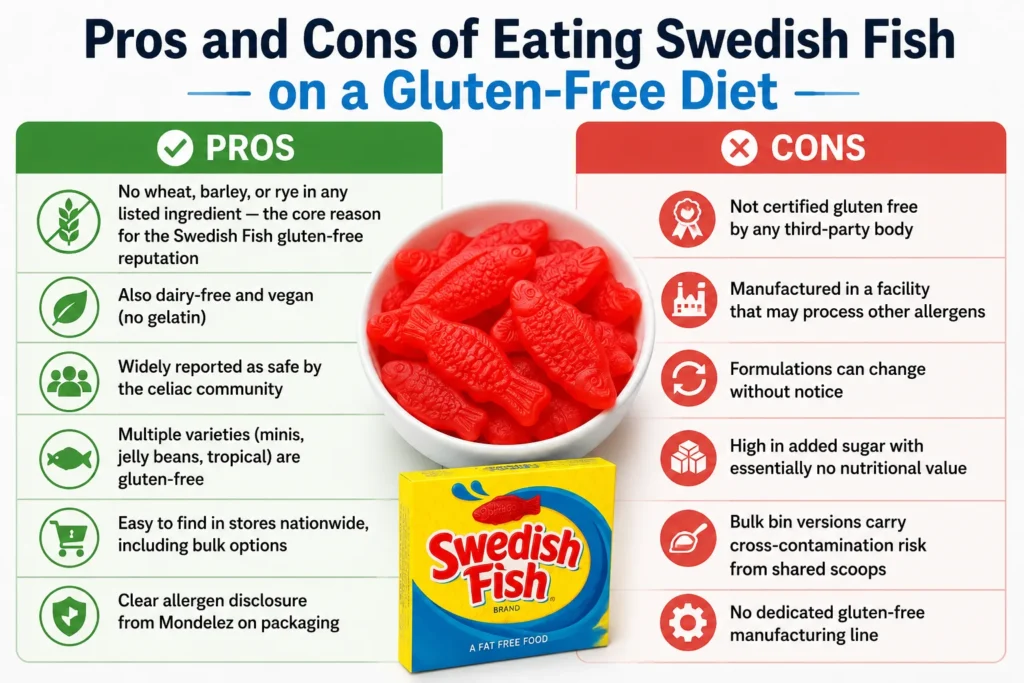
Pros and Cons of Eating Swedish Fish on a Gluten-Free Diet
Weighing the Swedish Fish gluten-free question side by side makes the tradeoffs easy to see at a glance.
Tips for Shopping Gluten-Free With Confidence
A few habits make a real difference no matter which candy you’re eyeing, not just the Swedish Fish gluten-free question:
- Read the label every time, even for a brand you’ve bought a hundred times, like a Swedish Fish gluten-free bag from last month. Manufacturers reformulate products more often than most people realize.
- Look for the allergen statement, not just the ingredients. In the U.S., wheat has to be disclosed if it’s present, which makes candy label-reading faster than you’d think.
- Avoid bulk bins. Even a completely Swedish Fish gluten-free candy can pick up cross-contact from a shared scoop that also touches pretzels or wafer candy.
- When in doubt, contact the manufacturer. Most major candy companies, including Mondelez and Mars, have consumer hotlines and can confirm current formulations and the latest Swedish Fish gluten-free status.
- Lean on certified products when sensitivity is severe. “No gluten ingredients” and “certified gluten-free” are not the same claim, and for some people that distinction matters a lot.
Frequently Asked Questions
Is Swedish Fish gluten-free?
Yes. Swedish Fish are made without any wheat, barley, or rye ingredients, so they’re widely considered gluten-free, even though the packaging doesn’t carry a certified gluten-free label.
Are Swedish Fish dairy-free too? Yes. Swedish Fish don’t contain any dairy ingredients, which makes the Swedish Fish gluten-free formula a solid option for people managing both gluten and dairy restrictions at once.
Are Swedish Fish vegan? Yes. Unlike most gummy candy, Swedish Fish don’t use gelatin, so they’re suitable for a vegan diet as well as a gluten-free one.
Can someone with celiac disease eat Swedish Fish?
Most people with celiac disease report that the Swedish Fish gluten-free reputation holds up in real life, based on the ingredient list and allergen disclosure. That said, because the product isn’t certified gluten-free, individuals with severe sensitivity may want extra caution or to confirm directly with Mondelez.
Are Snickers gluten-free like Swedish Fish?
Yes, by ingredients. Snickers doesn’t contain wheat, barley, or rye, much like the Swedish Fish gluten-free formula, but neither product carries official gluten-free certification.
Are Trolli Sour Brite Crawlers gluten-free?
Generally, yes. Like the Swedish Fish gluten-free classic, Trolli Sour Brite Crawlers are made without gluten-containing ingredients, though they’re produced in shared facilities, so extremely sensitive individuals should stay alert to any labeling changes.
Is chocolate always gluten-free?
No. Plain chocolate is naturally gluten-free, but many chocolate candies add cookie pieces, wafers, or barley malt, which do contain gluten. Always check the full ingredient list rather than assuming.
What’s the best gluten-free Halloween candy besides Swedish Fish?
Sour Patch Kids, most Skittles, Starburst, plain M&Ms, and Trolli Sour Brite Crawlers are commonly cited as gluten-free Halloween candy options, right alongside the Swedish Fish gluten-free classic.
Why doesn’t Swedish Fish just get certified gluten-free?
Certification involves third-party testing and ongoing verification costs that not every manufacturer chooses to pursue, especially when the Swedish Fish gluten-free formula is already gluten-free by ingredients. It’s a business choice more than a safety signal.
The Bottom Line
So, are Swedish Fish gluten-free? Based on every publicly available ingredient list, yes — Swedish Fish gluten-free status holds up whether you’re checking the original red fish, the tropical mix, or the mini bags. There’s no wheat, barley, or rye anywhere in the recipe, and the candy is also dairy-free and vegan as a bonus. The only real caveat is the lack of formal certification, which mostly matters if you or your family member has a severe, highly reactive form of celiac disease.
For everyone else building a gluten-free candy list — whether it’s for a Halloween bowl, a lunchbox, or just a sweet tooth craving — the Swedish Fish gluten-free classic remains one of the more reliable gf candy picks on the shelf. Pair that Swedish Fish gluten-free knowledge with a quick label check before every purchase, and you can enjoy the chewy, fruity classic without second-guessing every bite.
Sources and References
The Swedish Fish gluten-free claims in this article are based on the following sources:
- Celiac Disease Foundation – Gluten-Free Candy List
- Meaningful Eats – Are Swedish Fish Gluten-Free?
- Tasting Table – Are Swedish Fish A Gluten-Free Candy?
- The Helpful GF – Are Swedish Fish Gluten-Free?
- Meaningful Eats – Are Snickers Gluten-Free?
- Grain Free Table – Are Snickers Gluten-Free?
- The GFB – Are Trolli Sour Brite Crawlers Gluten-Free?
- Healthline – Is Chocolate Gluten-Free?
- Food Republic – Not All Chocolate Is Gluten-Free
This article is for general informational purposes only and is not medical advice. If you have celiac disease or a severe gluten allergy, always verify current ingredient and allergen information directly with the manufacturer, and consult a registered dietitian or physician for guidance specific to your health needs.

Natural home remedies, skincare secrets, dental & eye health tips, and real product reviews to help you stay healthy the natural way.