

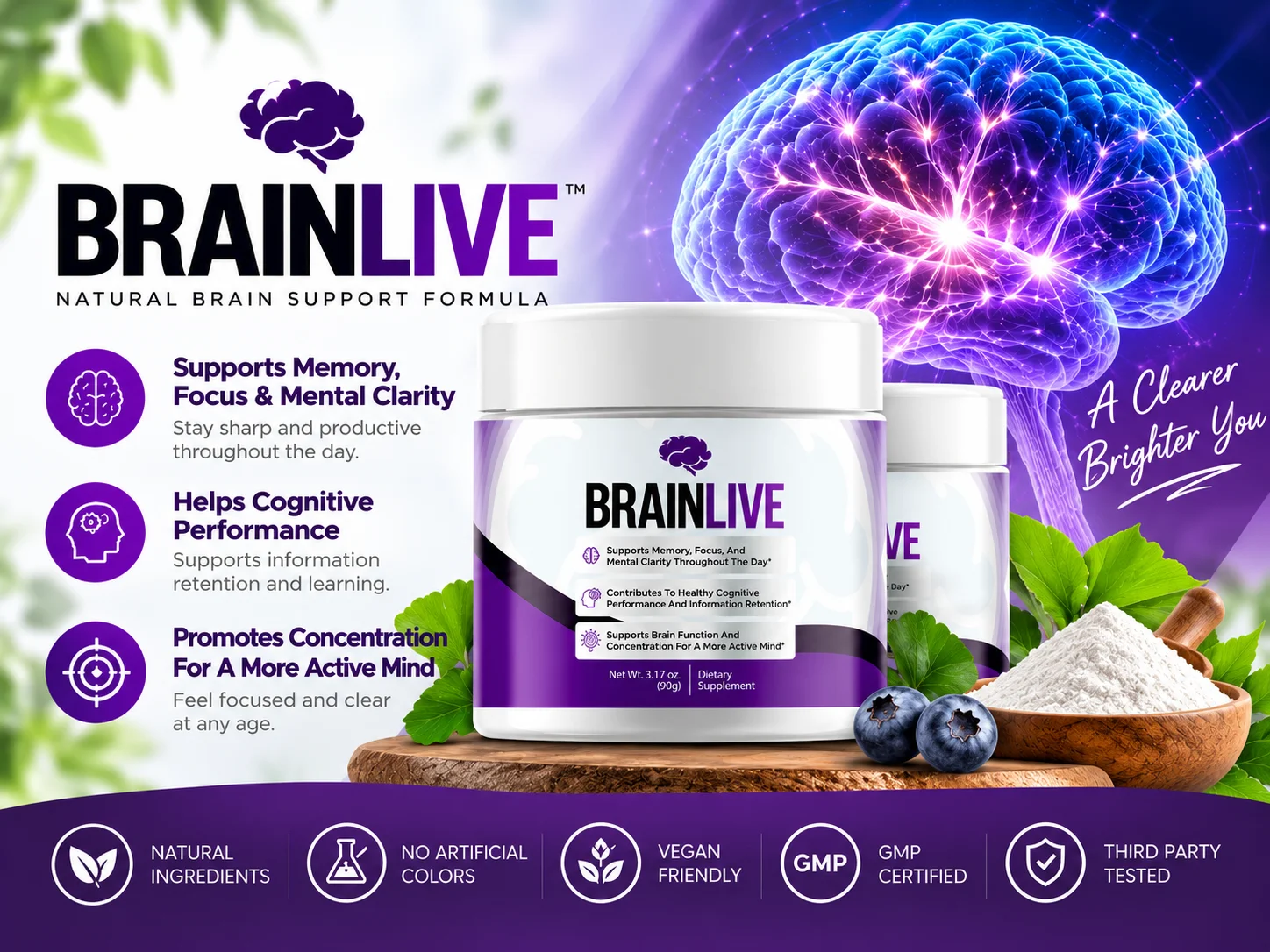
What You Need to Know Before You Spend $158 on BrainLive
BrainLive is a real product from a verified distributor, sold through an established payment platform, with a disclosed return address and a documented refund policy. It is not listed on the FDA’s Health Fraud Product Database, and third-party domain trust checkers have scored the associated domain at roughly 80 out of 100, which points to low scam probability. So the more useful question isn’t whether BrainLive is a scam — it’s whether the formula, at the dose actually delivered, is worth the money for your specific situation.
That question comes down to one detail the BrainLive sales page never spells out: BrainLive uses a proprietary blend that names five ingredients without disclosing how much of any single one is included. That matters most for Spermidine, the formula’s most research-active ingredient for cognitive aging, because published human research shows its cognitive effects are dose-dependent. Since Spermidine is listed last in BrainLive’s five-ingredient, 2.4-gram blend — meaning it’s the smallest component by weight — whether it reaches a research-relevant amount is the central question this review sets out to answer.
This review documents everything a prospective buyer needs to evaluate BrainLive: what’s actually on the BrainLive label, what the ingredient-level science does and doesn’t support, what it costs, how the guarantee works, and the specific questions worth asking the brand before committing to a larger order.
See BrainLive’s Full Ingredient Label, Pricing, and 60-Day Guarantee at the Official Site
About This BrainLive Review
This review draws on the BrainLive Supplement Facts label as reviewed for verification, published brand policies, peer-reviewed ingredient research from PubMed, the Cochrane Library, and the National Center for Complementary and Integrative Health (NCCIH), and third-party trust-verification tools. Claims that could not be independently verified are flagged as gaps rather than filled in. Information reflects publicly available sources as of June 2026; pricing, policies, and availability can change, so readers should confirm current terms directly on the official BrainLive site before ordering.
These statements have not been evaluated by the Food and Drug Administration. BrainLive is a dietary supplement, not a drug, and it is not intended to diagnose, treat, cure, or prevent any disease. The label states the product is manufactured in an FDA-registered facility — facility registration is not the same as FDA approval of the product or its claims. Dietary supplements are not a substitute for professional medical advice.
BrainLive Fast Facts
- Product type: BrainLive is a powdered dietary supplement (nootropic drink mix), not capsules or tablets.
- Serving: one 3-gram scoop mixed into 8 ounces of water, taken once daily, one hour after breakfast.
- Container: 90 grams (30 servings) — a 30-day supply per bottle.
- Active blend: a 2.4-gram proprietary blend containing pea starch, baobab fiber (Adansonia digitata), L-arabinose, konjac glucomannan (Amorphophallus konjac), and spermidine.
- Per-ingredient doses: not disclosed, since the formula is sold as a proprietary blend.
- Other ingredients: silicon dioxide (anti-caking agent), natural flavors, and stevia.
- Stimulants: none disclosed on the label — no caffeine.
- Label claims: supports memory, focus, and mental clarity; contributes to healthy cognitive performance and information retention; supports brain function and concentration.
- Manufacturing: United States, FDA-registered facility, GMP-compliant. FDA registration does not equal FDA approval.
- Distributor: Instituto Experience, Lakeland, Florida.
- Payment processor: BuyGoods, an established direct-to-consumer platform.
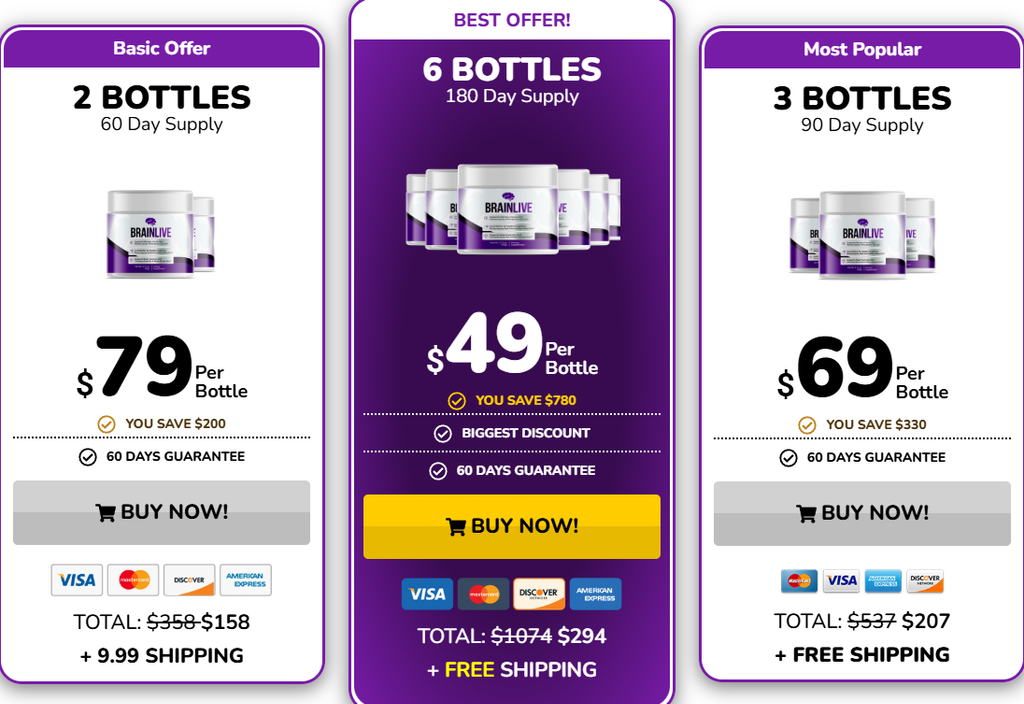
- Pricing: $158 for a 2-bottle/60-day supply plus $9.99 shipping; $207 for a 3-bottle/90-day supply with free shipping; $294 for a 6-bottle/180-day supply with free shipping.
- Guarantee: a brand-described 60-day money-back guarantee. Confirm with the brand whether the window starts at your purchase date or your delivery date, since both are referenced in different brand documents.
- Subscription: none. Every order is a one-time purchase.
- FDA Health Fraud Database status: BrainLive was not listed as of June 2026.
Is BrainLive a Scam, or Legit?
The short answer: the fraud signals that typically define a scam supplement simply aren’t present with BrainLive. BrainLive is not listed on the FDA’s Health Fraud Product Database, which tracks products cited for warning letters, recalls, and health-fraud notifications. Third-party domain trust tools have evaluated the site at roughly 80 out of 100 across dozens of factors, which is generally read as a low scam-probability score. The distributor, Instituto Experience, lists a real street address and a working phone number, and orders are processed through BuyGoods, a mainstream platform with established dispute-resolution infrastructure. The refund policy names an actual physical return address rather than a vague “contact us” page.
Most of what fuels “is BrainLive a scam” searches in the supplement space isn’t confirmed fraud — it’s reasonable buyer caution around a category that does have bad actors: hidden subscriptions, refunds that never arrive, fabricated celebrity endorsements, and fake return addresses. None of those show up in BrainLive’s case. The brand does use countdown timers and limited-stock language on its site, which is manufactured urgency rather than a fraud signal, but worth knowing before you feel pressured to decide quickly.
What does exist with BrainLive are transparency gaps rather than fraud signals: no per-ingredient dose disclosure, no clinical trial on the finished product, and no independent, third-party review base yet since the product is newly launched. Those gaps are real, they’re documented throughout this review, and they’re the actual reason to slow down before ordering — not because BrainLive looks illegitimate, but because the formula’s value depends on details the label doesn’t fully provide.
See BrainLive’s Full Ingredient Label, Pricing, and 60-Day Guarantee at the Official Site
What BrainLive Actually Is
BrainLive is a powdered supplement mixed into water — one 3-gram scoop, 8 ounces of water, taken an hour after your morning meal. There’s no loading phase and no complicated timing schedule.
The brand positions BrainLive as a daily maintenance product for cognitive health, not a fast-acting focus booster. According to the brand’s published materials, the formula is built around three proposed mechanisms: supporting the gut-brain axis through prebiotic fiber, helping stabilize brain energy through glucose-regulating ingredients, and supporting cellular renewal through a process called autophagy. Those are proposed mechanisms grounded in ingredient-level research, not findings from a clinical trial on BrainLive itself, which doesn’t exist yet.
What’s easy to miss on the sales page is that every one of BrainLive’s five active ingredients is a fiber or polyamine compound — none are stimulants, and there’s no caffeine anywhere in the formula. Nothing here is designed to produce an immediate sensory effect. The proposed mechanisms work through gradual microbiome shifts and cellular pathways that unfold over weeks, not minutes. Anyone expecting a first-dose jolt of alertness from BrainLive is likely to be disappointed — that’s not a flaw in the formula so much as a mismatch in expectations, and it’s worth knowing before you buy.
The Supplement Facts Label: What It Discloses and What It Doesn’t
The BrainLive sales page is marketing. The Supplement Facts label is the document that actually carries regulatory weight under the Dietary Supplement Health and Education Act (DSHEA), so it’s worth reading closely.
Each serving is one 3-gram scoop, with 30 servings per container — a 30-day supply. Two bottles cover 60 days, three cover 90, and six cover 180, which matters when weighing package size against both the brand’s recommended evaluation period and the 60-day guarantee window.
The proprietary blend totals 2.4 grams and lists five named ingredients without individual amounts — pea starch, baobab fiber, L-arabinose, konjac glucomannan, and spermidine. That’s permitted under DSHEA, which doesn’t require brands to break out per-ingredient amounts within a blend. But for a formula where one ingredient’s published research shows outcomes that shift direction depending on dose, the missing number is more than a technicality — it’s a real gap in what a buyer can evaluate.
Ingredient order is still informative, since DSHEA requires blend ingredients to be listed in descending order by weight. Pea starch, listed first, is the largest component. Spermidine, listed last, is the smallest. Spread across five ingredients in BrainLive’s 2.4-gram blend, spermidine is likely present in the low-milligram range — but whether that falls inside the dose window shown to matter in published research is exactly what BrainLive’s label doesn’t say.
The remaining ingredients are silicon dioxide (an anti-caking agent), natural flavors, and stevia — no artificial sweeteners or colors, and nothing stimulant-based. The label also carries three standard DSHEA structure/function claims, each with the required FDA disclaimer: support for memory, focus, and mental clarity; support for cognitive performance and information retention; and support for brain function and concentration. These are legally permitted marketing statements, not FDA-approved claims and not evidence from a clinical trial on this specific formula.
See BrainLive’s Full Ingredient Label, Pricing, and 60-Day Guarantee at the Official Site
The Spermidine Dose Question: Why It’s the Most Important Line on the Label
Spermidine sits last in BrainLive’s ingredient list, meaning it’s the smallest of the five components in that 2.4-gram blend — and that positioning, combined with what the published research actually shows, is arguably the single most important fact in this entire review.
Spermidine is a naturally occurring polyamine found in foods like wheat germ, soybeans, aged cheese, and mushrooms, and the body also produces it on its own. Levels decline measurably with age, and that decline has been linked in mechanistic research to reduced efficiency of autophagy — the cellular process responsible for clearing damaged proteins from aging cells, brain cells included. The idea that supplementing spermidine could help restore that cellular housekeeping process has moved from animal studies into genuine human trial research in recent years.
Research from Pekar and colleagues, examining dietary spermidine intake from food sources in older adults, found cognitive performance improvements in 42% of participants at roughly 3.3 milligrams of spermidine daily over a one-year period, with 30% showing no change and 28% showing decline — a result the researchers present as an honest reflection of individual variation rather than a flaw. More notably for anyone evaluating BrainLive specifically, an earlier trial found that a lower-dose group actually showed cognitive decline while a higher-dose group showed improvement — meaning dose didn’t just change the size of the effect, it changed the direction of it.
There’s also an active, Cochrane-registered randomized controlled trial called the SmartAge study, specifically examining spermidine supplementation and cognition in older adults with subjective cognitive decline. Separately, the European Food Safety Authority approved spermidine-rich wheat germ extract as a Novel Food in 2021, setting 6 milligrams per day as a safe upper limit. It’s also worth noting that spermidine can come from different source forms — food-derived versus synthetic spermidine trihydrochloride — which carry different regulatory histories, and BrainLive’s label simply lists “spermidine” without specifying which form is used.
Putting that together: spermidine is the fifth of five ingredients in BrainLive’s 2.4-gram blend, behind four fiber-based compounds that likely each outweigh it individually. A reasonable estimate places BrainLive’s spermidine dose somewhere in the low-milligram range — possibly within the 1 to 3.3 milligram window studied in published research, possibly below it. The brand hasn’t disclosed the number.
To be clear, this isn’t an allegation that BrainLive is underdosed or fraudulent — it’s a documented evaluation gap that matters most to buyers specifically interested in the autophagy and cognitive-aging angle. The most useful step available is contacting the brand directly and asking. They may decline to share the figure, since proprietary formulas often do, but if they answer, the biggest unknown in this formula becomes a known.
The Other Four Ingredients, in Plain English
Four of BrainLive’s five ingredients are prebiotic fiber compounds that share a common proposed mechanism: feeding gut bacteria that produce short-chain fatty acids involved in gut-brain signaling.
Pea starch, listed first and therefore the largest component by weight, is a well-established prebiotic fiber derived from yellow split peas with a solid safety profile. It’s positioned as the gut-brain foundation ingredient, feeding bacteria that produce short-chain fatty acids like butyrate, which has documented roles in gut barrier integrity and inflammation regulation. The mechanism pathway — fiber to fermentation to short-chain fatty acid production to gut-brain signaling — is well established in the literature, though direct clinical trials of pea starch specifically as a cognitive supplement are limited. Because it’s legume-derived, anyone with a pea or legume allergy should check with a physician first.
Baobab fiber, sourced from the African baobab fruit, has a long history of traditional food use and a solid safety record. A 2024 study published in Nutrients found that baobab fiber meaningfully altered gut microbial composition and boosted short-chain fatty acid production in a lab model using human fecal donors — real mechanistic evidence, though not a finished-product cognitive trial. Some baobab fiber research has used doses around 15 grams daily, far above BrainLive’s entire 2.4-gram blend, so whether a much smaller amount still produces a meaningful prebiotic effect is genuinely uncertain.
L-arabinose, a plant-derived sugar, has a well-characterized mechanism: it slows sucrose digestion by inhibiting intestinal sucrase, blunting the blood sugar and insulin spike that follows a sugary meal. That effect has human research support at doses of 2 to 10 grams daily. The link to cognition is a mechanism extrapolation — blood sugar spikes are associated with transient cognitive dips in observational research — but direct studies of L-arabinose on cognitive outcomes at supplement-level doses are limited. Anyone managing blood sugar or on glucose-affecting medication should discuss this ingredient with a doctor.
Konjac glucomannan has the strongest research and regulatory profile of the four. The FDA formally recognized it as a dietary fiber in 2020 based on cholesterol-reduction evidence, and the European Food Safety Authority has an approved health claim for it at 3 grams daily for weight management. A 2025 study in Frontiers in Nutrition documents its effects on gut microbiota composition and downstream influence on short-chain-fatty-acid-mediated pathways, including GABA and serotonin signaling. Two safety notes matter here: its high viscosity can affect the absorption timing of medications taken around the same time, particularly anticoagulants like warfarin and thyroid medications, so check with a physician or pharmacist if either applies to you. And the instruction to mix it with a full 8 ounces of water isn’t arbitrary — inadequate hydration when taking a high-viscosity fiber carries a rare but documented risk of esophageal or intestinal blockage, so that instruction should be followed exactly.
Across all four fiber ingredients in BrainLive, the gut-brain mechanism is scientifically plausible and increasingly well supported in the literature. The consistent limitation is the gap between the doses used in that research and what’s realistically present in a 2.4-gram commercial blend split five ways.
Does BrainLive Actually Work?
BrainLive is a dietary supplement, not an FDA-approved treatment, and no clinical trial on the finished BrainLive product has been published or identified as of this review. What does exist is ingredient-level research — and that’s genuinely where the honest answer lives.
Spermidine, baobab fiber, and konjac glucomannan each have peer-reviewed research exploring autophagy activation, gut microbiome modulation, and glycemic regulation, with plausible pathways toward cognitive support. That research base is real and actively growing. Whether BrainLive’s undisclosed doses actually reach levels shown to matter in that research is a question the proprietary blend format doesn’t let a buyer answer without reaching out to the brand. It’s also worth remembering that even the best available spermidine research showed real variation in outcomes — 42% improved, 30% unchanged, 28% declined — which is the literature being honest about individual response rather than promising a uniform result.
See BrainLive’s Full Ingredient Label, Pricing, and 60-Day Guarantee at the Official Site
Possible Side Effects and Who Should Check With a Doctor First
The five active ingredients in BrainLive carry different safety profiles, and it’s worth going beyond the generic “talk to your doctor” line.
The most likely side effects are mild and digestive — bloating, gas, or general gut adjustment in the first one to two weeks as the microbiome adapts to a new fiber load, which typically settles with continued use. Spermidine, at research doses up to 6 milligrams daily, has been associated with mild nausea and bloating in a subset of participants.
A few ingredient-specific notes are worth knowing. Pea starch is legume-derived, so anyone with a pea or legume allergy should check with a physician before ordering. Konjac glucomannan can affect the absorption timing of oral medications, particularly anticoagulants and thyroid medications, and should always be taken with the full 8 ounces of water specified in the instructions to avoid a rare risk of GI obstruction. L-arabinose inhibits sucrase, which is relevant for anyone with a condition affecting sucrose metabolism or taking glucose-lowering medication. Spermidine’s proposed mechanism, autophagy induction, has theoretical relevance to immune function that hasn’t been fully characterized in a supplementation context, so anyone with an active cancer diagnosis, an immunocompromising condition, or on immunosuppressant therapy should talk to a physician before starting. Stevia is generally recognized as safe, with rare individual sensitivity.
In short, five groups should check with a physician before starting BrainLive: those on anticoagulants, those on immunosuppressant therapy, those with an active cancer diagnosis, those with an active GI condition, and those on glucose-lowering medication. The label itself carries the standard caution to consult a healthcare professional if you’re under a physician’s care, taking medication, pregnant, nursing, or managing a known medical condition.
Five Questions Worth Asking Before You Order
A short list of things worth confirming directly with the BrainLive brand before you commit any money.
Does the 60-day guarantee start at the purchase date or the delivery date? Different brand documents reference each, and the gap between them could matter. Email support and get the answer in writing before ordering.
How much spermidine is actually in each serving? The brand may not share this, since proprietary blends often don’t, but it costs nothing to ask, and if you get an answer it resolves the single biggest open question in this review.
Are you on anticoagulants, thyroid medication, or immunosuppressants? If so, this is a conversation for your physician or pharmacist before it’s a purchasing decision, given how konjac glucomannan and spermidine can interact with those categories.
Are you testing the formula or committing to the brand’s recommended six-month timeline? The 2-bottle order fits neatly inside the 60-day guarantee window for a lower-risk trial; the 6-bottle order matches the brand’s suggested evaluation period at the best per-day price.
What are you actually comparing BrainLive to? If spermidine and autophagy are your main interest, standalone spermidine supplements with disclosed doses exist for comparison. If the gut-brain prebiotic angle is the draw, fully dose-transparent prebiotic formulas are also available. BrainLive’s differentiator is combining both approaches in a single daily powder — which may or may not be the right trade-off for you.
BrainLive Pricing and the Per-Day Math
BrainLive sells direct-to-consumer only, with no listings on Amazon or in retail stores as of publicly available information. The 2-bottle package (a 60-day supply) costs $158 plus $9.99 shipping, working out to roughly $2.80 per day. The 3-bottle package (a 90-day supply) is $207 with free shipping, about $2.30 per day. The 6-bottle package (a 180-day supply) is $294 with free shipping, about $1.63 per day — the strongest per-day value if you’re committing to the full recommended evaluation window.
The brand’s website lists higher strikethrough reference prices for each tier; those are the brand’s own comparison points and shouldn’t be read as independently verified market pricing. Tax is calculated at checkout, and the $9.99 shipping charge applies only to the 2-bottle order — confirm your full total before completing any purchase, since promotional pricing can change without notice.
Larger orders (3-bottle and 6-bottle) include five digital bonus guides delivered instantly by email, with brand-stated values attached to each; treat those valuations as promotional rather than independently appraised. Every BrainLive order, regardless of size, is confirmed as a one-time purchase with no subscription or automatic renewal.
The practical way to decide between BrainLive package sizes: if you’ve resolved the spermidine dose question to your satisfaction, the 6-bottle option offers the best value for the brand’s full recommended timeline. If the dose question is still open, the 2-bottle package lets you test the formula inside the guarantee window without committing to a larger, harder-to-return order.
How the Gut-Brain Axis Actually Works
The gut-brain axis isn’t just marketing language for BrainLive — it’s a real, bidirectional communication system between the digestive tract and the central nervous system, connected physically through the vagus nerve. The gut has its own neural network, called the enteric nervous system, containing more neurons than the spinal cord. Roughly 90% of the body’s serotonin is stored in the gut’s enterochromaffin cells, which underscores the gut’s role in neurotransmitter metabolism, even though gut-produced serotonin doesn’t cross the blood-brain barrier directly and functions mainly within the enteric system itself. Short-chain fatty acids produced by gut bacteria, particularly butyrate, do cross the blood-brain barrier and influence both neural function and inflammatory signaling, and this relationship between the microbiome and the brain is one of the more active areas in current neuroscience research.
A 2024 meta-analysis in Nutrients examined 32 randomized controlled trials of prebiotics, probiotics, and synbiotics on cognitive function and found statistically significant improvements overall, though with real caveats: effect sizes were modest, study populations varied widely, the strongest effects showed up in people with existing cognitive concerns rather than healthy younger adults, and research doses often exceeded what a typical commercial supplement serving provides. NCCIH describes prebiotic research on cognition as promising but still preliminary, and reasonable disagreement exists among physicians about whether prebiotic supplementation produces meaningful benefits for otherwise healthy adults.
The upshot: the mechanism BrainLive is built around is genuinely plausible and grounded in a growing body of research, and the ingredients involved have solid safety profiles. Whether the doses in a 2.4-gram commercial blend translate to a perceptible effect for any individual user is the open question — which is exactly what “promising but preliminary” means in practice.
Known Complaints and Transparency Gaps
Because BrainLive is newly launched, no independent consumer complaint database entries have been identified as of June 2026. The concerns documented here come from editorial research rather than accumulated customer complaints.
The most substantive concern is the lack of per-ingredient dose disclosure discussed at length above — legal under DSHEA, but still a real limitation, especially for spermidine. A second concern is the countdown timers and “limited stock” messaging on BrainLive’s own site, which represents manufactured urgency rather than independently verifiable supply data, and shouldn’t factor into a purchase decision. A third concern is the ambiguity around whether the 60-day guarantee starts at the purchase date or the delivery date — worth resolving in writing before you order. A fourth is the absence of independent third-party reviews on platforms outside the brand’s own site; the handful of testimonials published on BrainLive’s website carry the brand’s own disclosure that some names and identifying details have been changed, meaning testimonial names may not be real, and should be read as individual, brand-reported anecdotes rather than typical or guaranteed outcomes. Finally, return shipping on any refund is paid by the buyer, which is worth factoring into the total cost calculation on a larger order.
None of these amount to evidence of fraud. They’re transparency gaps, and each one is resolvable — mostly with a single email to support before you place an order.
Six Signals That Point to Legitimacy
A named distributor with a physical, verifiable address stands behind BrainLive. A payment processor, BuyGoods, with established industry standing and dispute-resolution infrastructure. A real street return address rather than a P.O. box or vague contact form. Confirmed absence from the FDA’s Health Fraud Product Database as of June 2026. A Supplement Facts label that follows DSHEA formatting requirements, with proper structure/function disclaimers. And a written, one-time-purchase confirmation with no subscription or automatic billing.
What’s still missing — per-ingredient dose transparency, a finished-product clinical trial, and an independent review base — are evaluation gaps, not fraud indicators. “Is it legitimate” and “is it right for me” are genuinely two different questions, and the answer to the first one is yes.
BrainLive Price
Who BrainLive Is Actually a Good Fit For
Adults over 50 interested in long-term cognitive-aging support are the strongest fit for BrainLive, since spermidine’s human research is most developed in older populations with subjective cognitive concerns, and the stimulant-free profile avoids interactions with cardiovascular medications or caffeine sensitivity common in that age group. People who’ve had a rough experience with stimulant-heavy nootropics — jitteriness, crashes, disrupted sleep — may also find BrainLive’s mechanism a better fit, since none of that applies here. Buyers already interested in gut health independent of the cognitive angle are a reasonable fit too, given four of the five ingredients have documented digestive benefits on their own.
BrainLive is probably not the right choice for anyone who needs an acute performance boost, since its proposed mechanisms take weeks to months to develop rather than hours. And it’s not the right choice, at least not yet, for anyone who requires full ingredient-dose transparency as a condition of purchase, unless the brand is willing to share that figure directly. The five medication and health-condition groups outlined earlier should treat this as a physician conversation before it becomes a purchasing decision.
The BrainLive Guarantee: What It Covers
The brand describes a 60-day money-back guarantee on BrainLive. To use it, email support with “Refund Request” in the subject line, ship all bottles — opened, unopened, used, or empty — to the return address provided, include the packing slip, and expect processing within 3 to 5 business days after the returned package arrives. The buyer covers return shipping. As noted above, the one detail worth confirming in writing before you order is whether that 60-day window starts at your purchase date or your delivery date, since brand materials reference both.
Frequently Asked Questions
Is BrainLive FDA approved?
No — and that’s true of every dietary supplement sold in the United States, since none require FDA premarket approval under DSHEA. What matters is whether the manufacturing facility follows current Good Manufacturing Practice standards (BrainLive’s label states it does) and whether the label’s claims are truthful. FDA facility registration is not the same as FDA product approval.
What are BrainLive’s side effects?
Mostly mild digestive adjustment — bloating or gas — in the first one to two weeks, which typically resolves. Spermidine has been linked to mild nausea in a small subset of research participants at higher doses. Five groups should check with a doctor first: those on anticoagulants, immunosuppressants, or glucose-lowering medication, and those with an active cancer diagnosis or active GI condition.
Does BrainLive contain caffeine?
No. None of the five active ingredients or three other listed ingredients include a caffeine source.
How long does BrainLive take to work?
The brand recommends a minimum six-month evaluation period, and the underlying research on ingredients like spermidine used timelines as long as a year. Judging the formula after a week or two is likely measuring the wrong timeframe for how these mechanisms actually operate.
Can BrainLive treat or prevent Alzheimer’s or dementia?
No. It’s a dietary supplement regulated under DSHEA and is not intended to diagnose, treat, cure, or prevent any disease. Anyone experiencing meaningful cognitive changes should see a board-certified neurologist rather than relying on a supplement.
Is there a subscription?
No. Every order, regardless of size, is confirmed by the brand as a one-time purchase with no automatic renewal — worth double-checking at checkout regardless.
Why doesn’t BrainLive disclose individual ingredient doses?
Because it’s formulated as a proprietary blend, which DSHEA permits without breaking out per-ingredient amounts. That’s a minor issue for most of the ingredients here, but a meaningful one for spermidine specifically, where the direction of the published outcome depends on the dose.
Can I take BrainLive with my medications?
That’s a question for your pharmacist, not a general review. Konjac glucomannan can affect the absorption timing of anticoagulants and thyroid medication specifically, and spermidine’s mechanism is worth disclosing if you’re on immunosuppressant therapy.
See BrainLive’s Full Ingredient Label, Pricing, and 60-Day Guarantee at the Official Site
The Bottom Line on BrainLive
The case for trying BrainLive is genuinely reasonable: the ingredient profile is more research-adjacent than most products at this price point, it’s entirely stimulant-free, the distributor and payment processor check out, there’s no subscription trap, and the 60-day guarantee bounds the financial risk of the entry-level order. The case for asking questions first is just as real: the spermidine dose isn’t disclosed, the brand’s own recommended evaluation window runs longer than the guarantee period, and there aren’t yet independent reviews to weigh against the brand’s own testimonials.
The most sensible path is straightforward. Ask the brand about the spermidine dose and the guarantee start date before ordering, in writing. If the answers satisfy you — or if you’re comfortable proceeding without them — the 2-bottle entry order is a bounded way to test whether BrainLive fits your routine. If you’re ready to commit to the brand’s full recommended timeline, the 6-bottle package offers the best per-day value. Either way, confirm current pricing, ingredient details, and guarantee terms directly on the official site before completing a purchase, since offers and policies can change.
Additional Resources
Readers who want to verify the research and regulatory background referenced throughout this BrainLive review can consult the following independent sources directly:
- U.S. Food and Drug Administration, Health Fraud Product Database — the official government database used to check whether a supplement has been cited for fraud, recalls, or health-fraud warning letters: fda.gov/drugs/medication-health-fraud
- National Institutes of Health, National Library of Medicine (PubMed) — the searchable database of peer-reviewed research referenced throughout this review, including studies on spermidine, prebiotic fiber, and gut-brain axis mechanisms: pubmed.ncbi.nlm.nih.gov
- Cochrane Library — home of registered systematic reviews and ongoing randomized controlled trials, including the SmartAge study on spermidine and cognitive decline mentioned in this review: cochranelibrary.com
- National Center for Complementary and Integrative Health (NCCIH) — federal guidance on the current state of evidence for prebiotics, cognitive supplements, and other complementary health approaches: nccih.nih.gov
- U.S. Federal Trade Commission, Business Guidance on Health Claims — background on how supplement advertising claims are regulated and what counts as a deceptive marketing claim under FTC rules: ftc.gov/business-guidance/advertising-marketing/health-claims
Readers considering BrainLive or any similar dietary supplement are encouraged to cross-check ingredient-level claims against these independent sources and to bring specific medication or health-condition questions to a licensed physician or pharmacist rather than relying on brand messaging alone.
Disclosures
Advertorial Disclosure: This article contains affiliate links, and a commission may be earned on qualifying purchases at no additional cost to the reader. All product claims are attributed to the brand, the product label, or cited peer-reviewed research. FTC disclosure provided in accordance with 16 CFR Part 255.
FDA Disclaimer: These statements have not been evaluated by the Food and Drug Administration. BrainLive is not intended to diagnose, treat, cure, or prevent any disease and is not a substitute for professional medical advice, diagnosis, or treatment. Consult a qualified healthcare professional before starting any new supplement, particularly if you are pregnant, nursing, under a physician’s care, or taking prescription medication.
Testimonial Disclaimer: Customer testimonials published on the brand’s official site are brand-reported accounts, not independently audited by this publication. The brand’s own site discloses that some names and identifying details have been changed. These accounts do not represent typical or guaranteed results, and individual experiences vary substantially.
Material Limitations: This review is based on publicly available materials, including the official BrainLive website, the Supplement Facts label as provided for editorial review, published brand policies, and peer-reviewed ingredient research. This publication has not received compensated product samples for independent testing and has not conducted laboratory or clinical testing of BrainLive. Pricing, policies, and product specifications may change after publication; readers should verify current terms directly with the brand before purchasing.

Natural home remedies, skincare secrets, dental & eye health tips, and real product reviews to help you stay healthy the natural way.