

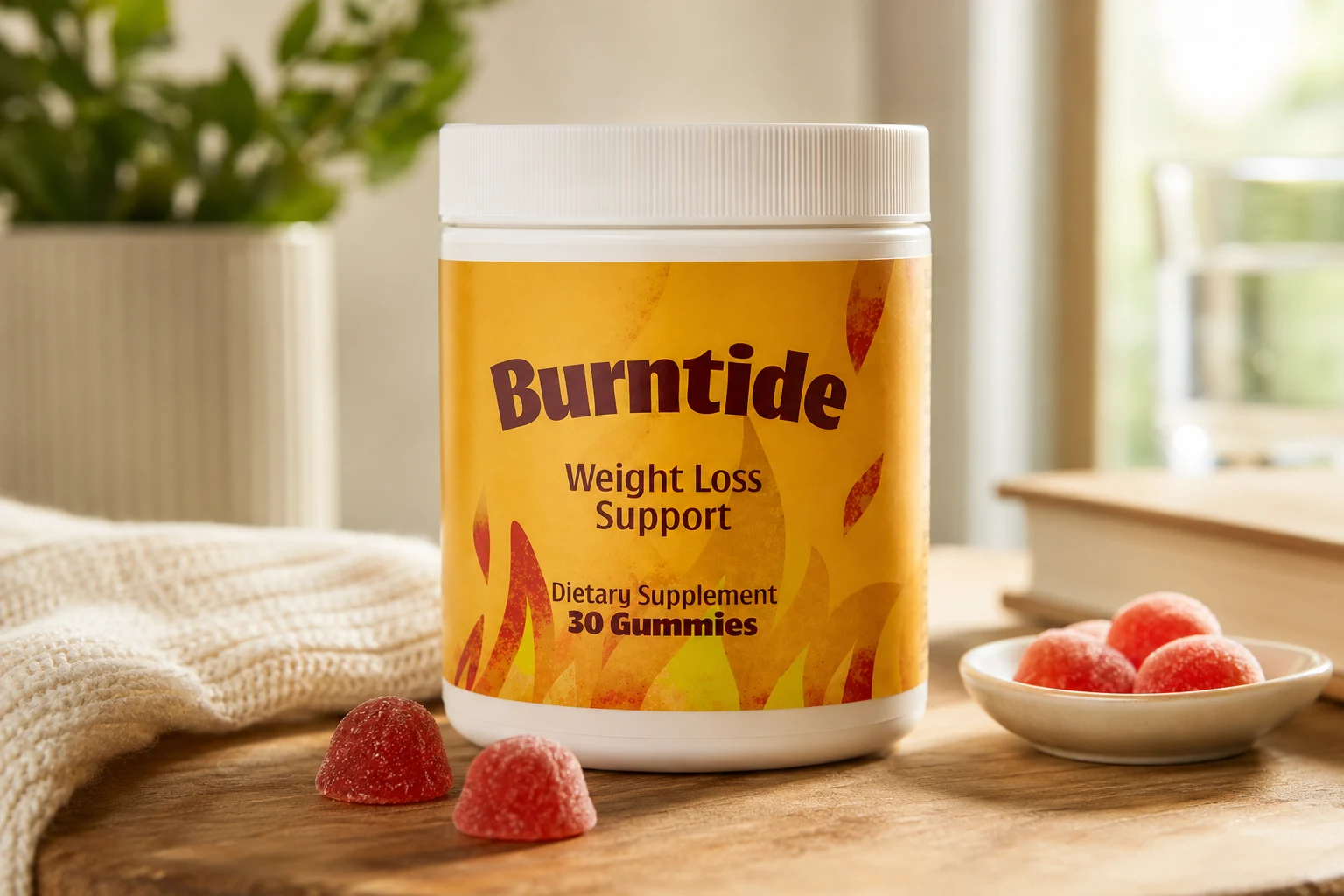
Gummy-format metabolism supplements have become one of the fastest-growing categories in the diet and wellness aisle, and BurnTide is one of the newer entrants combining two popular ingredients — apple cider vinegar (ACV) and beta-hydroxybutyrate (BHB) salts — into a single daily gummy. Before adding any supplement to a routine, it’s worth understanding exactly what is (and isn’t) in the formula, what the underlying research on those ingredients actually shows, and how the product is manufactured and sold. This review breaks down BurnTide’s label, cross-checks its two headline ingredients against current clinical literature, and outlines who the product is and isn’t formulated for.
BurnTide is positioned as a daily-support product for adults who are already working on their diet and activity levels — not as a standalone weight-loss treatment. That distinction matters, and it’s one the brand itself is explicit about: BurnTide is not marketed as a weight-loss medicine, and its BHB content is intentionally well below the doses used in ketone research. Keeping that framing in mind is the key to evaluating the product realistically.
What Is BurnTide?
BurnTide is an oral gummy supplement taken once daily, built around two ingredient categories:
● Apple cider vinegar — a fermented liquid long studied for its acetic acid content and potential role in appetite and metabolic markers.
● BHB salts (calcium, magnesium, and sodium β-hydroxybutyrate) — mineral-bound forms of the ketone body beta-hydroxybutyrate, more commonly associated with “exogenous ketone” supplements.
The two are combined into a 525 mg proprietary blend per gummy, alongside trace amounts of the minerals used to bind the BHB (sodium 2.5 mg, calcium 1 mg, magnesium 0.75 mg). Because it’s formulated as a proprietary blend, the label does not break out the exact milligram split between the ACV and the BHB salts individually — a common practice in the gummy-supplement category, though one that limits how precisely a buyer can compare BurnTide’s ACV or BHB content to the doses used in specific clinical trials.
BurnTide at a Glance
| Attribute | Details |
| Format | Gummy — one gummy once daily |
| Key ingredients | Apple cider vinegar; BHB salts (calcium / magnesium / sodium β-hydroxybutyrate) |
| Blend size | 525 mg proprietary blend, plus sodium 2.5 mg, calcium 1 mg, magnesium 0.75 mg |
| Made for | Adults 18+ wanting everyday support alongside diet and activity |
| Manufacturing | FDA-registered, GMP-certified facility in the USA (registration is not FDA approval) |
| Price | $79 per jar for two jars, down to $49 per jar on the six-jar package |
| Guarantee | 60 days, money back |
| Not suitable for | Under-18s, pregnancy and nursing, and anyone on insulin, diuretics, or digoxin without medical advice |
The Research on Apple Cider Vinegar
Apple cider vinegar is the most heavily studied ingredient in BurnTide’s blend, and the evidence base has grown substantially in the last two years.
Body weight and BMI
A 2026 systematic review and meta-analysis published in Nutrients pooled 10 randomized controlled trials covering 789 adults and found that daily ACV intake produced statistically significant reductions in body weight, BMI, and waist circumference compared with control groups, using data drawn from a search of PubMed, Scopus, Web of Science, and the Cochrane Central database.
An earlier randomized clinical trial in overweight and obese adults following a calorie-restricted diet found that adding 30 mL of ACV daily led to significant reductions in body weight, BMI, hip circumference, visceral adiposity index, and appetite scores over 12 weeks compared with diet alone, alongside improvements in triglyceride and total cholesterol levels.
An important caveat
Not every paper in this space has held up to scrutiny. A widely circulated 2024 Lebanese trial reporting dramatic ACV-driven weight loss was later flagged in the same journal for “improbable data characteristics,” a reminder that ACV research — like many supplement categories — includes both solid and questionable studies, and that reviewers now explicitly weigh study quality (using tools like the Cochrane risk-of-bias framework) rather than taking any single trial at face value.
Taken together, the current weight of evidence suggests ACV can modestly support body-weight and waist-circumference outcomes when used alongside — not instead of — a calorie-controlled diet, with effect sizes in the meta-analyses described as small-to-moderate rather than dramatic.
The Research on BHB Salts
BHB salts are the compound behind most “exogenous ketone” products, and the research here tells a more mixed story than the marketing around them often suggests.
Energy metabolism
A pharmacokinetic study published in Frontiers in Nutrition found that exogenous D-BHB can raise blood ketone levels measurably within about an hour of ingestion and is metabolized as an alternative energy substrate, particularly by the heart and kidney, supporting the basic premise that BHB salts do shift short-term energy metabolism.
Appetite: the evidence is inconsistent
This is the area where claims often outrun the data. A controlled study on a commercial BHB ketone-salt supplement in healthy females found it altered energy metabolism and blood ketone levels but produced no significant change in appetite ratings or energy intake compared with placebo. A separate post-exercise study using a ketone monoester similarly found no significant effect on hunger, fullness, or subsequent food intake, despite measurable changes in appetite-related hormones like acyl-ghrelin and GLP-1.
Body composition at low, non-ketogenic doses
An 8-week randomized, double-blind, placebo-controlled trial testing BHB mineral salts alongside a modest calorie deficit did find a significant reduction in fat mass in the BHB group versus placebo, though a separate 6-week trial layering BHB salts on top of a full ketogenic diet found no added benefit to weight or body-composition outcomes beyond the diet itself.
The common thread across this research: clinically studied BHB doses are typically several grams per serving, taken specifically to raise blood ketone levels toward a ketogenic range. BurnTide’s label is explicit that its BHB content sits well below that threshold and is not intended to induce ketosis — which means the appetite- and metabolism-related findings from higher-dose ketone-salt research shouldn’t be assumed to transfer directly to a single low-dose daily gummy. This is a reasonable formulation choice for a general-support product, but it does mean expectations should be calibrated accordingly.
How a Combination Gummy Compares to Standalone ACV or BHB Products
Most of the clinical research described above tested ACV or BHB in isolation, usually as a liquid, capsule, or drink mix, rather than as a combined gummy. That distinction is worth sitting with rather than glossing over. Combining two ingredients in one proprietary blend is convenient — one gummy instead of a vinegar shot and a separate ketone-salt drink — but it also means the exact ACV and BHB amounts aren’t independently listed, so it isn’t possible to map BurnTide’s formula directly onto any single trial’s dosing protocol.
Practically, that has a few implications for anyone comparing options. A standalone ACV capsule or liquid lets a buyer match a specific studied dose (commonly around 15–30 mL of liquid ACV per day in the trials reviewed above) more precisely than a proprietary blend does. A standalone, higher-dose ketone-salt product is the more appropriate choice for someone specifically trying to reach a measurable blood-ketone response, since BurnTide’s BHB content is intentionally sub-ketogenic. What a combination gummy like BurnTide offers instead is format convenience and a lower, more conservative BHB dose — a reasonable trade-off for someone who wants a simple daily habit rather than someone chasing a specific clinical endpoint from either ingredient alone.
Where BurnTide’s approach lines up well with the literature is in framing: the brand doesn’t claim the product induces ketosis or acts as a weight-loss drug, and the research summarized above supports treating both ACV and low-dose BHB as adjuncts to — not replacements for — diet and exercise.
Who BurnTide Is — and Isn’t — Formulated For
| Category | Guidance |
| Generally appropriate for | Healthy adults (18+) looking for everyday support alongside an existing diet and exercise routine |
| Not suitable for | Anyone under 18 |
| Not suitable for | Pregnant or nursing individuals |
| Talk to a doctor first | Anyone taking insulin, diuretics, or digoxin, due to the sodium, calcium, and magnesium content |
| Not a substitute for | Prescription weight-loss medication or treatment for obesity or diabetes |
How BurnTide Is Meant to Be Used
The label directs adults to take one gummy per day. Because the formula includes acetic acid from ACV, taking it with food is a reasonable practical step for anyone prone to digestive sensitivity — a precaution that applies to ACV-containing products generally, independent of the specific brand. As with any daily supplement, consistency matters more than any single dose, and BurnTide is designed to be paired with, not substituted for, the diet and activity habits already doing the heavier lifting on metabolic outcomes.
Pricing and Guarantee
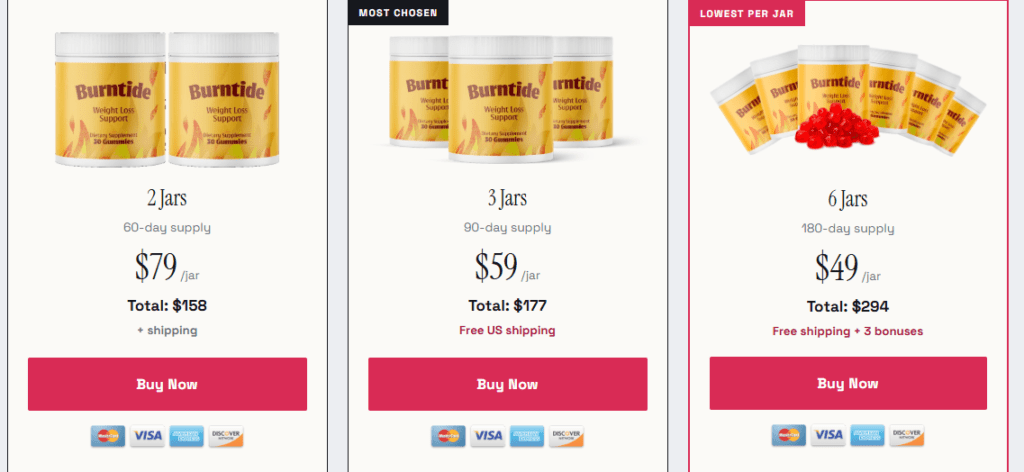
BurnTide is sold in multi-jar packages rather than as a single unit, with per-jar pricing dropping as order size increases:
| Package | Price per jar |
| Entry package (two jars) | $79 per jar |
| Largest package (six jars) | $49 per jar |
Every order is backed by a 60-day money-back guarantee, giving buyers roughly two months to evaluate the product before committing to a refill. As with any supplement guarantee, it’s worth confirming the current refund process (return address, whether opened jars are accepted, and processing timelines) directly on the order page before purchasing, since these operational details can change independent of the formula itself.
Manufacturing and Quality Signals
BurnTide is produced in a facility that is FDA-registered and GMP (Good Manufacturing Practice) certified in the United States. It’s worth being precise about what that does and doesn’t mean: FDA registration confirms a facility is on file with the agency and subject to inspection, and GMP certification indicates the manufacturer follows standardized quality and sanitation processes — but neither is the same as FDA approval of the product itself. Under U.S. law, dietary supplements are not evaluated or approved by the FDA for safety or efficacy before they reach the market the way prescription drugs are, per the FDA’s own consumer guidance on dietary supplements. That’s a category-wide fact, not a knock on BurnTide specifically, but it’s context every supplement buyer should have.
Safety Considerations
● Not intended for anyone under 18, or for pregnant or nursing individuals.
● Anyone taking insulin, diuretics, or digoxin should speak with a doctor first, since these medications can interact with the sodium, calcium, and magnesium delivered alongside the BHB salts.
● ACV-containing products can cause digestive upset (nausea, throat irritation) in sensitive individuals, particularly on an empty stomach — a general property of acetic acid, well documented in ACV safety-review literature.
● BurnTide is not a treatment for obesity, diabetes, or any diagnosed medical condition, and should not replace prescribed medication or medical care.
Anyone managing a chronic condition, taking prescription medication, or planning to combine BurnTide with other supplements should review the full ingredient list with a physician or pharmacist first.
It’s also worth applying a general skepticism filter to this entire product category. Supplement research is uneven in quality — as the retracted-data example in the ACV section shows — and individual responses to acetic acid and BHB salts vary based on baseline diet, medication use, and metabolic health. A single gummy is unlikely to override the effects of overall calorie intake, sleep, or activity level, and it shouldn’t be marketed or understood as doing so.
Frequently Asked Questions
Is BurnTide a weight-loss drug?
No. The brand is explicit that BurnTide is not a weight-loss medicine and is not intended to treat obesity or diabetes. It’s positioned as a daily-support product to use alongside diet and activity, not as a replacement for either.
Will BurnTide put me into ketosis?
No. Clinically studied ketogenic doses of BHB salts run several grams per serving. BurnTide’s BHB content is deliberately kept below that range, so it is not formulated to induce measurable ketosis the way higher-dose exogenous-ketone products are.
Is there real research behind the ingredients?
Apple cider vinegar has a growing body of randomized controlled trial evidence, including a 2026 meta-analysis of 10 RCTs, showing modest effects on body weight, BMI, and waist circumference. BHB salts have research support for shifting short-term energy metabolism, though controlled studies on appetite specifically have shown mixed-to-null results, and most of that research used doses higher than BurnTide’s.
Who should avoid BurnTide?
The label lists under-18s, pregnant or nursing individuals, and anyone on insulin, diuretics, or digoxin as groups who should not use the product without medical advice first.
What does the 60-day guarantee cover?
BurnTide is sold with a 60-day money-back guarantee. Specific return conditions should be confirmed on the official order page at the time of purchase.
How is BurnTide different from a straight ACV shot or a ketone-salt drink?
A gummy format trades dosing precision for convenience: liquid ACV and standalone ketone-salt products let you match specific study doses, while BurnTide combines lower amounts of both into a single daily proprietary blend aimed at general support rather than a specific clinical endpoint like measurable ketosis.
Can BurnTide be taken with other supplements or medications?
Because it contains sodium, calcium, and magnesium alongside ACV and BHB salts, anyone on a controlled mineral intake, insulin, diuretics, or digoxin should check with a doctor or pharmacist before combining it with other products.
Bottom Line
BurnTide combines two ingredients — apple cider vinegar and low-dose BHB salts — that each have a real, if uneven, research base. ACV has reasonably consistent RCT support for modest effects on body weight, BMI, and waist circumference when paired with diet changes. BHB salts have clearer support for shifting acute energy metabolism than for suppressing appetite, and BurnTide’s dose is intentionally below the level studied for inducing ketosis. That makes BurnTide best understood as a daily-support gummy for adults already working on their diet and activity — not a stand-alone or fast-acting weight-loss solution — with a 60-day guarantee that gives buyers room to judge it for themselves.
Medical Disclaimer
This article is for informational purposes only and does not constitute medical advice. It is not a substitute for professional medical diagnosis, treatment, or guidance. Always consult a qualified healthcare provider before starting any new supplement, especially if you are pregnant, nursing, under 18, or taking prescription medication such as insulin, diuretics, or digoxin. Statements about dietary supplements have not been evaluated by the Food and Drug Administration, and these products are not intended to diagnose, treat, cure, or prevent any disease. Content produced by homehealthyremedy.com.
Scientific References
Mazza, E. et al. Effect of Apple Cider Vinegar Intake on Body Composition in Humans with Type 2 Diabetes and/or Overweight: A Systematic Review and Meta-Analysis of RCTs. Nutrients, 2025 (PMC/NIH). —https://pmc.ncbi.nlm.nih.gov/articles/PMC12472926/
Khezri, S.S. et al. Beneficial Effects of Apple Cider Vinegar on Weight Management, Visceral Adiposity Index and Lipid Profile in Overweight or Obese Subjects Receiving a Restricted Calorie Diet: A Randomized Clinical Trial. (Study record, AGRIS/FAO). —https://agris.fao.org/search/fr/records/65de516163b8185d9ca835e3
Comprehensive clarification of statistical and data concerns on the effects of apple cider vinegar on weight loss. PubMed, 2024. —https://pubmed.ncbi.nlm.nih.gov/39882285/
Soto-Mota, A. et al. Metabolism of Exogenous D-Beta-Hydroxybutyrate, an Energy Substrate Avidly Consumed by the Heart and Kidney. Frontiers in Nutrition (PMC/NIH). —https://pmc.ncbi.nlm.nih.gov/articles/PMC7042179/
Beta-Hydroxybutyrate Ketone Salt Supplement Alters Energy Metabolism, Blood Glucose and Ketone Levels But Not Appetite or Energy Intake. Journal of Nutritional Health, 2023. —https://www.gavinpublishers.com/article/view/beta-hydroxybutyrate-ketone-salt-supplement–alters-energy-metabolism-blood-glucose-and–ketone-levels-but-not-appetite-or-energy-intake
Okada, T.E. et al. Exogenous Ketones Lower Post-exercise Acyl-Ghrelin and GLP-1 but Do Not Impact Ad Libitum Energy Intake. Frontiers in Nutrition, 2021 (PMC/NIH). —https://www.ncbi.nlm.nih.gov/pmc/articles/PMC7854551/
Effect of Exogenous Ketones as an Adjunct to Low-Calorie Diet on Metabolic Markers, 8-week RCT (PMC/NIH). — https://www.ncbi.nlm.nih.gov/pmc/articles/PMC12655410/
U.S. Food and Drug Administration. Questions and Answers on Dietary Supplements. —https://www.fda.gov/food/information-consumers-using-dietary-supplements/questions-and-answers-dietary-supplements


Natural home remedies, skincare secrets, dental & eye health tips, and real product reviews to help you stay healthy the natural way.