

Medical Disclaimer: This article is provided for informational and educational purposes only and should not be considered medical advice. Memory loss, brain fog, and cognitive decline may have various underlying causes, some requiring prompt medical evaluation. Always consult a licensed healthcare professional before starting any new supplement, especially if you have an existing medical condition, take prescription medications, or experience sudden or worsening cognitive symptoms. For additional health and wellness information, visit Home Healthy Remedy.
Introduction
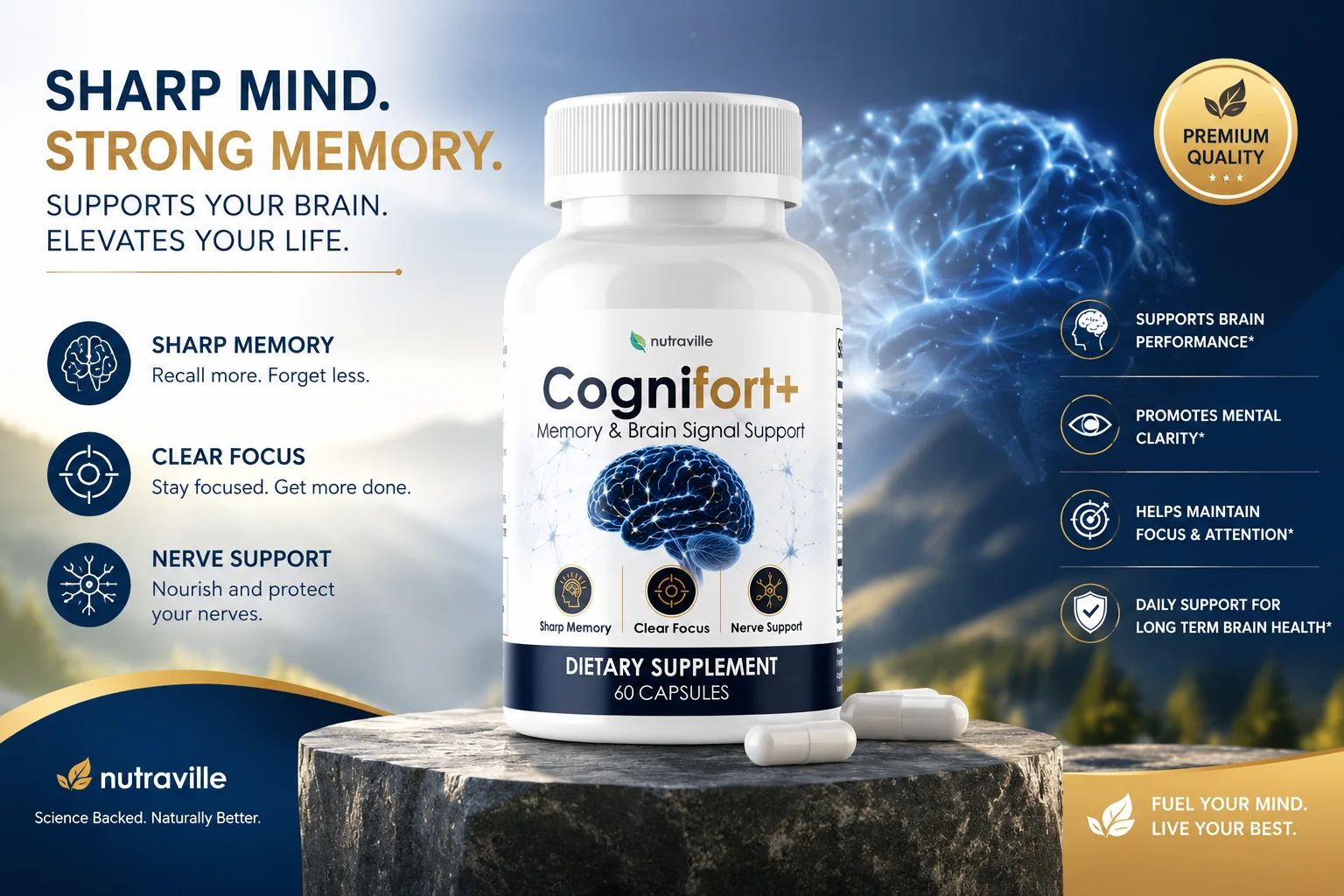
Cognifort+ is a nootropic supplement marketed toward older adults who are noticing memory lapses, difficulty following conversations, or general “brain fog.” Like many supplements in this category, its marketing leans heavily on emotional storytelling and bold promises. But behind the sales copy, Cognifort+ is built around a handful of ingredients — Bacopa monnieri, Lion’s Mane mushroom, Ginkgo biloba, Rhodiola rosea, and Panax ginseng — that do have a real, if modest, research base.
This article sets aside the marketing narrative and looks at what’s actually known about these ingredients, what they can realistically be expected to do, and what to keep in mind before buying any cognitive health supplement — Cognifort+ included. Every scientific claim below is tied to a real, published source, listed in the references section at the end of this article, so you can read the underlying research yourself rather than taking a marketing page’s word for it.
How Memory and “Brain Fog” Actually Change With Age
Before evaluating any supplement, it helps to understand what’s actually happening physiologically as people age. The hippocampus — the brain region most associated with forming and retrieving memories — does shrink somewhat with normal aging. Longitudinal MRI research has estimated this decline at around 1% of hippocampal volume per year in cognitively healthy older adults, a gradual process quite different from the much faster atrophy rates seen in Alzheimer’s disease, which some studies have measured at over 4% per year.
This distinction matters. Ordinary, age-related slowing in word retrieval or processing speed is not the same thing as a neurodegenerative disease, and supplement marketing that blurs this line — implying a product can definitively tell you “it’s not dementia” — is overstepping what any over-the-counter product can actually determine. Only a clinical evaluation, often including cognitive testing and sometimes imaging or bloodwork, can meaningfully distinguish normal aging from something that needs medical treatment.
There’s also a well-documented, evidence-based connection between hearing and cognitive decline. Large longitudinal studies have found that hearing loss is associated with a significantly increased risk of dementia, and a major 2020 report from the Lancet Commission identified hearing loss as the single largest modifiable risk factor for dementia among those it examined. This is a legitimate and important finding — but it’s a reason to get hearing checked and treated (hearing aids have real evidence behind them), not necessarily a reason to expect a supplement to resolve hearing-related cognitive symptoms.
Why People Search for Supplements Like Cognifort+
Age-related changes in memory and processing speed are extremely common. Many adults over 50 notice they occasionally forget names, lose their train of thought, or take a beat longer to follow a fast conversation. This is often a normal part of aging and is different from dementia, which involves progressive, significant impairment that interferes with daily functioning.
That said, memory changes should never be self-diagnosed. Some causes of cognitive symptoms — including hearing loss, sleep apnea, thyroid problems, vitamin B12 deficiency, medication side effects, depression, or early-stage neurodegenerative disease — are treatable or manageable once identified by a doctor. Anyone experiencing new, worsening, or concerning memory problems should get a proper medical evaluation before assuming a supplement is the answer.
With that context in mind, here’s an honest look at what’s inside Cognifort+.
The Ingredients in Cognifort+: What the Research Shows
1. Bacopa Monnieri
Bacopa monnieri is an herb used for centuries in Ayurvedic medicine, and it’s one of the more researched botanicals in the nootropic space. Several small randomized controlled trials in older adults have looked at standardized Bacopa extracts (typically dosed around 300 mg/day) over periods of 12 weeks or longer.
Findings from this body of research generally suggest:
- Modest improvements in delayed recall and working memory compared to placebo in some studies of older adults.
- Some evidence of reduced “processing latency” (the gap between receiving information and responding to it), measured through EEG markers like N100 and P300 latency in a few small trials.
- Generally good tolerability, though some users report mild gastrointestinal upset.
It’s worth noting that most Bacopa trials are small (typically 50–100 participants), industry-independent replication is limited, and effect sizes, while statistically significant in some studies, are modest — not the dramatic “words rushing back” transformation often implied in supplement marketing. For example, one 12-week randomized, placebo-controlled trial in adults over 55 found improvements in delayed word recall with a standardized Bacopa extract compared to placebo, but the study population was modest in size and the improvements, while statistically significant, were incremental rather than dramatic.
Bacopa’s active compounds (bacosides) are indeed fat-soluble, and there is preclinical evidence — largely from cell and animal studies — that lipid-mediated pathways can affect how bacosides cross the blood-brain barrier. However, robust human trials directly comparing fat-paired versus standard Bacopa capsule delivery are limited, so claims about a specific “ritual” dramatically multiplying Bacopa’s effects go well beyond what’s currently been tested in people.
2. Lion’s Mane Mushroom (Hericium erinaceus)
Lion’s Mane has generated interest because certain compounds it contains — erinacines — have been shown in laboratory and animal studies to stimulate nerve growth factor (NGF) synthesis, a protein involved in the growth and maintenance of neurons.
Human research on Lion’s Mane for cognition is still in early stages. A small Japanese trial in older adults with mild cognitive impairment found that a Lion’s Mane extract was associated with improved scores on a cognitive function scale during the supplementation period, with scores tending to decline again after supplementation stopped — an interesting pattern, but based on a small sample over a relatively short period. The erinacine-NGF mechanism itself is well documented in laboratory research on fungal mycelium extracts, but translating a mechanism seen in cells and animals into a proven cognitive benefit in humans requires larger, longer, independently replicated trials that don’t yet exist for Lion’s Mane.
3. Ginkgo Biloba
Ginkgo biloba is one of the most widely studied herbal supplements for cognitive health. It’s believed to work partly by improving cerebral blood flow. Some small studies have shown measurable short-term increases in blood flow to the brain and modest improvements in processing speed with Ginkgo supplementation.
One small imaging study in healthy older men found that a standardized Ginkgo extract taken twice daily for four weeks was associated with measurable increases in cerebral blood flow, and a separate small trial found some improvement in speed of information processing after Ginkgo supplementation. These are legitimate physiological findings worth noting.
However, it’s important to note that larger, longer-term trials on Ginkgo — including the NIH-funded Ginkgo Evaluation of Memory (GEM) study, one of the largest trials of its kind — found that Ginkgo biloba did not reduce the incidence of dementia or Alzheimer’s disease in older adults followed over several years. This is a meaningful gap between short-term physiological changes (like blood flow) and the much bigger claim of preventing cognitive decline, and it’s a useful reminder that positive results in small studies don’t always hold up in larger ones. Ginkgo also has documented interactions with blood-thinning medications, which is a meaningful safety consideration for older adults, who are more likely to take anticoagulants.
4. Rhodiola Rosea
Rhodiola is an adaptogen — a category of herbs traditionally used to help the body manage stress. A frequently cited placebo-controlled study in physicians working night shifts found that a standardized Rhodiola extract was associated with reduced overall fatigue and improved performance on tests of audio-visual perception and short-term memory during a demanding work period. Its role in a formula like Cognifort+ appears to be more about supporting mental energy and stress resilience than directly targeting long-term memory formation, and most of the supporting research has been conducted in younger or middle-aged adults under acute stress rather than in older adults with age-related memory concerns specifically.
5. Panax Ginseng
Panax ginseng has a long history of use in traditional medicine, and modern research has looked at its effects on mental fatigue, working memory, and mood, generally in the context of short-term use. Findings across this body of research are mixed and depend heavily on dose, extract standardization, and the population studied. Its inclusion in cognitive formulas is generally framed around sustaining energy and reducing fatigue rather than directly reversing memory decline, and it should be noted that ginseng can interact with blood sugar medications and certain antidepressants.
What This Means for Cognifort+ Specifically
It’s important to separate ingredient-level research from product-level claims. Studies cited in Cognifort+ marketing materials are typically studies of the individual ingredients (often at specific doses, in specific populations, using specific extracts) — not clinical trials of the Cognifort+ formula itself. This is common across the supplement industry, but it does mean that claims like “clinically studied” or references to institutions like Johns Hopkins, Harvard, or Stanford usually refer to unrelated academic research on an ingredient, not an endorsement of the finished product.
This doesn’t necessarily mean the ingredients are useless — several do have a genuine, published research base, as outlined above. But it does mean prospective buyers should calibrate their expectations: modest, gradual support is a more realistic expectation than dramatic reversal of memory loss, and results (if any) will vary significantly between individuals.
Marketing Claims Worth Being Skeptical Of
When evaluating any brain-health supplement — Cognifort+ included — it’s worth watching for a few common red flags in how these products are sold:
- “It’s not aging, it’s not dementia” framing. No supplement can reliably rule out a medical condition. Only a healthcare provider can properly evaluate cognitive symptoms.
- Dramatic before/after personal stories. These are often unverifiable and shouldn’t be treated as clinical evidence.
- Countdown timers and “limited stock” messaging. These are standard direct-response marketing tactics designed to create urgency, not genuine supply constraints tied to a specific harvest.
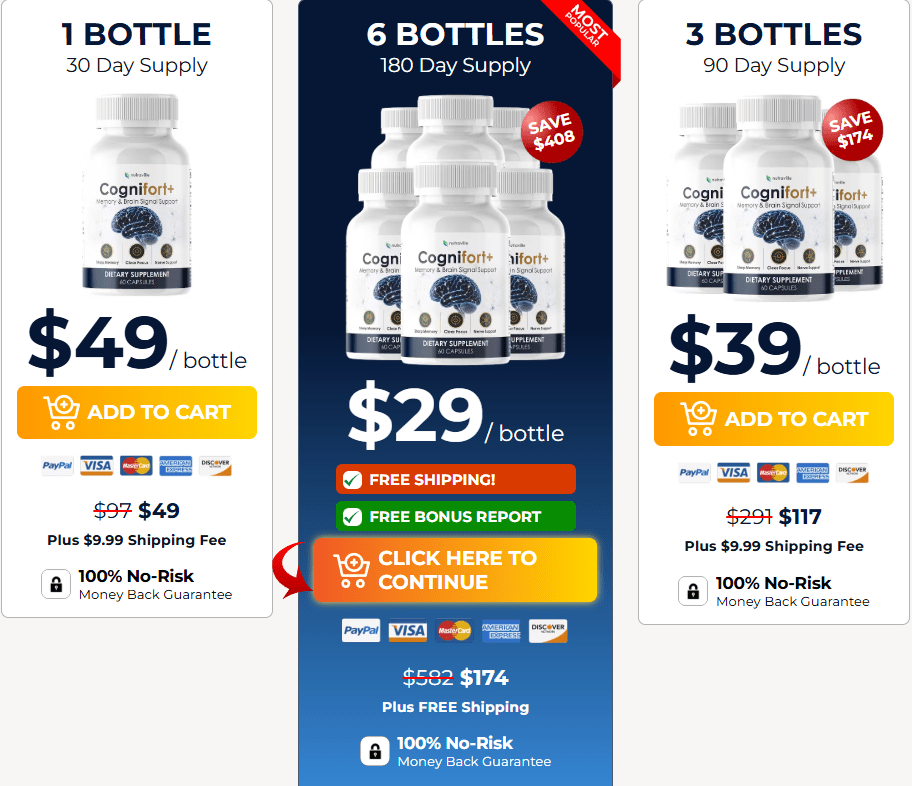
- Comparisons to the cost of dementia care or prescription drugs. While memory care is genuinely expensive, this framing is used to make a $29–$49 supplement feel like an obvious, low-risk decision — when in reality no supplement is a substitute for medical care or proven treatment.
- Institutional name-dropping. Mentioning that an ingredient was studied at a well-known university is not the same as that university endorsing the finished commercial product.
Safety and Interaction Considerations
Before starting Cognifort+ or any similar multi-ingredient nootropic, it’s worth discussing with a doctor or pharmacist, particularly if you:
- Take blood thinners (Ginkgo can increase bleeding risk)
- Have a thyroid condition (some adaptogens can interact with thyroid medication)
- Take antidepressants or other psychiatric medications (herb-drug interactions are possible with several of these ingredients)
- Are pregnant or breastfeeding
- Have an upcoming surgery (several herbs in this category are recommended to be stopped beforehand due to bleeding or sedation risk)
Because supplements aren’t regulated by the FDA in the same way as prescription drugs, third-party testing certifications (like NSF or USP) can offer some added confidence in a product’s purity and label accuracy, and it’s worth checking whether a specific brand has this kind of independent verification.
Realistic Expectations
Based on the current research on Cognifort+’s core ingredients, a reasonable set of expectations would be:
- Any benefits are likely to be gradual and modest rather than dramatic
- Individual response will vary significantly
- Consistency over weeks to months, not days, is what’s reflected in most of the underlying research
- Supplements like this are best thought of as a possible complement to — not a replacement for — good sleep, cardiovascular exercise, social engagement, hearing health, and management of underlying conditions, all of which have stronger and more consistent evidence for supporting cognitive health with age
Lifestyle Factors With Stronger Evidence for Brain Health
It’s worth putting supplement research in context. Several lifestyle factors have a substantially larger and more consistent evidence base for supporting cognitive health with age than any single herbal supplement currently does:
- Cardiovascular exercise. Regular aerobic activity is one of the most consistently supported interventions for supporting brain health and slowing age-related cognitive decline in longitudinal research.
- Treating hearing loss. Given the strength of the hearing-dementia link discussed earlier, addressing hearing loss with a proper evaluation and hearing aids if needed is one of the higher-confidence steps someone can take.
- Sleep quality. Poor sleep, including undiagnosed sleep apnea, is associated with worse memory performance and is often overlooked as a contributor to “brain fog.”
- Social engagement. Maintaining social connections and mentally engaging activities has repeatedly been associated with better cognitive outcomes in observational research.
- Cognitive/processing-speed training. A large, long-running NIH-funded trial (the ACTIVE study) found that a specific form of computerized speed-of-processing training was associated with a meaningfully lower rate of dementia diagnosis over a 10-year follow-up period compared to control groups — one of the more robust findings in this space, and notably not a supplement-based intervention at all.
- Managing cardiovascular risk factors. Blood pressure, cholesterol, and blood sugar control are all linked to long-term brain health in large population studies.
None of this means supplements like Cognifort+ have zero potential value — some of their ingredients do have legitimate, if modest, supporting research, as detailed above. But it does mean a supplement is reasonably viewed as one small piece of a much larger picture, not a replacement for the interventions with the strongest evidence behind them.
How to Evaluate Any Brain Health Supplement (Not Just Cognifort+)
If you’re comparing Cognifort+ against other cognitive supplements, a few practical questions can help you cut through marketing language:
- Are doses disclosed? Look for a supplement facts panel that lists exact milligram amounts for each ingredient, ideally matching or close to doses used in published research (e.g., ~300 mg/day for standardized Bacopa extracts in most trials).
- Is the extract standardized? Herbal potency varies enormously depending on how it’s grown, harvested, and processed. Look for standardization to a specific percentage of active compounds (e.g., bacosides for Bacopa).
- Is there third-party testing? Independent certification (NSF Certified for Sport, USP Verified, or similar) provides some assurance that a product contains what the label says and is free of contaminants — something the FDA does not routinely verify for supplements before they reach the market.
- Are claims about the finished product or the individual ingredients? As discussed above, most brain-health formulas cite research on their individual ingredients, not the specific blend being sold. That’s not necessarily dishonest, but it’s an important distinction to keep in mind when weighing how much confidence to place in marketing claims.
- Does the return policy seem reasonable, and is the seller transparent about it? A generous return window can be a genuine benefit, but it’s separate from evidence of efficacy.
Cognifort+ Pricing
Frequently Asked Questions
Is Cognifort+ backed by clinical trials? The finished Cognifort+ formula itself does not appear to have published clinical trials. Its individual ingredients — particularly Bacopa monnieri and Ginkgo biloba — have been studied in small human trials, with mixed but sometimes promising results.
How long does it take to notice a difference? In the research on ingredients like Bacopa, measurable effects (where found) generally appeared after 8–12 weeks of consistent use, not days.
Is it safe to take alongside medication? Not necessarily. Several ingredients (especially Ginkgo) can interact with common medications like blood thinners. Check with a doctor or pharmacist first.
Can it treat or prevent dementia? No supplement, including Cognifort+, has been shown to prevent or treat dementia. If you or a loved one is experiencing concerning memory symptoms, a medical evaluation is the appropriate next step.
Final Thoughts
Cognifort+ combines several botanicals — Bacopa monnieri, Lion’s Mane, Ginkgo biloba, Rhodiola rosea, and Panax ginseng — that each have some genuine, if limited, scientific backing for supporting aspects of cognitive function, mental energy, or stress resilience. That’s worth taking seriously. At the same time, the marketing narrative around products like this often overstates what the underlying research actually supports, and uses persuasion tactics (urgency, unverified testimonials, loose institutional references) that are worth recognizing for what they are.
If you’re considering Cognifort+ or a similar supplement, the most useful first step is usually a conversation with your doctor — both to rule out treatable causes of memory changes, and to check for interactions with anything else you’re taking. From there, a realistic, patient approach — combined with the lifestyle factors that have the strongest evidence base for brain health — is likely to serve you better than any single supplement, however it’s marketed.
Scientific References
- Raz N, et al. “Regional Brain Changes in Aging Healthy Adults.” Cerebral Cortex, 2005. — PubMed: https://pubmed.ncbi.nlm.nih.gov/15703252/
- Barnes J, et al. “A Meta-Analysis of Hippocampal Atrophy Rates in Alzheimer’s Disease.” Neurobiology of Aging, 2009. — PubMed: https://pubmed.ncbi.nlm.nih.gov/18346820/
- Lin FR, et al. “Hearing Loss and Incident Dementia.” Archives of Neurology, 2011. — PMC: https://www.ncbi.nlm.nih.gov/pmc/articles/PMC3277836/
- Livingston G, et al. “Dementia Prevention, Intervention, and Care: 2020 Report of the Lancet Commission.” The Lancet, 2020. — PubMed: https://pubmed.ncbi.nlm.nih.gov/32738937/
- Morgan A, Stevens J. “Does Bacopa monnieri Improve Memory Performance in Older Persons?” Journal of Alternative and Complementary Medicine, 2010. — Study details: Southern Cross University, 98 adults over 55, 300 mg/day, 12 weeks.
- Calabrese C, et al. “Effects of a Standardized Bacopa monnieri Extract on Cognitive Performance, Anxiety, and Depression in the Elderly.” Journal of Alternative and Complementary Medicine, 2008. — PubMed: https://pubmed.ncbi.nlm.nih.gov/18611150/
- Peth-Nui T, et al. “Effects of 12-Week Bacopa monnieri Consumption on Attention, Cognitive Processing, Working Memory, and Functions of Both Cholinergic and Monoaminergic Systems in Healthy Elderly Volunteers.” Evidence-Based Complementary and Alternative Medicine, 2012. — PMC: https://www.ncbi.nlm.nih.gov/pmc/articles/PMC3537209/
- Abdul Manap AS, et al. “Bacosides Cross the Blood-Brain Barrier via Lipid-Mediated Passive Diffusion.” Journal of Experimental Pharmacology, 2019. — PMC: https://www.ncbi.nlm.nih.gov/pmc/articles/PMC6669844/
- Kawagishi H, et al. “Erinacines A, B, and C, Strong Stimulators of Nerve Growth Factor (NGF) Synthesis, from the Mycelia of Hericium erinaceum.” Tetrahedron Letters, 1994. — ScienceDirect: https://www.sciencedirect.com/science/article/abs/pii/S0040403900767608
- Mashayekh A, et al. “Effects of Ginkgo biloba on Cerebral Blood Flow Assessed by Quantitative MR Perfusion Imaging: A Pilot Study.” Neuroradiology, 2011. — PubMed: https://pubmed.ncbi.nlm.nih.gov/21061003/
- Allain H, et al. “Effect of Two Doses of Ginkgo biloba Extract (EGb 761) on the Dual-Coding Test in Elderly Subjects.” Clinical Therapeutics, 1993. — PubMed: https://pubmed.ncbi.nlm.nih.gov/8364946/
- DeKosky ST, et al. “Ginkgo biloba for Prevention of Dementia: A Randomized Controlled Trial (Ginkgo Evaluation of Memory [GEM] Study).” JAMA, 2008. — PubMed: https://pubmed.ncbi.nlm.nih.gov/19017911/
- Darbinyan V, et al. “Rhodiola rosea in Stress Induced Fatigue — A Double Blind Cross-Over Study of a Standardized Extract SHR-5 with a Repeated Low-Dose Regimen on the Mental Performance of Healthy Physicians During Night Duty.” Phytomedicine, 2000. — ScienceDirect: https://www.sciencedirect.com/science/article/abs/pii/S0944711300800550
- Coe NB, et al. “Impact of Cognitive Training on Claims-Based Diagnosed Dementia Over 20 Years: Evidence from the ACTIVE Study.” Alzheimer’s & Dementia: Translational Research & Clinical Interventions, 2026. — PubMed: https://pubmed.ncbi.nlm.nih.gov/41669119/
Note: These citations refer to published research on individual ingredients found in Cognifort+ and related supplements. They do not represent clinical trials of the Cognifort+ product itself, and findings from small or preliminary studies should be interpreted with appropriate caution. This article does not constitute medical advice.
previous post- https://homehealthyremedy.com/kerafirm-pro-review-nail-cuticle-overview/
previous post- https://homehealthyremedy.com/gluconara-scam-or-legit/
previous post- https://homehealthyremedy.com/ketovera-review-ingredients-benefits/

Natural home remedies, skincare secrets, dental & eye health tips, and real product reviews to help you stay healthy the natural way.