

Introduction
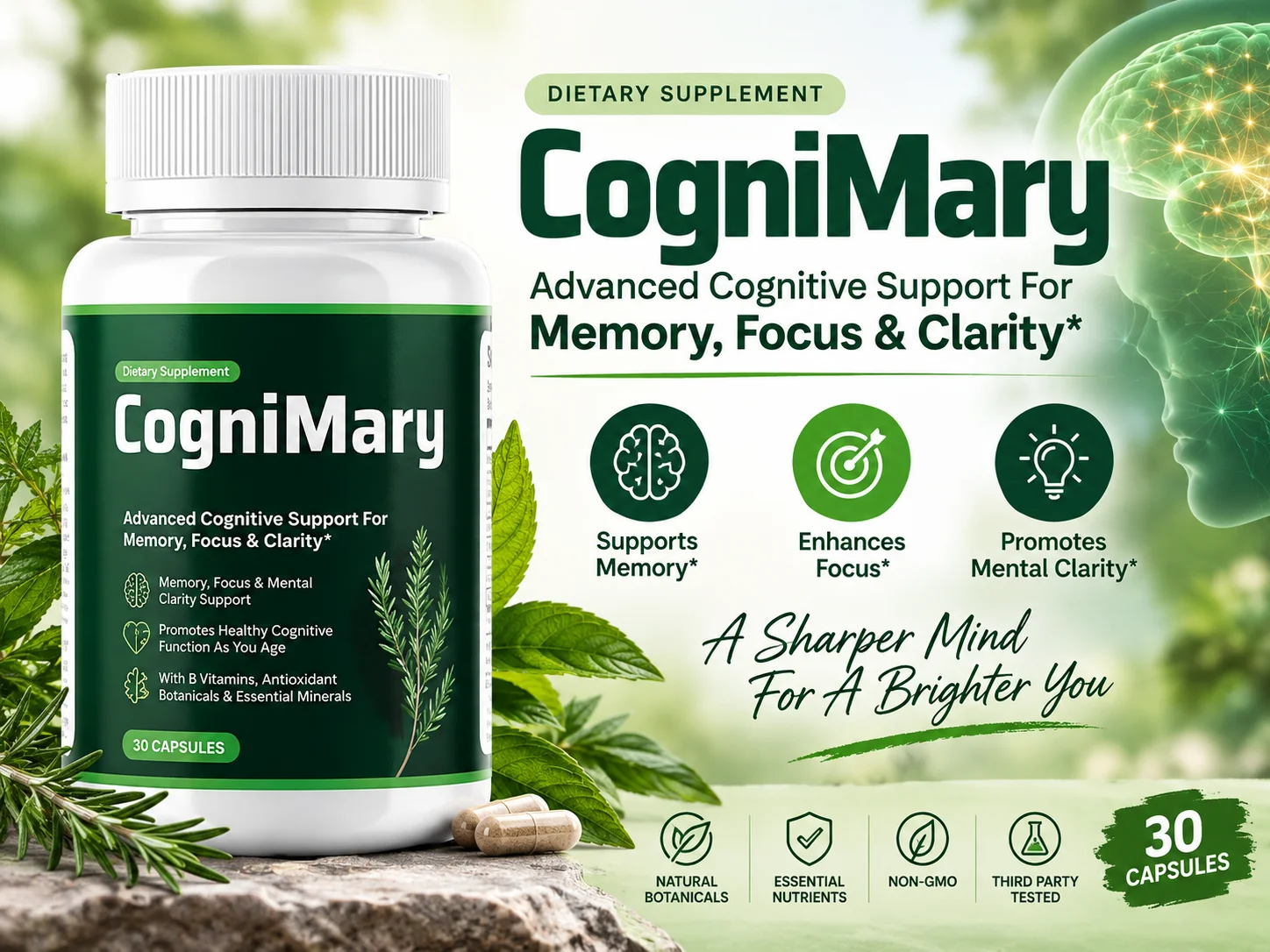
If you’ve searched for “CogniMary,” you’ve likely landed on one of a dozen near-identical promotional pages — cogni-mary.com, cognimaryofficial.com, cogni-mary.org, cogni-mary.net — each promising sharper memory, better focus, and clearer thinking in a single daily capsule. CogniMary is marketed as a natural cognitive wellness supplement, part of a crowded category of “brain support” products aimed at adults who want an edge in memory, concentration, and mental clarity.
This article takes a different approach than most CogniMary reviews online. Rather than repeating marketing copy, it looks at three things directly: what CogniMary actually claims, what independent research says about the ingredient categories these formulas typically use, and what red flags consumers should know about before buying. The goal is to give you the information you need to make your own informed decision — not to sell you anything.
What Is CogniMary?
CogniMary is positioned as a dietary supplement intended to support everyday cognitive wellness alongside healthy lifestyle habits such as sleep, exercise, balanced nutrition, and hydration. Promotional pages describe it as a “botanical blend” designed to support memory retention, daily focus, and general brain health.
Marketing materials frame CogniMary as a complement to — not a replacement for — good habits and professional medical care. That framing is standard, appropriate language for the dietary supplement category, and it’s worth taking seriously: no capsule substitutes for sleep, movement, and a balanced diet when it comes to brain health.
The Ingredient Question: A Moving Target
Here’s where CogniMary research gets complicated. Unlike most legitimate supplement brands, which maintain one product page with a fixed Supplement Facts panel, CogniMary is distributed across a wide network of affiliate and landing-page domains, and the ingredient lists are not consistent between them.
Some CogniMary sales pages attribute the formula’s effects to rosemary extract and ginkgo biloba. Others list L-tyrosine, green coffee bean extract, or theobromine as the active ingredients. There is no single, easily accessible Supplement Facts label showing exact milligram dosages across these different versions of the product.
This inconsistency matters for a simple reason: in supplement science, dose is everything. An ingredient that shows measurable cognitive benefits at a clinically studied dose can do essentially nothing at a fraction of that amount. Without a transparent, verifiable label, there is no way to know whether a CogniMary capsule contains a research-relevant dose of anything, or mostly fillers and binders with token amounts of active compounds.
Because of this, this article treats the frequently cited CogniMary ingredients as a case study — reviewing what legitimate research says about each one, on its own, at studied doses — rather than making any claim about what a CogniMary capsule specifically delivers.
What the Science Actually Says About the Commonly Cited Ingredients
Ginkgo Biloba
Ginkgo biloba is one of the most heavily studied “brain support” botanicals in the world, which makes it a useful test case for how nuanced this research really is.
The U.S. National Center for Complementary and Integrative Health (NCCIH) reviewed the evidence and found a mixed picture. In the large, NIH-funded Ginkgo Evaluation of Memory (GEM) study, more than 3,000 adults aged 75 and older took either ginkgo extract or a placebo for a median of six years — and researchers found no difference between the groups in rates of developing dementia or Alzheimer’s disease. Further analysis of that same trial also found ginkgo ineffective at slowing general cognitive decline.
At the same time, other reviews paint a more encouraging picture for a specific population: people who already have mild cognitive impairment or Alzheimer’s disease. A 2020 meta-analysis of seven randomized controlled trials involving 939 Alzheimer’s patients found that a standardized ginkgo extract (EGb-761) was associated with modest cognitive improvement in that group, and a 2016 systematic review of 21 trials reached a similar conclusion for people with mild cognitive impairment or dementia.
However, a systematic review focused specifically on healthy adults under 60 — the population most cognitive-supplement marketing is aimed at — concluded there was no convincing evidence that ginkgo improved any aspect of cognitive performance in that group.
The takeaway: ginkgo’s evidence base is real, but it’s concentrated in older adults with existing cognitive impairment, at standardized clinical doses — not in healthy adults looking for a general mental edge.
Rosemary Extract (Rosmarinus officinalis)
Rosemary has a long folk history as “the herb of remembrance,” and modern research has started to test that reputation. A systematic review and meta-analysis of animal studies found consistent cognition-enhancing effects associated with rosemary extract and its constituent compounds, including rosmarinic acid.
Human evidence is more preliminary but suggestive. A randomized controlled trial in healthy working-age Japanese men found that four weeks of continuous rosemary extract intake was associated with improvements in mood, fatigue, and cognitive function. A related study observed improved delayed word recall — a marker of short-term memory — in adults aged 40–62 who took a combined rosemary, sage, and lemon balm extract rich in rosmarinic acid for two weeks.
Researchers attribute rosemary’s potential effects partly to its phenolic compounds — rosmarinic acid, carnosic acid, and related antioxidants — which have shown neuroprotective activity against oxidative stress in laboratory studies, a mechanism relevant to neurodegenerative conditions like Alzheimer’s disease.
The takeaway: rosemary extract has genuine, if still early-stage, human research behind it, mostly using standardized extracts at specific doses over defined trial periods — details that matter and that CogniMary’s inconsistent labeling doesn’t provide.
L-Tyrosine
L-tyrosine is an amino acid and precursor to the neurotransmitters dopamine and norepinephrine, which is the basis for claims that it supports focus and mental performance, particularly under stress.
A rapid evidence assessment published in Military Medicine reviewed the literature on tyrosine for cognitive and physical performance under stress. It found a weak recommendation in favor of tyrosine specifically for cognitive performance under stress, since the available studies consistently showed a positive direction of effect — but the review stopped short of a confident, general recommendation due to the overall quality and quantity of evidence.
A separate review in the peer-reviewed literature reached a similar conclusion: tyrosine may counteract stress-related dips in cognitive performance by supporting dopamine and norepinephrine synthesis, but results across studies vary considerably, and effects appear most consistent in situations involving acute stress, sleep deprivation, or cognitive load — not in general, everyday, low-stress conditions.
The takeaway: tyrosine’s best-supported use case is narrow — cognitive performance under acute stress — rather than general, all-purpose memory enhancement.
Green Coffee Bean Extract and Theobromine
These two ingredients appear on some CogniMary-affiliated pages but are less studied specifically for cognition. Green coffee bean extract’s research base is concentrated in metabolic and weight-related outcomes, driven largely by its chlorogenic acid content, rather than in memory or focus. Theobromine is a mild stimulant compound found in cacao, related to caffeine, with some evidence of mood and alertness effects tied largely to its stimulant properties rather than to a demonstrated cognitive-enhancement mechanism.
Given how thin the direct cognitive research is on these two ingredients compared to ginkgo, rosemary, and tyrosine, their inclusion on some CogniMary pages — and not others — reinforces the pattern of inconsistent formulation discussed above.
Red Flags Worth Knowing About
Independent research into CogniMary’s online presence has surfaced several patterns that are worth flagging for anyone considering a purchase:
- Multiple, inconsistent domains. CogniMary is sold through a web of similarly named sites (cogni-mary.com, cogni-mary.org, cogni-mary.net, cognimaryofficial.com) as well as landing pages that bundle it with entirely unrelated products, a structure more typical of affiliate marketing networks than a single accountable brand.
- No consistent, accessible Supplement Facts label. As noted above, exact ingredient amounts are difficult to verify across sales channels.
- Varying ingredient claims. Different “official” pages attribute CogniMary’s effects to different active ingredients, which is inconsistent with how legitimate supplement manufacturers typically operate.
- Reliance on direct-to-consumer landing pages rather than retail availability or independent third-party testing disclosures (such as NSF or USP certification), which many reputable supplement brands provide.
None of this proves CogniMary is fraudulent — dietary supplements in general are only loosely regulated under U.S. law (the FDA treats them differently from drugs, and manufacturers do not need FDA approval before marketing a supplement, as the agency’s own consumer guidance explains). But these patterns are exactly the kind of thing consumer-protection resources like the FTC and BBB advise shoppers to watch for before purchasing an unfamiliar supplement online.
Understanding Supplement Regulation: Why “Natural” Doesn’t Mean “Proven”
A lot of confusion around products like CogniMary comes from a basic misunderstanding of how dietary supplements are regulated in the United States. Under the Dietary Supplement Health and Education Act (DSHEA) of 1994, supplements are regulated more like a category of food than a category of medicine. That has a few important consequences worth spelling out:
- No pre-market approval. A supplement manufacturer does not need to prove safety or effectiveness to the FDA before selling a product, unlike prescription or over-the-counter drugs.
- The manufacturer is responsible for accuracy. Companies are legally required to ensure their claims are truthful and not misleading, and to be able to substantiate them — but this is largely a self-policing system unless the FDA or FTC intervenes after the fact.
- Structure/function claims are allowed with limits. Language like “supports memory” or “promotes cognitive wellness” is legally permitted without clinical proof specific to that product, as long as the company doesn’t claim to diagnose, treat, cure, or prevent a disease (claiming to treat “dementia” or “Alzheimer’s,” for instance, would cross into drug-claim territory and trigger stricter scrutiny).
- Enforcement is reactive, not proactive. The FDA and Federal Trade Commission generally only step in after a product is already on the market and consumer complaints, adverse event reports, or investigative journalism raise concerns.
This regulatory environment is exactly why ingredient-level research matters so much more than marketing copy. A label can legally say a product “supports focus and mental clarity” regardless of whether independent researchers have ever tested that specific formula. The responsibility shifts to the consumer to check what’s actually inside the bottle and whether the doses match what’s been studied — which circles back to why CogniMary’s inconsistent ingredient lists and missing label data are a meaningful gap, not a minor detail.
Spotting Affiliate Content vs. Independent Reviews
One more pattern worth understanding: a large share of what appears online when you search “CogniMary reviews” is affiliate marketing content, not independent journalism or consumer reporting. These pages are often structured to look like objective reviews — complete with headers like “What Is CogniMary?”, “How Does It Work?”, and “Final Thoughts” — while ultimately linking to the same handful of ordering domains and earning commission on any resulting sale.
A few tells can help you tell the difference:
- Near-identical structure and phrasing across “different” review sites — a sign the content was templated and syndicated rather than independently written.
- Prominent “Official Site” or “Visit Here” links early and often in the text, rather than links to studies, regulatory filings, or verifiable lab reports.
- Vague, hedged language (“may help,” “is designed to,” “is intended to”) throughout, without any specific data, percentages, or study citations tied directly to the product itself.
- Publication on ad-hosting or classifieds platforms rather than established health, medical, or consumer-review publications with editorial standards.
None of this means every affiliate-marketed supplement is worthless — but it does mean the volume of positive-sounding “reviews” for a product like CogniMary tells you more about its marketing budget than about its actual efficacy.
How to Evaluate Any Cognitive Supplement — CogniMary or Otherwise
Whether you’re looking at CogniMary or a competing “brain support” product, the same evaluation checklist applies:
- Look for a complete, single, consistent Supplement Facts label with exact milligram dosages for every active ingredient.
- Compare those doses to the doses used in actual clinical studies for each ingredient — a “proprietary blend” that hides individual amounts is a reason for caution.
- Check for third-party testing or certification (NSF Certified for Sport, USP Verified, or similar), which confirms a product contains what its label claims.
- Be skeptical of products sold only through scattered affiliate landing pages rather than a single official brand site and reputable retailers.
- Talk to a healthcare provider, especially if you take other medications or supplements, since even “natural” ingredients like ginkgo can interact with blood thinners and other drugs.
- Remember that supplements are not a substitute for sleep, exercise, nutrition, and stress management — the lifestyle factors with the strongest, most consistent evidence for supporting cognitive health.
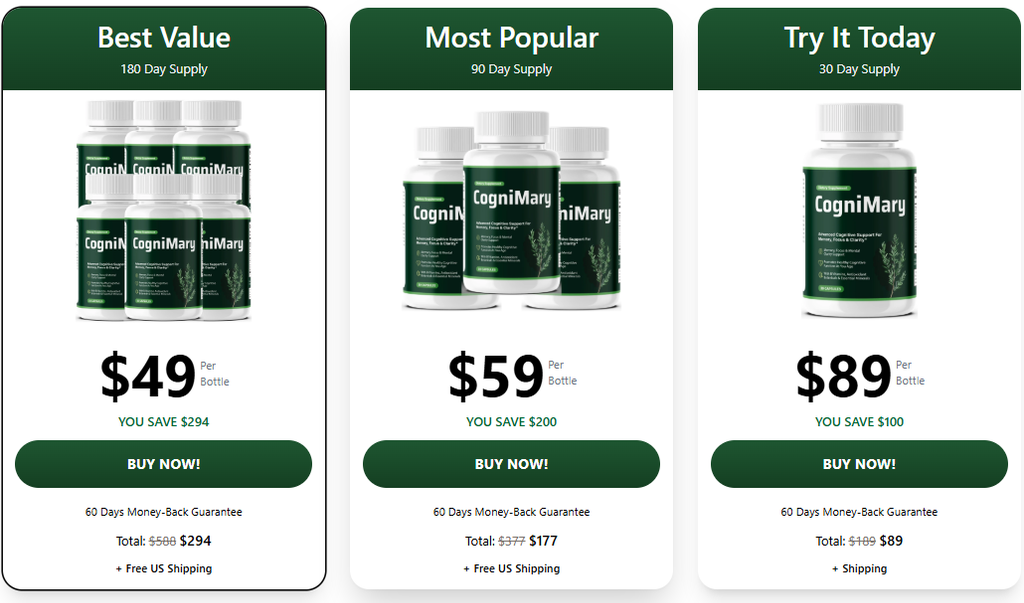
CogniMary Pricing
Frequently Asked Questions
Is CogniMary FDA-approved? No dietary supplement is “FDA-approved” in the way medications are. Under U.S. law, the FDA does not review or approve supplements for safety or effectiveness before they go to market; manufacturers are responsible for that themselves, and the agency generally only acts after a product is already for sale.
Does CogniMary work? There’s no independent, peer-reviewed clinical research on CogniMary as a finished product. What can be evaluated is the research behind the ingredients various CogniMary pages claim to use — and that research shows modest, ingredient-specific, dose-dependent effects, mostly in narrower populations or conditions than general marketing claims suggest.
What are the side effects of CogniMary? Because the exact formulation isn’t consistently disclosed, specific side effects can’t be predicted with confidence. The individual ingredients associated with CogniMary (ginkgo, rosemary, tyrosine, caffeine-like stimulants) each carry their own known risks and interactions — for example, ginkgo has documented interactions with blood-thinning medications — which is another reason to consult a healthcare provider before use.
Is CogniMary a scam? “Scam” is a strong legal term, and this article doesn’t make that determination. What can be said is that CogniMary’s marketing follows patterns — multiple inconsistent domains, no verifiable label, shifting ingredient lists — that consumer-protection resources commonly flag as warranting extra caution before purchase.
What’s a better-supported alternative to a product like CogniMary? Rather than a specific product recommendation, the more evidence-backed approach is to look at standardized, single-ingredient extracts (such as EGb-761 ginkgo extract, which has the most clinical trial data behind it) from brands that provide third-party testing and a transparent label — and to prioritize sleep, exercise, and diet, which have the strongest overall evidence for supporting cognitive health.
Conclusion
CogniMary sits within a large, competitive, and lightly regulated category of cognitive wellness supplements. The ingredients most commonly associated with it — ginkgo biloba, rosemary extract, and L-tyrosine — do have real, published research behind them, but that research is more nuanced, dose-dependent, and population-specific than promotional copy typically suggests. Meanwhile, the inconsistency in CogniMary’s own ingredient claims across different sales domains, and the absence of a single verifiable label, are genuine reasons for caution.
If you’re considering CogniMary or any similar product, the most useful next step isn’t reading another review — it’s requesting the actual Supplement Facts label, checking it against the doses used in the studies referenced here, and discussing it with a healthcare provider who knows your health history.
This article is for informational purposes only and is not medical advice. Consult a qualified healthcare professional before starting any new supplement.
Scientific Sources
- National Center for Complementary and Integrative Health (NCCIH) — Ginkgo: Usefulness and Safety
- NCCIH — Dietary Supplements and Cognitive Function, Dementia, and Alzheimer’s Disease: What the Science Says
- PMC — An Overview of Systematic Reviews of Ginkgo biloba Extracts for Mild Cognitive Impairment and Dementia
- NCBI Bookshelf (DARE) — Ginkgo biloba is not a smart drug: an updated systematic review
- PMC — Mild Cognitive Impairment and Mild Dementia: The Role of Ginkgo biloba (EGb 761®)
- PMC — Cognition enhancing effect of rosemary in lab animal studies: a systematic review and meta-analysis
- PMC — Effects of Continuous Intake of Rosemary Extracts on Mental Health in Working Generation Healthy Japanese Men
- PMC — Protective Contribution of Rosmarinic Acid in Rosemary Extract Against Oxidative Stress
- Oxford Academic, Military Medicine — Tyrosine for Mitigating Stress and Enhancing Performance in Healthy Adult Humans
- PubMed — Effect of tyrosine supplementation on clinical and healthy populations under stress or cognitive demands
Previous Post- https://homehealthyremedy.com/horse-peak-gelatin-reviews/

Natural home remedies, skincare secrets, dental & eye health tips, and real product reviews to help you stay healthy the natural way.