

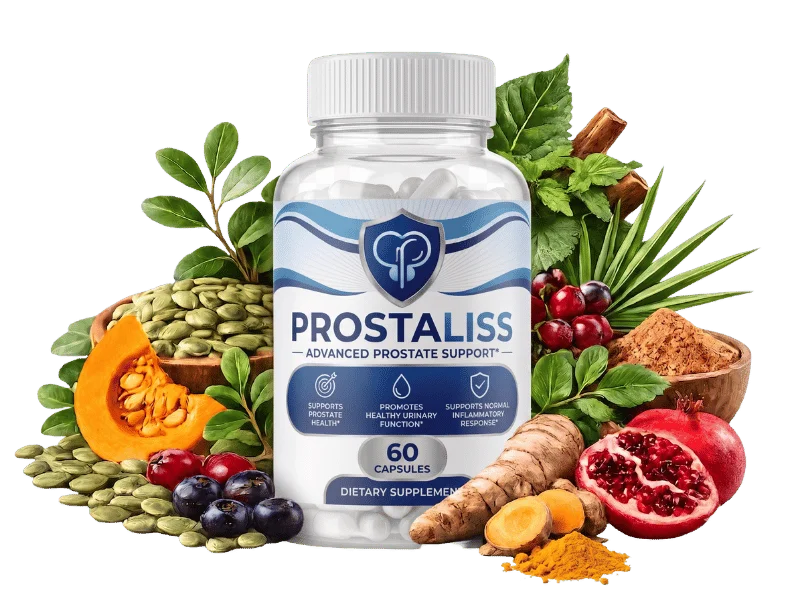
If you are waking up two or three times a night to urinate, dealing with a weak stream, or feeling like your bladder never fully empties, you are not alone. These symptoms become more common as men age, and they are the reason the prostate supplement market is so crowded. One of the newer names competing for your attention is ProstaLiss.
In this detailed ProstaLiss review, we look at what the product claims, what the ProstaLiss ingredients actually are, what clinical research says about each major ingredient, how the ProstaLiss price and packages work, what to expect from the money-back guarantee, and the possible ProstaLiss side effects. The goal is simple: to help you decide whether ProstaLiss deserves your money, based on evidence rather than sales copy.
ProstaLiss Review: Quick Verdict
- What it is: ProstaLiss is an over-the-counter dietary supplement in capsule form, marketed for prostate and urinary support in men over 40.
- Best-supported ingredients: plant sterols (beta-sitosterol) and pygeum africanum have modest clinical support for mild to moderate urinary symptoms.
- Weakest link: saw palmetto, the headline ingredient, failed to beat placebo in the best-designed trials, and the dose used here is lower than most studies tested.
- Transparency: a 142 mg proprietary blend hides individual doses of about a dozen ingredients.
- Price: from $49 to $79 per bottle depending on package, with a 60-day refund policy advertised.
- Our take: the supplement is unlikely to be harmful for most healthy men, but the dramatic promises in its marketing are not backed by studies on this specific formula. See a doctor first if you have symptoms.
What Is ProstaLiss?
It is sold as an “Advanced Prostate Support Formula.” The official sales page says it is designed for men who struggle with interrupted sleep, urgent bathroom trips, a weak or dribbling stream, and the feeling of incomplete emptying. It combines herbal extracts, minerals, antioxidants, and a proprietary blend that includes mushrooms and other botanicals.
The product is sold through BuyGoods, a third-party online retailer. The fine print on the page states that the retailer does not endorse or review the product or its claims. Like every supplement sold in the United States, it has not been evaluated by the FDA and is not intended to diagnose, treat, cure, or prevent any disease. The company’s own FAQ confirms this, saying the supplement is not intended to treat BPH (benign prostatic hyperplasia), even though the page headline talks about sleeping all night and flowing freely again.
That difference is worth remembering as you read any ProstaLiss review: a supplement can legally support “urinary health” but it cannot legally promise to fix an enlarged prostate.
ProstaLiss Ingredients: What Is Inside Each Capsule?
The official page lists the following components. The directions say to take two capsules daily before a meal with a full glass of water, and the page does not make clear whether the amounts below are per capsule or per serving, so always check the Supplement Facts panel on the bottle.
| Ingredient | Listed amount | How well is it supported? |
| Saw Palmetto (berries) | 200 mg | Popular, but best trials show little or no benefit over placebo; dose is below the 320 mg used in most studies |
| Plant Sterol Complex | 300 mg | Beta-sitosterol has the strongest evidence, but the page does not state how much beta-sitosterol is in the complex |
| Pygeum Africanum (bark) | 100 mg | Modest benefit in small, short trials; dose is in a commonly used range if it is a standardized extract |
| Selenium (gluconate) | 140 mcg | Antioxidant mineral; large trial found no prostate benefit |
| Zinc | 10 mg | Essential mineral; not proven to relieve urinary symptoms |
| Vitamin E | 13 mg | Low dose; high-dose vitamin E was linked to higher prostate cancer risk in one large trial |
| Stinging Nettle | 20 mg | Traditional use in Europe; limited human evidence at this dose |
| Tomato (lycopene) | 10 mg | Mostly observational and laboratory evidence |
| Red Raspberry, Green Tea | 50 mg each | Antioxidant support; little direct evidence for urinary flow |
| Proprietary blend | 142 mg total | Includes maitake, reishi, shiitake, cat’s claw, soursop leaf, pumpkin seed and others; individual amounts not disclosed |
Things to Notice About the ProstaLiss Ingredients
Proprietary blend. A 142 mg blend divided among about twelve ingredients means each one is present in a small amount on average. Because the label does not break it down, you cannot tell how much pumpkin seed, cat’s claw, or mushroom extract you are getting, and no clinical study on this exact combination is cited.
Page inconsistencies. Selenium appears as both milligrams and micrograms on the sales page (micrograms is the plausible figure), nettle is described as a leaf but explained using root research, and the tomato card shows a pomegranate image. These are small errors, but they matter when you are comparing a label to published research.
Standardization. Herbal products vary widely in quality. Researchers who study herbal treatments for BPH point to the lack of standardized extraction methods and dosing as a major limit on what we can conclude. The sales page does not state whether its saw palmetto, pygeum, or plant sterols are standardized extracts.
Does ProstaLiss Work? What the Research Says
This is the most important question in any ProstaLiss review. The honest answer is that no published clinical trial has tested this exact formula, so we have to look at the research on its main ingredients.
Saw Palmetto: The Headline Ingredient
Saw palmetto is the best-known herbal remedy for prostate symptoms, and the formula puts it first. Unfortunately, it is also the ingredient with the most disappointing high-quality evidence.
A Cochrane review of 27 randomized controlled trials with 4,656 participants compared saw palmetto (alone or combined with other plant agents) to placebo. Almost all of these studies used 320 mg per day. The review concluded there was little to no difference in urinary symptoms or symptom scores at short- or long-term follow-up. An earlier trial published in the New England Journal of Medicine found that saw palmetto did not improve symptoms or objective measures of BPH over a year, and a large NIH-funded trial found that doses up to three times the standard amount did no better than placebo. The National Center for Complementary and Integrative Health has summarized the research in similar terms.
Not every analysis is negative. One overview of systematic reviews found that saw palmetto and beta-sitosterol may offer slight improvements in symptoms and urine flow, but it rated the certainty of the evidence as low to moderate. A 2020 meta-analysis reported results comparable to the drug tamsulosin, while a 2021 network meta-analysis of 22 trials found no meaningful improvement.
For this formula, this means two things. First, describing saw palmetto as the “gold standard” is an overstatement. Second, the 200 mg dose here is lower than the 320 mg used in nearly all trials, so even the more optimistic studies do not directly apply.
Plant Sterols (Beta-Sitosterol)
The plant sterol complex is where the formula has its best scientific footing. A Cochrane review of beta-sitosterol found that these treatments were well tolerated and improved urinary symptoms and flow measures in men with mild to moderate BPH. The same review cautioned that long-term effectiveness, safety, and the ability to prevent complications remain unknown.
The catch is that the label lists a “Plant Sterol Complex” at 300 mg rather than a specific beta-sitosterol dose. Because the amount of actual beta-sitosterol is not stated, the research supports the ingredient category more than this exact formula.
Pygeum Africanum
Pygeum, from the bark of the African cherry tree, has a small but real trial record. A meta-analysis concluded that it modestly but significantly improves urologic symptoms and flow measures, while noting that the studies were short and varied in design. A Cochrane review reached a similarly cautious view: a standardized preparation may be useful, but the studies were small, used varied doses, and rarely used validated measures.
Clinical references describe the standardized European extract as containing 13% total sterols, taken at 50 to 100 mg twice daily or 100 mg once daily, and monitored for at least six months. The 100 mg here falls in that range, provided it is a standardized extract.
Selenium and Vitamin E
The sales page highlights selenium at 255% of the daily value. A careful review should treat this with caution. The large SELECT trial found that neither selenium nor vitamin E reduced prostate cancer incidence over seven years, and vitamin E was associated with a 17% higher risk compared to placebo. A follow-up analysis found that selenium supplements increased high-grade prostate cancer risk in men who already had high selenium levels.
To be fair, SELECT tested cancer prevention rather than urinary symptoms, and it used much higher vitamin E (400 IU) and different selenium forms. The lower doses here do not prove harm. But the trial does undercut the claim that higher selenium intake reliably protects the prostate. If you already take a multivitamin or eat selenium-rich foods such as Brazil nuts and seafood, extra selenium may add nothing.
Lycopene, Green Tea, Nettle, and the Proprietary Blend
These ingredients are common in prostate formulas because of laboratory findings, observational studies, and traditional use. Human trials showing they relieve urinary symptoms at the small doses used here are limited or absent. They are unlikely to be the parts of the formula doing the heavy lifting.
How to Take ProstaLiss
According to the product page, the recommended ProstaLiss dosage is two capsules daily before a meal with a full glass of water. The company suggests taking it consistently and completing a 90-day protocol before evaluating results. This timeline is consistent with research on herbal prostate products, which are typically studied over several months. It also happens to encourage larger purchases, so it is sensible to start with a smaller supply, track your symptoms, and reassess.
A simple way to judge whether the supplement is working is to keep a diary for two weeks before you start: how many times you wake to urinate, how strong the stream feels, and how urgent the need is. Repeat the diary after 8 to 12 weeks. Your doctor can also give you a standard symptom questionnaire for more objective tracking.
ProstaLiss Reviews and Customer Testimonials: What Can You Trust?
Search for ProstaLiss reviews and you will find dozens of glowing articles, many claiming ratings around 4.8 out of 5 from more than 20,000 verified buyers. Be careful. Several of these pages use nearly identical wording across different products with similar names, such as Prostalis, Prostabliss, and Prostalite. One even lists ingredients (silymarin and sea buckthorn) that do not appear on the official page, which suggests the writer never checked the label. The “Trustpilot, BBB, and Consumer Reports” sources these pages cite are rarely linked or verifiable.
The official page also features six five-star testimonials, each following the same pattern: years of symptoms, then dramatic relief within three to eight weeks, often with an emotional detail. There are no mixed or negative reviews, no sources for the claim that 50 million American men suffer these symptoms, and no named clinic behind the testimonial about a “doctor who was impressed.”
It is also worth remembering that BPH symptoms fluctuate, and the placebo response in urinary trials is large. In one analysis of a saw palmetto trial, symptom scores fell by about 2.2 points in the saw palmetto group and about 3 points in the placebo group. A man who feels better after six weeks may simply be experiencing that natural variation, along with better sleep habits.
We were unable to find independent, verifiable customer reviews specific to this product on a neutral platform. That does not prove the product is ineffective, but it means claims of tens of thousands of satisfied customers cannot be confirmed.
ProstaLiss Price and Packages
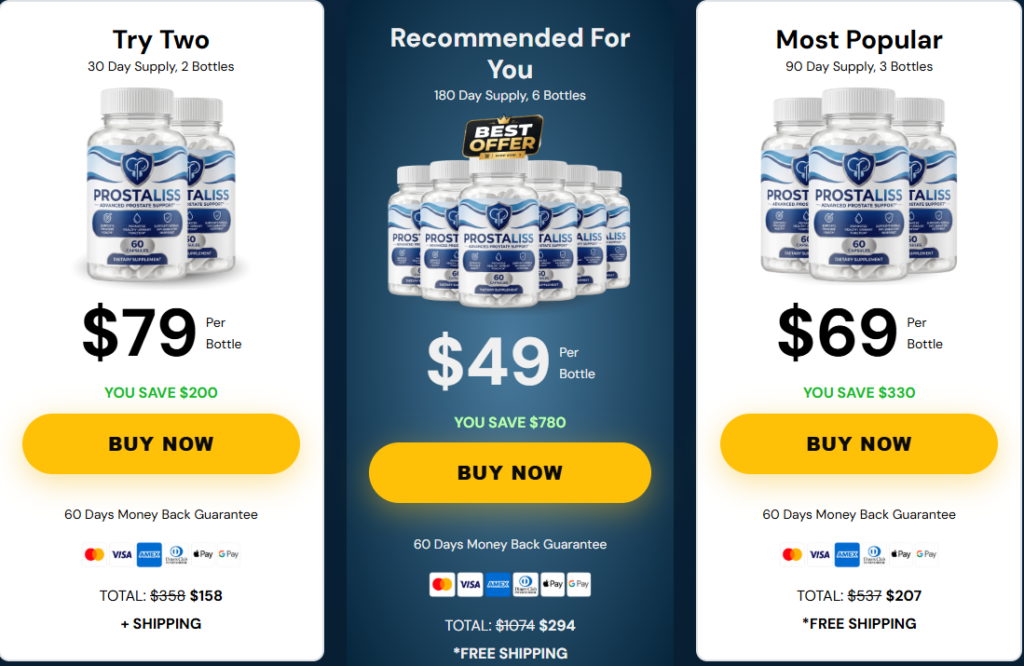
The ProstaLiss price depends on how many bottles you buy:
| Package | Bottles | Price per bottle | Total | Shipping |
| Try Two | 2 (30-day supply per page) | $79 | $158 | Extra |
| Most Popular | 3 (90-day supply) | $69 | $207 | Free |
| Recommended | 6 (180-day supply) | $49 | $294 | Free |
The sales page shows crossed-out totals of $358, $537, and $1,074, which all work out to $179 per bottle. There is no evidence that bottles ever sell at that price, so “You save $780” compares the real price to a number the seller chose. A better comparison is with similar products: retail listings for prostate supplements containing saw palmetto and beta-sitosterol from established brands appear at roughly $20 to $45 per bottle. The packaging graphics also contain small errors, such as a three-bottle box marked “4b.”
The page states that it is a one-time purchase with no subscription or auto-billing. Even so, check your card statement after ordering and dispute any unexpected charge promptly.
ProstaLiss Money-Back Guarantee and Where to Buy
The company advertises a 60-day money-back guarantee. To claim it, you email the support address on the official site within 60 days, and the page says you do not need to return the bottles. On paper, that is a fair policy.
In practice, customer experiences with the retailer, BuyGoods, are mixed. On Trustpilot, many reviewers report eventually receiving full refunds, but some describe delays, slow email replies, and difficulty reaching a person by phone. One reviewer said the company asked for empty bottles to be returned, which conflicts with the sales page wording. A complaint aggregator shows a low average rating for BuyGoods across several hundred reviews. Refund complaints are common with online supplement retailers, and many of these were resolved, but you should be prepared.
If you decide to buy ProstaLiss, purchase only from the official website, use a credit card rather than a debit card, save your order confirmation, note the date, and request a refund well before day 60 if you are unhappy. If the seller does not respond, contact your card issuer.
ProstaLiss Side Effects and Safety
Most ProstaLiss ingredients are generally well tolerated at supplement doses. The Cochrane review on beta-sitosterol described the treatments as well tolerated, and the NEJM saw palmetto trial found side effects similar to placebo. That said, a few cautions apply:
- Medication interactions: the company itself advises talking to your physician if you take blood pressure medicine, blood thinners, or alpha-blockers. Green tea, vitamin E, and some botanicals can affect clotting or interact with prescription drugs.
- Undisclosed amounts: the proprietary blend means you cannot fully assess your exposure to each ingredient.
- Selenium totals: if you already take a multivitamin or selenium supplement, your combined intake may climb higher than you realize.
- Quality control: supplements are not approved by the FDA before sale. The page mentions USA manufacturing but does not mention independent third-party testing, such as USP, NSF, or ConsumerLab.
- Digestive upset: mild stomach discomfort is a common complaint with herbal supplements, especially when taken on an empty stomach.
Stop taking it and contact a doctor if you develop a rash, swelling, unusual bleeding, severe stomach pain, or any other worrying symptom.
When to See a Doctor Instead of Relying on ProstaLiss
This is the most important point in this ProstaLiss review. Night-time urination, weak stream, urgency, and incomplete emptying are common with BPH, but they can also be caused by:
- Urinary tract infections or prostatitis
- Overactive bladder
- Diabetes, which increases urine production
- Sleep apnea, a well-known cause of night-time urination
- Heart or kidney problems, or medication side effects such as diuretics
- Prostate cancer, which can overlap with BPH symptoms
A supplement that seems to help could delay a diagnosis that needs treatment. See a doctor promptly if you notice blood in your urine, pain, fever, sudden inability to urinate, or unexplained weight loss. A urologist or primary care physician can evaluate your symptoms, run a urine test, and discuss PSA testing. Prescription medicines such as alpha-blockers and 5-alpha reductase inhibitors have far stronger evidence than any supplement, including measurable improvement in urine flow.
Lifestyle changes also help: cut back on fluids and caffeine in the evening, limit alcohol, manage blood sugar, treat sleep apnea if present, stay physically active, and review your medications with your doctor.
ProstaLiss Pros and Cons
Pros
- Contains ingredient types (beta-sitosterol and pygeum) with some clinical support for mild to moderate urinary symptoms
- Pygeum dose falls within a commonly studied range
- One-time purchase with no stated subscription
- 60-day refund policy advertised
- Most ingredients are generally well tolerated
Cons
- Saw palmetto is under-dosed compared with most trials, and top-quality studies show little benefit over placebo
- Proprietary blend hides individual doses
- Plant sterol content is not standardized on the page
- Selenium and vitamin E have a troubling history in prostate research
- Marketing claims go beyond the evidence
- Inflated “original” prices and unverifiable testimonials
- Mixed customer experiences with the retailer’s refund process
- No independent clinical trial on the exact formula
Who Should Consider ProstaLiss, and Who Should Skip It?
This supplement may be worth discussing with your doctor if you have mild symptoms, have been evaluated to rule out other causes, do not take interacting medications, and want to try a low-risk supplement with realistic expectations. In that case, start with the smallest package and track your results.
You should skip it, or at least speak with a doctor first, if you have not been evaluated for your symptoms, you take blood thinners or other prescription drugs, you already supplement with selenium or vitamin E, or you hope to replace prescribed treatment with a supplement.
ProstaLiss Alternatives
If you are researching prostate supplements, compare the label of any product against the research. Look for standardized extracts, a clearly stated beta-sitosterol dose, full disclosure of every ingredient with no proprietary blend, saw palmetto at the 320 mg dose used in studies (if you want it at all), and third-party testing. Also consider single-ingredient beta-sitosterol or standardized pygeum products, which may cost less than a multi-ingredient formula. Most importantly, ask your doctor about proven prescription options.
ProstaLiss FAQs
What is ProstaLiss used for?
It is marketed as a prostate health supplement to support urinary flow, bladder comfort, and sleep in adult men. It is not approved to treat any disease.
Does ProstaLiss really work?
There is no published clinical trial on this exact formula. Some of its ingredients, especially plant sterols and pygeum, show modest benefit in small studies, while saw palmetto has largely failed to beat placebo in the best trials. Results vary and are not guaranteed.
How long does ProstaLiss take to work?
The company says many men notice changes within three to four weeks and larger changes within eight weeks, and recommends a 90-day trial. Herbal prostate products are usually studied over months, but individual results differ and the placebo effect can be strong.
What are the side effects of ProstaLiss?
The ingredients are generally well tolerated, but possible issues include stomach upset, allergic reactions, and interactions with blood thinners, blood pressure medicines, and alpha-blockers. Talk to your doctor before starting.
How much does ProstaLiss cost?
The ProstaLiss price is $79 per bottle for two bottles, $69 per bottle for three, and $49 per bottle for six, with free shipping on the larger packages.
Is ProstaLiss a subscription?
According to the official page, no. It is a one-time purchase with no auto-billing, but you should still check your card statement.
Can ProstaLiss cure BPH?
No. It is a dietary supplement and, as its own FAQ states, is not intended to diagnose, treat, cure, or prevent BPH or any other disease.
Is ProstaLiss safe to take with medication?
Not always. If you take blood pressure drugs, blood thinners, or alpha-blockers, check with your doctor or pharmacist before using it.
Final Verdict: Is ProstaLiss Worth It?
ProstaLiss is a typical modern prostate supplement: familiar botanicals, a few minerals, and a proprietary blend wrapped in strong marketing. Plant sterols and pygeum give it some scientific credibility, but the saw palmetto dose is low, the proprietary blend limits transparency, and the dramatic promises on the sales page have not been tested in trials of this formula. The pricing tactics and unverifiable testimonials also deserve skepticism.
For most healthy men, ProstaLiss is probably low risk, but it is also unlikely to deliver everything the marketing suggests. If your symptoms are bothering you, the best first step is not a supplement. It is an appointment with a doctor.
Disclaimer: This article is for informational purposes only and is not medical advice. Consult a qualified healthcare professional about urinary symptoms and before starting any supplement. Individual results vary.
References
- Cochrane review of saw palmetto for lower urinary tract symptoms due to BPH (summarized by American Family Physician, 2024): https://www.aafp.org/pubs/afp/issues/2024/0500/cochrane-saw-palmetto-benign-prostatic-hyperplasia.html
- Bent S, et al. Saw palmetto for benign prostatic hyperplasia. New England Journal of Medicine: https://www.nejm.org/doi/full/10.1056/NEJMoa053085
- NIH news release: Saw palmetto no more effective than placebo for urinary symptoms (2011): https://www.nih.gov/node/20601
- NCCIH Clinical Digest: Spotlight on Saw Palmetto (2019): https://www.nccih.nih.gov/health/providers/digest/spotlight-on-saw-palmetto-science
- Cochrane: Beta-sitosterols for benign prostatic hyperplasia: https://www.cochrane.org/evidence/CD001043_herbal-medicines-containing-beta-sitosterols-may-help-relieve-urinary-symptoms-and-urinary-flow
- Pygeum africanum for benign prostatic hyperplasia (Cochrane review), PubMed: https://pubmed.ncbi.nlm.nih.gov/11869585/
- Pygeum africanum systematic review and meta-analysis, PubMed: https://pubmed.ncbi.nlm.nih.gov/11099686/
- Selenium and Vitamin E Cancer Prevention Trial (SELECT) review: https://pmc.ncbi.nlm.nih.gov/articles/PMC3705339/
- Fred Hutch: SELECT data shows vitamin E increases prostate cancer risk (2011): https://www.fredhutch.org/en/news/center-news/2011/11/SELECT-prostate-cancer.html
- Dietary supplements for BPH: an overview of systematic reviews, Vascular and Endovascular Review: https://verjournal.com/index.php/ver/article/view/105
- PeaceHealth Health Library: Pygeum: https://www.peacehealth.org/medical-topics/id/hn-2152003
- Merck Manual Professional Edition: Saw Palmetto: https://www.merckmanuals.com/professional/special-subjects/dietary-supplements/saw-palmetto

Natural home remedies, skincare secrets, dental & eye health tips, and real product reviews to help you stay healthy the natural way.