

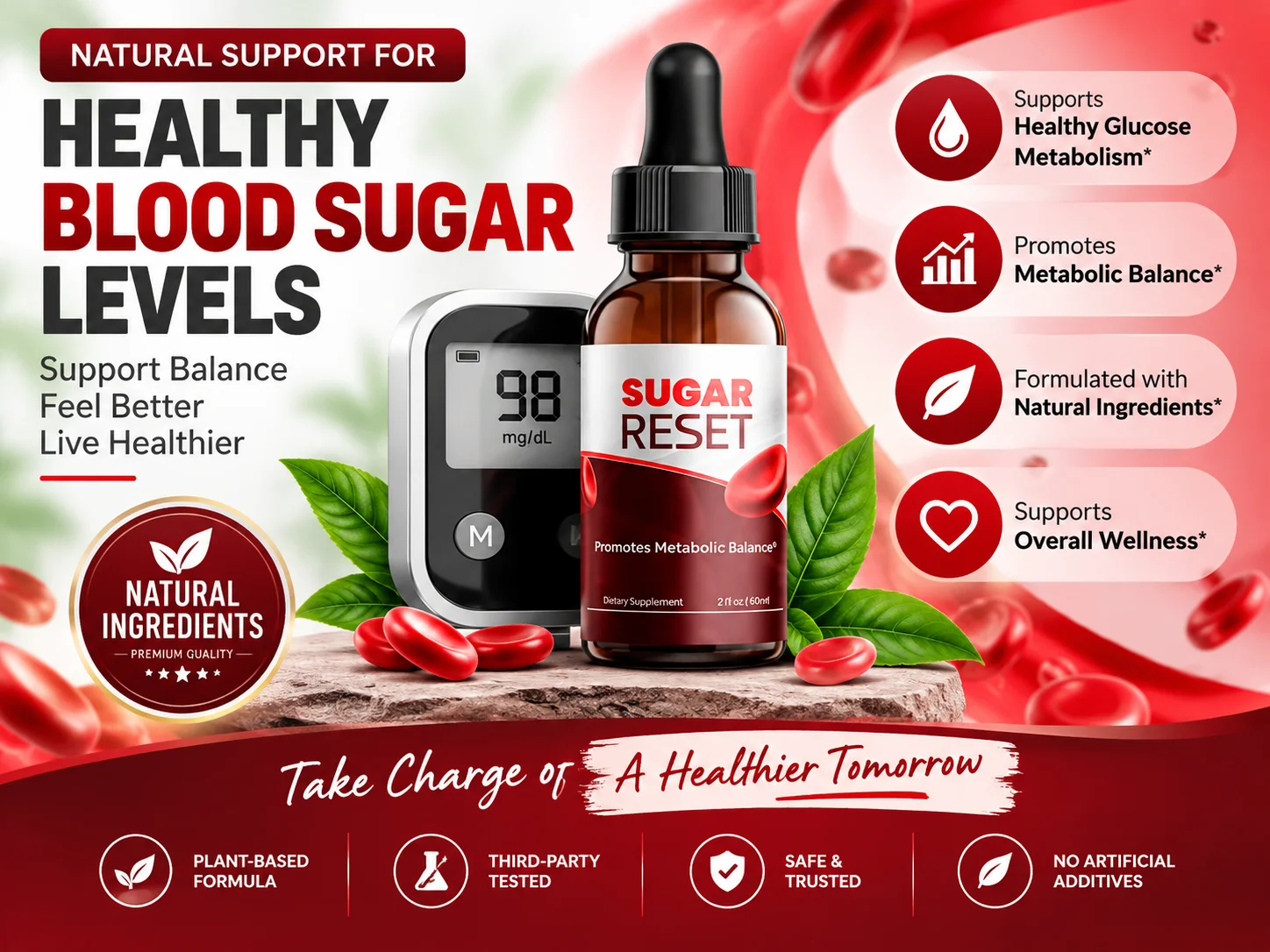
Medical Notice: This content is for educational purposes only and does not constitute medical advice. Sugar Reset has not been evaluated by the FDA and is not intended to diagnose, treat, cure, or prevent any disease. If you’re over 40 and already managing blood pressure, cholesterol, or blood sugar with medication, talk to your doctor before adding Sugar Reset or any new supplement.
If you’re in your 40s, 50s, or 60s and looking into Sugar Reset, you’re probably not doing it out of idle curiosity. Somewhere around midlife, blood sugar stops being background noise. Energy dips after lunch feel different than they used to. Maybe a recent bloodwork panel flagged a fasting glucose number that’s crept up a little, or your doctor mentioned the word “prediabetes” for the first time. That’s exactly the moment when a product like Sugar Reset starts showing up in your search results, promising support without a prescription.
This article takes Sugar Reset seriously enough to check its claims properly. Rather than repeating marketing language, it goes through each of the six ingredients in the Sugar Reset formula, one at a time, and reports what peer-reviewed human research actually found, including the parts that don’t flatter the product. It also speaks directly to what matters most for readers over 40: how age-related changes in metabolism and medication use should shape the way you think about a supplement like Sugar Reset.
Why Age 40+ Changes the Blood Sugar Conversation
Insulin sensitivity naturally declines with age, even in people who haven’t gained weight or changed their diet. For women, the hormonal shifts of perimenopause and menopause add another layer, since falling estrogen is linked to increased abdominal fat storage and a higher likelihood of insulin resistance. For men, testosterone decline plays a similar, if less discussed, role. This is precisely the population that supplements like Sugar Reset are marketed toward, and it’s also the population with the most reason to be careful, because it’s the population most likely to already be on medication.
Adults over 40 are statistically far more likely to be taking something for blood pressure, cholesterol, or blood sugar already. That matters enormously for a product like Sugar Reset, because several of its ingredients, chromium and green tea extract in particular, are known to interact with those exact drug classes. None of the research below should be read as a reason to start Sugar Reset without first accounting for your own prescription list.
The Core Distinction: Ingredient Research vs. Sugar Reset Itself
No clinical trial of the finished Sugar Reset formula appears to exist in the published literature, and Sugar Reset does not disclose the milligram dose of any ingredient on its label. That means every finding below is about the individual compound in isolation, tested at a specific, published dose, not about Sugar Reset as a bottled product. A supplement brand can accurately say an ingredient “has research behind it” while the finished product has never been tested at all. Keeping that line clear is the whole point of this review.
Chromium Picolinate: A Genuinely Mixed Record
Chromium picolinate is one of the most heavily studied minerals in the blood-sugar-supplement space, and it’s a fair test case for how Sugar Reset’s ingredient list holds up against real evidence.
Some trials found real benefit. A double-blind trial comparing chromium picolinate against metformin in women with polycystic ovary syndrome found that chromium picolinate significantly lowered fasting blood sugar after three months, along with a measurable increase in insulin sensitivity (Jamilian et al., published via PMC). A separate study concluded that 1,000 micrograms of chromium picolinate daily for six months meaningfully improved insulin sensitivity and glycemic control in its participants (published in Clinical Nutrition Research).
But other well-designed trials found nothing. A six-month randomized trial in adults at risk for type 2 diabetes found that chromium picolinate at either 500 or 1,000 micrograms daily had no measurable effect on glucose, insulin, insulin sensitivity, or lipid levels compared with placebo (summarized by the Linus Pauling Institute, Oregon State University). A pooled analysis of nine randomized trials reached a similarly unimpressed verdict, finding no overall effect on fasting glucose at doses between 200 and 1,000 micrograms daily. And a 24-week trial in adults already diagnosed with type 2 diabetes found no significant change in insulin sensitivity, fasting glucose, or HbA1c from 1,000 micrograms of chromium picolinate daily, per the NIH Office of Dietary Supplements.
What this means if you’re considering Sugar Reset: chromium is a real, legitimate ingredient with a genuine research trail, but the human evidence is split roughly down the middle. For adults 40+ already on medication, chromium’s documented interaction with blood-sugar and blood-pressure drugs is worth flagging to your doctor before you add Sugar Reset to your routine, regardless of which way the efficacy evidence leans.
Panax Ginseng: Small, Real, and Age-Relevant
Ginseng’s research base is smaller than chromium’s, but points more consistently in one direction, which matters for a midlife audience specifically since much of the ginseng research was conducted in adults over 40.
A meta-analysis of sixteen randomized trials, covering more than 700 people’s fasting glucose readings, found that ginseng significantly reduced fasting blood glucose compared to placebo, though it didn’t move fasting insulin, HbA1c, or insulin resistance scores overall. When the researchers separated longer parallel-group trials from shorter crossover trials, the parallel trials specifically showed a significant HbA1c reduction, suggesting ginseng’s effect, modest as it is, may build with sustained use rather than appear quickly.
The proposed mechanism, ginseng helping muscle tissue absorb glucose through a pathway that doesn’t depend on insulin, has support at the cellular level: laboratory research on ginsenoside Rb1, one of ginseng’s active compounds, found it promotes glucose uptake by acting on riboflavin transport and metabolism, a distinct route from the classic insulin-receptor pathway.
What this means if you’re considering Sugar Reset: ginseng’s blood-sugar effect in humans is real but small, and it appears to take weeks to months to show up. If Sugar Reset’s ginseng dose is anywhere near the ranges used in these trials, patience over a full 60- to 90-day trial period, not a two-week test run, is what the evidence actually supports.
Gymnema Sylvestre: The Strongest Ingredient in the Sugar Reset Formula
Of Sugar Reset’s six ingredients, gymnema sylvestre has by far the deepest and most consistent human trial record, which fits its traditional name, “gurmar,” Hindi for “sugar destroyer.”
A 2013 trial giving 500 mg of gymnema twice daily to adults with type 2 diabetes for 60 days found fasting glucose dropped from roughly 162 to 119 mg/dL, with a parallel drop in post-meal glucose and a rise in insulin and C-peptide levels. An earlier trial using 1 gram daily for 30 days saw fasting glucose fall from about 219 to 138 mg/dL, though levels partially crept back up once the supplement stopped, an important point for anyone hoping a supplement produces a lasting fix rather than requiring ongoing use.
A larger pooled analysis covering 419 patients across multiple trials found consistent reductions in fasting glucose, post-meal glucose, and HbA1c with gymnema supplementation, and mechanistic research describes gymnemic acids working on several fronts at once: slowing intestinal sugar absorption, protecting insulin-producing pancreatic cells, and directly stimulating insulin release. A more recent placebo-controlled trial combining gymnema with corn silk extract, zinc, and chromium, an ingredient stack that overlaps meaningfully with Sugar Reset’s own formula, found significant reductions in fasting glucose and HbA1c after three months, with no signs of kidney or liver strain.
Even researchers optimistic about gymnema are candid about its limits: a comprehensive review of the evidence noted that study designs, treatment lengths, and extract standardization vary widely across the literature, meaning larger, longer trials are still needed before gymnema’s role can be considered fully settled.
What this means if you’re considering Sugar Reset: gymnema is the one ingredient where “backed by research” comes closest to “shown to move real glucose numbers” across independent human trials. Effective doses in research ranged from 400 mg to 1 gram daily; Sugar Reset doesn’t say where it falls in that range, which is the main open question for anyone over 40 hoping this specific ingredient does the heavy lifting.
Sugar Reset Price

African Mango (Irvingia Gabonensis): Promising, But From a Narrow Set of Studies
African mango extract is included in Sugar Reset more for its metabolic and appetite-related effects than as a direct blood-sugar agent, and the research reflects that emphasis.
The most-cited trial, using 150 mg of a patented extract called IGOB131 twice daily before meals, found significant improvements in body weight, body fat, waist size, cholesterol, blood glucose, and leptin (a hormone tied to hunger signaling) compared with placebo over ten weeks. A systematic review pooling three trials and roughly 210 participants confirmed consistent reductions in body weight and waist circumference, along with favorable cholesterol changes.
The catch is that this entire body of evidence is narrower than it first appears. The same review, conducted through Oxford University’s Centre for Evidence-Based Medicine, noted plainly that the existing trials all came from one geographic region, the same research group, and the same journal, a real limitation on how far the findings generalize. A separate, more skeptical systematic review went further, concluding that African mango could not yet be recommended as a weight-loss aid until better-quality trials exist.
What this means if you’re considering Sugar Reset: the positive African mango trials are real and randomized, but they haven’t been independently repeated by other research teams, which puts this ingredient a notch below gymnema in terms of how much confidence the evidence supports.
Green Tea Extract: A Real Effect, But Dose Matters More Than the Label Admits
Green tea’s research base is large, and for adults 40+ who may already drink green tea regularly, this section is worth reading closely, since the effect depends heavily on how much active catechin content is actually consumed, not just whether “green tea extract” appears on an ingredient list.
A meta-analysis of 17 randomized trials found a significant fasting-glucose-lowering effect, but only in the subgroup of studies using higher catechin doses; the effect disappeared in the lower-catechin subgroup. The same body of research found a meaningful long-term glucose-lowering pattern based on HbA1c results, even though fasting insulin levels didn’t move much across the pooled data.
Not every analysis agrees on the size of the effect. A separate meta-analysis published in the Journal of Human Nutrition and Dietetics found no statistically significant difference between green tea extract and placebo on fasting glucose across its own pooled trials, which shows how sensitive these numbers are to exactly which studies get included and how catechin content is measured.
What this means if you’re considering Sugar Reset: green tea extract’s glucose benefit is real in high-catechin formulations and inconsistent in low-catechin ones. Since Sugar Reset doesn’t disclose its catechin content, there’s genuinely no way to know which category its version falls into. There’s also a caffeine-adjacent consideration for readers 40+ who are sensitive to stimulants at night, worth checking the label for, even though the brand states the formula is stimulant-free overall.
Maca Root: A Reasonable Idea With Thin Direct Evidence
Maca is the ingredient in Sugar Reset with the biggest gap between traditional reputation and direct blood-sugar-specific proof. Most human trials on maca focus on libido, mood, and menopausal symptoms, not glucose control, which is directly relevant to the many 40+ readers who may have already seen maca marketed for hot flashes or low energy rather than metabolic support.
The stress-and-cortisol rationale behind including maca in a formula like Sugar Reset rests mostly on animal research. A 2023 study using maca extract in rats on a high-fat, high-carbohydrate diet designed to mimic metabolic syndrome found the extract showed potential benefit for metabolic markers compared with metformin, but this was a rodent model, not a human trial, and that’s a meaningful gap to bridge before drawing conclusions about a human sublingual dose.
What this means if you’re considering Sugar Reset: the biological logic connecting chronic stress, elevated cortisol, and blood sugar instability is well established in general metabolic science. Whether maca, specifically, at whatever dose Sugar Reset uses, delivers a meaningful version of that effect in a human body is not yet demonstrated.
Sugar Reset’s Six Ingredients, Ranked by Evidence Strength
- Strongest evidence: gymnema sylvestre, with multiple independent trials and a large pooled analysis showing consistent glucose reductions.
- Real but inconsistent: chromium picolinate and Panax ginseng, both with genuine positive trials and genuine null trials.
- Promising but narrow: African mango, with legitimate but non-replicated positive findings from a single research cluster.
- Real but dose-dependent: green tea extract, effective mainly at higher catechin concentrations that Sugar Reset doesn’t disclose.
- Plausible but unproven directly: maca root, whose blood-sugar rationale is reasonable but not yet shown in human glucose trials.
Taken together, Sugar Reset’s ingredient list leans on some genuinely well-supported compounds and some far thinner ones, and no combination of individually-studied ingredients substitutes for a trial of Sugar Reset itself, which doesn’t currently exist.
A Note for Readers 40 and Older Specifically
If you’re in this age group and considering Sugar Reset, a few things are worth doing before you order:
- Bring your full medication list to your doctor or pharmacist first. Chromium and green tea extract both carry documented interaction potential with blood sugar and blood pressure medications, which are common prescriptions in this age group.
- Set realistic expectations about timeline. The strongest ingredient in Sugar Reset’s formula, gymnema, showed its clearest effects over 30 to 90 days of continuous use in trials, not days or a couple of weeks.
- Track a number, not a feeling. If your doctor is comfortable with it, a home glucose check before and after a consistent 60-day trial of Sugar Reset gives you actual data, rather than relying on how you feel, which can be influenced by sleep, stress, and diet changes made at the same time.
- Watch for the ingredients that overlap with what you already take. If you’re on a statin, a blood pressure medication, or metformin, several of Sugar Reset’s ingredients act on adjacent pathways, which is exactly the kind of overlap a pharmacist can flag quickly.
Where to Verify This Yourself
You don’t have to take this article’s word for any of it. These are the same categories of sources this review pulled from, and all of them are free, non-commercial, and independent of any supplement brand:
- PubMed (pubmed.ncbi.nlm.nih.gov) — the National Library of Medicine’s database of peer-reviewed medical literature, and the source for most of the trials cited above.
- NIH Office of Dietary Supplements (ods.od.nih.gov) — government fact sheets on individual nutrients like chromium, including dosage ranges and safety data.
- Linus Pauling Institute Micronutrient Information Center (lpi.oregonstate.edu) — Oregon State University’s academic summaries of nutrient and botanical research.
- ClinicalTrials.gov — the U.S. registry of clinical trials, useful for checking whether a finished product, rather than just its ingredients, has ever actually been tested.
- Examine.com — an independent, ad-free supplement research database that doesn’t sell the products it reviews.
The Bottom Line on Sugar Reset
Sugar Reset’s ingredient list isn’t fabricated or scientifically empty. Gymnema sylvestre has a genuinely strong, repeated human trial record. Chromium and ginseng have real, if inconsistent, positive findings behind them. Green tea extract works, but mainly at catechin levels Sugar Reset doesn’t disclose. African mango’s promising results come from a narrow set of studies. Maca’s rationale is reasonable but not yet proven directly for blood sugar in humans.
What none of that tells you is whether Sugar Reset, the actual bottled product, at whatever concentration it uses, reproduces any of it. For adults 40 and older especially, where medication interactions and realistic expectations matter more than they did at 25, the responsible path is straightforward: read the ingredient research with open eyes, talk to your doctor before starting Sugar Reset if you’re on any prescription medication, commit to a full 60-day trial if you decide to proceed, and judge the result by an actual number rather than a feeling.
Disclaimer: This article is for educational purposes only and does not constitute medical advice. Statements about individual ingredients reflect published research on those compounds, not verified claims about the finished Sugar Reset product, which has not been independently clinically tested. Always consult a qualified healthcare provider before starting Sugar Reset or any new supplement, particularly if you are over 40, have a diagnosed medical condition, or take prescription medication.

Natural home remedies, skincare secrets, dental & eye health tips, and real product reviews to help you stay healthy the natural way.