


If you’ve ever dropped a few mint leaves into your water bottle or torn some into a salad, you already know how good they smell. But mint leaves are more than a garnish, and once you understand the science, mint leaves deserve a permanent spot in your kitchen and medicine cabinet alike. This small, green herb from the Mentha genus has been used in kitchens and home remedies for thousands of years, and modern research is starting to catch up with what grandmothers already knew.
In this guide, we’re breaking down the real, evidence-backed benefits of mint, how mint leaves show up in everyday life, and how you can actually use this herb without falling for hype. We’ll also look at a US-based case study, a pros-and-cons table, a peppermint vs. spearmint comparison, and answers to the questions people search for most.
Focus keyword: Mint Leaves
What Exactly Are Mint Leaves?
Mint leaves come from plants in the Mentha family, which includes over a dozen species. The two most common types you’ll find in grocery stores are peppermint and spearmint. Peppermint has a higher menthol content, which gives it that sharp, cooling bite, while spearmint is milder and sweeter, making it popular in cooking.
Mentha health benefits have been documented across Ayurvedic medicine, traditional Chinese medicine, and Mediterranean folk remedies long before lab studies existed. Today, scientists are confirming many of those old claims, particularly around digestion, oral health, and stress relief.
Nutrition Snapshot: What’s Inside Mint Leaves
A small amount of fresh mint packs a surprising nutritional punch. Per 100 grams of fresh mint leaves, you’ll generally find:
- Vitamin A – supports eye and immune health
- Vitamin C – a natural antioxidant
- Iron – needed for healthy red blood cells
- Manganese and calcium – support bone and metabolic function
- Menthol, rosmarinic acid, and flavonoids – plant compounds behind most of mint’s therapeutic effects
Because mint is usually eaten in small quantities (a few leaves in tea or a garnish), it’s not a major calorie or macronutrient source. Its real value lies in these concentrated plant compounds, which is exactly why even a small handful of mint leaves can deliver an outsized health impact.
15 Science-Backed Health Benefits of Mint Leaves
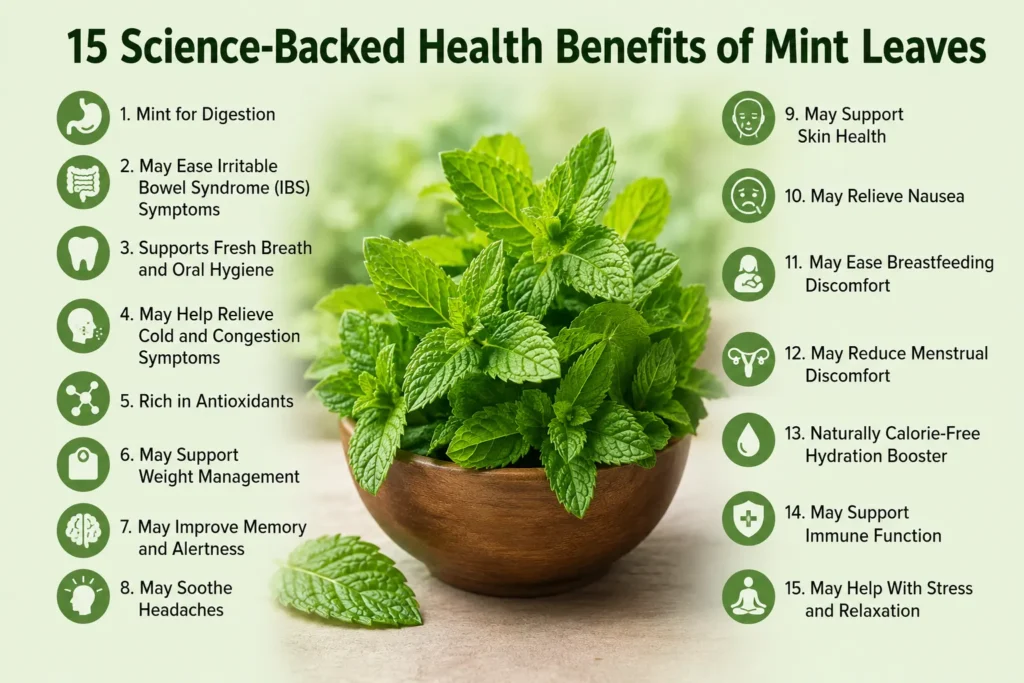
1. Mint for Digestion
This is probably the most well-known reason people reach for mint leaves. Menthol, the active compound in mint, relaxes the smooth muscles lining your digestive tract, which helps food and gas move through more comfortably. This is exactly why mint tea after a heavy meal feels so soothing. Menthol in mint relaxes the smooth muscles of the digestive tract, helping food move efficiently and relieving gas or bloating.
2. May Ease Irritable Bowel Syndrome (IBS) Symptoms
This is one of the strongest, most clinically studied benefits of mint. A pooled analysis of randomized controlled trials found that enteric-coated peppermint oil produced significantly greater improvement in global IBS symptoms compared with placebo, and a review of 16 clinical trials involving 651 patients reported an average “overall success” response rate of 58% for peppermint oil versus 29% for placebo. While most of these trials used concentrated peppermint oil capsules rather than raw mint leaves, the underlying mechanism is the same active compound found naturally in the leaf.
3. Supports Fresh Breath and Oral Hygiene
Mint’s antibacterial properties help fight the bacteria responsible for bad breath, which is why it’s the go-to flavor in gum, toothpaste, and mouthwash. Chewing on fresh mint leaves or sipping mint tea can offer a similar, more natural effect.
4. May Help Relieve Cold and Congestion Symptoms
Menthol has a cooling sensation that tricks your brain into feeling like you’re breathing more freely, even though it doesn’t physically clear mucus. While multiple clinical trials show that menthol has no direct effect on decongestion, it might help reduce the sensation of nasal obstruction, which is why mint-infused steam or tea is a common home remedy during cold season.
5. Rich in Antioxidants
Mint leaves are loaded with rosmarinic acid and flavonoids, plant antioxidants that help neutralize free radicals in the body. These antioxidants help protect the body from harmful free radicals and oxidative stress, reducing the risk of chronic disease over time.
6. May Support Weight Management
Mint itself isn’t a magic weight-loss herb, but it can play a supporting role. A 2003 study suggested mint may help stimulate digestive enzymes involved in absorbing nutrients and converting fat into usable energy, and swapping sugary drinks for a naturally calorie-free mint tea is an easy, low-effort habit that supports a healthier overall diet.
7. May Improve Memory and Alertness
Several small studies have looked at how the scent of mint affects the brain. A 2015 study found that inhaling mint essential oils while driving increased alertness and decreased frustration, anxiety, and fatigue, and animal research has shown similar cognitive-protective effects. Human research is still limited, but the early signals are promising.
8. May Soothe Headaches
Because menthol produces a cooling, slightly numbing sensation, applying diluted mint oil to the temples is a popular natural remedy for tension headaches. This isn’t a replacement for medical treatment, but many people find it genuinely relaxing.
9. May Support Skin Health
Thanks to its antibacterial, antifungal, and anti-inflammatory properties, mint is often used in natural skincare for acne-prone skin. It can help calm redness and inflammation associated with breakouts, though it should always be diluted before applying directly to the skin.
10. May Relieve Nausea
The cooling, calming effect of mint has made it a traditional remedy for nausea and mild motion sickness, especially peppermint tea sipped slowly.
11. May Ease Breastfeeding Discomfort
This is a lesser-known but genuinely researched benefit. Clinical studies have found that applying mint essential oil is valuable in easing pain and healing soreness associated with cracked nipples in breastfeeding mothers, when properly diluted and used under guidance.
12. May Reduce Menstrual Discomfort
Menthol oil may help relieve menstrual cramps for some women, likely due to its natural muscle-relaxing properties, similar to how it works in the digestive tract.
13. Naturally Calorie-Free Hydration Booster
Adding mint leaves to plain water is one of the simplest ways to make hydration more enjoyable without added sugar or artificial flavoring, an easy daily habit with essentially zero downside.
14. May Support Immune Function
The combination of vitamin C, vitamin A, and antioxidant compounds in mint leaves gives modest support to overall immune health, especially when mint is part of a broader diet rich in fruits, vegetables, and herbs.
15. May Help With Stress and Relaxation
The simple act of smelling or sipping something mint-flavored has a mild calming effect for many people, partly due to aromatherapy-style relaxation and partly due to the ritual of slowing down for a warm cup of tea.
Peppermint vs. Spearmint: A Quick Comparison
| Feature | Peppermint | Spearmint |
|---|---|---|
| Menthol content | High | Low |
| Flavor | Sharp, cooling | Sweet, mild |
| Best for | Digestion, IBS, headaches | Cooking, salads, mocktails |
| Common form | Tea, oil capsules | Fresh leaves, garnish |
| Caffeine-free | Yes | Yes |
Both varieties fall under the same Mentha genus, so the core Mentha health benefits overlap significantly, the difference is mostly about potency and flavor use.
Pros and Cons of Mint Leaves
| Pros | Cons |
|---|---|
| Naturally calorie-free and easy to add to meals or drinks | Can worsen acid reflux/heartburn in some people |
| Backed by real clinical research for digestion and IBS | Peppermint oil (not leaves) can be unsafe for infants and young children |
| Widely available and inexpensive | May interact with certain medications like antacids |
| Supports oral health and fresh breath | Excessive amounts of essential oil can irritate skin |
| Simple to grow at home | Some benefits (memory, headaches) still need more human studies |
US Case Study: Mint and the Rise of Functional Herbal Teas
Herbal tea consumption has grown steadily across the United States over the past decade, and mint remains one of the top-selling flavors in that category. Wellness-focused consumers in cities like Los Angeles, Austin, and New York have driven demand for peppermint and spearmint teas as caffeine-free alternatives that still feel like a “functional” beverage rather than plain water.
A frequently cited real-world example comes from IBS patients in the US who use peppermint oil capsules, the concentrated cousin of mint leaves, as a first-line, drug-free option. Clinical data from pooled randomized trials show that peppermint oil produced a risk ratio of 2.39 for global symptom improvement compared with placebo, which is one of the reasons US gastroenterologists increasingly mention it as a reasonable, low-risk option for mild to moderate IBS before moving to stronger prescription treatments. This shift, from viewing mint as “just a garnish” to treating it as a legitimate first step in gut-health management, reflects exactly why interest in mint leaves benefits keeps climbing among American health and wellness communities.
How to Add Mint Leaves to Your Daily Routine
- Steep 8–10 fresh mint leaves in hot water for 5 minutes for a simple digestive tea
- Add torn mint leaves to salads, yogurt, or fruit bowls for a fresh flavor boost
- Muddle mint into sparkling water for a refreshing, sugar-free drink
- Chew a few fresh leaves after meals to freshen breath naturally
- Freeze mint leaves in ice cube trays to flavor drinks without diluting them
- Grow a small mint plant at home, it thrives in pots and spreads quickly
Safety and Precautions
Mint leaves are generally very safe for most healthy adults in normal culinary amounts. However, a few things are worth keeping in mind:
- People with GERD or acid reflux sometimes find that mint worsens symptoms because it can relax the lower esophageal sphincter
- Concentrated peppermint oil should not be given to infants or very young children
- If you’re pregnant, breastfeeding, or on medication, it’s worth checking with a doctor before using concentrated mint extracts or oils
- Stick to food-level amounts of fresh mint leaves unless a healthcare provider recommends otherwise
Frequently Asked Questions (FAQ)
1. What are the main benefits of mint leaves?
The most well-supported benefits of mint include better digestion, relief from IBS-related bloating and cramping, fresher breath, and a good source of antioxidants like rosmarinic acid.
2. Is mint good for digestion every day?
Yes, for most people, drinking mint tea or eating fresh mint leaves daily is considered safe and can be a gentle, natural way to support digestion.
3. Can mint leaves help with weight loss?
Mint alone won’t cause weight loss, but replacing sugary drinks with mint tea, and its mild role in supporting digestive enzymes can be a helpful piece of a broader healthy routine.
4. Are mint leaves the same as peppermint oil?
No. Mint leaves are the whole fresh or dried herb, while peppermint oil is a concentrated extract. Most clinical research on IBS and digestion actually used peppermint oil, not raw leaves, though both share the same active compounds.
5. Do mint leaves have any side effects?
In normal food amounts, side effects are rare. Some people with acid reflux may notice increased heartburn, and concentrated oil forms can irritate skin or be unsafe for young children.
6. Can I grow mint leaves at home?
Yes, mint is one of the easiest herbs to grow. It does best in a contained pot since it spreads aggressively if planted directly in garden soil.
7. Is spearmint or peppermint better for health benefits?
Peppermint generally has more concentrated menthol, so it’s often preferred for digestive and headache-related benefits, while spearmint is milder and better suited for everyday cooking and flavoring.
Final Thoughts
Mint leaves are one of those rare ingredients that are genuinely backed by both centuries of traditional use and a growing body of modern clinical research. From easing IBS symptoms to supporting fresh breath, mild stress relief, and simple hydration, the advantages of mint leaves go far beyond a pretty garnish on your plate. Whether you’re steeping a warm cup of tea, adding a handful to your water bottle, or growing a small pot on your windowsill, this humble herb is an easy, low-risk way to support your everyday wellness.
As always, if you’re dealing with a specific health condition, it’s worth talking to a doctor or registered dietitian before relying on mint leaves or any herbal remedy as a treatment. Even so, for most people, mint leaves remain one of the easiest, safest herbs to add to a daily wellness routine.
References and Scientific Sources
- PubMed / National Library of Medicine – Peppermint oil in irritable bowel syndrome (meta-analysis): https://pubmed.ncbi.nlm.nih.gov/16121521/
- PubMed Central – The impact of peppermint oil on IBS: a meta-analysis of pooled clinical data: https://www.ncbi.nlm.nih.gov/pmc/articles/PMC6337770/
- PubMed – Peppermint oil (Mintoil) in the treatment of IBS, randomized controlled trial: https://pubmed.ncbi.nlm.nih.gov/17420159/
- PubMed – Enteric-coated peppermint oil capsules for IBS in children: https://pubmed.ncbi.nlm.nih.gov/11148527/
- ClinicalTrials.gov – Peppermint Oil for the Treatment of IBS or Functional Abdominal Pain in Children (MINT Study): https://clinicaltrials.gov/study/NCT05799053
- Healthline – Health Benefits of Mint: https://www.healthline.com/nutrition/mint-benefits
- Organic Facts – Impressive Benefits of Mint Leaves: https://www.organicfacts.net/health-benefits/herbs-and-spices/health-benefits-of-mint.html
- Dr. Axe – Mint Leaves Benefits, Nutrition, Uses and Recipes: https://draxe.com/nutrition/mint-leaves/
- PharmEasy – Top Health Benefits of Mint Leaves: https://pharmeasy.in/blog/benefits-of-mint-leaves/
Disclaimer: This article is for informational purposes only and is not a substitute for professional medical advice, diagnosis, or treatment. Always consult a qualified healthcare provider before making changes based on this content.

Natural home remedies, skincare secrets, dental & eye health tips, and real product reviews to help you stay healthy the natural way.