


You went to bed feeling fine. You wake up and can barely turn your head toward the alarm clock. If that sounds familiar, you already know how disruptive neck pain from sleeping can be. It’s one of those problems that seems small until it’s ruining your morning coffee, your commute, and your ability to check your blind spot while driving.
The good news? Most sleep-related neck pain is caused by things you can actually control — your pillow, your mattress, your posture, and your sleeping position. In this guide, we’ll break down the real causes of neck pain, the warning signs you shouldn’t ignore, the best sleeping position for neck pain, and fast relief methods you can try tonight. We’ll also look at a real-world case study, a pros and cons table, a quick comparison of sleep positions, and answers to the questions people ask most.
Why Does Neck Pain Happen After Sleeping?
Your neck (medically called the cervical spine) is made up of seven small vertebrae, cushioning discs, ligaments, nerves, and a network of muscles that hold your head — which weighs about 10-12 pounds — steady all day and all night. When you sleep, your neck needs to stay in a neutral position, roughly in line with the rest of your spine. When it doesn’t, muscles and ligaments get stretched or compressed for hours at a time, and that’s when the discomfort shows up.
According to the Mayo Clinic, neck pain is a common problem affecting many adults at some point in their lives, and it can involve just the neck and shoulders or radiate down an arm
. So if you’re dealing with this, you’re far from alone.
Common Neck Pain Causes
Here are the most frequent causes tied specifically to sleep:
- Wrong pillow height or firmness – A pillow that’s too high, too flat, or too soft forces your neck into an unnatural angle for 6-8 hours straight.
- Poor mattress support – An old or sagging mattress lets your body sink unevenly, pulling your spine and neck out of alignment.
- Stomach sleeping – This position twists your head to one side for hours, which is one of the biggest contributors to neck pain from sleeping.
- Muscle strain and tension – Stress and anxiety often cause people to clench their jaw and shoulders overnight, which tightens neck muscles.
- Sudden movements – Jerking awake, tossing and turning, or moving suddenly during a dream can strain the neck.
- Underlying medical conditions – Arthritis, degenerative disc disease, herniated discs, or cervical spondylosis can make your neck more sensitive to poor sleep posture.
- Old injuries – A previous whiplash injury or sports injury can resurface as soreness, especially in unsupportive sleep positions.
- Sleeping without support in odd places – Falling asleep on a couch, plane, or car seat without neck support is a fast track to a sore neck.
Research shows that sleeping disturbances may also be a risk factor for neck pain
, which means poor sleep quality, and this condition can actually feed into each other — a cycle worth breaking early.
Symptoms of Neck Pain From Sleeping
This condition doesn’t always show up the same way for everyone. Some common symptoms include:

Left Side Neck Pain
Left side neck pain after sleeping is usually linked to sleeping on that side with insufficient pillow support, or consistently sleeping with your head turned to one side. It’s typically muscular and improves within a few days. That said, if left side neck pain shows up alongside chest tightness, shortness of breath, jaw pain, or arm heaviness, it needs immediate medical attention, since these can be signs of a heart-related issue rather than a simple sleep-related strain.
Pain in the Back of the Neck
Pain in the back of the neck after waking up is often related to the pillow pushing the head too far forward or too far back overnight. It can also come from tension in the trapezius muscles, which run from the base of the skull down to the shoulders. Gentle stretching and heat usually help this soreness ease up within a day or two.
Severe Neck and Shoulder Pain
When neck pain spreads into the shoulders and becomes severe, it’s usually a sign that more than one muscle group is involved, or that a nerve is being irritated (a condition sometimes called cervical radiculopathy). Severe neck and shoulder pain that doesn’t improve with rest, ice, or over-the-counter medication within a week deserves a visit to a doctor or physical therapist.
When Neck Pain Is a Red Flag
Most morning stiffness is harmless and fades within a few days. But according to Mayo Clinic guidance, you should seek prompt medical care if the pain:
- Follows a fall, a car accident, or a direct blow to the neck or head
- Comes with numbness, weakness, or tingling in the arms or legs
- Is accompanied by a severe headache, fever, or stiff neck
- Makes it difficult to swallow or breathe
- Spreads down one or both arms with shooting pain
- Doesn’t improve after a week of home care
If any of these apply, don’t wait it out — get checked by a healthcare provider.
Best Sleeping Position for Neck Pain
Choosing the right sleeping position can make the difference between waking up refreshed and waking up in agony. Here’s how the most common positions stack up.
Comparison: Sleep Positions and Neck Pain Risk
| Sleeping Position | Effect on Neck | Risk of Neck Pain | Recommended Pillow |
|---|---|---|---|
| Back sleeping | Keeps spine and neck in a neutral line | Low | Medium-thin, contoured pillow supporting the natural curve |
| Side sleeping | Neck stays aligned if the pillow fills the shoulder gap | Low to Moderate | Firmer, thicker pillow matching shoulder width |
| Stomach sleeping | Forces the neck to twist sideways for hours | High | Very thin pillow or no pillow (still not ideal) |
| Fetal position (side, curled) | Generally neutral if the pillow height is correct | Low | Medium pillow, knees supported with a second pillow |
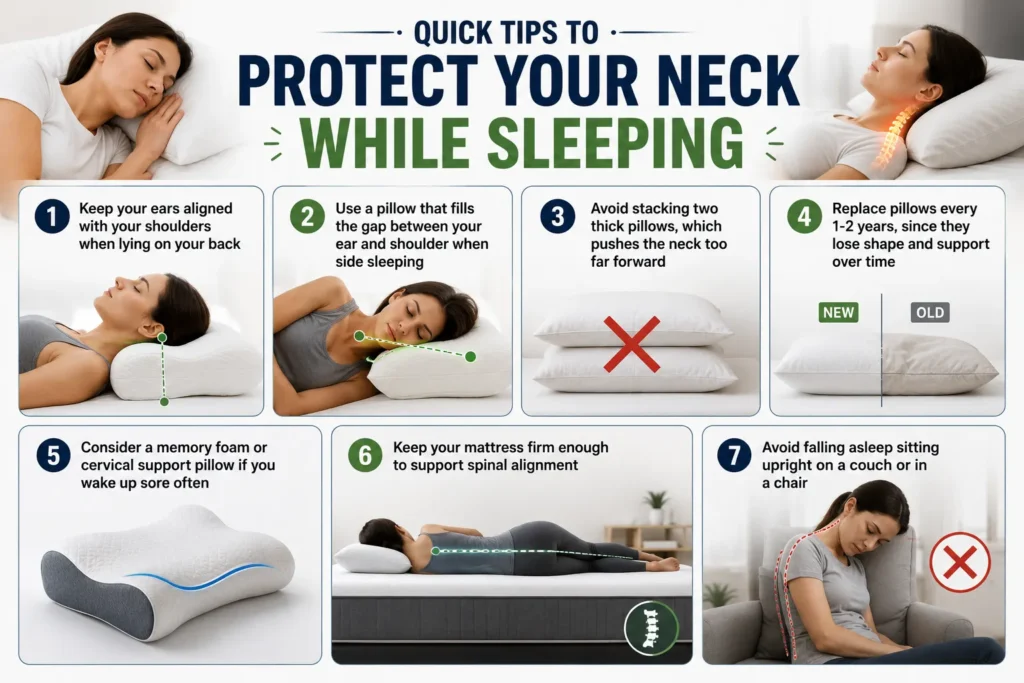
Sleep experts and orthopedic specialists generally agree that sleeping on your back and on your side are the best positions for neck pain, as they allow the cervical spine to rest in a neutral, supported position. Stomach sleeping is consistently flagged as the position most likely to cause neck pain, since it forces the head to rotate to one side for an extended period.
Quick Tips to Protect Your Neck While Sleeping
Fast Relief for Neck Pain
If you’re already dealing with a stiff, sore neck this morning, here’s how to get fast, safe relief:
- Apply heat or cold. Ice reduces inflammation in the first 24-48 hours; a warm compress after that relaxes tight muscles.
- Move gently. Slow, controlled neck rotations and tilts help loosen stiffness — avoid forcing the movement.
- Try an over-the-counter pain reliever. Ibuprofen or acetaminophen can ease inflammation and discomfort for a day or two.
- Massage the area. Light massage on the shoulders and base of the skull can release built-up tension.
- Adjust your pillow tonight. Fixing the setup that caused the pain prevents it from repeating.
- Stay active. Gentle movement throughout the day is better for neck pain than staying completely still.
- Practice good daytime posture. Hours spent hunched over a phone or laptop add to the strain your neck already carries overnight.
Pros and Cons of Common Remedies
| Remedy | Pros | Cons |
|---|---|---|
| Heat therapy | Relaxes muscles, easy to do at home, inexpensive | Not ideal for fresh inflammation |
| Cold therapy | Reduces swelling quickly, good for acute pain | Can feel uncomfortable, shouldn’t be used too long |
| OTC pain relievers | Fast-acting, widely available | Not a long-term fix, possible side effects with overuse |
| Cervical pillow | Supports neutral neck alignment, prevents recurring pain | Takes time to adjust to, can be pricier |
| Physical therapy | Long-term relief, strengthens supporting muscles | Requires time and multiple sessions |
| Stretching/exercise | Free, improves flexibility, prevents future pain | Needs consistency to see results |
| Massage therapy | Relieves tension, improves circulation | Ongoing cost if done professionally |
Case Study: A Real-Life Example From the U.S.
Consider Sarah, a 34-year-old marketing professional based in Austin, Texas. For nearly a year, she woke up almost every day with a stiff, aching neck that radiated into her left shoulder. She initially blamed stress from her job, but after tracking her symptoms, she noticed a pattern: the soreness was worse on days after she’d fallen asleep on her stomach while scrolling on her phone.
She consulted a physical therapist, who confirmed that her sleeping posture — combined with an old, flattened pillow — was the main driver of her recurring neck pain. In the U.S., musculoskeletal issues like this are among the leading reasons people miss work or visit a doctor, and Sarah’s case is a common one among American office workers who spend long hours at a desk and then sleep in positions that undo any progress made during the day.
Her treatment plan included:
- Switching to a medium-firm cervical support pillow
- Training herself to fall asleep on her back instead of her stomach
- Daily neck and shoulder stretches in the morning
- Reducing phone use in bed
- Short walks and posture breaks during work hours
Within six weeks, Sarah reported her symptoms had dropped from a near-daily occurrence to occasional mild stiffness, mostly on nights she reverted to old habits. Her case reflects what many clinicians see: sleep-related neck pain is highly responsive to simple, consistent changes in sleeping position and pillow support.
Prevention: Daily Habits That Help
Preventing neck pain isn’t just about nighttime fixes. What you do during the day matters just as much:
- Keep screens at eye level to avoid “text neck”
- Take breaks every 30-45 minutes if you sit at a desk
- Strengthen neck and upper back muscles with light exercise
- Manage stress, since tension often settles in the neck and shoulders
- Stay hydrated, as spinal discs need water to stay cushioned
- Avoid carrying heavy bags on one shoulder consistently
Frequently Asked Questions (FAQ)
1. Why do I keep getting neck pain from sleeping even with a good pillow?
Even a quality pillow won’t help if your sleeping position or mattress isn’t supportive too. It’s usually the result of a combination of factors, not just the pillow alone.
2. What is the best sleeping position for neck pain?
Back sleeping and side sleeping are generally considered the best sleeping positions for neck pain, as they allow the neck to stay in a more neutral, supported alignment compared to stomach sleeping.
3. Is left side neck pain something to worry about?
Mild left side neck pain after sleeping is usually muscular and improves within a few days. However, if it comes with chest discomfort, shortness of breath, or arm pain, seek medical attention right away.
4. How long should neck pain from sleeping last?
Mild neck pain typically eases within 2-5 days with rest, gentle movement, and proper support. If it lingers beyond a week or worsens, it’s time to see a doctor.
5. Can stress cause neck pain while sleeping?
Yes. Stress often causes people to unconsciously tense their shoulders and neck muscles overnight, which can lead to a noticeably sore neck by morning.
6. Should I use a hard or soft pillow for neck pain?
It depends on your sleeping position, but generally, a medium-firm pillow that keeps your neck aligned with your spine works best for most people dealing with this issue.
7. When should I see a doctor for neck pain?
See a doctor if neck pain follows an injury, includes numbness or weakness, spreads down the arm, or doesn’t improve after a week of home care.
Final Thoughts
Neck pain from sleeping is frustrating, but it’s rarely something you have to live with. In most cases, it comes down to fixable habits: the wrong pillow, an unsupportive mattress, or a sleeping position that twists your neck out of alignment for hours. By choosing the best sleeping position for neck pain, upgrading your sleep setup, and paying attention to daytime posture, you can break the cycle of waking up with a stiff, aching neck.
If your neck pain is severe, spreading into your shoulders and arms, or sticking around longer than a week, don’t tough it out — a doctor or physical therapist can help identify what’s really going on and get you back to pain-free mornings.
References & Scientific Sources
- Mayo Clinic – Neck Pain: Symptoms and Causes
- Mayo Clinic – Neck Pain: When to See a Doctor
- Healthline – Waking Up with Neck Pain: Causes, Treatment, and Prevention
- National Center for Biotechnology Information (NCBI/PMC) – Sleep Disturbance Is Associated with Neck Pain: A Longitudinal Study
- ClinicalTrials.gov (Mayo Clinic Study) – Dry Needling and Therapeutic Exercise on Sleep in Individuals With Chronic Neck Pain
Medical Disclaimer: This article is published by Home Healthy Remedy for educational and informational purposes only. It is not intended to replace professional medical advice, diagnosis, or treatment. If you have persistent, severe, or worsening neck pain, consult a licensed healthcare provider. For more evidence-based health information, visit https://homehealthyremedy.com/.

Natural home remedies, skincare secrets, dental & eye health tips, and real product reviews to help you stay healthy the natural way.