

Medical disclaimer: This article is for informational purposes only and is not medical advice. Alka Lean and Jelly Lean are dietary supplements, not FDA-approved drugs, and are not intended to diagnose, treat, cure, or prevent any disease. Talk to a licensed healthcare provider before starting any new supplement, especially if you are pregnant, nursing, taking medication, or managing a health condition. Content provided by homehealthyremedy.com.
Quick Answer
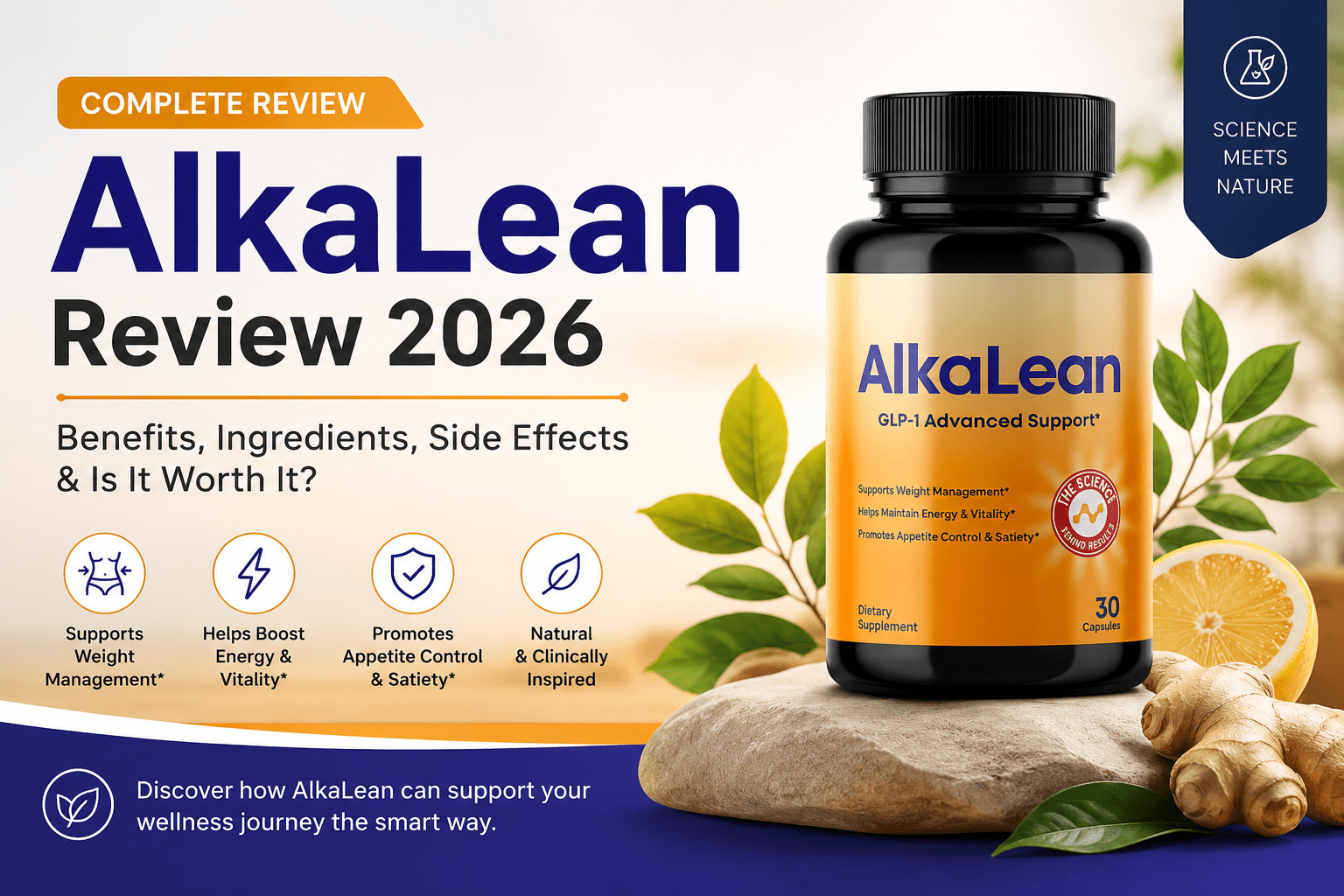
AlkaLean is marketed on its official bottle label as “GLP-1 Advanced Support” — a prebiotic-fiber-and-probiotic capsule built around chicory root inulin, resistant starch, and a targeted probiotic blend, positioned to support the body’s own GLP-1 response rather than replace prescription GLP-1 medications like semaglutide or tirzepatide. There is no independent, published clinical trial on the finished AlkaLean product itself, but the underlying gut-fermentation-to-GLP-1 pathway it relies on is a real, studied biological mechanism. Below, we break down the ingredients, the science, current pricing, and how it stacks up against Jelly Lean, a competing gummy-format product.
What Is Alka Lean?
If you search “Alka Lean,” you will not land on one single product. You will land on several. That matters, and it is the first thing worth understanding before anything else.
At least three distinct formulas are currently marketed under the “Alka Lean” or “AlkaLean” name by different sellers:
- AlkaLean “GLP-1 Advanced Support” — the version this article focuses on, built around chicory root inulin (211 mg), potato resistant starch (100 mg), and a small probiotic blend, marketed as supporting the body’s natural GLP-1 release through gut fermentation. This is the formula shown on the current official bottle label and pricing pages.
- A “proprietary blend” capsule listing ingredients such as apple cider vinegar, cinnamon extract, bitter melon, banaba leaf, Gymnema sylvestre, and chromium, without disclosing exact per-ingredient amounts.
- A stimulant-free fat-metabolism capsule that leans on grape seed extract and other antioxidants, marketed for lean muscle retention and cardiovascular support alongside weight management.
Some of these are sold from lookalike domains (for example, sites differing only by a hyphen, an extra letter, or a country-code prefix), which is a pattern common in the weight-loss supplement space and one reason due diligence matters before ordering. When you’re comparing an “Alka Lean review,” it’s worth checking which formula and which seller the review is actually describing, because the ingredient list — and therefore the science that applies — is not the same across all of them.
What the versions have in common is the general pitch: support for metabolism, appetite control, blood sugar balance, and energy, delivered as a daily capsule rather than a prescription medication.
How Alka Lean Claims to Work
Across the different formulations, the marketing logic falls into two broad mechanisms:
1. Feeding gut bacteria to trigger satiety hormones
The chicory-root-based version relies on a well-documented biological pathway: fermentable fibers like inulin are not digested in the small intestine. They travel to the colon, where gut bacteria ferment them into short-chain fatty acids (SCFAs) — mainly acetate, propionate, and butyrate. SCFAs are known to stimulate intestinal L-cells to release GLP-1 and PYY, hormones involved in appetite regulation. This pathway itself is real and has been studied for years in the context of gut health and metabolic function.
A 2020 randomized controlled trial found that six weeks of inulin-type fructan supplementation produced a measurable bifidogenic effect and significantly raised fecal short-chain fatty acid concentrations in adults with type 2 diabetes, without changing overall microbial diversity.
A more recent systematic review and meta-analysis of randomized controlled trials specifically examined chicory-derived inulin-type fructans for weight management outcomes, evaluating effects on body weight, BMI, fat mass, and waist circumference — the kind of evidence you want to see before accepting a “prebiotic fiber for weight loss” claim.
The gap: this research is on isolated inulin-type fructans, generally at doses of 10–16 g per day. Most Alka Lean capsule formulas contain roughly 200–300 mg of fiber per serving — a fraction of the doses used in the clinical literature. That doesn’t make the ingredient fake; it means the dose on the label may be too low to reproduce the effect seen in trials.
2. Botanical “metabolic support” blends
The proprietary-blend versions of Alka Lean lean on ingredients like apple cider vinegar, cinnamon, bitter melon, Gymnema sylvestre, and chromium — all ingredients that show up constantly across the weight-loss supplement category because they have some research suggesting effects on blood sugar or appetite. The catch with proprietary blends is transparency: when a label lists a combined blend weight instead of individual amounts, there’s no way to know whether any single ingredient is present at a dose that matches the research.
The Science Behind the Individual Ingredients
Here’s an honest, ingredient-by-ingredient look at what the research actually supports — separate from what any brand’s marketing page claims.
Chicory root inulin. Real prebiotic effects on gut bacteria composition and SCFA production are well established. Weight-loss-specific evidence is more mixed and dose-dependent; effects in trials are generally modest, not dramatic.
Probiotic strains (e.g., Akkermansia muciniphila, Bifidobacterium infantis). Akkermansia in particular has drawn research interest for its association with metabolic health markers, but most of that evidence comes from animal studies and small human trials, not large-scale confirmed weight-loss trials on a supplement product.
Apple cider vinegar (ACV). This is the most contested ingredient on this list. A widely publicized 2024 randomized trial reported dramatic weight loss (roughly 7 kg over 12 weeks) from small daily doses of ACV. That study has since been retracted by the journal after independent statisticians identified implausible data patterns and were unable to replicate the results. A separate 2025 meta-analysis of 10 RCTs (789 participants) found ACV produced a statistically significant but modest reduction in body weight, BMI, and waist circumference — nowhere near the retracted study’s numbers. The honest summary: ACV may have a small effect on weight and blood sugar markers, but the “miracle vinegar” claims you’ll see in ads are not supported.
Glucomannan (konjac fiber, more common in gummy-format competitors). This is a viscous fiber that absorbs water and expands in the stomach, increasing fullness. A meta-analysis of glucomannan trials found associated reductions in total cholesterol, LDL, fasting glucose, and triglycerides, though the review also notes that good-quality trial data specifically confirming weight-loss efficacy is limited, and some individual RCTs found no significant weight difference versus placebo at typical doses.
Chromium, cinnamon extract, bitter melon, Gymnema sylvestre, banaba leaf. These appear frequently in “blood sugar support” and weight-management formulas. They have research suggesting mild effects on glucose metabolism in some studies, but evidence quality is inconsistent, and none is established as an effective standalone weight-loss agent by major health authorities.
Grape seed extract. Primarily studied for antioxidant and cardiovascular effects (proanthocyanidins). Weight-loss-specific evidence is limited and largely preliminary.
The pattern across nearly every ingredient here is the same: there is some legitimate research on the compound in isolation, but there is no published clinical trial on the finished Alka Lean product itself proving that the capsule, at its labeled dose, produces weight loss in humans. That’s typical for the supplement industry — the FDA does not require clinical trials before a dietary supplement is sold, only that it be manufactured safely and not make disease-treatment claims.
AlkaLean Pricing and Packages (2026)
AlkaLean GLP-1 Advanced Support is sold in three package sizes directly from the official checkout page. Pricing scales down significantly with larger bundles, which is standard practice in the direct-to-consumer supplement industry:
| Package | Supply | Price per Bottle | Listed Total | Discounted Total | Shipping | Guarantee |
|---|---|---|---|---|---|---|
| 2 Bottles | 60-day supply | $79/bottle | $358 | $158 | + Shipping | 60-day money-back guarantee |
| 3 Bottles | 90-day supply | $69/bottle | $537 | $207 | Free shipping | 60-day money-back guarantee |
| 6 Bottles | 180-day supply | $49/bottle | $1,024 | $294 | Free shipping | 60-day money-back guarantee |
Key takeaways on pricing:
- The 6-bottle package offers the lowest per-bottle cost ($49) and includes free shipping, making it the best value if you already plan to use AlkaLean for a full 180-day cycle.
- The 2-bottle package is the only tier that does not include free shipping, which affects the real out-of-pocket cost versus the sticker price.
- All three tiers carry the same 60-day money-back guarantee — but as with any supplement brand, always confirm the guarantee terms directly on the checkout/refund policy page before ordering, since return-window details have been described inconsistently across some Alka Lean-branded sites in the broader marketplace.
- Payment is typically processed via major cards (Visa, Mastercard, American Express, Discover) and PayPal.
- Prices and bundle structures on direct-to-consumer supplement sites change without notice; treat the figures above as a snapshot rather than a permanent guarantee, and confirm current pricing at checkout before buying.
Alka Lean vs. Jelly Lean: Full Comparison
Jelly Lean is a separate, gummy-format supplement that has been heavily marketed since early 2026 through sponsored “consumer report” articles. It’s a useful comparison because it represents the other major format and ingredient strategy in this product category.
| Feature | Alka Lean (capsule versions) | Jelly Lean (gummy) |
|---|---|---|
| Format | Capsule/pill | Chewable gummy |
| Core ingredient strategy | Prebiotic fiber + probiotics, OR a botanical proprietary blend (varies by seller) | Apple cider vinegar + BHB salts in most versions; some listings feature Cissus quadrangularis, broccoli sprout extract, acetyl L-carnitine, glucomannan |
| Stated mechanism | Gut-fermentation-driven GLP-1/satiety support, or general “metabolic support” | Ketone-assisted fat metabolism (BHB) plus ACV’s effect on blood sugar/appetite |
| Label transparency | Mixed — some sellers disclose exact mg per ingredient, others use an undisclosed proprietary blend | Mixed — several listings use a combined proprietary blend weight (e.g., 525 mg ACV + BHB blend) rather than individual amounts |
| Clinical trials on the finished product | None found | None found |
| Independent evidence on core ingredients | Reasonable evidence for inulin/SCFA pathway; weight-loss-specific data is modest | ACV weight-loss evidence is mixed and includes a high-profile retraction; BHB salt evidence for weight loss in supplement form (as opposed to a ketogenic diet) is weak |
| Multiple competing “official” sites | Yes — several different domains and formulas share the Alka Lean/AlkaLean name | Yes — several different domains (jellylean.us.com, official-jellylean.com, jellylenn.com, and others) share the Jelly Lean/JellyLean name |
| Typical positioning | “GLP-1 Advanced Support” — gut-fermentation-driven satiety support | “Fat burner,” appetite balance, joint mobility (some listings) |
| Pricing (as of official checkout) | $49–$79/bottle depending on package size (2/3/6-bottle tiers), 60-day guarantee | Varies by seller; commonly ~$49–$60/bottle |
| Regulatory status | Dietary supplement, not FDA-evaluated | Dietary supplement, not FDA-evaluated |
The honest takeaway on Alka Lean vs. Jelly Lean
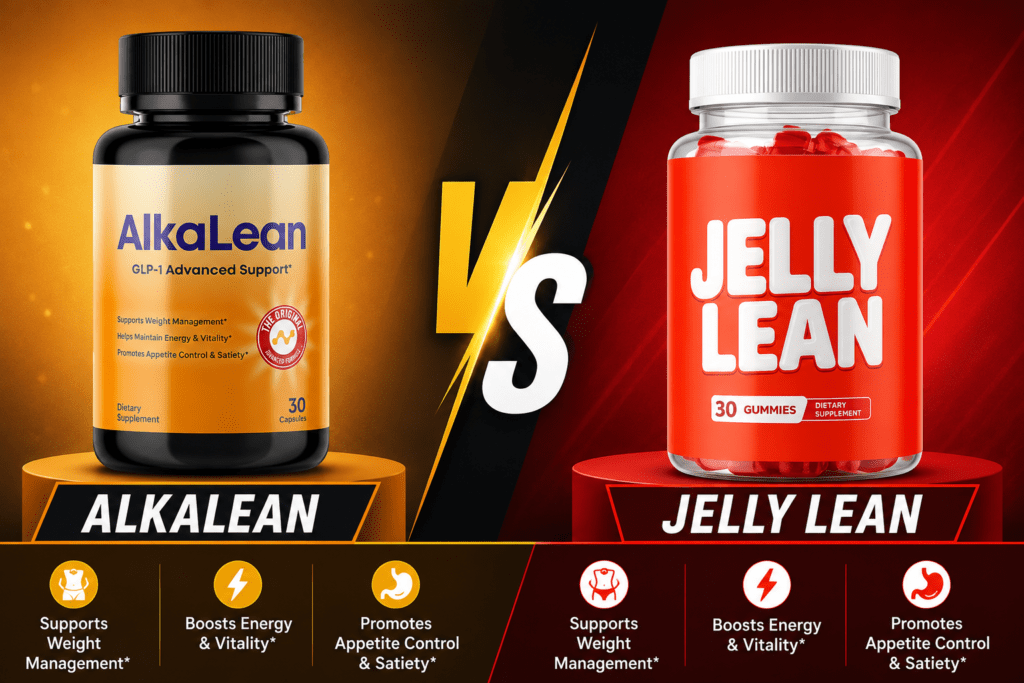
Neither product has independent clinical trial data on the finished formula. Both rely on ingredients that have some published research individually, and both are sold through multiple, differently branded websites — a red flag pattern worth taking seriously regardless of which one you’re considering. The gummy format of Jelly Lean may improve palatability and consistency of use compared with swallowing capsules, but format alone doesn’t change whether an ingredient dose is clinically meaningful. If anything, gummies typically carry less active ingredient per serving than capsules, since sugar/gelling agents take up space in the formulation.
Safety Considerations
- Dietary supplements are regulated by the FDA differently from drugs: manufacturers don’t need pre-market approval, and the FDA generally only intervenes after a safety issue is reported.
- Fiber-based ingredients (inulin, glucomannan) can cause bloating, gas, or digestive discomfort, especially when started at a high dose. Glucomannan tablets have specifically been associated with esophageal blockage risk if not taken with adequate water.
- Apple cider vinegar in concentrated or capsule form has been linked to potential interactions with diabetes medications and, in some case reports, to changes in tooth enamel or throat irritation when taken undiluted.
- Chromium supplementation can interact with insulin and other diabetes medications.
- Anyone who is pregnant, nursing, under 18, or managing a chronic condition (especially diabetes, thyroid disease, or GI disorders) should talk to a doctor before starting either product.
- Because “Alka Lean” and “Jelly Lean” both cover multiple different formulas sold by different companies, always read the actual Supplement Facts label on the bottle you’re ordering — not just the sales page — before assuming what’s inside.
Red Flags to Check Before Buying Alka Lean (or Any Similar Product)
- Multiple “official” websites for the same name. If a product has several competing domains all claiming to be the real one, that’s a sign of affiliate-driven duplication, not necessarily fraud, but it means you should verify you’re buying from a legitimate seller with a real refund policy.
- Undisclosed proprietary blends. If the label only shows a combined milligram total for several ingredients, you can’t verify the dose of any one ingredient against the published research.
- Refund policy inconsistencies. Some Alka Lean sellers have been noted to describe their return window differently on different pages of their own site — always check the actual checkout/terms page, not just the ad copy.
- Star ratings with unclear sourcing. A “4.98/5 from 2,000+ reviews” claim is meaningless without knowing whether those reviews are verified purchases.
- Comparisons to prescription GLP-1 drugs. No dietary supplement is a substitute for semaglutide, tirzepatide, or other prescription GLP-1 medications, regardless of how the marketing is worded.
Frequently Asked Questions
Is Alka Lean the same as Alka-Seltzer?
No. Alka-Seltzer is an unrelated over-the-counter antacid and pain reliever made by Bayer, containing aspirin, sodium bicarbonate, and citric acid. Alka Lean is a weight-management dietary supplement with no connection to Alka-Seltzer.
Does Alka Lean actually work for weight loss?
There’s no published clinical trial on a finished Alka Lean product. Some of its ingredients (like chicory inulin) have research behind their mechanism, but at the doses typically used in capsule supplements, meaningful weight loss isn’t guaranteed. Individual results vary, and a supplement is not a substitute for diet, physical activity, and medical guidance.
Is Alka Lean FDA approved?
No dietary supplement is “FDA approved” in the way a drug is. The FDA does not review dietary supplements for safety or effectiveness before they go to market; it can take action only after a product is found to be unsafe or mislabeled.
How is Alka Lean different from Jelly Lean?
The most obvious difference is format — Alka Lean is typically a capsule, Jelly Lean is a gummy. Ingredient strategy also differs: Alka Lean formulas commonly focus on prebiotic fiber/probiotics or a botanical blend, while Jelly Lean commonly centers on apple cider vinegar and BHB salts. Neither has finished-product clinical trial data.
Can I take Alka Lean with other medications?
Some ingredients used in Alka Lean formulas (chromium, apple cider vinegar, cinnamon extract) can interact with diabetes medications. Talk to your doctor or pharmacist before combining any new supplement with prescription medication.
How much does AlkaLean cost?
On the official checkout page, AlkaLean GLP-1 Advanced Support is priced at $79/bottle for a 2-bottle (60-day) package, $69/bottle for a 3-bottle (90-day) package with free shipping, and $49/bottle for a 6-bottle (180-day) package with free shipping. All tiers currently list a 60-day money-back guarantee. Confirm current pricing at checkout, since bundle pricing on direct-to-consumer supplement sites can change.
What does “GLP-1 Advanced Support” mean on the AlkaLean label?
It means the product is formulated to support the body’s own natural GLP-1 release — primarily through fermentable fiber (chicory root inulin and resistant starch) feeding gut bacteria that produce short-chain fatty acids, which in turn can stimulate GLP-1 release from intestinal cells. It does not contain semaglutide, tirzepatide, or any pharmaceutical GLP-1 agonist, and it is not a substitute for those prescription medications.
Why are there so many different “Alka Lean” and “Jelly Lean” websites?
This is common in the affiliate-driven supplement market: multiple marketers can promote similarly or identically named products, sometimes with different formulas, through different domains. It doesn’t automatically mean a product is fake, but it does mean buyers should verify the actual seller, ingredient label, and refund terms before purchasing rather than relying on the sales page alone.
Bottom Line
“Alka Lean” isn’t a single, clinically tested product — it’s a name used across several competing supplement formulas, most built around either a prebiotic-fiber/probiotic strategy or a botanical metabolic-support blend. The individual ingredients have real, if mixed and dose-dependent, scientific support. Compared with Jelly Lean, the main practical differences are delivery format (capsule vs. gummy) and ingredient strategy (fiber/probiotics vs. ACV/BHB) — not a difference in the strength of clinical evidence, since neither has trials on the finished formula. Anyone considering either product should read the actual label, verify the seller, and check with a healthcare provider, particularly if pregnant, nursing, or managing a medical condition.
Scientific Resources and Sources
- National Institutes of Health, Office of Dietary Supplements — Dietary Supplements: What You Need to Know: https://ods.od.nih.gov/factsheets/WYNTK-Consumer/
- U.S. Food and Drug Administration — Dietary Supplements overview and regulation: https://www.fda.gov/food/dietary-supplements
- Birkeland E, et al. “Prebiotic effect of inulin-type fructans on faecal microbiota and short-chain fatty acids in type 2 diabetes: a randomised controlled trial.” (2020) — PMC: https://www.ncbi.nlm.nih.gov/pmc/articles/PMC7501097/
- “The effects of chicory inulin-type fructans supplementation on weight management outcomes: systematic review, meta-analysis, and meta-regression of randomized controlled trials” — PMC: https://pmc.ncbi.nlm.nih.gov/articles/PMC11600113/
- “Improbable data characteristics and extreme effects of apple cider vinegar on weight loss” (2025, discussing the retracted ACV trial) — PMC: https://pmc.ncbi.nlm.nih.gov/articles/PMC12322552/
- “Effect of Apple Cider Vinegar Intake on Body Composition in Humans with Type 2 Diabetes and/or Overweight: A Systematic Review and Meta-Analysis of Randomized Controlled Trials” (2025) — PMC: https://pmc.ncbi.nlm.nih.gov/articles/PMC12472926/
- Sood N, et al. “Glucomannan and obesity: a critical review” — PubMed: https://pubmed.ncbi.nlm.nih.gov/16320857/
- Clinical Advisor — “Consider glucomannan for obesity treatment” (summarizing meta-analysis of 14 studies): https://www.clinicaladvisor.com/features/consider-glucomannan-for-obesity-treatment/
- Mayo Clinic — Weight-loss supplements: A cautionary note: https://www.mayoclinic.org/healthy-lifestyle/weight-loss/in-depth/weight-loss-supplements/art-20046409
- Wikipedia — Alka-Seltzer (for the unrelated-product clarification): https://en.wikipedia.org/wiki/Alka-Seltzer
This article was produced for homehealthyremedy.com and reflects publicly available product listings and peer-reviewed research as of July 2026. Product formulas and sellers change frequently in this category — always verify current ingredients and terms directly on the manufacturer’s official Supplement Facts label before purchasing.

Natural home remedies, skincare secrets, dental & eye health tips, and real product reviews to help you stay healthy the natural way.