

Introduction
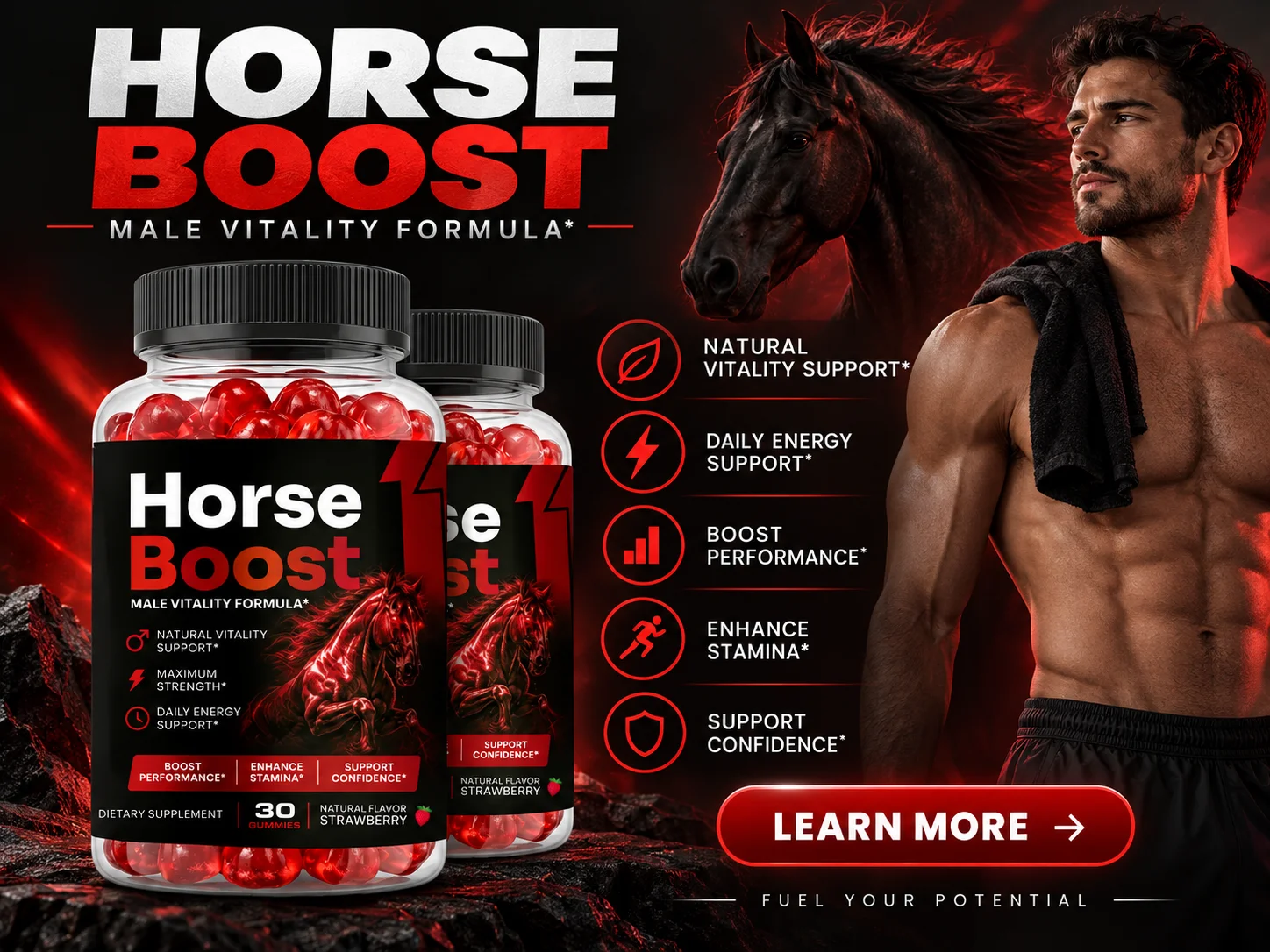
“Horse Boost” is the name behind a strawberry-flavored gummy supplement marketed to men who want more daily energy, stamina, and general vitality. It sits in a fast-growing corner of the wellness industry: chewable, flavored supplements positioned as an easier alternative to capsules or tablets. Names like Horse Boost lean on imagery of raw strength and endurance, and the marketing around these products typically promises better performance, more confidence, and renewed energy with a single daily gummy.
Before buying any product in this category, it helps to separate three different things that often get blurred together in supplement marketing: what the ingredients are, what independent research actually shows about those ingredients, and what the company itself claims. This article focuses on the middle piece — the science — using Horse Boost as the example product, while staying grounded in what is actually verifiable rather than repeating unverified sales copy.
What Kind of Product Is Horse Boost?
Horse Boost is positioned as a dietary supplement, not a drug. That distinction matters. In the United States, dietary supplements are regulated under the Dietary Supplement Health and Education Act (DSHEA), which means the FDA does not review supplements for safety or effectiveness before they reach the market the way it does with prescription medications. Manufacturers are responsible for ensuring their products are safe and that their claims are truthful, but there is no pre-market approval process. This is why supplement labels and marketing pages almost always carry a disclaimer along these lines: “This statement has not been evaluated by the Food and Drug Administration. This product is not intended to diagnose, treat, cure, or prevent any disease.”
That disclaimer is a legal requirement, not a footnote to skim past. It tells you that any energy, stamina, or performance claims are the manufacturer’s own positioning, not an FDA-reviewed medical conclusion.
Products like Horse Boost typically describe themselves as being made in a GMP-certified (Good Manufacturing Practice) facility. GMP certification is a real and meaningful manufacturing standard — it governs things like sanitation, equipment calibration, and batch record-keeping — but it certifies how a product is made, not that the finished formula is clinically proven to work for the health claims on the label.
Common Ingredients in “Male Vitality” Gummies
While exact formulations vary by brand and are proprietary, gummies in this category typically draw from a recurring list of botanical and nutritional ingredients. Below is an honest look at the research behind the ones most commonly used in this product category, including where the evidence is solid and where it’s thin.
L-Arginine
L-arginine is an amino acid the body uses to produce nitric oxide, a molecule that helps blood vessels relax and widen. This mechanism is why arginine shows up so often in products aimed at circulation and performance. Some clinical trials have found modest benefits for mild-to-moderate erectile difficulties, particularly at higher doses (often several grams per day) taken consistently over weeks — doses considerably higher than what a typical gummy serving provides. A 2019 meta-analysis in the World Journal of Urology found a statistically significant, though modest, improvement in erectile function scores with arginine supplementation. However, the effect size in most trials is small, and gummies rarely disclose whether they contain a clinically relevant dose.
Maca Root (Lepidium meyenii)
Maca is a Peruvian root vegetable that has been studied for its effects on libido and sexual desire. A Cochrane-style systematic review published in BMC Complementary and Alternative Medicine found some evidence that maca may modestly improve subjective sexual desire, but the review also noted that most trials were small, short in duration, and of mixed methodological quality. Evidence for maca improving stamina or athletic performance is weaker and more mixed than the evidence for libido.
Tribulus Terrestris
Tribulus is a flowering plant long used in traditional medicine and heavily marketed as a testosterone booster. This is one of the more overstated ingredients in the supplement world. Multiple controlled studies, including research published in the Journal of the International Society of Sports Nutrition, have found that tribulus does not meaningfully raise testosterone levels in humans, despite widespread marketing claims to the contrary. Some smaller studies suggest a possible effect on subjective libido or sexual satisfaction independent of any hormonal change, but the testosterone-boosting claim specifically is not well supported.
Panax Ginseng
Korean red ginseng has more consistent clinical support than most ingredients in this category. A systematic review in the British Journal of Clinical Pharmacology concluded that red ginseng may be an effective treatment option for erectile dysfunction, based on several randomized controlled trials showing improvement over placebo. That said, the doses used in clinical trials are typically standardized extracts (often 600–1000 mg, multiple times daily), and it’s rarely clear whether a gummy serving matches those doses.
Horny Goat Weed (Epimedium)
Horny goat weed contains a compound called icariin, which has shown some promise in animal studies for supporting blood flow via a mechanism similar to PDE5 inhibitor drugs (the same drug class as sildenafil). However, robust human clinical trials are limited. Most of the evidence for icariin comes from lab and animal research rather than large, well-controlled human trials, so claims based on this ingredient should be treated as preliminary.
Zinc and B-Vitamins
Zinc deficiency is genuinely linked to lower testosterone and reduced fertility markers, and correcting a deficiency can restore normal function. However, this only applies to men who are actually deficient — supplementing zinc in someone who already has adequate levels does not reliably produce additional benefit. B-vitamins play a real role in energy metabolism, which is why “energy support” claims often lean on them, but again, the effect is most noticeable in people who are deficient, not as a general performance enhancer.
The Pattern Worth Noticing
Looking at the ingredient list as a whole, a pattern emerges that’s common across this entire product category: most of these compounds have some legitimate research behind them in isolation, often at doses and in populations that don’t match how the finished gummy product is formulated or marketed. Individual studies get compressed into blanket claims like “clinically studied” or “doctor-formulated” on sales pages, without disclosing which specific study, at what dose, was actually replicated in the product.
This doesn’t mean every ingredient is useless — several genuinely have plausible mechanisms and supportive research. It means the responsible way to evaluate a product like Horse Boost is ingredient-by-ingredient and dose-by-dose, rather than taking a marketing page’s summary at face value.
Red Flags Common to This Product Category
Independent of Horse Boost specifically, there are recurring red flags worth watching for across “male enhancement” and “vitality” gummy marketing:
Inflated or unverifiable social proof. Claims like “12,000+ verified buyers” or “150K+ men trust this” are marketing copy unless backed by an independent, auditable source. Genuine third-party review platforms for these products often show only a handful of reviews, sometimes written by the company itself, which is a mismatch worth noticing.
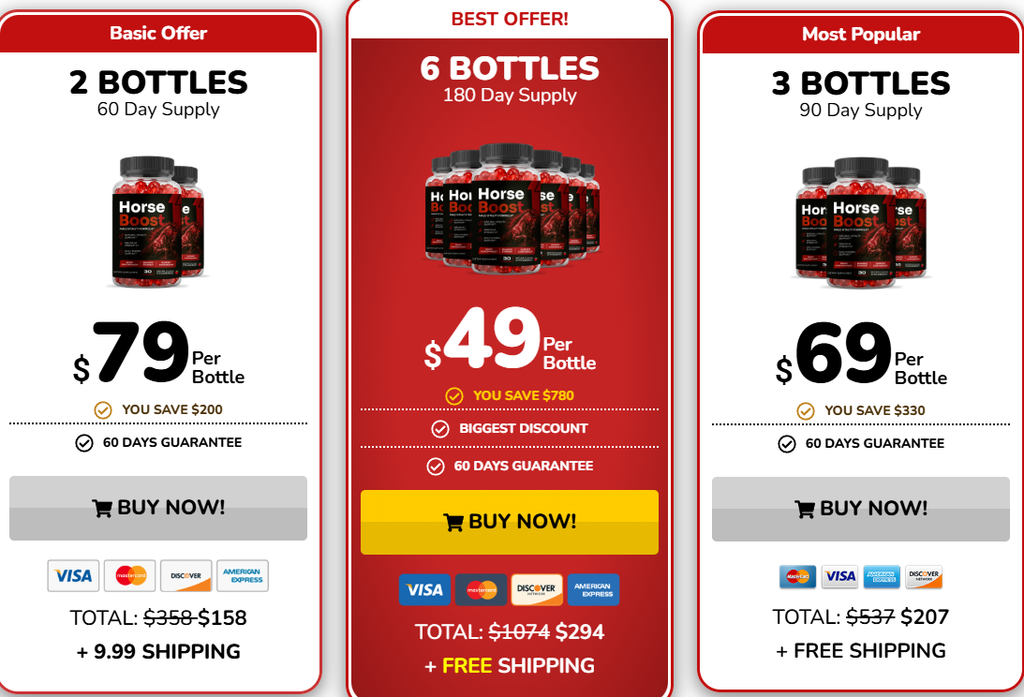
Steep, tiered “discounts.” Pricing structures that show a large struck-through “original price” next to a much lower “sale price” (for example, a bundle “worth $1,074” for “$294”) are a common urgency tactic in direct-response marketing. The crossed-out price is frequently not a price the product was ever actually sold at; it exists to make the discount look larger.
Vague clinical language. Phrases like “clinically studied,” “doctor-formulated,” or “backed by science” without naming the specific study, the sample size, the dosage tested, or a link to published, peer-reviewed research are marketing language, not scientific claims you can verify.
Broad money-back guarantees paired with affiliate checkout platforms. A 60-day guarantee is a legitimate consumer protection when honored, but it’s worth checking who processes the refund and under what conditions, since guarantee terms sometimes have conditions (unopened bottles, restocking fees, return shipping costs) buried in the fine print.
The FDA disclaimer sitting directly below disease-adjacent claims. When a page promises support for “performance” or “vitality” and is immediately followed by “not intended to diagnose, treat, cure, or prevent any disease,” that’s the legal boundary the company is drawing around its own claims — useful context for how much weight to put on the marketing above it.
Safety Considerations
Even “natural” ingredients can interact with medications or existing health conditions. A few specific points worth knowing:
- L-arginine can interact with medications for blood pressure and with PDE5 inhibitors (like sildenafil or tadalafil), potentially causing blood pressure to drop too low. It’s also generally not recommended for people who have had a heart attack without medical supervision, based on some studies suggesting risk in that specific population.
- Ginseng can interact with blood thinners (like warfarin) and may affect blood sugar levels, which matters for people with diabetes.
- Gummy supplements in general often contain added sugars, and serving sizes are sometimes set by what tastes good rather than by a clinically studied dose, since gummies are limited in how much active ingredient they can hold per piece without becoming unpalatable.
Anyone on prescription medication, especially for blood pressure, heart conditions, or diabetes, should talk to a doctor or pharmacist before adding a supplement like this — not because the ingredients are necessarily dangerous, but because interactions are genuinely possible and rarely disclosed on marketing pages.
Horse Boost Pricing
How to Evaluate a Product Like This Before Buying
A few practical checks apply to Horse Boost or any similar product:
- Look for a full ingredient list with exact doses, not just a proprietary blend total. If a label lists a “Proprietary Blend: 500 mg” without breaking down each ingredient’s individual dose, you cannot compare it to the doses used in the research behind those ingredients.
- Search for the company’s manufacturing and contact information independently, rather than relying only on what’s listed on the sales page.
- Check independent review platforms directly (not through a link on the sales page) and look at the total number of reviews and how recent they are, not just the star rating.
- Be skeptical of urgency mechanics — countdown timers, “only X left,” and steep tiered discounts are conversion tactics used broadly across direct-response marketing, not indicators of product quality.
- Set a baseline expectation: supplements, even well-researched ones, tend to produce modest effects over weeks of consistent use, not dramatic overnight changes. Marketing that implies rapid, large transformations is a mismatch with how these ingredients actually behave in the clinical literature.
The Bottom Line
Horse Boost belongs to a large and growing category of gummy-format male vitality supplements built on a recurring set of botanical ingredients — L-arginine, maca, tribulus, ginseng, horny goat weed, zinc, and B-vitamins being among the most common. Some of these ingredients, particularly Korean red ginseng and, to a lesser extent, L-arginine and maca, have real clinical research behind them, though usually at doses and in study populations that may not match a gummy’s actual formulation. Others, like tribulus’s testosterone-boosting reputation, are not well supported by controlled research despite being widely marketed.
As with any supplement in an unregulated, direct-to-consumer market, the responsible approach is to separate the ingredient science from the sales page: check exact doses against the doses used in actual studies, look at independent (not company-hosted) reviews, understand that “not evaluated by the FDA” is a real regulatory fact and not boilerplate, and talk to a healthcare provider if you’re on any medication before adding a new supplement to your routine.
Sources referenced
- Rhim, H.C., et al. “The Potential Role of Arginine Supplements on Erectile Dysfunction: A Systematic Review and Meta-Analysis.” The Journal of Sexual Medicine, 2019. PubMed | Oxford Academic
- Shin, B.C., et al. “Maca (L. meyenii) for Improving Sexual Function: A Systematic Review.” BMC Complementary and Alternative Medicine, 2010. PubMed | Full Text (PMC)
- Rogerson, S., et al. “The Effect of Five Weeks of Tribulus Terrestris Supplementation on Muscle Strength and Body Composition During Preseason Training in Elite Rugby League Players.” Journal of Strength and Conditioning Research, 2007. PubMed
- Jang, D.J., et al. “Red Ginseng for Treating Erectile Dysfunction: A Systematic Review.” British Journal of Clinical Pharmacology, 2008. Wiley Online Library
- National Center for Complementary and Integrative Health (NCCIH), NIH — Asian Ginseng: Usefulness and Safety. NCCIH Official Website
- U.S. Food & Drug Administration (FDA) — Dietary Supplements. FDA Official Website
- FDA — Information for Consumers on Using Dietary Supplements. FDA Consumer Information
This article is for general educational purposes and is not medical advice. Consult a doctor or pharmacist before starting any new supplement, especially if you take prescription medication or have an existing health condition.
Previous Post- https://homehealthyremedy.com/sodatide-review-check-before-you-buy/
https://homehealthyremedy.com/prostaliss-reviews/

Natural home remedies, skincare secrets, dental & eye health tips, and real product reviews to help you stay healthy the natural way.