

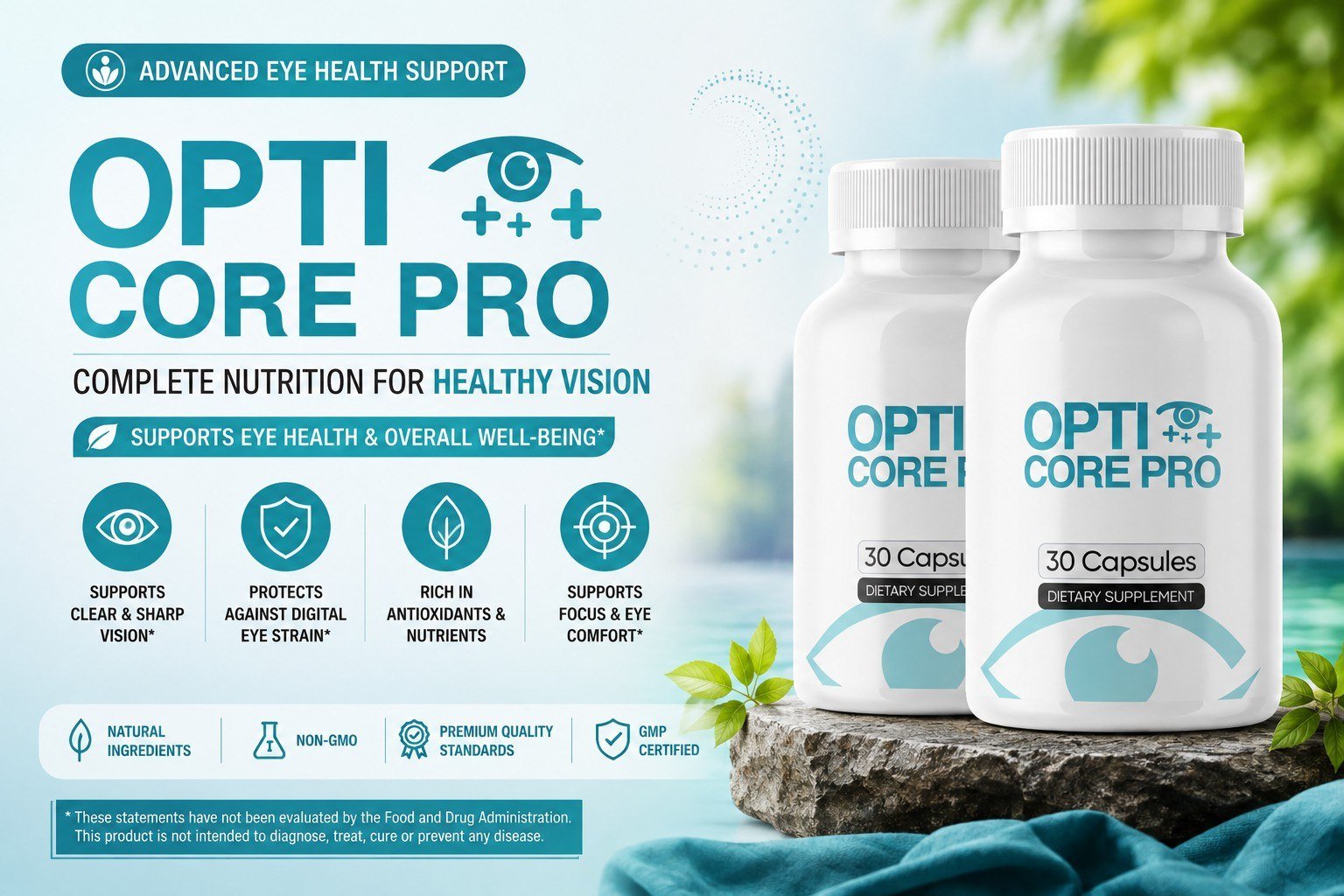
In a world where screens dominate almost every waking hour, our eyes are working harder than they ever have in human history. From early-morning phone scrolling to late-night streaming, the average adult now spends upward of seven hours a day staring at digital displays. It’s no surprise that eye strain, dryness, blurred focus, and long-term concerns about vision health have become everyday conversations. This is where Opti Core Pro enters the picture — a daily vision wellness supplement formulated to support the eyes from the inside out, using nutrients that have a long track record in eye health research.
This article takes an in-depth look at what Opti Core Pro is designed to do, the science behind its core ingredients, who might consider adding it to their routine, and how it fits into a broader approach to lifelong vision wellness. Along the way, we’ll reference real scientific studies — including landmark research funded by the U.S. National Institutes of Health — so you can make an informed decision rather than relying on marketing claims alone.
What Is Opti Core Pro?
Opti Core Pro is positioned as a daily nutritional supplement built around a blend of vision-supportive nutrients: carotenoids like lutein and zeaxanthin, antioxidant vitamins (A, C, and E), the mineral zinc, and, in many formulations of this type, botanical extracts such as bilberry along with omega-3 fatty acids. The goal isn’t to replace corrective lenses, medical treatment, or regular eye exams — no supplement can do that — but rather to give the eyes consistent access to nutrients that research suggests play a supportive role in maintaining normal visual function and comfort over time.
It’s important to set expectations properly from the outset: dietary supplements like Opti Core Pro are intended to support everyday eye wellness, not to diagnose, treat, cure, or prevent any eye disease. Statements about supplements have not been evaluated by the FDA. If you have an existing eye condition, sudden vision changes, or are considering a supplement as part of managing a diagnosed condition like macular degeneration, you should talk to an ophthalmologist or optometrist first.
Why Vision Wellness Deserves More Attention Today
Our eyes evolved for a world of daylight, distance vision, and natural rest cycles. Modern life looks nothing like that:
- Extended screen exposure. Computers, smartphones, and tablets keep our eyes focused at a fixed close distance for hours, which is linked to digital eye strain — symptoms like dryness, blurred vision, headaches, and fatigue.
- Blue light exposure. LED screens and lighting emit a higher proportion of blue wavelength light than older technologies, and researchers continue to study its longer-term effects on the retina.
- Nutrient-poor diets. Two of the most eye-relevant nutrients, lutein and zeaxanthin, are not produced by the human body. They must come entirely from diet — primarily leafy greens like kale and spinach — or from supplementation. Many people simply don’t eat enough of these foods daily to reach the levels used in clinical research.
- Aging populations. As people live longer, age-related changes to the eyes — including declining macular pigment density — have become a larger public health focus, prompting large-scale nutritional research like the NIH’s AREDS and AREDS2 trials discussed below.
Given these pressures, it makes sense that more people are looking at targeted nutritional strategies, and products like Opti Core Pro, as one piece of a broader vision wellness routine that also includes regular eye exams, screen breaks, and a nutrient-dense diet.
The Science Behind the Core Ingredients
The credibility of any vision supplement rests on the evidence behind its individual ingredients. Below is a breakdown of what research actually shows about the nutrients commonly found in formulas like Opti Core Pro.
Lutein and Zeaxanthin
Lutein and zeaxanthin are carotenoids that accumulate specifically in the macula, the small central area of the retina responsible for sharp, detailed vision. Together they’re often referred to as “macular pigment.” Because the body cannot synthesize them, dietary or supplemental intake is the only way to raise macular pigment density.
The most rigorous research on these two nutrients comes from the National Eye Institute (NEI), part of the U.S. National Institutes of Health. The NEI conducted two major trials — the Age-Related Eye Disease Study (AREDS) and its successor AREDS2 — specifically to test how nutritional supplementation affects eye health over time. was launched by the NEI to test whether adding omega-3 fatty acids or lutein and zeaxanthin would make the original AREDS supplement formula more effective, since lutein and zeaxanthin are plant-derived carotenoids known to accumulate in the retina.
The results were nuanced but informative. the full study group, adding lutein and zeaxanthin did not produce an overall additional effect on age-related macular degeneration (AMD) compared to the base formula, though researchers noted they were a safer alternative to beta-carotene, which had been linked to increased lung cancer risk in smokers. Importantly, when researchers looked specifically at people who had low dietary intake of lutein and zeaxanthin to begin with, those who took lutein and zeaxanthin supplements had a 26% reduced risk of developing advanced AMD compared to those who. In a direct head-to-head comparison, lutein and zeaxanthin showed a statistically meaningful advantage over beta-carotene, reducing the hazard ratio for developing late AMD by roughly.
A decade-long follow-up analysis published in JAMA Ophthalmology reinforced this.Researchers who analyzed ten years of AREDS2 data found that the formula containing lutein and zeaxanthin instead of beta-carotene was more effective at reducing the risk of AMD progression, in addition to avoiding the lung cancer risk associated with beta-carotene. As NEI epidemiology director Dr. Emily Chew put it in the NIH’s own release on the follow-up study, the ten-year data confirmed that switching the formula from beta-carotene to lutein and zeaxanthin was the right decision.
The takeaway for everyday vision wellness: lutein and zeaxanthin are among the most well-studied nutrients in eye health science, with the strongest benefit shown in people whose diets are otherwise low in these carotenoids — which describes a large share of the general population.
Vitamin A
Vitamin A is essential for the production of rhodopsin, the light-sensitive pigment in the retina’s rod cells that allows the eyes to adapt to low light. A vitamin A deficiency is one of the best-documented nutritional causes of vision problems worldwide, particularly affecting night vision and the health of the eye’s surface (the cornea and conjunctiva). Most vision-support formulas include vitamin A specifically to help maintain normal visual function under variable lighting conditions.
Vitamin C and Vitamin E
Both are antioxidant vitamins that were part of the original AREDS formula tested by the National Eye Institute. The original AREDS formulation combined vitamin C (500 mg), vitamin E (400 IU), beta-carotene, zinc, and copper, and was shown to reduce the risk of progression to advanced AMD. The eye is a highly metabolically active organ with a large surface area exposed to light and oxygen, which makes it particularly susceptible to oxidative stress. Antioxidant vitamins like C and E are included in eye formulas to help neutralize free radicals generated by this constant exposure.
Zinc
Zinc is a trace mineral highly concentrated in the retina and the tissue surrounding it, where it plays a role in transporting vitamin A from the liver to the retina and supporting several retinal enzymes. It was a core component of both the original AREDS and AREDS2 formulas. Researchers also tested varying the zinc dose in AREDS2 and found it did not meaningfully change outcomes at lower levels, which is why some modern formulations use a more moderate zinc dose than the original 80 mg tested in the 1990s-era AREDS trial.
Bilberry Extract
Bilberry (Vaccinium myrtillus) is a close relative of the blueberry, rich in anthocyanins — plant compounds with antioxidant properties. Bilberry has a long history in European herbal traditions associated with night vision and eye comfort, and continues to be studied for its potential role in supporting circulation to small blood vessels, including those in the eye. While the clinical evidence for bilberry is less extensive than for lutein, zeaxanthin, or the AREDS-studied nutrients, it remains a popular addition to vision-support blends for its antioxidant profile.
Omega-3 Fatty Acids (DHA/EPA)
Omega-3 fatty acids, particularly DHA, are structural components of retinal cell membranes and were the other major nutrient tested in the AREDS2 trial alongside lutein and zeaxanthin. AREDS2 tested adding DHA (350 mg) and EPA (650 mg) to the base AREDS formulation. While omega-3s did not show an independent benefit for AMD progression in that specific trial, DHA remains a structurally important nutrient for retinal cell health and is commonly included in comprehensive eye formulas for that reason, as well as its broader support for tear film quality and dry eye comfort.
How Opti Core Pro Is Designed to Work
Rather than targeting a single mechanism, a formula like Opti Core Pro is designed to work on several fronts simultaneously:
- Building macular pigment. Regular intake of lutein and zeaxanthin over weeks to months can help raise macular pigment optical density, the protective “internal sunglasses” layer in the retina.
- Buffering oxidative stress. Vitamins C and E, along with bilberry’s anthocyanins, work as antioxidants to help counter the oxidative load created by light exposure and normal cellular metabolism in the eye.
- Supporting low-light and night vision. Vitamin A supports the visual cycle that allows the eyes to adjust between bright and dim environments.
- Maintaining structural and membrane health. Zinc and omega-3 fatty acids contribute to the retina’s underlying cellular and enzymatic support systems.
- Supporting comfort during screen use. Ingredients associated with tear film and circulation support may help address the dryness and fatigue commonly reported after long stretches of near-focus screen work.
Because nutrients like lutein and zeaxanthin accumulate gradually in retinal tissue, most people taking a vision-support supplement should expect a gradual, cumulative effect rather than an immediate change — consistency over weeks and months is what the underlying research is actually measuring.
Who Might Consider Opti Core Pro
A vision wellness supplement like Opti Core Pro is generally marketed toward:
- Adults who spend several hours a day on digital screens for work or leisure
- People whose diets are low in leafy green vegetables, the primary dietary source of lutein and zeaxanthin
- Adults in midlife and beyond who are proactively thinking about long-term eye health
- Individuals looking for a convenient way to consolidate several eye-relevant nutrients into one daily routine
It is not intended for children, and pregnant or nursing individuals should consult a healthcare provider before starting any new supplement. People who already have a diagnosed eye condition — such as intermediate or advanced AMD, diabetic retinopathy, or glaucoma — should talk to their eye doctor about whether a specific AREDS2-formulated supplement (which has direct clinical trial backing for that population) is more appropriate than a general wellness blend.
How to Take It
Most supplements in this category are formulated for once- or twice-daily capsule intake, typically with a meal to support absorption of the fat-soluble nutrients involved (vitamins A and E, and the carotenoids lutein and zeaxanthin are all better absorbed alongside dietary fat). As with any supplement, follow the label directions on your specific bottle of Opti Core Pro, and don’t exceed the recommended daily dose. Results associated with carotenoid supplementation in the research literature are generally measured over months, not days, so a realistic mindset is to treat it as a long-term addition to your wellness routine rather than a quick fix.
Safety Considerations
Vision supplements built around lutein, zeaxanthin, vitamins A, C and E, zinc, and omega-3s are, in general, well tolerated by most healthy adults when taken at recommended doses. That said, a few practical safety notes apply:
- Zinc at high doses can interfere with copper absorption over time, which is why many modern formulations pair zinc with a small amount of copper or use a moderated zinc dose.
- Vitamin A should not be combined carelessly with other high-dose vitamin A sources, since fat-soluble vitamins can accumulate in the body.
- Blood thinners and omega-3s. If you’re on anticoagulant medication, mention any omega-3 supplementation to your doctor.
- Smokers and former smokers should be cautious with beta-carotene-containing formulas specifically, given the lung cancer signal identified in earlier NIH-funded research — this is one reason many modern formulas, including most positioned like Opti Core Pro, favor lutein and zeaxanthin over beta-carotene.
- Always disclose any supplement you’re taking to your physician, particularly if you take prescription medication or have an existing health condition.
Trimoryn Price

Frequently Asked Questions
Is Opti Core Pro a treatment for eye disease? No. It’s formulated as a nutritional wellness supplement, not a medical treatment. Diagnosed eye conditions should be managed by an eye care professional, and any supplement use should be discussed with them.
How long before I notice a difference? Because key ingredients like lutein and zeaxanthin build up gradually in retinal tissue, most research on these nutrients measures outcomes over months rather than days. Consistent daily use is more important than any single dose.
Can I get these nutrients from food instead? Yes — leafy greens like spinach, kale, and collard greens are rich in lutein and zeaxanthin, and fatty fish like salmon provide omega-3s. Supplements are typically used to help close the gap when dietary intake falls short of research-studied levels, not to replace a healthy diet entirely.
Is it safe to take with other multivitamins? Generally, yes, but it’s worth checking for overlapping ingredients (especially vitamin A and zinc) across all the supplements you take to avoid exceeding safe upper limits. When in doubt, ask a pharmacist or physician to review your full supplement stack.
Final Thought
Opti Core Pro represents a category of everyday vision wellness supplements built on nutrients — lutein, zeaxanthin, vitamins A, C, and E, zinc, bilberry, and omega-3s — that have a genuine, decades-long research history behind them, anchored by the National Eye Institute’s AREDS and AREDS2 trials. The honest takeaway from that research isn’t that any supplement is a cure-all: it’s that for people whose diets fall short on these specific nutrients, targeted supplementation has shown measurable, statistically significant benefits in reducing the risk of advanced age-related eye disease — particularly when lutein and zeaxanthin replace beta-carotene in the formula.
Used as part of a broader approach — regular eye exams, sensible screen breaks, a diet rich in leafy greens and fatty fish, and protective eyewear where appropriate — a well-formulated daily supplement like Opti Core Pro can be a reasonable addition to a long-term vision wellness routine. As always, individual results vary, and this article is provided for general educational purposes only; it is not medical advice. Speak with an eye care professional before starting any new supplement, especially if you have an existing eye condition or take other medications.
This content is for informational purposes only and has not been evaluated by the FDA. It is not intended to diagnose, treat, cure, or prevent any disease.visit homehealthyremedy.com.

Natural home remedies, skincare secrets, dental & eye health tips, and real product reviews to help you stay healthy the natural way.