

Introduction
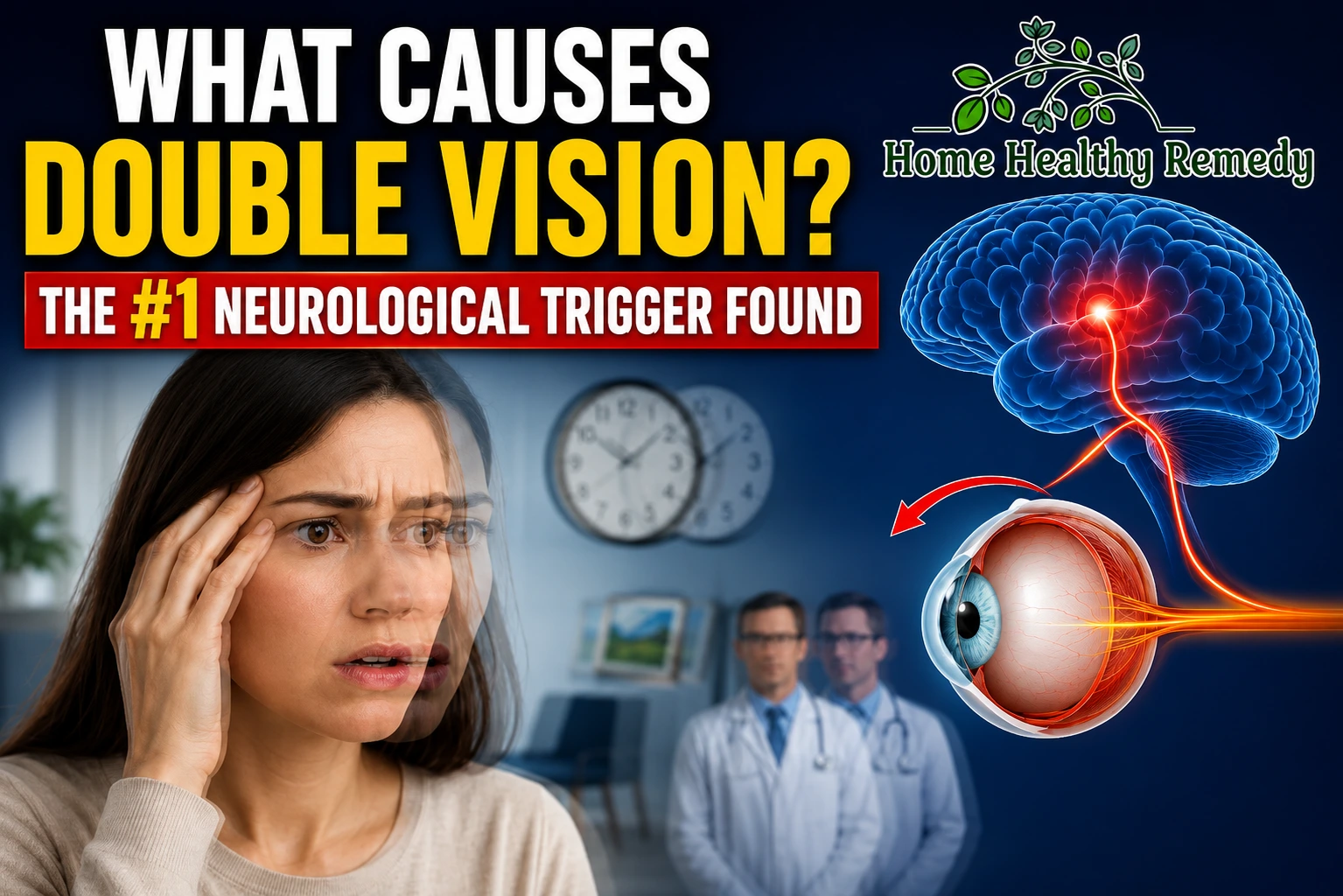
If you have ever looked at a stop sign and seen two of them — or tried to read text only to find it splitting into ghostly duplicate lines — you already know how disorienting what causes double vision can be. Medically known as diplopia, double vision is not just a nuisance. In many cases it is a red-flag symptom pointing directly to a serious, even life-threatening, underlying condition in the nervous system.
In the United States alone, over 800,000 people seek medical attention for double vision every year, with roughly 50,000 of those visits taking place in emergency rooms. Understanding what causes double vision — from a strained eye muscle all the way to a stroke or multiple sclerosis — is the critical first step toward the right treatment and recovery.
This comprehensive guide covers everything you need to know: all causes, types, the #1 neurological trigger, eye exercises, home remedies, double vision spectacles, the ICD-10 code, when to see an eye doctor, and finally how the natural supplement VisiFlora can support long-term eye health from within.
What Is Double Vision? (Diplopia)
Double vision, or diplopia, occurs when a person perceives two images of a single object simultaneously. These images may appear side by side, one above the other, at a diagonal angle, or they may overlap like a blurry ghost image. The condition can affect one eye (monocular diplopia) or both eyes (binocular diplopia), and it can be temporary or chronic.
The brain processes slightly different images from each eye and fuses them into a single three-dimensional picture. When this fusion mechanism is disrupted — due to nerve damage, muscle weakness, corneal irregularities, or brain disease — the result is diplopia. The Eyes and Vision system is an extraordinarily complex neurological network, and even a minor disruption anywhere along the visual pathway can produce double vision.
Quick Definition: Double vision is a visual symptom — not a standalone disease — in which the visual cortex perceives two images rather than one unified picture. It nearly always signals an underlying problem in the eye, muscles, nerves, or brain.
Types: Monocular Double Vision vs. Binocular Double Vision
| Feature | Monocular Double Vision | Binocular Double Vision |
| Definition | Double vision in one eye only | Double vision requiring both eyes open |
| Cover Test | Persists when unaffected eye is covered | Disappears when either eye is covered |
| Common Causes | Cataracts, astigmatism, dry eye, corneal irregularities | Strabismus, cranial nerve palsy, stroke, MS, myasthenia gravis |
| Urgency Level | Moderate — needs evaluation but less often an emergency | HIGH — may indicate life-threatening neurological event |
| Specialist | Ophthalmologist | Neuro-ophthalmologist or neurologist |
| ICD-10 Code | H53.2 (with additional specificity) | H53.2 (with additional specificity) |
Monocular double vision is caused by a problem within the eye itself. It is usually less alarming than its binocular counterpart. Binocular double vision, however, should always be taken seriously — it results from the two eyes failing to align correctly, which is most often a direct consequence of nerve or brain dysfunction.
What Causes Double Vision? — All Major Triggers
Understanding what causes double vision requires examining the entire visual pathway — from the cornea and lens, through the eye muscles and cranial nerves, all the way into the brain’s visual processing centers. Here is a complete breakdown organized by level:
A. Eye-Level Causes (Monocular)
| Cause | How It Creates Double Vision |
| Cataracts | Clouding of the eye’s natural lens scatters incoming light, splitting images |
| Astigmatism | Irregularly shaped cornea or lens refracts light unevenly, creating ghosting or doubling |
| Dry Eye Syndrome | Unstable tear film distorts the light-refracting surface of the cornea |
| Corneal Irregularities | Scarring, keratoconus, or swelling distort the image before it reaches the lens |
| Lens Dislocation | A displaced lens from trauma or Marfan syndrome creates two focal points |
| Eye Teratomas | Rare orbital tumors that can displace eye structures, causing monocular image distortion |
Eye Teratomas are rare benign or malignant orbital masses that, when large enough, can mechanically displace the eyeball or distort the corneal surface — producing monocular diplopia that is often the first clinical sign. They fall within the broader category of orbital neoplasms managed by ophthalmic oncologists.
B. Muscle-Level Causes
Six extraocular muscles control each eye’s precise movement. When any of these muscles is too weak, too tight, or physically restricted, the eyes fall out of alignment and what causes double vision becomes a mechanical problem:
- Strabismus — eye misalignment (crossed eyes, wall eyes, or vertical deviation)
- Thyroid Eye Disease (Graves’ Disease) — autoimmune thickening and scarring of eye muscles
- Orbital Fracture — facial trauma that traps or tears an extraocular muscle
- Myositis — inflammation of the extraocular muscles from infection or autoimmune disease
- Orbital Pseudotumor — inflammatory mass that restricts eye muscle movement
C. Nerve-Level Causes (The #1 Neurological Trigger Zone)
Three cranial nerves directly command eye movement:
- CN III (Oculomotor) — controls four eye muscles plus the eyelid
- CN IV (Trochlear) — controls the superior oblique muscle
- CN VI (Abducens) — controls the lateral rectus muscle
Damage to any of these nerves is the single most common neurological cause of binocular double vision. Conditions causing cranial nerve palsy include diabetes, aneurysms, brain tumors, and increased intracranial pressure.
D. Brain-Level Causes
Multiple regions in the brainstem and cerebral cortex coordinate both eyes together. Damage to these regions from stroke, tumors, or demyelinating diseases immediately disrupts binocular fusion and produces diplopia.
The #1 Neurological Trigger: Cranial Nerve Damage
Emergency Warning: If you experience sudden double vision alongside facial drooping, slurred speech, numbness on one side of the body, or loss of balance — call 911 immediately. These are classic signs of a stroke.
When doctors investigate what causes double vision in adults — especially sudden-onset binocular diplopia — the answer most frequently traced back is cranial nerve damage. The nervous system acts as the wiring between the brain’s command center and the muscles that position each eye. When this wiring is cut, compressed, or short-circuited, the eyes cannot point in the same direction and the brain receives two mismatched images.
The three cranial nerves most implicated in diplopia:
- CN III (Oculomotor Nerve Palsy) — Causes the eye to drift down and out, with drooping eyelid (ptosis). Often signals a compressive aneurysm at the posterior communicating artery — a life-threatening neurosurgical emergency.
- CN IV (Trochlear Nerve Palsy) — Causes vertical diplopia — one image appears tilted above the other. The patient often tilts their head to compensate.
- CN VI (Abducens Nerve Palsy) — Causes horizontal diplopia — the eye cannot look outward. The most common isolated cranial nerve palsy in adults.
Diabetes mellitus is the single most common systemic cause of isolated cranial nerve palsy in adults over 50, making it arguably the #1 neurological trigger of double vision globally. Uncontrolled blood sugar damages the small vessels feeding the cranial nerves — a process called microvascular ischemic cranial neuropathy — starving the nerve of oxygen and causing temporary or permanent palsy.
What Neurological Conditions Cause Double Vision?
Beyond cranial nerve palsies, several major neurological diseases are closely associated with diplopia:
| Neurological Condition | Mechanism | Key Additional Symptoms |
| Stroke / TIA | Interrupts blood supply to brainstem or visual cortex | Sudden weakness, speech problems, face drooping |
| Multiple Sclerosis (MS) | Demyelination of nerves controlling eye muscles | Fatigue, limb weakness, balance issues, Lhermitte’s sign |
| Myasthenia Gravis | Autoimmune attack on neuromuscular junctions | Drooping eyelids, worsening with fatigue, fluctuating diplopia |
| Brain Tumor | Pressure on cranial nerves or visual pathways | Headaches, nausea, personality changes, seizures |
| Guillain-Barré Syndrome | Peripheral nerve inflammation (ascending) | First symptoms often in eyes; limb weakness progressing upward |
| Wernicke’s Encephalopathy | Vitamin B1 (thiamine) deficiency affecting brainstem | Confusion, unsteady gait, nystagmus — classic triad |
| Brain Aneurysm | Bulging vessel compresses CN III | Severe sudden “thunderclap” headache — emergency |
| Diabetes (Microvascular) | Small-vessel disease starves cranial nerves of blood | High blood sugar history, headache behind the eye |
| Myasthenia Gravis | Immune system attacks neuromuscular junction | Variable drooping, worsens with activity, improves with rest |
What Causes Double Vision in One Eye?
Monocular double vision — what causes double vision in one eye — is a separate diagnostic puzzle from binocular diplopia. Because the doubling persists even when the opposite eye is covered, the problem must lie within the affected eye itself, not in the nerve or brain.
| Cause | Prevalence | Typical Correction |
| Uncorrected or High Astigmatism | Very common | Updated prescription glasses or contacts |
| Cataract (early to advanced) | Very common in adults 60+ | Cataract surgery or stronger glasses |
| Dry Eye / Tear Film Instability | Common | Artificial tears, lifestyle changes, digital eye strain reduction |
| Corneal Scarring or Keratoconus | Less common | Rigid contacts, corneal cross-linking |
| Lens Subluxation / Dislocation | Rare | Surgical repositioning |
| Early Macular Disease | Less common | Anti-VEGF treatment, monitoring |
| Eye Teratomas (Orbital) | Very rare | Surgical removal by ophthalmic oncologist |
Managing digital eye strain — a major modern trigger of dry eye and monocular ghosting — through regular screen breaks, artificial tears, and proper lighting is an underrated but highly effective first step.
What Causes Sudden Temporary Double Vision That Goes Away?
One of the most alarming and most-searched scenarios is sudden double vision that goes away on its own. Here are the main explanations:
| Trigger | Duration | Urgency |
| Extreme fatigue / sleep deprivation | Minutes to hours | Low — resolves with rest |
| Transient Ischemic Attack (TIA / “Mini-Stroke”) | Seconds to minutes | EMERGENCY — seek care immediately |
| Migraine with aura (basilar/retinal) | 20–60 minutes | Moderate — needs evaluation |
| Alcohol or drug intoxication | Hours | Low — resolves as substance clears |
| Stress and anxiety | Variable | Moderate — rule out organic cause |
| Blood sugar fluctuation (diabetics) | Minutes to hours | Moderate — optimize glucose control |
| Early Graves’ Disease (thyroid) | Hours to days | Moderate — needs thyroid workup |
Critical Rule: Any episode of sudden double vision that goes away accompanied by neurological symptoms (weakness, numbness, speech difficulty, confusion) must be evaluated in an emergency department — even if symptoms fully resolved. A TIA is a warning of imminent stroke.
What Does Double Vision Look Like?
People frequently ask what does double vision look like because the experience differs from person to person. It is not always two perfectly identical, clearly separated images. The manifestations include:
| Visual Presentation | Description | Likely Cause Type |
| Side-by-side (Horizontal) | Two images placed left-right of each other | CN VI palsy, convergence insufficiency |
| Stacked (Vertical) | One image floating directly above the other | CN IV palsy, skew deviation |
| Diagonal / Oblique | One image above and to the side | Combined nerve palsy |
| Ghost Image / Overlay | Faint second image slightly offset from main | Astigmatism, early cataract |
| Blurring + Splitting | Text or fine details split into two layers | Dry eye, tear film instability, digital eye strain |
| Tilted Image | One image appears rotated relative to the other | CN IV palsy, head tilt compensation |
Double Vision ICD-10 Code — H53.2 Explained
For medical billing, documentation, and insurance purposes, the double vision ICD-10 classification is critically important for every clinician and patient navigating this condition.
ICD-10-CM Primary Code: H53.2 — Diplopia (Double Vision) Category: H53 — Visual Disturbances Subcategory H53.2 covers all forms of diplopia.
Additional specificity codes may be appended to indicate laterality, underlying cause (such as neurological conditions), and whether the condition is transient or persistent. Associated diagnostic codes include disorders of the oculomotor, trochlear, and abducens nerves, as well as diseases of the brainstem and occipital lobe.
Key Documentation Tips for H53.2:
- Always specify transient vs. persistent diplopia
- Link to underlying cause (e.g., diabetic neuropathy, myasthenia gravis)
- Document laterality where applicable
- Include results of visual acuity tests, MRI findings, and neurology consultations
Failing to document the underlying cause when coding H53.2 can result in claim denials and affect risk adjustment scores — particularly in complex neurological cases.
Eye Doctor for Double Vision: When to Seek Help & Who to See
Choosing the right eye doctor for double vision depends entirely on the type and suspected cause of your diplopia:
| Specialist | Best For |
| Optometrist (OD) | Initial evaluation, monocular diplopia from refractive error, dry eye, double vision spectacles and prism lenses |
| Ophthalmologist (MD) | Cataracts, corneal disease, strabismus surgery, Graves’ eye disease |
| Neuro-Ophthalmologist | Cranial nerve palsies, myasthenia gravis, MS-related diplopia, unexplained binocular double vision |
| Neurologist | Stroke, brain tumors, Guillain-Barré, Wernicke’s encephalopathy |
| Endocrinologist | Thyroid eye disease (Graves’ disease) |
| Emergency Physician | Sudden onset diplopia with any neurological symptoms whatsoever |
Go to the ER immediately if double vision appeared suddenly without explanation, is accompanied by headache, weakness, or speech difficulty, or follows a head injury.
Eye Exercises for Double Vision
Not all forms of double vision respond to exercises, but for binocular diplopia caused by convergence insufficiency or mild muscle imbalance, eye exercises for double vision can produce meaningful, lasting improvement. The National Eye Institute notes that improvements with these exercises may take 12 weeks or more of consistent practice.
Exercise 1: Pencil Push-Ups
Hold a pencil at arm’s length and focus on the tip. Slowly bring it toward your nose while keeping the image single. Stop the moment you see two pencils, hold for 3 seconds, then start over. Perform this for 15 minutes daily, 5 days per week. This is the gold-standard exercise for convergence insufficiency.
Exercise 2: Brock String Exercise
Attach a string with three colored beads to a fixed point at eye level. Hold the other end to your nose. Focus on each bead — the other two should appear as X-shaped doubles, confirming proper eye crossing. If images shift off-center, the exercise trains the brain to re-establish proper binocular fusion.
Exercise 3: Near-Far Focusing
Choose a near object (12 inches away) and a far object (at least 10 feet away). Focus on near for 5 seconds, then shift focus to far for 5 seconds. Alternate for 2–3 minutes. This exercises the ciliary muscles and trains the accommodative-convergence reflex.
Exercise 4: Barrel Card Exercise
Draw three progressively smaller barrels on a card. Hold the card against your nose with the largest barrel farthest from you. Train both eyes to see each barrel as a single image, moving through all three barrels to strengthen fusional vergence at multiple distances.
Digital Eye Strain Note: Prolonged screen use fatigues convergence muscles and is a leading modern trigger of diplopia. The 20-20-20 rule — every 20 minutes, look at something 20 feet away for 20 seconds — dramatically reduces digital eye strain and prevents exercise-responsive forms of double vision.
Home Remedies & Lifestyle Tips for Double Vision Support

While home remedies cannot cure neurologically-driven diplopia, they can meaningfully support eye health, reduce strain-related symptoms, and create ideal conditions for healing:
| Home Remedy / Habit | How It Helps | Applicable For |
| Warm Compresses (Puffy Eye Relief) | Reduces periorbital inflammation; soothes meibomian glands for better tear film | Monocular dry-eye diplopia; morning puffy eye |
| Eye Patching (One Eye) | Eliminates double image temporarily; gives strained muscles rest | Binocular diplopia — short-term relief |
| Omega-3 Fatty Acids (Fish Oil) | Reduces ocular surface inflammation; improves tear quality | Dry-eye monocular diplopia |
| Lutein & Zeaxanthin Supplementation | Protects macular and retinal cells from oxidative damage | Overall Eyes and Vision maintenance |
| Adequate Hydration | Maintains tear film stability; prevents dry eye | Dry-eye, digital eye strain related |
| Blue Light Filtering Glasses | Reduces digital eye strain from screens, preventing muscle fatigue | Screen-induced diplopia |
| Sleep Optimization | Eye muscles recover during deep sleep; sleep deprivation triggers transient diplopia | Fatigue-related double vision |
| Vitamin B1 (Thiamine) | Directly prevents Wernicke’s encephalopathy-related diplopia | Neurological support, deficiency prevention |
| Blood Sugar Management | Prevents diabetic cranial nerve palsy — the #1 systemic trigger | Diabetic diplopia prevention |
| Head Tilt Adjustment | Natural adaptive tilt reduces diplopia in CN IV palsy; consult doctor first | Trochlear nerve palsy |
Double Vision Spectacles — Prism Glasses Explained
Double vision spectacles, commonly called prism glasses, are one of the most effective non-surgical interventions for binocular diplopia. A prism is a transparent wedge that bends light before it enters the eye, effectively shifting the perceived image position to align with what the other eye sees — eliminating the double image optically.
| Type of Prism | Use Case | Pros | Cons |
| Stick-on Fresnel Prism | Temporary or changing diplopia (during nerve palsy recovery) | Cheap, adjustable, non-permanent | Reduces visual clarity; noticeable on lens |
| Ground-in Prism Lenses | Stable, long-term diplopia | Optically superior; invisible correction | Expensive; limited to ~5 prism diopters per lens |
| Monocular Occlusion (Frosted Lens) | Large-angle diplopia not correctable by prism | Completely eliminates double image | Eliminates depth perception; cosmetically noticeable |
Prism glasses are prescribed by a neuro-ophthalmologist or binocular vision specialist. They do not cure the underlying cause but provide critical quality-of-life improvement while the brain-eye connection heals or is managed medically.
Digital Eye Strain, Puffy Eyes & Double Vision — The Modern Connection
In today’s screen-saturated world, Digital Eye Strain (also called Computer Vision Syndrome) has become a leading contributor to intermittent diplopia. Studies report that over 94% of heavy screen users experience at least one eye strain symptom — and double vision is among the documented symptoms.
Prolonged near-focus screen work strains the convergence system: the eyes must maintain sustained inward turning for hours. When the convergence muscles fatigue, they temporarily slip out of alignment — producing the image splitting characteristic of convergence insufficiency diplopia.
Additionally, reduced blink rates during screen use (dropping from 15–20 blinks per minute down to 3–5) cause tear film instability, contributing to monocular ghosting and blurring.
Puffy eyes — caused by periorbital fluid retention, allergies, or sleep disruption — can mildly compress extraocular muscles or shift the optical axis of the eye, contributing to transient monocular double vision particularly upon waking. Applying a cool compress to puffy eye in the morning while sitting upright for a few minutes is a simple, underrated home remedy that reduces morning diplopia episodes.
Pros & Cons of Common Double Vision Treatments
| Treatment | Pros | Cons | Best For |
| Prism Glasses (Double Vision Spectacles) | Non-invasive; immediate relief; adjustable | Does not cure cause; optical limits; cost | Binocular diplopia, nerve palsy |
| Eye Exercises / Vision Therapy | Drug-free; improves underlying function; long-term benefit | Time-intensive; doesn’t work for all causes | Convergence insufficiency, mild strabismus |
| Surgery (Strabismus / Eye Muscle) | Permanent realignment; no ongoing devices | Surgical risks; recovery time; may need repeat surgery | Stable large-angle strabismus |
| Botulinum Toxin (Botox) Injection | Temporarily weakens overacting muscle | Temporary (3–4 months); repeat injections; ptosis risk | Acute nerve palsy, pre-surgical assessment |
| Treating Underlying Disease | Addresses root cause; diplopia may fully resolve | Results depend on extent of nerve/muscle damage | Diabetes, thyroid, MS, myasthenia gravis |
| Eye Patching (Occlusion) | Instant elimination of diplopia; cheap | Eliminates depth perception; cosmetically limiting | Large-angle diplopia, temporary relief |
| Natural Supplements (e.g., VisiFlora) | Supports nerve health; reduces inflammation; protects eye cells | Not a standalone cure for structural diplopia | Prevention, eyes and vision support, dry-eye monocular diplopia |
5 Big Resource Sites for Double Vision Research
These five authoritative sites are the gold standard for understanding what causes double vision:
| Resource Site | What It Covers | URL |
| Cleveland Clinic | Complete patient guide: all types, causes, diagnosis, treatment | my.clevelandclinic.org |
| Stanford Health Care | Clinical overview of neurological and muscular causes | stanfordhealthcare.org |
| NYU Langone Health | Neuro-ophthalmology: imaging, testing, specialist diagnosis | nyulangone.org |
| All About Vision | Patient-accessible: sudden diplopia, neurological red flags, prisms | allaboutvision.com |
| Medical News Today | Evidence-based eye exercises: pencil push-ups, Brock string, vision therapy | medicalnewstoday.com |
VisiFlora Eye Health Supplement — Support Your Vision Naturally
What is VisiFlora?
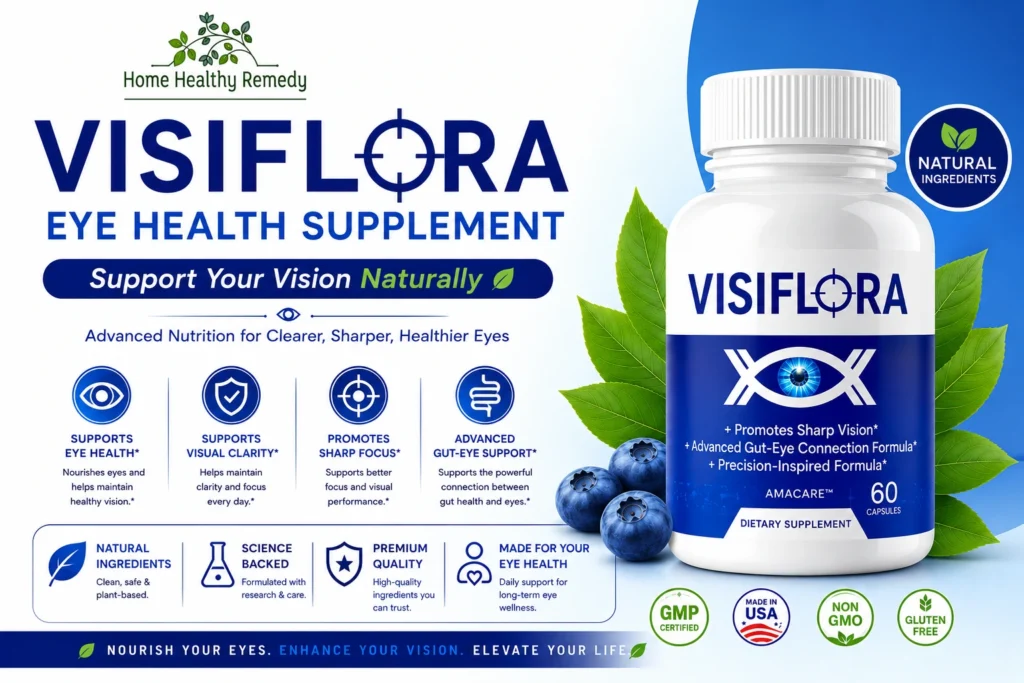
VisiFlora is an advanced vision-support supplement formulated to help nourish and protect your eyes from within. Featuring a powerful blend of antioxidants, essential vitamins, and plant-based nutrients, it is designed to support the health of the retina, macula, and optic nerve—key components for maintaining clear and healthy vision.
Modern lifestyles expose our eyes to constant screen time, environmental stressors, and the natural effects of aging, all of which can impact visual performance over time. VisiFlora works in harmony with your body to help defend delicate eye tissues, promote visual clarity, enhance eye comfort, and support long-term eye health and resilience.
Why Choose VisiFlora?
Most eye supplements on the market are generic multivitamins dressed up in fancy packaging. VisiFlora was specifically engineered to address the nutritional deficiencies most closely linked to visual pathway dysfunction — the same pathways that, when compromised, lead to double vision, eye fatigue, blurry vision, and poor night vision.
Every ingredient in VisiFlora is dosed at clinically studied levels, not token quantities added just to appear on the label. It is 100% natural, non-GMO, and third-party tested for purity and potency.
Key Ingredients & Benefits
| Ingredient | Dose | Benefit for Eyes and Vision |
| Lutein | 20mg | Macular pigment protector; filters blue light from digital eye strain; reduces retinal oxidative damage |
| Zeaxanthin | 4mg | Works with lutein to reinforce macular pigment and protect photoreceptor cells |
| Vitamin B1 (Thiamine) | 50mg | Directly supports cranial nerve health; deficiency is a documented neurological cause of diplopia |
| Omega-3 DHA | 500mg | Anti-inflammatory; improves tear film for dry-eye monocular diplopia; supports retinal membrane integrity |
| Vitamin C | 500mg | Antioxidant protection for the lens (anti-cataract); supports blood vessel and collagen integrity |
| Zinc | 25mg | Essential for retinal function; transports Vitamin A to retina; supports overall visual acuity |
| Bilberry Extract | 160mg | Rich in anthocyanins; supports night vision, microcirculation in the eye, and reduces eye strain |
| Alpha Lipoic Acid | 100mg | Powerful antioxidant; regenerates other antioxidants; protects ocular nerves from diabetic neuropathy |
VisiFlora Benefits List
- Nourishes and protects cranial nerves responsible for eye movement coordination
- Reduces ocular inflammation linked to dry eye and monocular double vision
- Supports macular health and retinal integrity for sharp, single-image vision
- Combats oxidative damage from Digital Eye Strain and blue light exposure
- Improves tear film stability — reducing ghosting and blurring from dry-eye diplopia
- Supports blood sugar management pathways to reduce diabetic cranial nerve risk
- Enhances microvascular circulation in the eye for optimal nerve oxygenation
- 100% natural, non-GMO, free from artificial fillers and allergens
VisiFlora Pros & Cons
| Pros | Cons |
| Clinically dosed ingredients — not token amounts | Available online only — not in physical pharmacies |
| Comprehensive formula targeting multiple causes of eye fatigue | Not a cure for structural or neurological double vision on its own |
| 100% natural, non-GMO, third-party tested | Results may take 4–8 weeks of consistent use |
| Free from artificial colors, fillers, and common allergens | Higher price point than basic vitamin supplements |
| Supports both nerve health AND ocular surface health simultaneously | Fish-derived Omega-3 — not suitable for strict vegans |
| Omega-3 DHA supports both retinal health and tear film stability | Should complement — not replace — professional medical evaluation |
FAQ — Frequently Asked Questions
Q1. What causes double vision and when should I be worried?
What causes double vision ranges from benign (fatigue, dry eye, astigmatism) to life-threatening (stroke, brain tumor, multiple sclerosis). You should seek emergency care immediately if double vision appears suddenly without a clear cause — especially if accompanied by headache, weakness, numbness, or speech difficulty. Any sudden binocular diplopia is a neurological emergency until proven otherwise.
Q2. What neurological conditions cause double vision?
The main neurological conditions that cause double vision include stroke and TIA, multiple sclerosis, myasthenia gravis, brain tumors, brain aneurysms, Guillain-Barré syndrome, Wernicke’s encephalopathy (Vitamin B1 deficiency), and diabetic microvascular cranial nerve palsy. Each condition disrupts the neurological pathway between the brain and the eye muscles in a different way, but all ultimately prevent the two eyes from aligning properly.
Q3. What causes sudden temporary double vision that goes away?
Sudden double vision that resolves on its own can be caused by extreme fatigue, a transient ischemic attack (mini-stroke), migraine with aura, blood sugar fluctuations in diabetics, stress-induced eye muscle spasm, or alcohol consumption. Even if it resolves completely, sudden double vision accompanied by any neurological symptom requires urgent medical evaluation to rule out TIA or stroke.
Q4. What causes double vision in one eye (monocular double vision)?
Monocular double vision is caused by problems within the eye itself — not the brain. The most common causes are astigmatism, cataracts, dry eye syndrome, corneal irregularities, and in rare cases, eye teratomas or lens dislocation. It persists even when the other eye is covered. It is far less likely to represent a neurological emergency compared to binocular diplopia but still requires evaluation by an eye doctor.
Q5. What does double vision look like exactly?
Double vision can look different depending on the cause. It may appear as two clearly distinct images placed side by side (horizontal diplopia), one image stacked above the other (vertical diplopia), or a faint ghost image slightly overlapping the main image (common with astigmatism or early cataracts). Text may split into two separate lines or appear blurry with a shadow. The distance between the two images typically increases when looking in a specific direction.
Q6. What is the ICD-10 code for double vision?
The ICD-10-CM code for double vision (diplopia) is H53.2. This falls under the category of H53 — Visual Disturbances. Additional specificity codes are appended to indicate laterality, underlying cause (such as cranial nerve palsy or strabismus), and whether diplopia is transient or persistent. Accurate documentation of associated conditions like myasthenia gravis or diabetes is critical for proper medical billing and care management.
Q7. Do eye exercises for double vision actually work?
Eye exercises for double vision can be highly effective for specific causes — particularly convergence insufficiency and mild muscle imbalance. Exercises like pencil push-ups, the Brock string technique, and near-far focusing strengthen the eye muscles and improve binocular fusion. However, they do not work for diplopia caused by serious neurological conditions like stroke or multiple sclerosis. Always consult an eye care professional before starting any exercise program for double vision.
Q8. What kind of eye doctor should I see for double vision?
The right eye doctor for double vision depends on the suspected cause. For refractive errors and prism glasses, see an optometrist. For cataracts or eye muscle surgery, see an ophthalmologist. For neurologically-driven diplopia — nerve palsies, MS, myasthenia gravis — see a neuro-ophthalmologist or neurologist. For sudden diplopia with any neurological symptom, go directly to an emergency department.
Q9. Can double vision be a sign of something serious like MS or a brain tumor?
Yes. Binocular double vision can absolutely be caused by multiple sclerosis, brain tumors, aneurysms, or stroke — all serious and potentially life-threatening conditions. This is precisely why persistent or sudden unexplained double vision in both eyes should never be ignored. A brain MRI, cranial nerve examination, and blood tests are typically ordered by a neuro-ophthalmologist to rule out these dangerous underlying causes.
Q10. How does digital eye strain contribute to double vision?
Digital eye strain caused by prolonged screen use fatigues the convergence muscles, leading to intermittent binocular diplopia — especially toward the end of a long workday. Additionally, reduced blinking during screen use causes tear film instability, which creates monocular ghosting and blurring. Following the 20-20-20 rule, using blue-light filtering glasses, and supporting your eye health with proper nutrition can significantly reduce screen-induced double vision episodes.
Q11. What is the Double Trouble Double Vision Tour?
The “Double Trouble Double Vision Tour” refers to the iconic 1978 concert tour by Foreigner, promoting their massively successful classic rock album Double Vision. The title track reached #2 on the Billboard Hot 100 and remains one of the band’s most recognizable songs. The tour brought Foreigner to mainstream arena prominence and gave the term “double vision” a powerful presence in popular culture beyond its medical meaning — though the medical condition is far less enjoyable than the song.
VisiFlora Pricing
| Plan | Bottles | Price Per Bottle | Total Price | Bonus | Shipping | Savings |
| Starter | 2 Bottles | $79 | $158 | No Bonus | Small Shipping Fee | $40 |
| Advanced | 3 Bottles | $59 | $177 | 3 Free eBooks | Free US Shipping | $302 |
| Ultimate | 6 Bottles | $49 | $294 | 3 Free eBooks | Free US Shipping | $434 |
Conclusion: Understanding What Causes Double Vision Can Save Your Life
Understanding what causes double vision is not just academic — it can literally be the difference between catching a stroke in time and suffering permanent neurological damage. This guide has covered the full spectrum: from simple monocular ghosting caused by dry eye and digital eye strain, to life-threatening binocular diplopia triggered by cranial nerve palsy, multiple sclerosis, or a brain aneurysm.
The key takeaways:
- Binocular double vision is a neurological emergency until proven otherwise
- Monocular double vision is almost always caused by a problem in the eye itself and is highly treatable
- Eye exercises, double vision spectacles, and home remedies provide real relief for the right type of diplopia
- Foundational eye health nutrition — as provided by a well-formulated supplement like VisiFlora — plays a meaningful supporting role in protecting the visual pathway, nourishing cranial nerves, and reducing inflammation
If you are experiencing symptoms of what causes double vision right now — please do not wait. See an eye doctor for double vision today. Your sight, and possibly much more, depends on timely evaluation.
© 2026 VisionHealth Today. For informational purposes only. This content does not constitute medical advice and is not a substitute for professional consultation with a qualified physician or eye care specialist.

Natural home remedies, skincare secrets, dental & eye health tips, and real product reviews to help you stay healthy the natural way.