

Quick Answer
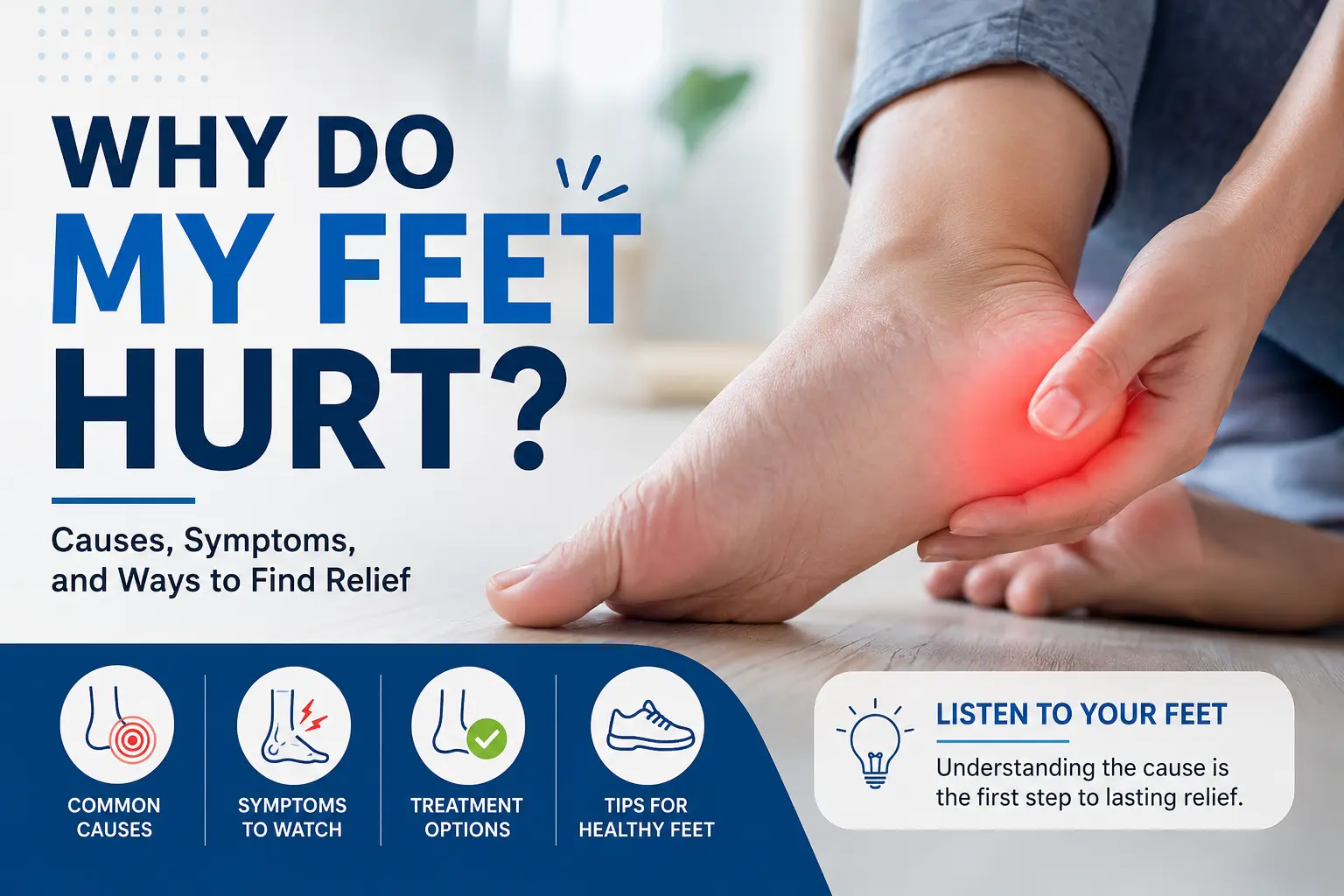
“why do my feet hurt” Feet hurt most often because of plantar fasciitis, ill-fitting shoes, overuse, or being on your feet too long — but foot pain can also point to bunions, stress fractures, Morton’s neuroma, arthritis, or nerve damage from conditions like diabetes. The exact cause usually depends on where the pain is (heel, arch, ball, or toes) and when it happens (first thing in the morning, after standing, or at night).
Why Do My Feet Hurt? A Quick Overview
If you’re asking yourself “why do my feet hurt” every single day, you’re not alone — foot pain is one of the most common reasons people search for health advice online, and one of the most common reasons people visit a podiatrist or primary care doctor. Your foot is a complicated structure of 26 bones, over 30 joints, and more than 100 muscles, tendons, and ligaments, all working together to absorb roughly 1.5 times your body weight with every step. When even one part of that system is overloaded, injured, or inflamed, your feet hurt.
Foot pain generally falls into three buckets:
- Mechanical or overuse causes — poor footwear, standing for long periods, being overweight, or repetitive impact from running or walking
- Structural causes — bunions, hammertoes, flat feet, high arches, or stress fractures
- Medical or systemic causes — nerve damage (neuropathy), poor circulation, arthritis, gout, or infection
Knowing which bucket your foot pain falls into is the first step toward real relief, instead of just guessing at over-the-counter foot pain remedies that may not target the actual problem.
15 Common Causes of Foot Pain
Plantar Fasciitis
This is the single most common reason feet hurt, especially the heel and arch. The plantar fascia is a thick band of tissue connecting your heel to your toes, and when it becomes inflamed from overuse, tight calf muscles, or unsupportive shoes, it causes sharp, stabbing pain — usually worst with your very first steps in the morning.
Ill-Fitting or Worn-Out Shoes
Shoes that are too tight, too loose, or lack arch support are one of the leading everyday reasons your feet hurt by the end of the day. High heels shift excess weight onto the front of the foot, while worn-out cushioning in athletic shoes fails to absorb impact properly.
Standing or Walking for Long Periods
Prolonged standing — common among nurses, teachers, retail workers, and cooks — puts constant pressure on the same points of the foot, leading to aching, swelling, and fatigue by evening.
Metatarsalgia
This condition causes pain and inflammation in the ball of the foot, often described as “walking on a pebble.” It’s linked to excess weight, high-impact activity, poorly fitted shoes, and toe deformities like hammertoe.
Morton’s Neuroma
A thickening of tissue around a nerve, typically between the third and fourth toes, that causes burning pain, tingling, or numbness in the ball of the foot. It’s significantly more common in women, largely due to narrow or high-heeled shoes.
Bunions and Hammertoes
Bunions are bony bumps that form at the base of the big toe, while hammertoes are toes that curl downward. Both change the shape of your foot and shift pressure to areas that aren’t built to handle it, causing chronic soreness.
Stress Fractures
Small cracks in the bones of the foot, usually from repetitive impact (running, jumping, or a sudden increase in activity), cause localized pain that worsens with weight-bearing activity and improves with rest.
Achilles Tendinitis
Inflammation of the tendon connecting your calf muscles to your heel bone causes pain and stiffness at the back of the foot and ankle, especially after exercise.
Gout and Arthritis
Gout is a form of inflammatory arthritis caused by excess uric acid, and it frequently attacks the big toe first, causing sudden, intense pain, redness, and swelling. Rheumatoid arthritis and osteoarthritis can also cause chronic foot and joint pain.
Peripheral Neuropathy
Nerve damage — most commonly from diabetes, but also from chemotherapy, kidney disease, autoimmune conditions, or vitamin deficiencies — causes burning, tingling, numbness, or shooting pain in the feet, often worse at night.
Poor Circulation (Peripheral Artery Disease)
Reduced blood flow to the feet can cause cramping, aching, or coldness, particularly during walking, and is more common in people with diabetes, high cholesterol, or a history of smoking.
Plantar Warts
Caused by HPV entering through a small break in the skin, these growths on weight-bearing areas of the foot can feel thick, tender, and painful when you walk.
Excess Body Weight
Extra weight increases the load your feet absorb with every step, which accelerates wear on joints, ligaments, and the plantar fascia, and is a major risk factor for both plantar fasciitis and metatarsalgia.
Flat Feet or High Arches
Both structural variations change how weight is distributed across your foot, which can lead to chronic arch, heel, or ankle soreness if left uncorrected with proper support.
Injury or Trauma
Sprains, fractures, and bruising from an accident, fall, or sports injury are an obvious but often underestimated cause of ongoing foot pain if not fully healed or properly treated.
Foot Pain by Location: What It Usually Means
| Where It Hurts | Most Likely Cause |
| Heel | Plantar fasciitis, Achilles tendinitis, heel spur |
| Arch | Plantar fasciitis, flat feet, overuse |
| Ball of foot | Metatarsalgia, Morton’s neuroma |
| Top of foot | Stress fracture, tendinitis, tight laces |
| Big toe | Gout, bunion, arthritis |
| Toes (burning/tingling) | Peripheral neuropathy, Morton’s neuroma |
| Whole foot, both sides | Poor circulation, systemic arthritis, ill-fitting shoes |
| Sole (burning at night) | Neuropathy, tarsal tunnel syndrome |
Comparison Table: Common Foot Pain Conditions
| Condition | Pain Location | When It’s Worst | Typical Treatment |
| Plantar Fasciitis | Heel, arch | First steps in the morning | Stretching, orthotic insoles, rest |
| Morton’s Neuroma | Between 3rd/4th toes | Wearing narrow shoes, walking | Wider shoes, padding, injections |
| Metatarsalgia | Ball of foot | Standing, high-impact activity | Supportive shoes, weight management |
| Peripheral Neuropathy | Soles, toes | Night, at rest | Manage underlying condition, medication |
| Gout | Big toe joint | Sudden flare-ups | Anti-inflammatory medication, diet changes |
| Achilles Tendinitis | Back of heel | After exercise | Rest, ice, calf stretches |
When Foot Pain Is a Medical Emergency
Occasional soreness after a long day is normal, but you should see a doctor or podiatrist if your foot pain:
- Lasts longer than a few days without improvement
- Comes with numbness, tingling, or burning that spreads
- Is accompanied by swelling, redness, warmth, or fever (possible infection)
- Follows a fall, twist, or direct injury and you can’t bear weight
- Occurs alongside diabetes, since foot wounds and nerve pain can escalate quickly
- Involves visible deformity or a foot that looks out of shape
Untreated foot pain can also change the way you walk, which sometimes leads to secondary knee, hip, or lower back pain — so it’s worth addressing early rather than waiting it out.
How to Relieve Sore Feet at Home
For mild, everyday foot pain caused by overuse or unsupportive shoes, most people find relief with a combination of the following:
- Rest and elevation — take pressure off the foot and reduce swelling
- Ice for 15–20 minutes — helpful for inflammation-related pain like plantar fasciitis
- Calf and plantar fascia stretches — done daily, especially before getting out of bed
- Switching to supportive footwear — with proper arch support and a wide toe box
- Over-the-counter anti-inflammatories — for short-term pain and swelling
- Weight management — reducing daily load on the joints and ligaments of the foot
- Foot soaks with Epsom salt — for general soreness after standing all day
Best Products for Foot Pain Relief
If home care isn’t enough, several supportive products can make a real difference for people whose feet hurt regularly:
- Orthotic insoles — custom or over-the-counter insoles that correct arch support and redistribute pressure away from painful areas, especially useful for plantar fasciitis and flat feet
- Supportive, cushioned walking or work shoes — designed for people who stand for long shifts, with better shock absorption than fashion footwear
- Compression socks — improve circulation and reduce swelling for people with poor circulation or long periods of standing
- Night splints — keep the plantar fascia gently stretched overnight to reduce that first-step morning pain
- Foot massagers or massage rollers — help relax tight muscles and improve blood flow after a long day
- Toe spacers and bunion pads — reduce friction and pressure for people with bunions or hammertoes
Choosing the right product usually depends on where your pain is and what’s causing it — which is why identifying the underlying cause first (Section 2) matters more than buying the first foot pain product you find online.
Frequently Asked Questions
Why do my feet hurt so bad at the end of the day?
Standing or walking for long periods causes cumulative pressure and mild inflammation in the muscles and ligaments of the foot, which often peaks by evening — especially if your shoes lack proper support.
Why do my feet hurt when I wake up?
Sharp morning heel pain is a classic sign of plantar fasciitis. Overnight, the plantar fascia tightens, and your first steps stretch it suddenly, causing a stabbing sensation that typically eases as you keep walking.
Why do my feet hurt for no reason?
Pain without an obvious injury is often linked to overuse, unsupportive footwear, early-stage arthritis, or nerve-related causes like peripheral neuropathy, particularly if the pain includes burning or tingling.
Can foot pain be a sign of diabetes?
Yes. Burning, tingling, or numb feet — especially worse at night — can be an early sign of diabetic peripheral neuropathy, and any diabetic with foot pain, numbness, or a wound should see a doctor promptly.
What foot pain should never be ignored?
Pain with swelling, redness, fever, sudden inability to bear weight, or spreading numbness needs prompt medical evaluation rather than home treatment.
Do insoles actually help foot pain?
For pain related to inadequate arch support — such as plantar fasciitis, flat feet, or metatarsalgia — supportive orthotic insoles are one of the most consistently effective, low-risk first steps.
Scientific Sources & References
This article was researched and fact-checked using the following authoritative medical sources:
- Mayo Clinic — Foot Pain: Causes, Symptoms & In-Depth Guide — mayoclinic.org
- Cleveland Clinic — Foot Pain: Common Causes & Treatments — my.clevelandclinic.org
- National Institute of Neurological Disorders and Stroke (NIH) — Peripheral Neuropathy Fact Sheet — ninds.nih.gov
- American Academy of Orthopaedic Surgeons (AAOS) — OrthoInfo: Plantar Fasciitis, Morton’s Neuroma, Bunions — orthoinfo.aaos.org
- American Podiatric Medical Association (APMA) — My Feet: Ditch the Pain — apma.org
- National Institute of Arthritis and Musculoskeletal and Skin Diseases (NIAMS/NIH) — Sports Injuries & Arthritis of the Foot — niams.nih.gov
Medical Disclaimer
The content on this page, published by HomeHealthyRemedy.com, is provided for general informational and educational purposes only. It is based on publicly available research from recognized medical institutions and is not intended to diagnose, treat, cure, or prevent any disease or medical condition. It should not be used as a substitute for professional medical advice, diagnosis, or treatment from a licensed physician or podiatrist.
Always seek the guidance of a qualified healthcare provider with any questions you may have regarding a medical condition, persistent foot pain, or before starting any new treatment, product, or exercise routine. Never disregard professional medical advice or delay seeking it because of something you have read on HomeHealthyRemedy.com. If you believe you may have a medical emergency, call your doctor or emergency services immediately.
HomeHealthyRemedy.com does not endorse any specific test, product, procedure, opinion, or other information mentioned in this article. Reliance on any information provided by HomeHealthyRemedy.com is solely at your own risk.

Natural home remedies, skincare secrets, dental & eye health tips, and real product reviews to help you stay healthy the natural way.