

You’re sitting at your desk, or maybe you just woke up, or maybe you’re mid-cry over something that probably won’t matter next week — and suddenly your eyes feel like they’re on fire. If you’ve ever typed “why do my eyes burn” into a search bar at 1 a.m., you’re in good company. Burning eyes are one of the most common eye complaints reported to optometrists across the United States, and while the sensation is almost always more annoying than dangerous, it’s your body’s way of flagging that something on the surface of your eye isn’t happy.
In this guide, we’ll walk through 15 real, evidence-based causes of burning eyes — including specific answers to why your eyes burn when you cry, why your tears themselves seem to burn, why you wake up with burning eyes, and what you can actually do about it. We’ll also cover a real-world style case study, a symptom comparison table, the pros and cons of common treatments, and a FAQ section built around the exact questions people ask their eye doctors.
What You Need to Know
Burning eyes usually come down to one of three things: dryness, irritation, or inflammation. Your tear film — the thin layer of moisture covering your eyes — is more complex than most people realize. When it’s disrupted, whether by allergens, screen time, chemicals, or your own tears during a cry, your nerve endings register it as burning or stinging. Most cases clear up with simple home care, but persistent burning deserves a proper eye exam.
How Your Eyes Work and Why They Burn
Before we get into the causes, it helps to understand your tear film, because almost every reason eyes burn ties back to it. Your eyes rely on three types of tears working together:
- Basal tears – the constant, low-level moisture that lubricates and protects your cornea 24/7.
- Reflex tears – the flood of tears your body releases to flush out irritants like smoke, dust, or onion fumes.
- Emotional tears – the tears triggered by crying, which carry a different chemical makeup than the other two.
When any of these three systems is out of balance—not enough basal tears, too much reflex irritation, or an emotional tear session—eyes burn because the eye’s surface loses the protection it needs. Keep this in mind, because it explains several of the causes below, including why crying itself can leave your eyes stinging.
15 Possible Causes of Burning Eyes
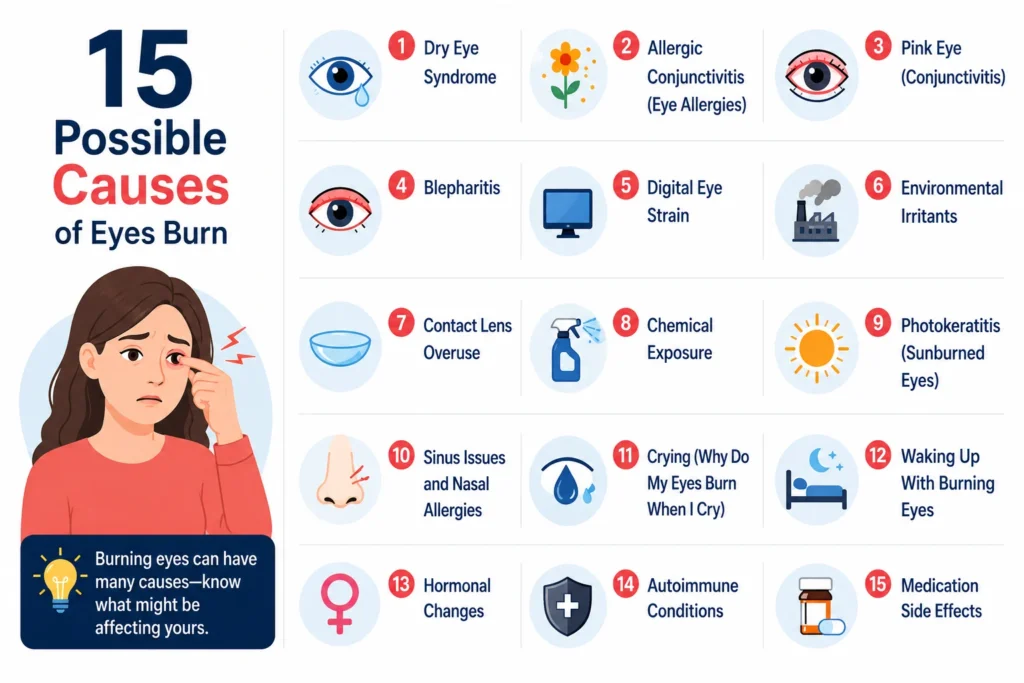
1. Dry Eye Syndrome
This is, by far, the number one reason people experience burning eyes. Dry eye happens when your eyes either don’t make enough tears or the tears they do make lack the right balance of water, oil, and mucus to keep the surface properly coated. The result is a scratchy, gritty, burning feeling that tends to get worse as the day goes on. Millions of adults in the U.S. live with some degree of chronic dry eye, and it’s especially common after age 50.
2. Allergic Conjunctivitis (Eye Allergies)
Seasonal or year-round allergies to pollen, dust mites, pet dander, or mold trigger your immune system to release histamines around the eyes. This inflames the eye’s surface, disrupts the tear film, and produces itching, redness, and burning. Allergy season often makes burning eyes noticeably worse, and rubbing itchy eyes only compounds the irritation.
3. Pink Eye (Conjunctivitis)
Whether viral, bacterial, or allergic, conjunctivitis inflames the thin membrane covering the white of your eye and the inside of your eyelids. It’s highly contagious when caused by a virus or bacteria and typically comes with burning, watering, redness, and sometimes a sticky discharge.
4. Blepharitis
Blepharitis is inflammation along the edge of your eyelids, often caused by clogged oil glands, bacteria, or microscopic Demodex mites living in the eyelash follicles. It tends to cause crusting at the lash line first thing in the morning, along with a persistent burning or stinging sensation.
5. Digital Eye Strain (Too Much Screen Time)
When you stare at a screen, your blink rate drops by more than half. Fewer blinks mean your tear film evaporates faster, leaving your eyes dry and burning by mid-afternoon. This is one of the fastest-growing causes of eye discomfort in the U.S. workforce, given how many people now work remotely in front of laptops for eight-plus hours a day.
6. Environmental Irritants
Smoke, air pollution, wildfire haze, strong perfumes, and even chlorine from swimming pools can irritate the eye’s surface directly. Dry, windy climates and indoor heating or air conditioning also speed up tear evaporation, which compounds the burning sensation.
7. Contact Lens Overuse
Wearing contact lenses too long, sleeping in them, or not replacing them on schedule reduces the amount of oxygen reaching your cornea and traps debris against the eye’s surface. This is a very common, very preventable cause of burning eyes.
8. Chemical Exposure
Cleaning products, chlorine, hairspray, sunscreen, and certain cosmetics can splash or drift into the eyes and cause an immediate burning reaction. Most chemical irritation is mild and resolves with rinsing, but stronger chemicals require urgent medical attention.
9. Photokeratitis (Sunburned Eyes)
Yes, your eyes can get sunburned. Prolonged exposure to UV light — from the sun, tanning beds, or even snow glare — can burn the cornea itself. Symptoms usually appear several hours after exposure and include intense burning, light sensitivity, and watering.
10. Sinus Issues and Nasal Allergies
Your sinuses and tear ducts are closely connected. Sinus infections or nasal allergies can cause inflammation that backs up into the eye area, producing pressure, burning, and watery eyes alongside congestion.
11. Crying (Why Do My Eyes Burn When I Cry)
This is one of the most searched questions on this topic, and there’s real science behind it. Emotional tears have a different chemical composition than your everyday basal tears — they contain extra proteins, hormones, and stress-related compounds. The combination of a much larger tear volume plus this altered chemistry is often what makes your eyes sting and burn after a hard cry.
12. Waking Up With Burning Eyes
If you regularly ask, “Why do my eyes burn when I wake up,” the likely culprits are: your eyes drying out overnight (especially if you sleep with a fan, AC, or your eyelids don’t fully close — a condition called nocturnal lagophthalmos), low bedroom humidity, or mild blepharitis that builds up overnight and irritates the eyes once you open them.
13. Hormonal Changes
Hormonal shifts during menopause, pregnancy, or while on birth control can reduce tear production and quality, leading to chronic burning. This is one reason dry eye disease disproportionately affects women, particularly after age 50.
14. Autoimmune Conditions
Conditions like Sjögren’s syndrome, rheumatoid arthritis, and lupus can attack the glands responsible for tear production, causing severe, chronic dry eye and burning. If burning eyes come with dry mouth, joint pain, or fatigue, it’s worth mentioning to your doctor.
15. Medication Side Effects
Antihistamines, decongestants, certain blood pressure medications, antidepressants, and acne medications like isotretinoin are known to reduce tear production as a side effect, leaving eyes dry and burning throughout the day.
Why Do My Tears Burn My Eyes?
The tears themselves are often the source of the burn — not just what they’re washing away. Reflex tears, released to flush out an irritant, carry a higher concentration of protective compounds and can temporarily worsen stinging before they provide relief. Emotional tears go a step further: research has found elevated levels of certain hormones and proteins in emotional tears compared to basal tears, and increased salt concentration during a hard cry can also play a role. So if your tears feel like they’re burning rather than soothing, it’s usually a combination of tear chemistry, higher tear volume, and existing dryness or sensitivity in your eyes.
Why Do My Eyes Sting and Burn When I Cry?
Stinging during crying is usually the same mechanism as burning, just experienced slightly differently. If you already have mild dry eye or allergy-related inflammation, the sudden flood of tears—with their altered composition—hits an already irritated surface, causing eyes to burn and intensifying the sting. Rubbing your eyes while crying (which almost everyone does) adds mechanical irritation on top of the chemical one, making the stinging worse and lasting longer. This is one reason many people notice their eyes burn even after the tears have stopped.
How to Treat Burning Eyes: What Actually Helps
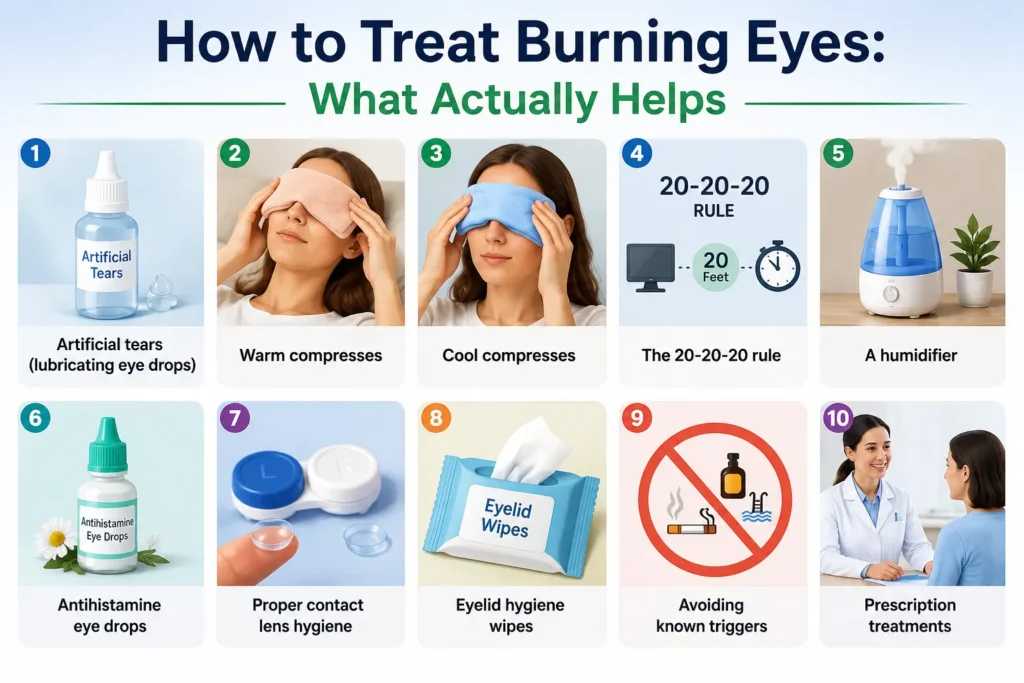
Most causes of burning eyes respond well to a combination of at-home care and, when needed, professional treatment. Here’s what eye doctors commonly recommend:
- Artificial tears (lubricating eye drops) – use preservative-free versions if you need drops more than four times a day
- Warm compresses – a warm, damp washcloth over closed eyes for 5–10 minutes helps unclog oil glands and ease blepharitis
- Cool compresses – better for allergy-related burning and swelling
- The 20-20-20 rule – every 20 minutes of screen time, look at something 20 feet away for 20 seconds to reset your blink rate
- A humidifier – especially useful in dry climates or heated bedrooms overnight
- Antihistamine eye drops – for allergy-driven burning and itching
- Proper contact lens hygiene – replace lenses on schedule and never sleep in daily-wear lenses
- Eyelid hygiene wipes – for blepharitis, to keep the lash line clean
- Avoiding known triggers – smoke, strong fragrances, chlorine, and known allergens
- Prescription treatments – for chronic dry eye or autoimmune-related burning, a doctor may prescribe anti-inflammatory drops, punctal plugs, or other specialized therapies
Pros and Cons of Common Burning Eye Treatments
| Treatment | Pros | Cons |
|---|---|---|
| Artificial tears (OTC) | Cheap, fast relief, no prescription needed | Only masks symptoms; needs reapplication throughout the day |
| Warm compress | Free, effective for blepharitis and clogged glands | Takes daily consistency to see results |
| Antihistamine eye drops | Fast relief from allergy-related burning | Can cause rebound dryness with overuse |
| Humidifier | Passive, long-term relief helps while sleeping | Upfront cost; needs regular cleaning to avoid mold |
| Prescription dry eye drops | Treats root inflammation, not just symptoms | Can take weeks to show full effect; it may need a prescription |
| Punctal plugs (in-office) | Long-lasting relief for chronic dry eye | Requires a doctor visit; not necessary for mild cases |
Comparison: Dry Eye vs. Allergies vs. Pink Eye
These three conditions are the most commonly confused causes of burning eyes, so here’s a side-by-side look to help you tell them apart.
| Symptom | Dry Eye | Allergies | Pink Eye (Conjunctivitis) |
|---|---|---|---|
| Burning/stinging | Yes, common | Yes, common | Yes, common |
| Itching | Mild | Severe, primary symptom | Mild to moderate |
| Discharge | Rarely, or stringy mucus | Watery | Watery (viral) or thick/sticky (bacterial) |
| Redness | Mild | Moderate to significant | Significant |
| Contagious | No | No | Yes (viral/bacterial types) |
| Worse with | Screen time, dry air, evening | Pollen, pet dander, dust season | Contact with infected person/object |
| Typical fix | Artificial tears, humidifier | Antihistamine drops, avoiding triggers | Time (viral), antibiotics (bacterial) |
Case Study: Sarah’s Experience With Burning Eyes (USA)
Sarah, a 34-year-old marketing manager working remotely from Austin, Texas, started noticing her eyes burn almost every afternoon. She spent roughly nine hours a day in front of her laptop, ran her AC constantly because of the Texas heat, and wore contact lenses daily. By 4 p.m., her eyes felt gritty, red, and like they were burning from the inside out. She initially assumed it was allergies, since central Texas has notoriously high pollen counts for much of the year, and tried over-the-counter antihistamine eye drops for two weeks with little improvement.
When Sarah finally saw an optometrist, she was diagnosed with evaporative dry eye syndrome, made worse by long screen sessions, constant AC airflow, and mild blepharitis she didn’t know she had. Her treatment plan included preservative-free artificial tears four times a day, a warm compress routine every night, switching to daily disposable contact lenses, and following the 20-20-20 rule during work hours. Within about three weeks, her burning symptoms dropped dramatically, and within two months, they were nearly gone. Her case reflects a pattern eye doctors across the U.S. see often: remote workers in dry, air-conditioned environments developing dry eye that gets mistaken for allergies. If your eyes burn regularly after long hours on a screen, dry eye syndrome may be the underlying cause rather than seasonal allergies.
When to See a Doctor
Here’s a natural version with “eyes burn” included:
Most cases where eyes burn resolve with simple home treatment, but you should get checked promptly if you notice:
- Eyes burn for more than a few days despite home care.
- Vision changes, sensitivity to light, or intense pain.
- Discharge, crusting, or swelling around the eye.
- Burning after a chemical splash or sun/UV exposure.
- Symptoms alongside joint pain, dry mouth, or fatigue (possible autoimmune signs).
Frequently Asked Questions
Why do my eyes burn?
The most common reasons are dry eye syndrome, allergies, screen fatigue, and environmental irritants. Burning is essentially your eye’s nerve endings reacting to a disrupted or evaporating tear film.
Why do my eyes burn when I cry?
Emotional tears carry a different chemical composition than your everyday tears, including extra hormones and proteins, plus a much higher tear volume during a cry. This combination often triggers a temporary burning or stinging sensation.
Why do my tears burn my eyes?
It’s usually the tear chemistry itself — reflex and emotional tears contain higher concentrations of certain compounds and salts than basal tears, which can sting sensitive or already-irritated eyes.
Why do my eyes burn when I wake up?
This is often caused by your eyes drying out overnight, sleeping with your eyelids slightly open, low bedroom humidity, or mild blepharitis that builds up while you sleep.
Why do my eyes sting and burn when I cry?
Stinging and burning during crying usually happen together because the altered tear chemistry hits an eye surface that may already be mildly dry or irritated, and eye-rubbing during crying adds further mechanical irritation.
Are burning eyes a sign of something serious?
Usually not. Most cases are linked to dryness, allergies, or irritation and clear up with home care. However, sudden severe burning, vision changes, or burning after chemical or UV exposure should be evaluated by a doctor right away.
Can drinking more water help with burning eyes?
Staying hydrated supports overall tear production, but it won’t fix burning eyes caused by allergies, screen strain, or blepharitis on its own. It’s a helpful supporting habit, not a standalone fix.
Final Thoughts
Burning eyes are frustrating, but in the vast majority of cases, they’re your body’s way of telling you the tear film needs a little help—whether that’s more moisture, fewer allergens, more blinking, or better eyelid hygiene. If your eyes burn, simple changes like using artificial tears, following the 20-20-20 rule, and running a humidifier at night can resolve most cases within a few weeks. If your eyes burn persistently, worsen, or come with other symptoms, it’s worth getting a proper eye exam rather than guessing at the cause.
Sources & References
- American Academy of Ophthalmology – All About Emotional Tears
- Cleveland Clinic – Burning Eyes: Causes and Home Remedies
- Cleveland Clinic – What Are Tears Made Of?
- Healthline – Dry Eye or Allergies: Differences, Causes, Treatment
- MedicineNet – What Are the Three Types of Tears?
- News-Medical.net – What are Tears Made of? The Biochemistry of Emotion
- National Center for Biotechnology Information (NCBI/PMC) – A Comparison of Emotionally Stimulated and Conventionally Collected Tears
- Becker ENT & Allergy – Can Allergies Cause Dry Eyes?
This article is for general educational purposes and is not a substitute for professional medical advice. If you have persistent or severe eye symptoms, please consult a licensed eye care provider.

Natural home remedies, skincare secrets, dental & eye health tips, and real product reviews to help you stay healthy the natural way.