

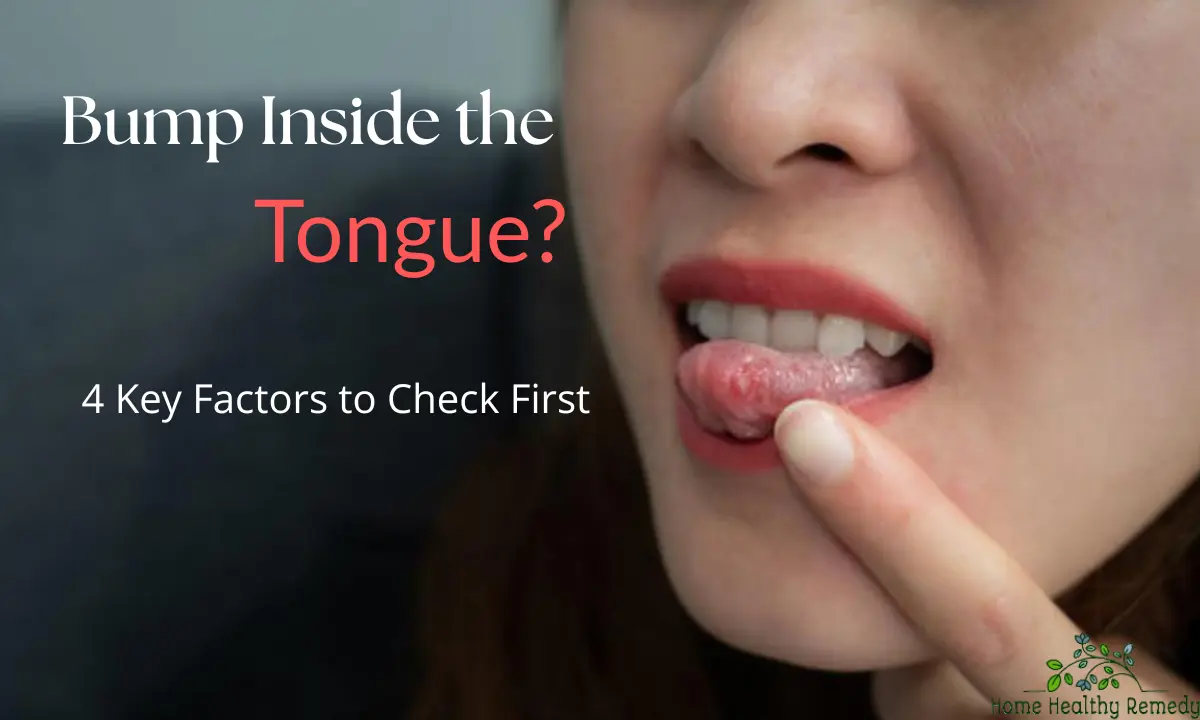
Finding a bump inside the tongue is unsettling, mostly because it’s hard to tell what you’re looking at. Is it something new, or has it always been there? The phrase “inside the tongue” doesn’t point to one single spot — it could mean the surface, the side, the back, or a lump underneath the tongue, and each location suggests different possibilities.
Most tongue bumps are minor and related to everyday irritation, but a few warrant closer attention. Rather than guessing from a description or a photo, this guide walks through four practical factors — location, appearance, symptoms, and duration — that can help you understand what you’re dealing with and decide on a sensible next step. It also covers safe self-care, common mistakes, and the warning signs that mean it’s time to involve a professional.
Quick Answer: What Can Cause a Bump Inside the Tongue?
A bump inside the tongue is often caused by irritation, an accidental bite, a burn from hot food, an inflamed papilla, or a canker sore. A lump underneath the tongue may involve a blocked salivary duct or a small cyst. A bump that is persistent, growing, hard, bleeding, or paired with breathing trouble needs prompt professional evaluation.
Key Takeaways
- “Inside the tongue” can mean the surface, the side, the back, or a lump underneath — location narrows the likely cause.
- Most bumps come from minor trauma, irritation, or a short-lived inflamed papilla, and settle within days.
- Appearance and colour alone can’t confirm a diagnosis — symptoms and how a bump inside the tongue changes over time matter just as much.
- Avoid popping, cutting, or scraping any tongue bump.
- Sudden swelling with breathing or swallowing difficulty is a medical emergency, not something to monitor at home.
- A bump that is hard, persistent, growing, bleeding, or recurring in the same spot should be examined by a dentist or doctor.
What Does “Inside the Tongue” Mean?
Because the tongue has several distinct surfaces, “inside” can describe more than one location. Working out which part is affected is the first step toward narrowing the possibilities.
A bump on the tongue’s surface
Most visible bumps sit on the top surface and involve the tongue’s papillae — the small natural projections that give the tongue its slightly rough texture. A bump inside the tongue on this surface can also be an ulcer, a burn, or a bite mark rather than a papilla at all.
A bump along the side or tip
The sides and tip make frequent contact with teeth, so this area is prone to bumps from accidental biting, a chipped tooth, a rough filling, or an ill-fitting denture, retainer, or brace bracket.
A bump at the back of the tongue
The circumvallate papillae sit at the very back in a V-shaped row and are naturally larger than papillae elsewhere on the tongue. It’s common to mistake these normal structures for something abnormal, especially if you haven’t looked closely at your tongue before.
A lump underneath or deep inside the tongue
The underside of the tongue and the floor of the mouth house salivary gland openings. A lump here may point toward a ranula (a fluid-filled cyst caused by a blocked salivary gland), a mucocele, or a deeper, more solid swelling that needs assessment.
Location alone doesn’t confirm a cause — it simply narrows the range of likely explanations for a bump inside the tongue and tells you what to look for next.
Use the Four-Factor Check
Before reaching a conclusion, it helps to observe a bump inside the tongue systematically. None of these factors work as a stand-alone diagnostic test, but together they give a clearer picture and help you describe the bump accurately if you do see a professional.
Factor 1 — Location
Note exactly where the bump sits: top surface, tip, side, back, underneath, or deeper in the tissue. A bump on the side that lines up with a sharp tooth points toward friction. A lump underneath that swells around mealtimes points toward the salivary glands.
Factor 2 — Appearance and texture
Look at colour and texture: red, white or yellow, clear or fluid-filled, blue or translucent, smooth, ulcerated, hard, or soft. Also note whether it’s symmetrical (matching structures on both sides of the tongue) or appears on one side only. Appearance is a useful clue, but it should never be the only one you rely on — many different conditions can look similar at a glance.
Factor 3 — Symptoms and triggers
Pay attention to pain, tenderness, bleeding, numbness, fever, swollen glands in the neck, sore throat, or trouble swallowing. Also think about what came before it — a recent burn, a bite, new dental work, or a new oral-care product can all explain a sudden bump. Swelling or pain that appears specifically during meals is a useful clue pointing toward the salivary glands.
Factor 4 — Duration and change
Track how the bump behaves over time: did it appear today, is it improving after a few days, does it keep recurring in the same spot, is it growing, or is it not healing at all? A bump that is stable or fading is reassuring. One that is enlarging, hardening, or changing colour is not, regardless of how it looked on day one.
Practical tip: If a bump doesn’t resolve quickly, note the date it appeared and take a photo every few days. This makes it much easier for you — and any professional you see — to judge whether it’s genuinely changing.
Common Causes of a Bump Inside the Tongue by Location and Pattern
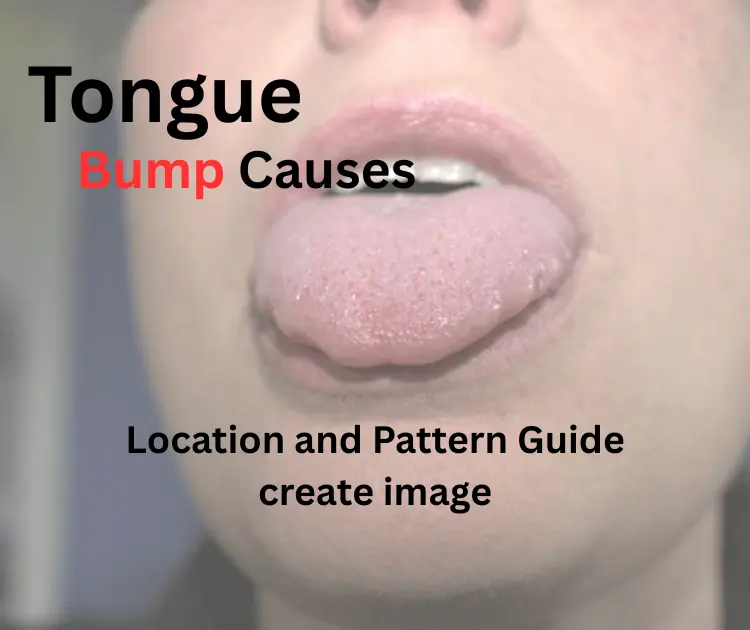
Inflamed papillae and transient lingual papillitis
The visible bumps on the tongue’s surface are papillae, and only some types of papillae contain taste buds — the papilla itself is not the taste bud, since taste buds sit inside the visible bumps rather than being the bump itself (Cleveland Clinic). When papillae become irritated, a condition sometimes called transient lingual papillitis or “lie bumps” can develop. This happens when something irritates the papillae, causing small, tender red or white bumps to appear (Cleveland Clinic). It can occur at any age and may recur from time to time, with triggers that are thought to include stress, spicy foods, poor oral hygiene, and dental work (Wikipedia, citing clinical literature).
It’s generally not a serious condition, and symptoms usually resolve within a few days (Cleveland Clinic). These bumps have a habit of showing up seemingly out of nowhere, and if that overnight timing sounds familiar, the triggers behind it (from a late spicy meal to nighttime teeth grinding) are broken down further in this guide on why lie bumps appear overnight.
Canker sores and traumatic ulcers
A canker sore is an ulcer rather than a raised papilla, and it typically looks like a shallow white or yellow centre with a red border. A traumatic ulcer follows a specific injury — biting, a burn, a sharp tooth, or an orthodontic appliance rubbing against the tongue. This kind of bump inside the tongue that keeps reappearing in exactly the same spot often points to repeated friction from a tooth or appliance, which is worth checking with a dentist.
Burns and food-related irritation
Very hot food or drink, along with spicy or acidic foods, can cause temporary pain, redness, and swelling on contact. This type of irritation is usually short-lived once the tissue is given a chance to heal and the triggering food is avoided for a few days.
Normal papillae at the back and sides
Because the circumvallate papillae are naturally larger and arranged symmetrically at the back of the tongue, it’s easy to mistake them for an abnormal growth the first time you notice them. A new bump that is one-sided, painful, or changing in appearance is different from this normal anatomy and deserves closer attention.
Ranulas, mucoceles, and salivary gland problems
A ranula is a soft, generally painless lump under the tongue that forms when saliva leaks from a salivary gland, usually because the gland has been blocked or damaged. A mucocele is a similar, generally painless, fluid-filled cyst that can form on the floor of the mouth or on the tongue itself, most often after minor trauma such as biting ). Separately, a salivary gland stone (sialolithiasis) can block saliva flow; this hardened mineral deposit traps saliva in the gland, causing swelling and pain, and a larger stone can cause sudden, intense pain specifically when eating.
Because these swellings involve the salivary glands rather than surface tissue, they’re generally worth a professional look rather than home management, even when painless.
Infections and inflammatory conditions
Oral thrush (a fungal infection), viral lesions, and bacterial infections can also produce bumps, patches, or sores on the tongue, often together with fever, multiple sores, or other systemic symptoms. Whether a particular cause is contagious depends entirely on what’s causing it — this is not something to assume from appearance alone, and should be confirmed by a professional if it matters for your situation (for example, before contact with a baby or someone who is immunocompromised).
A mouth or throat infection can also make itself known in unexpected places; if a sore throat accompanies your tongue symptoms and your ear starts aching too, that’s a recognized pattern of referred pain, explained in more detail in why your ear can hurt when you have a sore throat.
Persistent lesions and less common causes
Occasionally, a lesion doesn’t fit any of the patterns above: it’s a persistent hard lump, an ulcer that won’t heal, an unexplained red or white patch, or a spot that bleeds or grows over time. These features simply mean the lesion needs a professional look — they do not, on their own, confirm anything serious, and jumping to conclusions from a description online is not useful or accurate.
Normal Tongue Bump or Abnormal Lesion?
It helps to compare what you’re seeing against general patterns of normal anatomy versus a new lesion — while remembering that only an in-person examination can confirm whether a bump inside the tongue is one or the other.
Features that are usually normal:
- Symmetrical, appearing in the same spot on both sides
- Stable in size and appearance over weeks or months
- Similar in colour to the surrounding tongue tissue
- Located in an expected anatomical area, such as the back row of circumvallate papillae
Features that need professional attention:
- Newly developed and one-sided
- Growing in size
- Persistently painful, or persistently painless and firm
- Hard or fixed in place rather than soft and mobile
- Bleeding or ulcerated
- Changing in colour or texture over time
- Paired with difficulty swallowing or a lump in the neck
Photos and written descriptions can’t confirm a diagnosis — lighting, angle, and normal variation in tongue anatomy make it easy to misjudge size and colour online.
Comparison: Surface Bumps at a Glance
The table below compares the most common surface causes of a bump inside the tongue.
| Type | Typical Location | Appearance | Pain | Common Trigger | Usual Course | Contagious? |
|---|---|---|---|---|---|---|
| Normal papillae (circumvallate) | Back of tongue, symmetrical | Pink, slightly raised bumps in a V-shape | None | None — normal anatomy | Permanent, stable | No |
| Inflamed papilla / lie bump | Tip or surface | Small red or white raised bump | Often tender | Spicy or acidic food, stress, minor irritation | Days | Generally no |
| Canker sore | Anywhere on tongue surface | White or yellow centre, red border, shallow ulcer | Painful, especially with acidic food | Minor trauma, stress, unclear triggers | 1–2 weeks | No |
| Traumatic ulcer | Side of tongue, near teeth | Sore or ulcer matching the site of contact | Painful | Sharp tooth, braces, dentures, biting | Improves once trigger is removed | No |
| Burn | Tip or surface | Redness, mild swelling | Painful | Hot, spicy, or acidic food | Days | No |
| Ranula / mucocele | Underneath the tongue, floor of mouth | Soft, blue-tinged or clear, dome-shaped | Usually painless | Salivary gland blockage or trauma | Can persist or recur without treatment | No |
This table is a general guide for comparison, not a diagnostic tool.
Practical Steps: What To Do When You Notice a Bump Inside the Tongue
- Observe before reacting. Use the four-factor check above — location, appearance, symptoms, duration — and note what you find, ideally with the date.
- Remove obvious triggers. If a hot or acidic food, a new mouthwash, or a whitening product seems connected, stop using it for a few days.
- Reduce irritation. Choose softer foods temporarily, avoid very hot, spicy, acidic, or crunchy foods, and drink enough water to keep the mouth comfortable.
- Keep oral hygiene gentle. Brush normally but avoid scraping or repeatedly touching the bump with your tongue, a toothbrush, or your fingers.
- Address overnight dryness if it’s a factor. A dry mouth overnight can leave the tongue’s surface more vulnerable to irritation; running a humidifier while you sleep is a simple way to keep the air — and your mouth — from drying out, as covered in this breakdown of humidifiers and dry mucous membranes.
- Watch for a mechanical cause. If the bump lines up with a chipped tooth, a rough filling, a denture edge, or a brace bracket, that’s worth a dental visit even if the bump itself feels minor.
- Track duration. Give minor irritation a few days to a couple of weeks to improve. If it isn’t improving, is recurring, or is changing, arrange a professional evaluation rather than continuing to wait.
- Escalate immediately if needed. Sudden swelling with breathing or swallowing difficulty is never something to manage with home care — seek emergency help right away (see the warning signs section below).
Common Mistakes to Avoid
When dealing with a bump inside the tongue, a few habits tend to make things worse rather than better.
- Calling every visible bump a “swollen taste bud.” The visible structures are papillae; taste buds are the sensory cells housed inside certain papillae, not the bump itself.
- Diagnosing from colour alone. Red, white, or clear bumps can each have several different causes.
- Popping, squeezing, cutting, or scraping the bump. This risks worsening the injury or introducing infection, and it doesn’t speed healing.
- Applying undiluted chemicals or attempting to burn the bump off. This can damage healthy tissue.
- Assuming every white patch is oral thrush. Ulcers, food debris, and irritation can also look white or yellow.
- Ignoring repeated friction from a sharp tooth or appliance. A recurring sore in the same spot is a sign to see a dentist about the mechanical cause, not just the sore itself.
- Using antibiotics or supplements without a confirmed cause. These don’t help irritation-based bumps and aren’t appropriate to self-prescribe.
- Continuing smoking or vaping despite worsening irritation. This can delay healing of an existing sore.
- Waiting too long when a bump is growing, hardening, or bleeding. Early evaluation is easier and less worrying than delayed evaluation.
- Treating sudden swelling as something to “watch overnight.” Airway-related swelling can progress quickly and should never be monitored at home.
Myths vs. Facts About a Bump Inside the Tongue
| Myth | Fact |
|---|---|
| Every visible tongue bump is a swollen taste bud. | The visible bumps are papillae; taste buds are the sensory structures housed inside certain types of papillae, not the bump itself (Cleveland Clinic). |
| Every white bump on the tongue is oral thrush. | White or yellow areas can also result from canker sores, irritation, or trapped debris — thrush is only one possible cause. |
| All tongue bumps are contagious. | Whether a cause is contagious depends entirely on what’s behind it; irritation-based bumps, for example, are not contagious. |
| Popping a tongue bump will make it heal faster. | Squeezing or cutting a bump can worsen the injury or introduce infection, and doesn’t speed healing. |
| A painless bump is always harmless. | A persistent painless lump, such as a ranula or a firm growth, still needs professional evaluation. |
| A photo online is enough to identify the cause. | Appearance is only one of several relevant factors; an in-person exam and history-taking are often needed for an accurate assessment. |
Warning Signs: When to Seek Help for a Bump Inside the Tongue
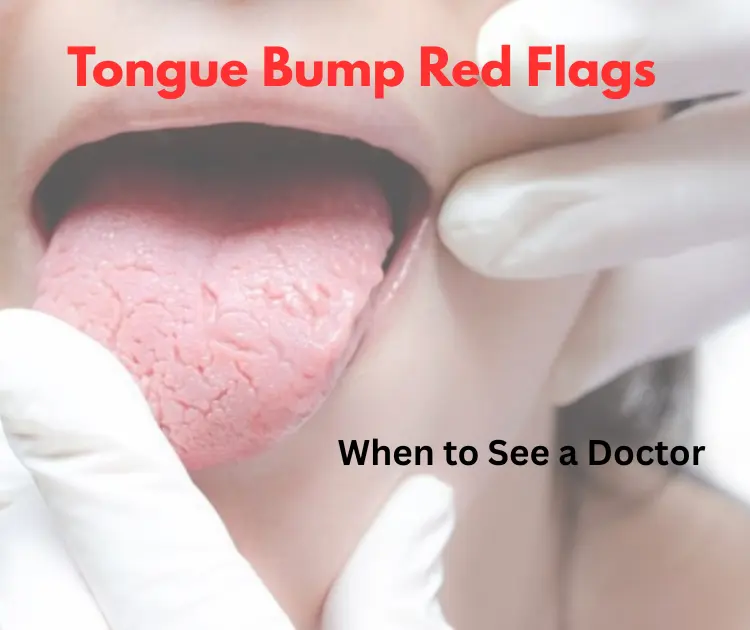
Monitor briefly at home
Reasonable only when the bump is small, clearly linked to a recent bite, burn, or minor irritation, and is already improving with no other symptoms.
Arrange a prompt dental or medical appointment
- A bump that persists beyond about two weeks, or keeps recurring in the same spot
- A hard or enlarging lump
- Bleeding or an ulcer that isn’t healing
- Numbness
- A red or white patch that doesn’t resolve
- A lump underneath the tongue that swells or hurts during meals
- Fever together with swollen lymph nodes
- Difficulty eating, a lump in the neck, or reduced tongue movement
A roughly two-week threshold for a minor bump is a reasonable general guide, but it isn’t a fixed rule — seek care sooner if other warning signs from this list are present.
Seek emergency help immediately
Sudden swelling of the lips, mouth, throat, or tongue is a medical emergency requiring immediate treatment, particularly alongside rapid or difficult breathing, a tight throat, or trouble swallowing (NHS). If you have an epinephrine auto-injector for a known allergy, use it and call emergency services right away — antihistamines are not a substitute (NewMouth, citing clinical sources). Do not wait to see whether symptoms improve on their own; treat any rapidly progressing tongue or throat swelling as an emergency until it’s assessed.
Under-Tongue Lumps: A Closer Look
| Type | Texture | Colour | Meal-Related Symptoms | Pain | Professional Evaluation |
|---|---|---|---|---|---|
| Ranula | Soft, fluctuant | Blue-tinged to translucent | Uncommon | Usually painless | Recommended, especially if enlarging |
| Mucocele | Soft, dome-shaped | Bluish or clear | Uncommon | Usually painless | Recommended if persistent |
| Salivary gland stone | Firm, may be tender on pressure | Normal mucosa colour over the swelling | Common — pain during eating | Can be significant, especially with larger stones | Recommended |
| Salivary duct inflammation | Diffuse swelling | May appear reddened | Possible | Often tender | Recommended |
| Persistent solid lump | Hard, fixed | Variable | Uncommon | Variable, including painless | Recommended promptly |
How Long Can a Bump Inside the Tongue Last?
Healing time varies a great deal depending on the cause, so there isn’t one single timeline that applies to every bump inside the tongue. Minor irritation from a burn, bite, or inflamed papilla often starts improving within a few days. Canker sores commonly take one to two weeks to heal fully. A bump that is growing, hardening, recurring, or bleeding shouldn’t be given an open-ended amount of time to resolve on its own — that pattern is a reason to arrange an evaluation rather than wait longer. Sudden swelling affecting breathing or swallowing should never be monitored at home, regardless of how it started.
Who Should Examine a Bump Inside the Tongue?
Dentist
A good first stop for a bump inside the tongue connected to the teeth or mouth structure — a sharp tooth, a rough filling, a denture, braces, a persistent localized sore, or repeated friction in the same spot.
Primary-care clinician
A reasonable choice when there’s fever, symptoms elsewhere in the body, a suspected medication reaction, recurring infections, or general nutritional concerns alongside the tongue bump.
ENT specialist or oral surgeon
May become relevant for a deep lump, a persistent under-tongue swelling, a recurring cyst, or a lesion that a dentist or doctor feels needs imaging or biopsy for a clear diagnosis. Referral pathways vary by clinic and region, so a dentist or primary-care clinician is usually the right starting point either way.
Guidance for Parents and Caregivers
Children can develop a bump inside the tongue for the same reasons as adults, including inflamed papillae, canker sores, and bite-related sores. Because young children may not describe symptoms clearly, caregivers should watch for:
- Reduced fluid intake or refusal to eat
- Fever or drooling
- Difficulty swallowing or breathing
- Rapid swelling
- Signs of dehydration, such as unusual tiredness or fewer wet diapers
- Multiple people in the household with similar mouth symptoms, which may point toward a shared cause
Avoid using adult oral-care products, mouth rinses, or dosing on children without guidance from a pediatrician, dentist, or pharmacist. Infants, young children, and anyone with a weakened immune system may need earlier professional advice than the general timelines above would suggest.
Frequently Asked Questions
What causes a bump inside the tongue? A bump inside the tongue is most often caused by irritation, an accidental bite, a burn, an inflamed papilla, or a canker sore, while a lump underneath the tongue may point to a blocked salivary gland.
Can I pop a bump on my tongue? No. Popping, squeezing, or cutting a tongue bump risks worsening the irritation or introducing infection, and it doesn’t make healing any faster.
Is a warm salt-water rinse safe? A mild salt-water rinse is a commonly used comfort measure for minor irritation, though it doesn’t treat the underlying cause. Anyone with specific health conditions or allergies should check with a dentist or doctor before using it.
Can stress contribute to tongue bumps? Stress is one of several factors that has been associated with inflamed papillae and canker sores, though the exact cause of these conditions isn’t fully understood.
Are tongue bumps contagious? It depends on the cause of the bump inside the tongue. Irritation, burns, and inflamed papillae are not contagious, while some viral or fungal infections can be.
Can a vitamin deficiency affect the tongue? Certain nutritional deficiencies can affect the appearance of the tongue, but this shouldn’t be assumed without a confirmed diagnosis — self-treating with supplements isn’t recommended without medical guidance. (Verify specific deficiency-related claims before publication.)
Can allergies cause tongue bumps or swelling? Yes, an allergic reaction can cause tongue swelling, sometimes suddenly. Rapid swelling with breathing difficulty is a medical emergency.
Can children develop inflamed tongue papillae? Yes, children can develop the same irritation-related bumps as adults.
Can a tongue bump temporarily affect taste? Localized irritation near the taste buds can sometimes cause a temporary change in taste in that area, which typically resolves as the bump heals.
Can smoking or vaping delay healing? Continued smoking or vaping can prolong irritation to an already-affected area of the tongue.
Can a harmless tongue bump disappear without treatment? Yes — many minor bumps linked to irritation, biting, or burns resolve on their own within days without any specific treatment.
Why does a bump under the tongue hurt during meals? Pain or swelling that worsens specifically during eating often points toward the salivary glands, such as a blocked duct or a salivary stone, since saliva production increases around mealtimes.
Should I see a dentist or doctor first? If a bump inside the tongue seems connected to a tooth, filling, or dental appliance, start with a dentist. If it’s paired with fever, illness, or symptoms elsewhere, a primary-care clinician is a reasonable first stop.
Is a hard painless tongue lump concerning? A painless lump is not automatically harmless, especially if it’s hard, fixed, or persistent — it should still be evaluated by a professional.
Why does the bump keep returning in the same place? A bump that recurs in exactly the same spot often points toward ongoing mechanical friction, such as a sharp tooth or an appliance edge, which a dentist can identify and correct.
Conclusion
A bump inside the tongue is common, and in most cases it’s linked to something straightforward — irritation, a bite, a burn, or a short-lived inflamed papilla. Working through the four factors covered here — location, appearance, symptoms, and duration — gives you a practical way to organize what you’re observing, rather than guessing from colour alone.
Minor, improving bumps are usually fine to monitor for a short period at home. A bump that is persistent, changing, hard, bleeding, or unexplained deserves a professional look. And any sudden swelling paired with breathing or swallowing difficulty should be treated as an emergency, not something to wait out.
For more practical, research-backed guides on everyday health concerns like this one, you can browse the full library at Home Healthy Remedy.
Sources and References
This article draws on the following medically reviewed sources:
- Cleveland Clinic — What Are Taste Buds?
- Cleveland Clinic — Ranula: Symptoms, Causes & Treatment
- Cleveland Clinic — Salivary Gland Stones (Sialolithiasis): Symptoms, Causes & Treatment
- NHS — Angioedema

Home Healthy Remedy — trusted natural remedies, honest product reviews, and simple wellness tips for skin, eyes, teeth, and overall health.