

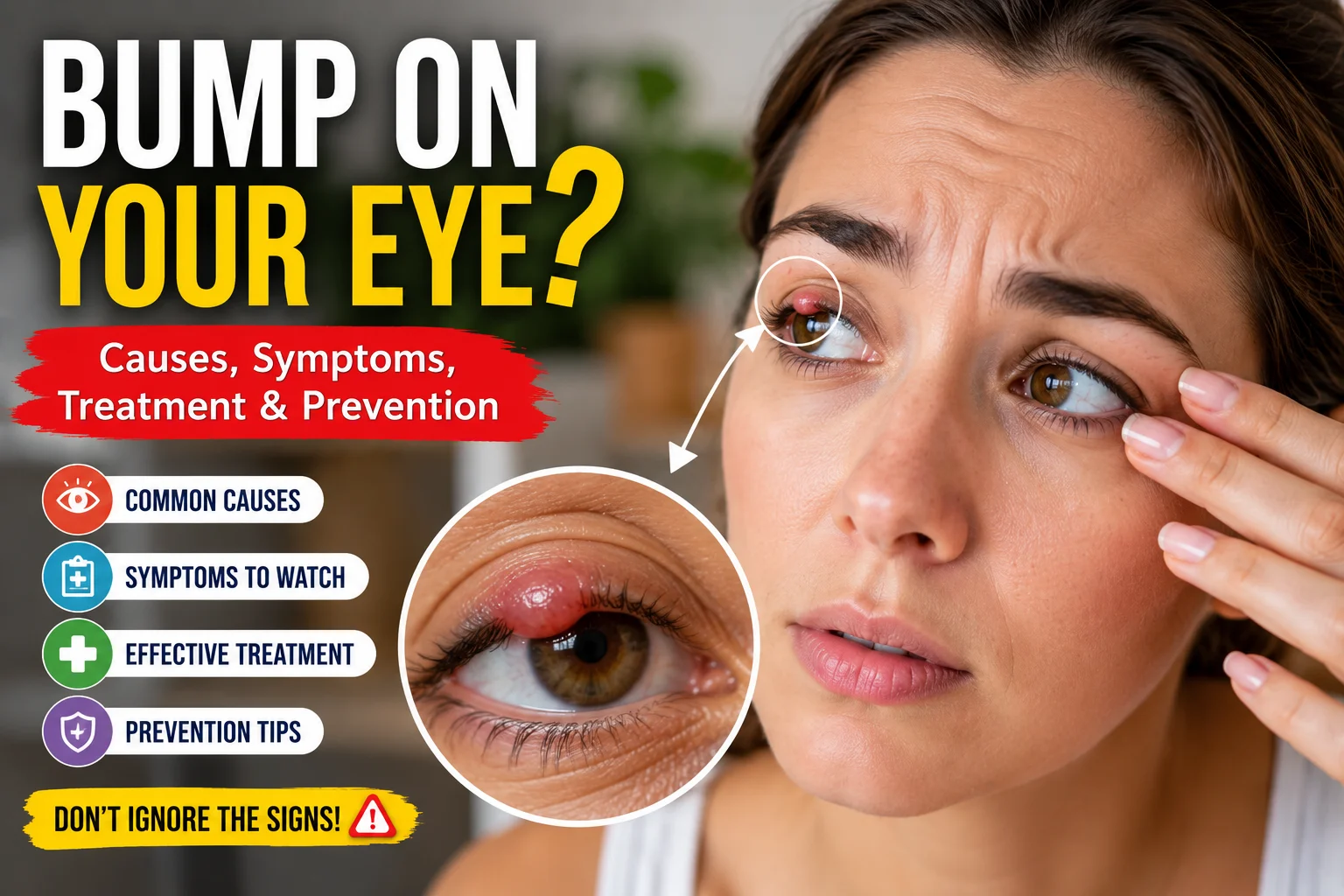
You looked in the mirror this morning, blinked twice, and there it was—a strange little bump on your eye that definitely wasn’t there yesterday. Maybe it’s sore, swollen, itchy, or causing an eye burn that makes every blink uncomfortable. Or perhaps it simply looks unusual. Either way, it’s normal to wonder, “Is this something serious?“
Take a breath. In most cases, a bump on your eye isn’t dangerous. It’s often your eyelid’s way of telling you that a tiny oil gland has become blocked or irritated. Depending on the cause, you may also notice redness, tenderness, watering, or a mild burning sensation in the eye. Because your eyes are so delicate, it’s important to know what’s causing the problem, what treatments actually work, and when it’s time to see an eye doctor instead of relying on late-night internet searches.
This guide explains everything you need to know about a bump on your eye—including common causes, symptoms such as eye burning, effective home remedies, treatment options, and the warning signs that mean you should seek medical care.
Quick Answer
A Bump on Your Eye is most often a stye (hordeolum) or a chalazion — both caused by a blocked or infected oil gland along the eyelid. Styes tend to be painful, red, and pimple-like, showing up right at the lash line, while a chalazion is usually painless and sits a little farther back on the eyelid. Most cases clear up in 1-2 weeks with warm compresses and good eyelid hygiene. See a doctor if the Bump on Your Eye affects your vision, keeps growing, or doesn’t improve after several days.
Table of Contents
- What Is a Bump on the Eye?
- Common Causes
- Symptoms
- Risk Factors
- Diagnosis
- Treatment
- Home Remedies
- Stye vs. Chalazion vs. Other Bumps (Comparison)
- Pros and Cons of Treatment Options
- Case Study: A Real-Life Example From the USA
- When to See a Doctor
- Prevention Tips
- FAQs
- References
What Is a Bump on the Eye?
A bump on eye simply means some kind of swelling or lump has formed on or near your eyelid. It can appear on the outside edge, tucked inside the eyelid, or even underneath the lash line. Most people notice it because it feels tender, looks red, or just seems out of place.
In almost every case, this kind of swelling isn’t dangerous. Your eyelids are packed with tiny oil-producing glands (called meibomian glands) and eyelash follicles. When one of these gets blocked or infected, your body reacts by swelling up — and that’s the lump you’re seeing.
The two most common culprits people search for are:
- A stye — a small, tender, pimple-like bump that forms at the base of an eyelash
- A chalazion — a firmer, usually painless bump that develops when an oil gland gets blocked
Both are incredibly common. Almost everyone gets an eyelid lump like this at least once in their life, and many people deal with it more than once.
Common Causes
Understanding why this lump showed up makes it much easier to treat and prevent. Here are the leading causes:
- Bacterial infection — A stye typically forms when oil glands or eyelash follicles along the eyelid margin become infected, most often by common skin bacteria. This can also lead to a puffy eye due to inflammation and swelling.
- Blocked oil (meibomian) glands — A chalazion develops when one of these tiny glands becomes clogged, causing a firm, swollen lump.
- Poor eyelid hygiene — Not washing your face or removing eye makeup before bed can allow oil, dirt, and bacteria to build up.
- Touching your eyes with dirty hands — This transfers bacteria directly to the delicate skin around your eyes, increasing the risk of infection.
- Old or contaminated makeup and applicators — Sharing or using expired eyeliner, mascara, or makeup brushes can introduce harmful bacteria.
- Blepharitis — Chronic inflammation of the eyelid margins makes styes and chalazia more likely to develop.
- Leftover, untreated stye — A stye that doesn’t heal properly over a couple of weeks may eventually turn into a chalazion.
- Skin conditions — Conditions such as rosacea or seborrheic dermatitis can increase the likelihood of blocked oil glands.
- Contact lens habits — Sleeping in contact lenses or failing to clean and replace them properly can irritate the eyelids and increase the risk of infection.
So when you’re wondering why this swelling suddenly showed up, the honest answer is usually one of these everyday habits — not something rare or alarming.
Symptoms
Here’s what to actually look and feel for, since symptoms depend on the type of eyelid lump you have.
Stye symptoms:
- A red, swollen, tender lump right at the edge of the eyelid, near the lashes
- Pain when blinking or touching the area
- A small pus-filled head, similar to a pimple
- Watery eyes and mild sensitivity to light
- Crusting along the eyelash line, especially in the morning
Chalazion symptoms (often described as a “bubble on inside of eyelid”):
- A round, usually painless lump that grows slowly
- May start with mild tenderness that fades within a day or two
- Can feel like a small, firm nodule under the skin
- In larger cases, mild blurry vision if it presses on the eyeball
Other white lumps on eyelids people notice include tiny white bumps called milia, which are just trapped keratin under the skin, and are harmless and unrelated to infection.
If your lump feels more like a hard, painless bump that has stuck around for weeks, it’s more likely a chalazion. If it’s sore, red, and looks like a “zit inside eyelid,” it’s more likely a stye.
Risk Factors
You’re more likely to develop this kind of eyelid swelling if you:
- Touch or rub your eyes frequently with unwashed hands
- Wear contact lenses without proper cleaning routines
- Sleep with makeup on regularly
- Have a history of blepharitis or dry eye
- Have rosacea or other skin conditions affecting oil glands
- Previously had a stye or chalazion (recurrence is common)
- Are going through hormonal changes or high stress periods, which can affect oil gland activity
- Use expired cosmetics or shared eye makeup
Diagnosis of a Bump on Your Eye
The good news? You usually don’t need an emergency visit to determine what’s causing a bump on your eye. In most cases, doctors can diagnose common conditions such as a stye or chalazion by examining the eyelid and discussing your symptoms and medical history. Blood tests or imaging are rarely needed for a straightforward bump on your eye.
Your eye doctor or primary care provider may:
- Examine the bump on your eye under a bright light or slit lamp.
- Gently flip the eyelid to inspect the inner surface for inflammation or blockage.
- Ask how long the bump on your eye has been present and whether it causes pain, tenderness, or vision changes.
- Rule out other conditions if the bump on your eye appears unusual, doesn’t improve with treatment, or keeps returning in the same location.
If the bump on your eye is persistent, unusually large, bleeding, changing shape, or affecting your vision, your doctor may recommend additional testing, such as a biopsy, to rule out less common but more serious conditions.
Treatment for a Bump on Your Eye
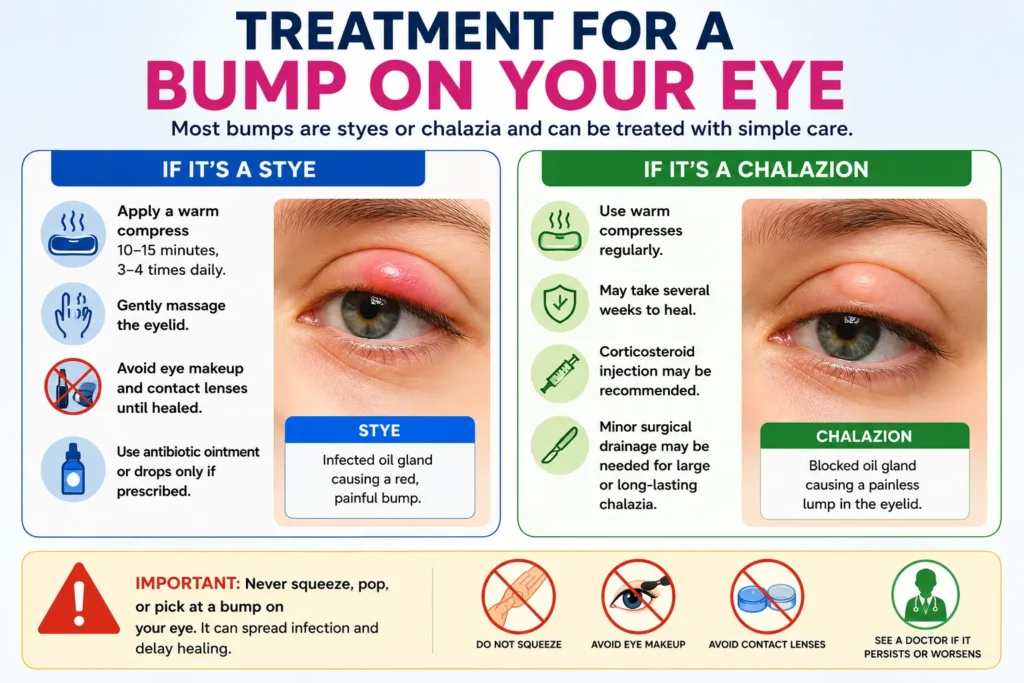
Treatment for a bump on your eye depends on the underlying cause. Whether it’s a stye or a chalazion, most cases respond well to simple, non-invasive care.
If the Bump on Your Eye Is a Stye
- Apply a warm compress for 10–15 minutes, 3–4 times daily.
- Gently massage the eyelid to encourage natural drainage.
- Avoid wearing eye makeup and contact lenses until the bump on your eye has healed.
- Use antibiotic ointment or eye drops only if prescribed by your healthcare provider.
- In rare cases, a doctor may perform a small in-office procedure to drain the stye.
If the Bump on Your Eye Is a Chalazion
- Most chalazia resolve within a few weeks with regular warm compresses.
- A corticosteroid injection may be recommended if the bump on your eye persists or becomes larger.
- Minor surgical drainage may be necessary for large or long-lasting chalazia.
- Since a chalazion is caused by a blocked oil gland rather than an infection, antibiotics are generally not effective unless an infection is also present.
Important: Never squeeze, pop, or pick at a bump on your eye. This can spread infection, damage delicate eyelid tissue, and delay healing. If the bump on your eye worsens, affects your vision, or doesn’t improve within a few weeks, schedule an evaluation with an eye care professional.
Home Remedies
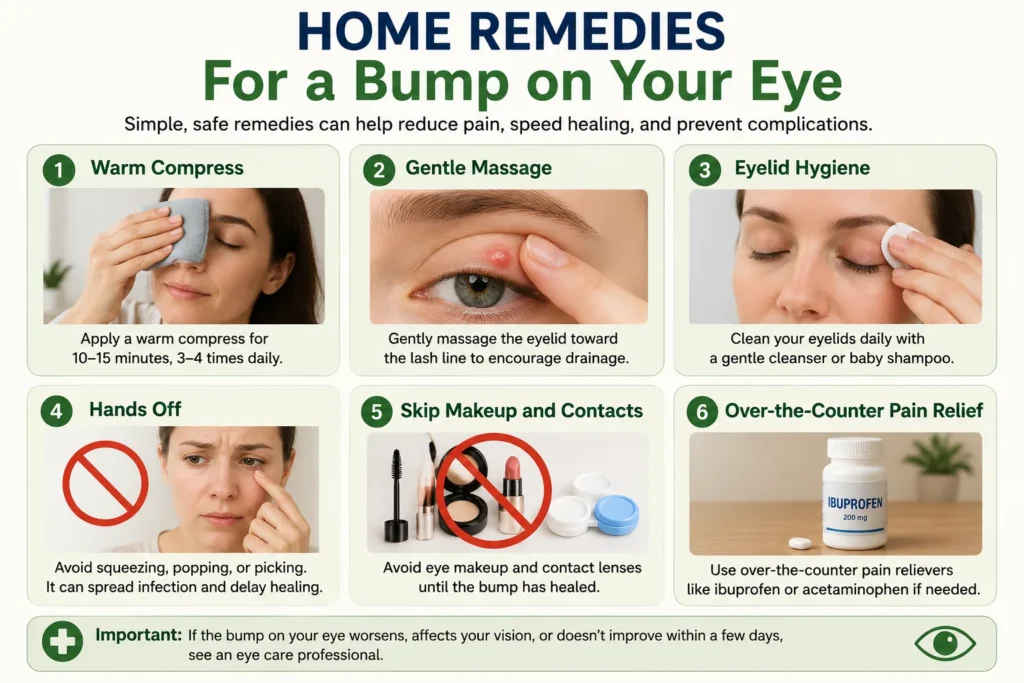
Most people can manage this kind of eyelid bump at home, especially in the early stages. Try these:
- Warm compress: A clean, warm (not hot) washcloth held over the closed eye for 10-15 minutes, 3-4 times a day
- Gentle massage: Light circular massage around the area after compressing, to help the gland drain
- Eyelid hygiene: Clean the lash line daily with a mild, diluted baby shampoo or a doctor-approved lid cleanser
- Hands off: Resist touching, rubbing, or squeezing the lump
- Skip makeup and contacts: Give the area time to heal without added irritation
- Over-the-counter pain relief: Ibuprofen or acetaminophen can ease discomfort if needed
These simple habits resolve the vast majority of stye and chalazion cases without any prescription treatment at all.
Stye vs. Chalazion vs. Other Bumps (Comparison)
| Feature | Stye (Hordeolum) | Chalazion | Milia (white bumps) |
|---|---|---|---|
| Location | Edge of eyelid, at lash line | Farther back on eyelid, often upper lid | Anywhere on eyelid skin |
| Pain | Usually painful | Usually painless | Painless |
| Cause | Bacterial infection | Blocked oil gland | Trapped keratin |
| Onset | Fast, within a day or two | Slower, over days to weeks | Gradual |
| Typical duration | A few days to a week | Several weeks | Can persist until treated |
| Needs antibiotics? | Sometimes | Rarely | No |
Pros and Cons of Treatment Options
| Treatment | Pros | Cons |
|---|---|---|
| Warm compress | Free, easy, works for most cases | Requires consistency, slower results |
| Antibiotic ointment | Targets bacterial infection directly | Only helpful for infected styes, not chalazia |
| Steroid injection | Fast reduction of stubborn chalazia | Needs a doctor’s visit, mild discomfort |
| Surgical drainage | Quick resolution for large lumps | Minor procedure, small recovery time |
| Doing nothing (mild cases) | No cost, no effort | May take longer to heal, risk of recurrence |
Case Study: A Real-Life Example From the USA
Maria, a 34-year-old graphic designer from Austin, Texas, noticed a small, tender bump on eye after a long week of wearing contact lenses and sleeping in her makeup during a busy project deadline. At first, she assumed it was just a pimple near her lash line and ignored it.
Within two days, the area became more swollen and sensitive to touch, and she noticed some crusting when she woke up. A quick search told her it matched typical stye symptoms, so she started applying a warm compress for 10 minutes, four times a day, and stopped wearing contacts and eye makeup.
By day four, the swelling had gone down significantly, and by day seven, the lump had fully resolved without needing antibiotics or a doctor’s visit. Maria’s optometrist later confirmed at a routine visit that this pattern — a stye triggered by contact lens overuse and incomplete makeup removal — is one of the most common cases seen among adults across the United States, particularly among people who work long hours at screens and skip nightly skincare steps.
Her takeaway, and a useful one for anyone dealing with a similar eyelid bump: early warm compresses and better hygiene habits can resolve most cases without any medical intervention at all.
When to See a Doctor
While most eyelid lumps clear up on their own, you should reach out to a healthcare provider if:
- It hasn’t improved after 48-72 hours of home care
- Redness or swelling spreads beyond the eyelid to the cheek or face
- You experience vision changes, blurriness, or eye pain that worsens
- The lump keeps growing instead of shrinking
- You develop a fever or feel generally unwell
- The bump on eye keeps coming back in the same spot repeatedly
- It bleeds, changes color, or looks unusual in any way
An eye doctor (ophthalmologist or optometrist) can offer prescription treatment or a simple in-office procedure if home care isn’t enough.
Prevention Tips
Once you’ve dealt with one eyelid bump, you’ll want to avoid a repeat. These habits go a long way:
- Always wash your hands before touching your eyes or face
- Remove eye makeup completely before bed, every single night
- Replace mascara and eyeliner every 3 months
- Clean contact lenses properly and never sleep in them
- Use a warm compress routine a few times a week if you’re prone to blocked glands
- Treat blepharitis or dry eye early if you have either condition
- Avoid sharing eye makeup, towels, or pillowcases with others
- Keep your eyelid margins clean, especially if you wear heavy makeup daily
Frequently Asked Questions About a Bump on Your Eye
1. What is a stye, exactly?
A stye is a small, painful, red bump on your eye that develops when an oil gland or eyelash follicle becomes infected, usually by Staphylococcus bacteria. It typically forms along the edge of the eyelid and may cause swelling, tenderness, and tearing.
2. What does a bump on your eye usually mean?
A bump on your eye often means that an oil gland in the eyelid has become blocked or infected. The most common causes are a stye (an infection) or a chalazion (a blocked oil gland). Both conditions are common and usually improve with proper care.
3. Is a zit inside the eyelid the same as a stye?
Yes, many people describe a bump on your eye inside the eyelid as a “zit.” In most cases, it’s an internal stye or an early chalazion, which develops beneath the eyelid surface instead of along the outer lash line.
4. What causes a bubble on the inside of an eyelid?
A bubble-like bump on your eye is commonly caused by a chalazion, which forms when a meibomian gland becomes blocked. It may also be an internal stye if the gland is infected. Less commonly, allergies or eye irritation can contribute to similar bumps.
5. Are white lumps on eyelids dangerous?
Most white bumps on your eye are harmless. Small white lumps are often milia, while larger white or yellow bumps may be a healing stye or chalazion. If the lump grows, becomes painful, or affects your vision, have it examined by an eye care professional.
6. Can I pop a bump on your eye myself?
No. You should never squeeze or pop a bump on your eye. Doing so can spread bacteria deeper into the eyelid, increase inflammation, and potentially lead to more serious eye infections.
7. How long does a bump on your eye usually last?
A stye usually heals within 7–10 days with warm compresses and good eyelid hygiene. A chalazion may take several weeks or even months to resolve completely, depending on its size.
8. Is a bump on your eye contagious?
A chalazion is not contagious, but a stye is caused by bacteria that can spread through direct contact. Avoid touching the affected eye, sharing towels, makeup, or contact lenses, and wash your hands frequently.
9. Should I use antibiotic drops for every bump on your eye?
Not always. Antibiotic eye drops or ointments may help treat an infected stye, but they generally don’t help a chalazion, since it results from a blocked gland rather than a bacterial infection. Always follow your healthcare provider’s advice.
10. When should a bump on your eye be checked by a doctor?
Seek medical attention if your bump on your eye:
- Doesn’t improve after a few days of home care.
- Becomes increasingly painful or swollen.
- Causes blurred vision or difficulty seeing.
- Keeps coming back.
- Spreads redness or swelling to other parts of your face.
- Is accompanied by fever or significant eye discharge.
References
- Mayo Clinic — Stye: Symptoms & Causes
- Mayo Clinic — Stye: Diagnosis & Treatment
- Cleveland Clinic — Chalazion
- Cleveland Clinic — Stye (Sty)
- Merck Manual (Consumer Version) — Chalazion and Stye (Hordeolum)
- American Academy of Ophthalmology — What Are Chalazia and Styes?
- WebMD — Styes: Causes, Symptoms, Treatment, Prevention
- Columbia Doctors Health Library — Styes and Chalazia Information & Treatment
This article is for general informational purposes only and is not a substitute for professional medical advice. If you have concerns about a bump on eye, consult a licensed eye care provider.

Natural home remedies, skincare secrets, dental & eye health tips, and real product reviews to help you stay healthy the natural way.