

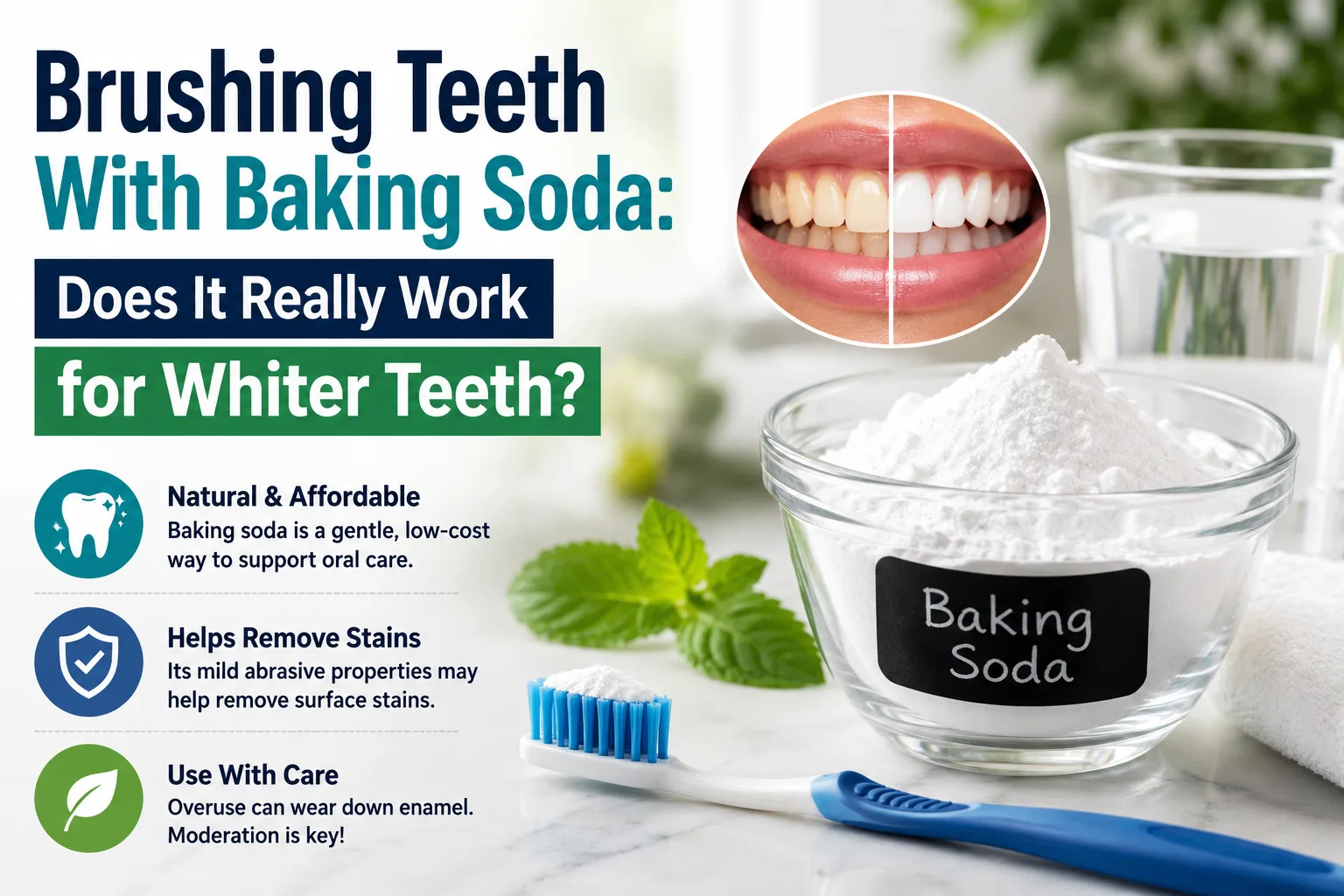
If you’ve ever searched for natural ways to brighten your smile, you’ve probably come across countless claims about Brushing Teeth With Baking Soda. Some people insist that a simple paste made from baking soda can remove years of stains and leave teeth looking noticeably whiter after just a few uses. Others warn that it can wear down enamel, increase tooth sensitivity, and do more harm than good. With so much conflicting advice online, it’s understandable to wonder which claims are actually backed by science.
The truth lies somewhere in the middle. Baking soda, also known as sodium bicarbonate, has been used in oral care for more than a century and remains a common ingredient in many whitening toothpastes. Thanks to its mild abrasive properties and ability to neutralize acids in the mouth, it can help remove surface stains and support overall oral hygiene when used correctly. However, it’s not a miracle whitening solution, and improper or excessive use may have drawbacks.
This comprehensive guide explores everything you need to know about Brushing Teeth With Baking Soda—including how it works, its proven benefits, potential risks, the safest way to use it, and what dental experts recommend. Whether you’re considering baking soda as a natural teeth-whitening option or simply want to understand the science behind it, this article will help you make an informed decision for a healthier, brighter smile.
What Is Baking Soda?
Baking soda is that white, powdery staple sitting in almost every American kitchen. It’s cheap, it’s been around forever, and it turns out it’s just as useful in the bathroom as it is in the kitchen.
What Is Sodium Bicarbonate?
Chemically speaking, baking soda is sodium bicarbonate (NaHCO₃), a naturally occurring mineral compound. It’s mildly alkaline, water-soluble, and slightly gritty in texture — which is exactly why it ended up in toothpaste formulas decades ago. That gritty texture acts as a gentle scrubbing agent, while its alkaline nature helps balance out acid in the mouth.
Why Is Baking Soda Used in Oral Care?
Long before whitening strips and LED trays existed, people were using baking soda to clean their teeth. It’s inexpensive, widely available, and unlike a lot of “natural remedies,” it actually has decades of dental research behind it. Modern toothpaste brands like Arm & Hammer still build entire product lines around it, and it’s a common ingredient in mouthwashes, whitening pastes, and even some prescription dental products.
How Does Baking Soda Work on Teeth?
So, does baking soda whiten teeth through chemistry or through elbow grease? A little of both, actually.
Removes Surface Stains Through Mild Abrasion
Baking soda’s texture is slightly gritty — just abrasive enough to physically scrub away surface stains from coffee, tea, wine, and tobacco, without being as harsh as some other abrasive agents. <cite index=”8-1″>Its intrinsic hardness is close to that of dentin and lower than enamel or other common toothpaste abrasives like calcium carbonate</cite>, which is a big part of why it’s considered relatively gentle.
Neutralizes Acids That Can Damage Teeth
Because it’s alkaline, baking soda helps neutralize the acids produced by bacteria in plaque and from acidic foods and drinks. Less acid sitting on your enamel means less erosion over time. Researchers have specifically studied this “acid-buffering” effect in biofilm and plaque environments, and it’s one of the more underrated benefits of baking soda in oral care.
Helps Freshen Breath by Balancing Mouth pH
Bad breath is often caused by acid-loving bacteria. By raising the pH in your mouth (making it less acidic), baking soda creates a less hospitable environment for odor-causing bacteria — which is why it shows up in natural deodorants and mouth rinses too.
Does Baking Soda Whiten Teeth?
Here’s the direct answer: yes, but with a caveat. Baking soda whitens teeth primarily by removing surface (extrinsic) stains — the yellowish film that builds up from coffee, red wine, tea, and smoking. It does not bleach your natural tooth color or lighten stains that sit deep inside the tooth (intrinsic stains).
Brushing Teeth With Baking Soda has been studied extensively for its ability to remove surface stains and improve tooth appearance. A review of clinical and laboratory research found that baking soda–based toothpastes are both effective and safe for removing tooth stains, resulting in noticeably whiter teeth. Interestingly, several studies also showed that toothpastes containing baking soda outperformed some non–baking soda formulas in stain removal—even when those alternatives were more abrasive. This demonstrates that a gentler ingredient can still deliver excellent whitening results.
If your teeth appear dull due to surface stains from coffee, tea, red wine, or tobacco, brushing teeth with baking soda may help restore a brighter smile. However, if tooth discoloration is caused by aging, certain medications, trauma, or naturally yellow dentin, baking soda is unlikely to produce dramatic whitening results. In these cases, professional dental treatments or other whitening options may be more effective.
How to Whiten Teeth With Baking Soda
The classic method most people try at home:
- Mix ½ teaspoon of baking soda with a few drops of water until it forms a soft paste.
- Dip a soft-bristled toothbrush into the paste.
- Brush gently in small circular motions for about 1–2 minutes.
- Rinse thoroughly with water.
- Use no more than 2–3 times per week, not as a daily replacement for regular toothpaste.
Some people mix baking soda with a small amount of hydrogen peroxide for extra whitening power — more on whether that’s a good idea later.
How to Use Baking Soda to Whiten Teeth Safely
How Much Baking Soda Should You Use?
Less is more here. A half teaspoon mixed with water is plenty for one brushing session. You don’t need a thick paste — a loose, slightly gritty slurry is enough to lift surface stains without over-scrubbing your enamel.
How Often Can You Brush With Baking Soda?
Most dental sources recommend limiting raw baking soda brushing to 2–3 times a week, not as your everyday toothpaste. Daily use of straight baking soda (without fluoride) can gradually wear down enamel and won’t protect against cavities the way fluoride toothpaste does.
Can You Mix Baking Soda With Toothpaste?
Yes — a lot of people simply sprinkle a small pinch of baking soda onto their regular fluoride toothpaste a couple of times a week. This gives you the mild-abrasion whitening benefit while still getting fluoride’s cavity protection in the same brushing session.
Can Baking Soda Whiten Teeth Permanently?
No. Baking soda removes stains that are already sitting on the surface of your enamel, but it can’t change your teeth’s underlying color, and it definitely can’t stop new stains from forming. The moment you drink coffee or red wine again, staining starts rebuilding. Think of it as stain maintenance, not a permanent bleaching solution like professional whitening treatments (which use peroxide-based bleaching agents to actually change the tooth’s internal color).
Benefits of Brushing Teeth With Baking Soda
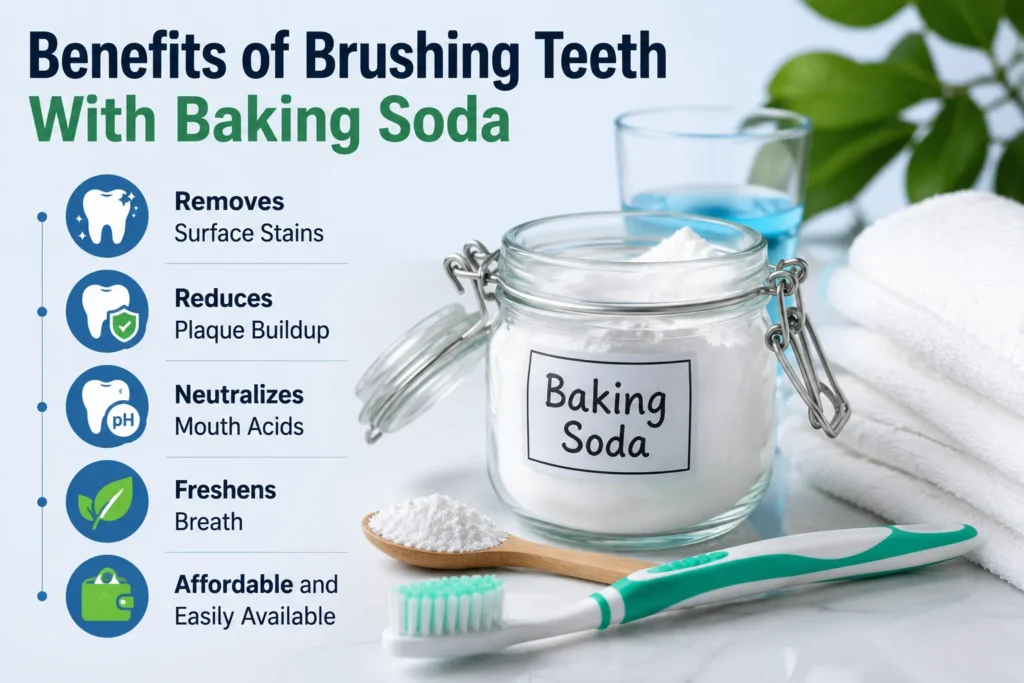
Removes Surface Stains
Its mild abrasiveness lifts away stains from coffee, tea, wine, and tobacco.
Reduces Plaque Buildup
Studies show baking soda toothpastes are better at removing plaque than toothpastes without baking soda
, which supports healthier gums over time.
Neutralizes Mouth Acids
Its alkaline nature helps buffer the acids in plaque that erode enamel and cause cavities.
Freshens Breath
By balancing your mouth’s pH, it makes the environment less friendly to odor-causing bacteria.
Affordable and Easily Available
A box of baking soda costs a couple of dollars and lasts for months — it’s one of the cheapest oral care hacks that’s actually backed by research.
Potential Risks and Side Effects
Enamel Wear From Overuse
Raw baking soda has no controlled RDA (Relative Dentin Abrasivity) rating, which is why using it straight, too often, or with too much pressure can cause uneven enamel wear
over time.
Tooth Sensitivity
Overuse can thin enamel, exposing the more sensitive dentin layer underneath and leading to temperature sensitivity.
Gum Irritation
Brushing too hard with a gritty paste can irritate or even recede gum tissue, especially if you already have sensitive gums.
Not Effective for Deep or Internal Stains
Baking soda can’t touch intrinsic stains — the kind caused by aging, certain medications (like tetracycline), or trauma to a tooth.
Is It Safe to Brush Your Teeth With Baking Soda Every Day?
Generally, dentists recommend against using straight baking soda as your everyday, all-day toothpaste. The ADA considers toothpastes with an RDA of 250 or below safe for daily use, but raw baking soda has no controlled RDA, which is why it can cause uneven enamel wear with daily use
. It’s also missing fluoride, which is essential for long-term cavity protection.
The safer daily habit: use a fluoride toothpaste that already contains baking soda as an ingredient (many ADA-approved options do), and save the DIY baking soda paste for a couple of times a week.
Baking Soda vs. Whitening Toothpaste
| Factor | Plain Baking Soda | Commercial Whitening Toothpaste |
|---|---|---|
| Whitening method | Mild physical abrasion | Abrasives + peroxide/chemical agents |
| Fluoride content | None (unless added) | Usually yes |
| RDA (abrasiveness) | Uncontrolled, can vary | Regulated, typically under 250 |
| Cavity protection | Minimal | Strong (via fluoride) |
| Cost | Very low | Moderate |
| Daily use recommended? | No | Yes |
| Best for | Occasional stain touch-ups | Everyday whitening + protection |
Baking Soda vs. Hydrogen Peroxide for Teeth Whitening
| Factor | Baking Soda | Hydrogen Peroxide |
|---|---|---|
| Whitening mechanism | Physical scrubbing (extrinsic stains only) | Chemical oxidation (can lighten deeper stains) |
| Speed of results | Slow, gradual | Faster, more noticeable |
| Enamel safety | Low risk if used sparingly | Can cause sensitivity if overused/high concentration |
| Best combined use | Mixed with peroxide occasionally for extra effect | Often used alone or in professional whitening kits |
| Availability | Kitchen pantry | Drugstore, dental offices |
Many people use a pinch of baking soda mixed with a small amount of 3% hydrogen peroxide as an at-home teeth whitening solution. This method can help reduce surface stains, but it should only be used occasionally (once or twice a week at most), not daily, since both ingredients are abrasive or oxidizing agents.
Who Should Avoid Using Baking Soda on Teeth?
- People with braces, crowns, veneers, or dental bonding (abrasion can dull or damage restorative materials)
- Anyone with active gum disease or receding gums
- People with diagnosed enamel erosion or high tooth sensitivity
- Those on a sodium-restricted diet (some baking soda can be swallowed during brushing)
- Kids under 6, who are more likely to swallow toothpaste
If any of these apply to you, talk to your dentist before adding baking soda to your routine.
What Do Dentists Say About Baking Soda Teeth Whitening?
The American Dental Association considers baking soda safe for enamel and dentin, though some researchers rate it lower as a stain remover compared to other whitening products
. At the same time, JADA research has noted that baking soda dentifrices, despite their low abrasivity, are often more effective at stain removal than non-baking-soda products with higher abrasivity
— a nuance that surprises a lot of people, including some dentists.
The general professional consensus: baking soda is fine in moderation, especially inside a proper toothpaste formula with fluoride, but it shouldn’t fully replace your regular oral care routine, and DIY pastes should be used sparingly.
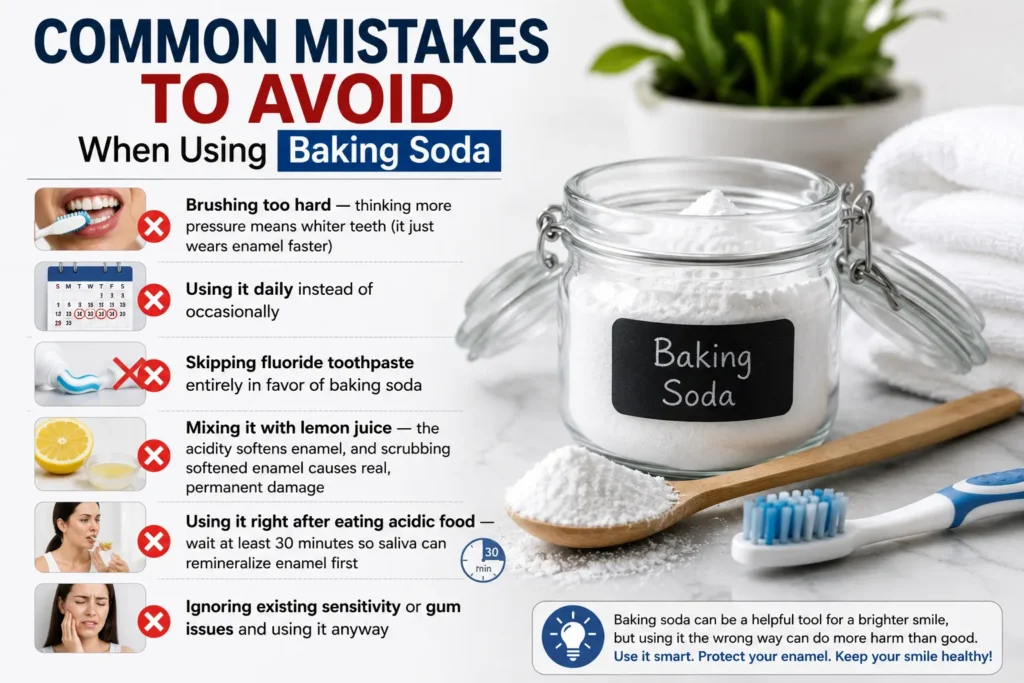
Common Mistakes to Avoid When Using Baking Soda
Natural Alternatives to Baking Soda for Teeth Whitening
If baking soda isn’t for you, a few gentler or complementary options include:
- Oil pulling with coconut oil (helps with plaque, mild freshness benefit)
- Activated charcoal toothpaste (though evidence for whitening is mixed and it can also be abrasive)
- ADA-approved whitening toothpaste with regulated RDA levels
- Professional in-office whitening for faster, longer-lasting, dentist-supervised results
- At-home peroxide-based whitening strips, used as directed
Case Study: How US Users Are Actually Using Baking Soda for Whitening
A 2023 informal survey-style report circulated among US dental hygiene blogs and coincides with what dentists across states like Texas, California, and New York have been reporting anecdotally in patient consultations: a growing number of adults aged 25–40 are turning to baking soda as a budget-friendly whitening method, largely driven by TikTok and Pinterest oral-care trends.
Dental clinics in several states noted a pattern worth highlighting:
- Patients who used a pinch of baking soda mixed into fluoride toothpaste, 2–3 times weekly, generally reported brighter-looking teeth within 2–3 weeks with no reported sensitivity issues.
- Patients who used straight baking soda paste daily were more likely to report increased tooth sensitivity within a month, and some showed early signs of enamel wear during routine cleanings.
- Patients who combined baking soda with lemon juice (a viral “DIY whitening hack”) were the most likely group to report gum irritation and enamel sensitivity, prompting several dental associations to issue public warnings against the combination.
The takeaway that lines up with the clinical literature: moderation and proper technique make the difference between a helpful habit and a harmful one. This mirrors <cite index=”9-1″>in-vitro research on baking soda combined with electric toothbrushing</cite>, which continues to explore how baking soda affects both stain removal and enamel surface texture depending on how it’s used.
Pros and Cons of Brushing Teeth With Baking Soda
| Pros | Cons |
|---|---|
| Removes surface stains from coffee, tea, wine, tobacco | Doesn’t whiten intrinsic/deep stains |
| Neutralizes acids, may reduce cavity risk from acid exposure | No fluoride on its own — needs to be paired with fluoride toothpaste |
| Helps freshen breath | Overuse can wear down enamel |
| Reduces plaque buildup | Can cause sensitivity with frequent use |
| Very affordable and widely available | Not a permanent whitening solution |
| Backed by JADA/ADA-reviewed research | Not suitable for people with braces, veneers, or gum disease |
Frequently Asked Questions
Does Brushing Teeth With Baking Soda whiten teeth?
Yes. Brushing Teeth With Baking Soda can lighten the appearance of teeth by removing surface stains through its mild abrasive action. However, it does not bleach the natural color of your teeth or change their internal shade.
Is Brushing Teeth With Baking Soda safe for teeth?
When used in moderation, Brushing Teeth With Baking Soda is generally safe. The American Dental Association (ADA) considers baking soda safe for enamel and dentin, but brushing too often or too aggressively may gradually wear down tooth enamel.
Can Brushing Teeth With Baking Soda replace toothpaste?
No. Brushing Teeth With Baking Soda should not completely replace regular toothpaste because baking soda does not contain fluoride, which is essential for preventing cavities and strengthening tooth enamel. It’s best used as an occasional supplement to fluoride toothpaste.
How long does Brushing Teeth With Baking Soda take to whiten teeth?
Most people notice a slight improvement in tooth brightness after 2–3 weeks of Brushing Teeth With Baking Soda two to three times per week. Results vary depending on the type and severity of tooth stains.
Can I practice Brushing Teeth With Baking Soda every day?
Daily Brushing Teeth With Baking Soda is generally not recommended. Using raw baking soda every day may gradually wear away enamel. Limiting use to 2–3 times per week is considered a safer approach.
Does Brushing Teeth With Baking Soda remove yellow stains?
Yes, Brushing Teeth With Baking Soda can help remove surface-level yellow stains caused by coffee, tea, wine, tobacco, and certain foods. However, it cannot treat deep or intrinsic discoloration caused by aging, medications, or thinning enamel.
Is Brushing Teeth With Baking Soda better than whitening toothpaste?
Not necessarily. While Brushing Teeth With Baking Soda is an inexpensive and effective way to remove surface stains, most whitening toothpastes also contain fluoride and carefully balanced abrasives, making them more suitable for everyday use.
Can Brushing Teeth With Baking Soda damage tooth enamel?
Yes, Brushing Teeth With Baking Soda can damage enamel if done too frequently, with excessive pressure, or when mixed with acidic ingredients such as lemon juice. When used correctly and in moderation, the risk of enamel damage is low.
Final Thoughts
Brushing your teeth with baking soda isn’t a myth and it isn’t a miracle — it’s a genuinely useful, research-backed habit when used the right way. It can lift surface stains, freshen breath, and even support plaque control, but it works best as an occasional boost alongside your regular fluoride toothpaste, not as a full replacement. If your goal is brighter teeth without enamel regrets, moderation really is the whole strategy.
If you have existing dental work, sensitive teeth, or gum issues, check in with your dentist before adding baking soda to your routine — a two-minute conversation can save you from a much bigger problem down the road.
Sources and References
- American Dental Association / JADA — Stain removal and whitening by baking soda dentifrice
- American Dental Association / JADA — Baking soda dentifrices and oral health
- American Dental Association / JADA — Baking soda as an abrasive in toothpastes
- National Center for Biotechnology Information (NCBI/PMC) — Combined use of baking soda and electric toothbrushing for removal of artificial extrinsic stain on enamel surface: An in vitro study
- Healthline — Baking Soda as Toothpaste and for Whitening: Pros, Cons, How-to
- Ameritas — Does Baking Soda Whiten Teeth?
- Arm & Hammer/Hygiene Squad RDA report — Why Baking Soda Toothpastes Have a Low RDA and High Plaque Removal
This article is for informational purposes only and does not replace professional dental advice. Always consult a licensed dentist before making significant changes to your oral care routine.

Natural home remedies, skincare secrets, dental & eye health tips, and real product reviews to help you stay healthy the natural way.