

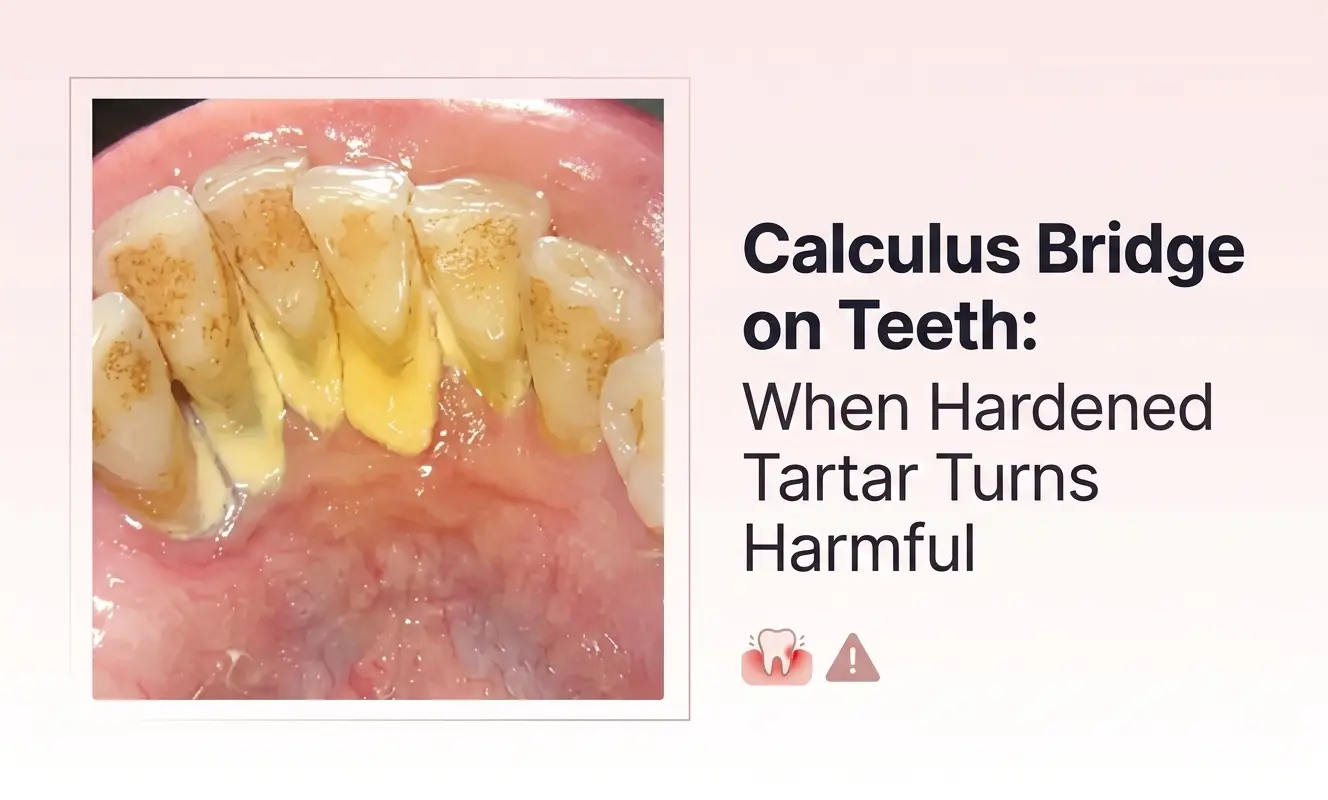
Maybe you noticed it while flossing, or caught a glimpse in the mirror after your morning coffee: a hard, yellowish-brown crust that seems to stretch across the back of your lower front teeth, almost gluing them together. It doesn’t move when you brush, and floss won’t slide through.
What you’re likely looking at is a calculus bridge — a stretch of hardened dental deposits large enough to connect two or more neighboring teeth. It can look alarming, but it’s also a well-understood dental issue with a straightforward solution. This article covers what a calculus bridge is, how it forms, what it can look and feel like, the oral-health risks it may carry, and what typically happens when a dentist removes it — plus practical ways to lower your chances of it coming back.
Quick Answer
A calculus bridge is a connected mass of hardened dental calculus (tartar) that spans across two or more adjacent teeth, usually near the gumline. It forms when bacterial plaque isn’t removed and gradually mineralizes with minerals from saliva. Because it’s calcified and firmly attached, a calculus bridge generally can’t be brushed away and typically requires professional dental scaling.
Key Takeaways
- A calculus bridge develops when soft plaque is left long enough to harden into calcified deposits that spread and connect.
- It’s most often found behind the lower front teeth and along the gumline.
- Left in place, it may contribute to gum inflammation, bad breath, and, in some cases, more advanced gum problems over time.
- Hardened calculus can’t be removed with brushing or home remedies; professional dental scaling is generally needed.
- Consistent brushing, interdental cleaning, and routine dental visits are the most reliable prevention.
- See a dentist for hard deposits that won’t brush away, ongoing bleeding gums, or persistent bad breath.
What Is a Calculus Bridge?
Plaque and dental calculus aren’t the same thing. Plaque is the soft, sticky bacterial film that forms on teeth daily — the kind a toothbrush is built to remove. Calculus is what happens when that plaque isn’t cleared and minerals in saliva harden it onto the tooth. Once calcified, it’s a firm, cement-like deposit that clings to enamel and root surfaces.
A calculus bridge is simply an extensive version of this process. Instead of staying confined to one tooth, the mineralized plaque spreads until deposits on neighboring teeth merge into a single crust — most often behind the lower incisors. It differs from ordinary tartar mainly in scale: a small patch on one tooth is common and easily managed, while a calculus bridge on teeth reflects a longer stretch of buildup across multiple surfaces.
How Does It Form?
A calculus bridge builds up gradually:
- Bacterial plaque forms on teeth throughout the day.
- If it isn’t brushed or flossed away, it stays on the surface.
- Saliva minerals harden the plaque into calculus, sometimes within days.
- The rough, hardened surface lets more plaque attach on top of it.
- Over repeated cycles, deposits thicken and spread, eventually bridging adjacent teeth.
Contributing factors can include inconsistent brushing, skipped flossing, crowded teeth that are harder to clean, smoking or tobacco use, dry mouth, sugary or starchy diets, and missed professional cleanings — though none of these guarantees a calculus bridge will form. For most people it’s a combination of a few factors over time.
What Does It Look and Feel Like?
- Yellow, brown, white, or dark grey/black coloration
- A rough, crusty, or stone-like texture
- Hard buildup concentrated near the gumline
- Deposits most common behind the lower front teeth
- Floss that won’t pass between certain teeth, or shreds when tried
- Visible material that appears to link two or more teeth together
Color and texture vary by diet, tobacco use, and how long the deposit has been present, so appearance alone isn’t a reliable measure of severity — a dental exam is.
Common Symptoms and Warning Signs
The calculus itself often isn’t painful, which is part of why it can go unnoticed. But it’s frequently accompanied by:
- Gums that bleed while brushing or flossing
- Swollen, tender, or reddened gums
- Persistent bad breath
- Gum recession
- Sensitivity to hot, cold, or sweet foods
- Discomfort while chewing
- Visible gaps once the deposits are removed
- Teeth that feel smoother or different once a calculus bridge is gone
Symptoms vary between individuals, so having one or two of these signs doesn’t automatically mean the situation is serious — but they’re worth mentioning at a check-up.
Not Every Oral Change Comes From Tartar
Not everything unusual in your mouth is tartar-related. Small, temporary tongue bumps often have different causes, and understanding why lie bumps may appear overnight can help you tell the difference.
Likewise, a firm or unusual lump on the tongue itself is a separate issue from tooth deposits. Reviewing possible causes of a bump inside the tongue can help you decide whether it’s worth flagging at your next visit.
Why It Can Become Harmful
The rough, porous surface of a calculus bridge gives bacteria an easy place to cling to, which can encourage further plaque buildup on top of it. Over time, this ongoing irritation near the gumline is associated with gingivitis — gum inflammation marked by redness, swelling, and bleeding.
Left unaddressed, gingivitis may, in some individuals, progress toward periodontal pockets, further gum recession, and — in more advanced or long-standing cases — loss of the bone supporting the teeth, which has been linked to loosening teeth and eventual tooth loss. This is a possible progression, not an inevitable one; many people have a calculus bridge removed with no lasting gum damage. Dentists generally recommend addressing hardened buildup rather than leaving it in place indefinitely.
Can It Be Removed at Home?
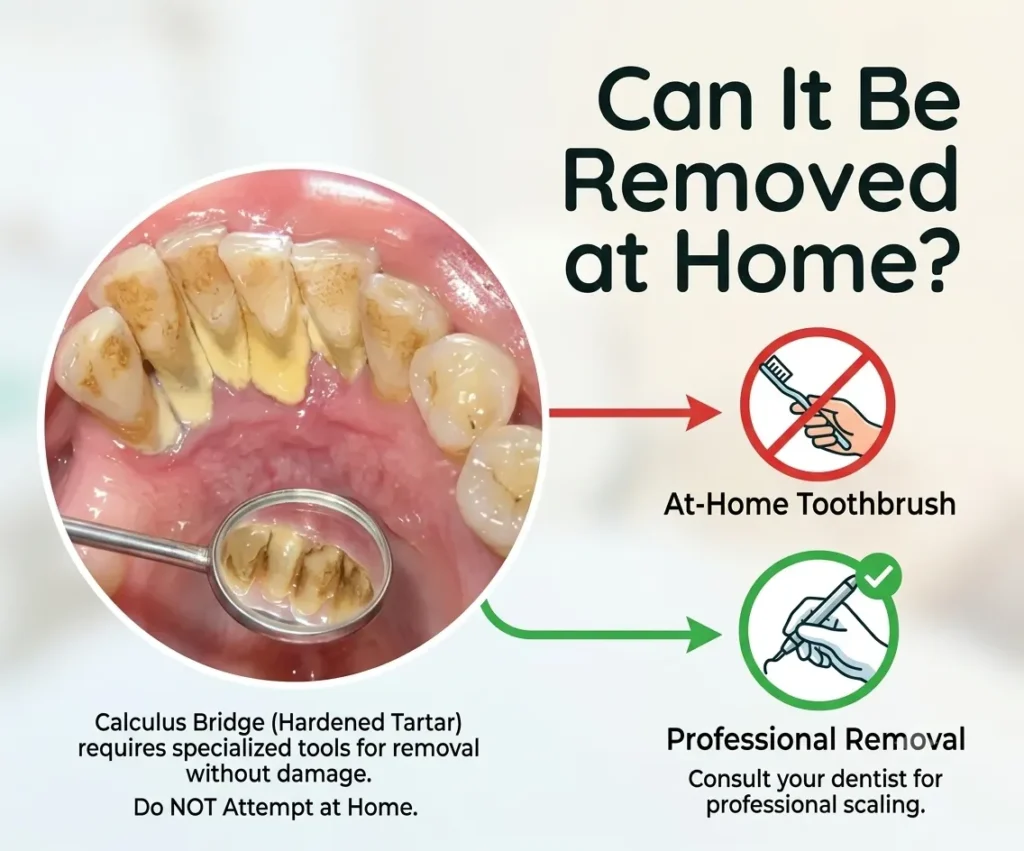
No, not safely. Once plaque mineralizes into calculus, it bonds too tightly for a toothbrush, floss, or mouthwash to break down. Baking soda pastes or vigorous brushing may polish the surface slightly but won’t remove the hardened material underneath.
Avoid trying to scrape it off yourself. Metal picks, needles, tweezers, or other sharp household tools can injure gums, scratch enamel, cause bleeding, or introduce infection — and it’s easy to leave hardened calculus behind at or below the gumline even after a determined attempt. Acidic “natural” tartar removers can also damage enamel without fully clearing the deposit.
How Dentists Remove It
- Exam: the dentist or hygienist checks the extent of buildup and gum health.
- Gum assessment: pocket depths may be measured around affected teeth.
- Dental scaling: ultrasonic and/or manual instruments carefully break up and remove the hardened deposits.
- Polishing: smooths the tooth surface and lifts surface staining.
- Deep cleaning or root planing: used when buildup extends below the gumline, to smooth root surfaces and support gum reattachment.
- Follow-up care: may be recommended if signs of gum disease are present.
The exact process and number of visits depends on how extensive the buildup is, so it’s hard to generalize — some people find it only mildly uncomfortable, while others with sensitive gums may want a topical numbing gel. Your dental team can advise on your specific case.
What to Expect After Removal
It’s common to notice temporary sensitivity, tender gums, or teeth that feel or look slightly longer once a calculus bridge is gone — the deposits were simply filling in small gaps that are now visible again. None of this usually means the cleaning caused damage; it reflects the natural tooth and gum contours reappearing.
If teeth look more yellow or stained afterward, that’s typically surface staining rather than new damage, and it’s separate from tartar itself. If appearance is a concern, understanding teeth-whitening options can help — though whitening addresses stains, not hardened calculus, so the two shouldn’t be confused.
Calculus Bridge vs Ordinary Tartar
| Feature | Ordinary Tartar Buildup | Calculus Bridge |
|---|---|---|
| Extent | Localized, one tooth or surface | Extensive, spans multiple teeth |
| Appearance | Small patches or thin film | Thick, connected crust |
| Teeth involved | Usually one or two | Three or more neighboring teeth |
| Cleaning difficulty | Floss may still pass | Floss often can’t pass at all |
| Gum involvement | Often minimal | More often associated with irritation |
| Typical treatment | Standard cleaning | Scaling, possibly deep cleaning/root planing |
Prevention Tips
- Brush twice daily for two minutes, angling bristles toward the gumline
- Use fluoride toothpaste
- Floss or use an interdental cleaner daily
- Consider interdental brushes for larger gaps or dental work
- Clean carefully along the gumline, where calculus tends to start
- Replace your toothbrush every three to four months
- Keep up with routine dental exams, generally every six months unless advised otherwise
- Follow the cleaning schedule your dentist recommends
- Avoid tobacco use
- Talk to a dentist or doctor about managing chronic dry mouth
- Don’t rely on whitening products as a substitute for plaque control
For broader day-to-day guidance beyond tartar prevention, this collection of everyday oral-health information covers related home-health topics.
When to See a Dentist
Book an appointment if you notice hard deposits that won’t brush away, gums that bleed regularly, persistent bad breath, gum swelling or recession, pus near the gumline, loose teeth, or pain while chewing.
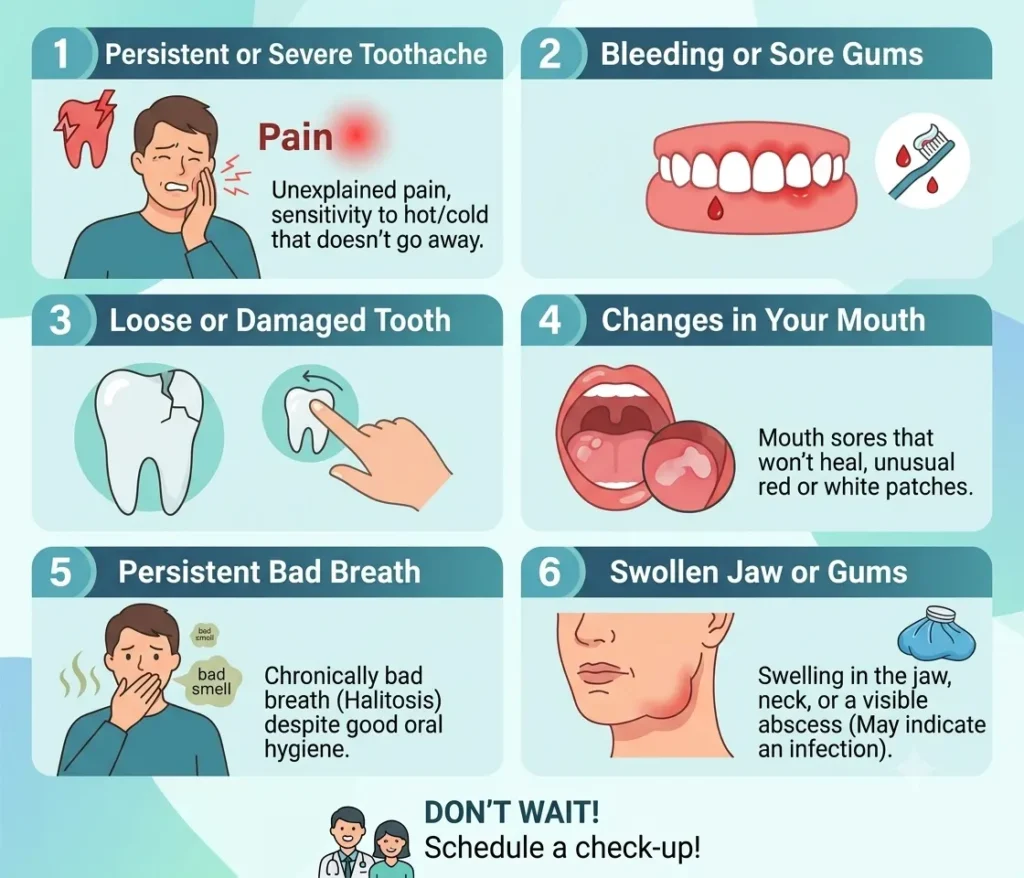
Some symptoms call for urgent care rather than a routine visit: rapidly increasing facial swelling, difficulty swallowing, trouble breathing, or bleeding that won’t stop. Seek prompt medical or dental attention right away in those situations.
FAQs
Is a calculus bridge the same as tartar? It’s made of the same material as ordinary tartar, but the term describes deposits extensive enough to connect two or more neighboring teeth.
Can a calculus bridge fall off on its own? Unlikely — calculus bonds tightly to tooth surfaces and generally stays in place until professionally removed.
Can brushing remove hardened dental calculus? No. Brushing and flossing prevent new buildup, but existing calculus needs professional scaling.
Does calculus bridge removal hurt? It varies. Many people feel only mild pressure, though those with sensitive gums or heavier buildup may find it more uncomfortable; numbing options are available if needed.
Why do gaps appear after tartar removal? Calculus can fill in small spaces between teeth as it builds up. Once removed, those natural spaces become visible again — it isn’t a sign of new damage.
Can a calculus bridge cause bad breath? Yes, it’s possible. Bacteria in and around hardened calculus can contribute to persistent bad breath, which often improves after cleaning.
How quickly can dental calculus form? Plaque can begin hardening within days if not removed, though a noticeable calculus bridge usually takes weeks to months to build up.
Can a calculus bridge return after cleaning? Yes, particularly without consistent daily hygiene and routine dental visits afterward.
Conclusion
A calculus bridge can look concerning the first time you spot it, but it’s a well-recognized dental issue with a clear path forward. It builds up gradually from everyday plaque that hardens and spreads when it isn’t consistently removed, and while it may be associated with gum irritation or other oral-health concerns, professional cleaning is generally effective at addressing it.
Rather than reaching for a sharp tool or a home remedy, the safest step is scheduling a visit with a dentist, who can assess the buildup and recommend the right approach for your situation. Everyone’s mouth is a little different, so what works for one person’s prevention routine may need small adjustments for another — a dental professional is best placed to guide that.
References
Calculus Bridge: Causes, Side Effects And Treatments
Calculus Bridge: Side Effects, Treatment, and Prevention
Calculus Bridge: Doctor Explains Causes, Symptoms, Treatment, and Prevention

Home Healthy Remedy — trusted natural remedies, honest product reviews, and simple wellness tips for skin, eyes, teeth, and overall health.