

Sunburn can range from mild warmth and redness to painful blistering accompanied by dehydration, fever, or nausea. Understanding how Severe Is Your Sunburn helps you choose appropriate care and recognize when professional medical attention may be necessary.
A sunburn is an inflammatory reaction caused by excessive exposure to ultraviolet radiation from sunlight or artificial sources such as tanning beds. Symptoms may begin within a few hours, but the full severity is not always visible immediately. Pain and redness can continue developing for up to 24 hours after exposure.
This complete guide explains how Severe Is Your Sunburn, the symptoms associated with each level, expected healing times, safe home-care methods, and important warning signs.
Medical notice: This chart provides general educational information and does not replace diagnosis or treatment from a qualified healthcare professional.
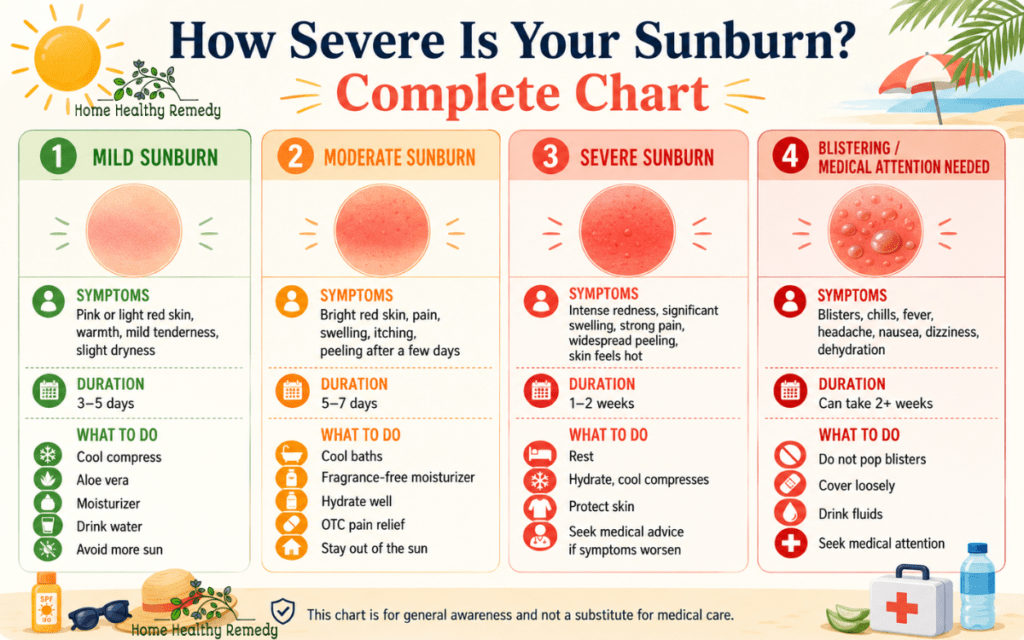
Complete Sunburn Severity Chart
Use the following chart to make an initial assessment of how Severe Is Your Sunburn. Skin color alone should not determine severity because redness may be difficult to see on brown or Black skin. Heat, tenderness, swelling, blistering, and general illness are also important signs.
| Sunburn level | Common symptoms | Approximate recovery | Recommended response |
|---|---|---|---|
| Mild | Warmth, slight tenderness, pinkness or subtle discoloration | 3–5 days | Cool the skin, moisturize and hydrate |
| Moderate | Noticeable pain, deeper redness, swelling, sensitivity and peeling | 5–7 days | Home care with close monitoring |
| Severe | Intense pain, considerable swelling, blisters and widespread inflammation | 7–14 days or longer | Contact a healthcare professional |
| Emergency warning level | Extensive blistering, confusion, faintness, fever, chills, vomiting or dehydration | Varies | Seek urgent medical assistance |
The chart can help you evaluate how Severe Is Your Sunburn, but symptoms affecting your whole body deserve more attention than skin redness alone.
What Does Mild Sunburn Look Like?
A mild sunburn affects the outer layer of the skin. The area may feel warm, tight, itchy or sensitive when touched. On lighter skin, it commonly appears pink or red. On darker skin, visible color changes may be subtle, while warmth and tenderness remain noticeable.
Common Mild Symptoms
You may have a mild burn when:
- The skin feels warmer than surrounding areas.
- Touching or rubbing the skin causes slight discomfort.
- There are no blisters.
- Swelling is absent or minimal.
- You otherwise feel well.
When deciding how Severe Is Your Sunburn, mild discomfort without blistering or systemic symptoms can generally be managed at home.
Mild Sunburn Care
Move indoors or into complete shade immediately. Cool the area with a cool shower, bath or damp cloth. Apply a gentle fragrance-free moisturizer while the skin remains slightly damp. Products containing aloe vera or soy may feel soothing. Drink additional water because sunburn can draw fluid toward the skin’s surface.
Do not place ice directly on burned skin. Extreme cold can irritate or further injure vulnerable tissue.
How to Recognize Moderate Sunburn
With moderate sunburn, pain and inflammation are more noticeable. The skin may become swollen, deeply discolored and uncomfortable beneath clothing. Peeling often begins several days later as the body removes damaged surface cells.
To determine how Severe Is Your Sunburn, monitor the affected area for changes during the first 24 hours. A burn that initially looks minor can become more painful as inflammation develops.
Signs of a Moderate Burn
Moderate symptoms can include:
- Persistent pain or stinging.
- Obvious warmth and swelling.
- Significant sensitivity to clothing.
- Itching as healing begins.
- Widespread peeling without extensive blistering.
Knowing how Severe Is Your Sunburn is particularly important when a large part of the back, chest, shoulders or legs has been exposed. Even without blisters, widespread inflammation can cause considerable discomfort and fluid loss.
Moderate Sunburn Treatment
Continue cooling the skin with brief cool baths or compresses. Apply moisturizer regularly, wear loose breathable clothing and avoid additional sunlight until the skin has healed.
Over-the-counter pain relievers may reduce discomfort for some people, but they are not suitable for everyone. Follow the package directions and check with a pharmacist or healthcare professional when you have medical conditions, take other medicines, are pregnant, or are treating a child.
What Makes a Sunburn Severe?
Blistering is an important indication when judging how Severe Is Your Sunburn. Blisters suggest deeper skin injury and should be protected rather than deliberately broken.
A severe sunburn can involve intense pain, extensive swelling, large or numerous blisters and symptoms affecting the entire body. The American Academy of Dermatology recommends seeking medical attention when worsening sunburn is accompanied by high fever, chills, nausea, pus or increasing swelling.
Severe Sunburn Symptoms
Contact a healthcare professional when you notice:
- Blisters covering a large area.
- Blisters on the face, hands or genitals.
- Severe or worsening pain.
- Significant facial swelling.
- Headache, dizziness or nausea.
- Fever or chills.
- Increasing redness, pus or red streaks.
- Symptoms that are not improving.
The answer to how Severe Is Your Sunburn depends on both skin damage and your overall condition. A smaller burn accompanied by confusion or faintness can be more urgent than a larger red area without other symptoms.
When Sunburn Requires Urgent Medical Care
Some symptoms may indicate severe dehydration, heat-related illness, infection or extensive skin damage. Seek urgent medical help when the person experiences confusion, fainting, difficulty remaining awake, repeated vomiting, severe weakness, rapid breathing, vision changes or inability to drink fluids.
Mayo Clinic also advises seeking medical help for worsening pain, fever, chills, nausea, confusion, eye pain, vision changes or signs of infection.
Emergency Warning Chart
| Warning sign | Why it matters | Recommended action |
|---|---|---|
| Confusion or fainting | Possible serious heat illness or dehydration | Obtain urgent medical help |
| Repeated vomiting | Fluids may not be replaceable by drinking | Seek prompt medical assessment |
| Extensive blistering | Indicates deeper or widespread injury | Contact a healthcare professional |
| Eye pain or vision changes | UV exposure may have affected the eyes | Seek urgent medical advice |
| Pus, spreading redness or fever | Possible infection | Arrange medical evaluation |
| Severe symptoms in a baby or young child | Children can become dehydrated quickly | Seek professional advice promptly |
This emergency chart is essential when evaluating how Severe Is Your Sunburn, especially after prolonged outdoor exposure.
Safe At-Home Sunburn Care
Once you understand how Severe Is Your Sunburn, use care methods that protect rather than irritate the skin.
Cool the Skin Gently
Take a cool bath or shower, or apply a clean damp cloth for approximately 10–15 minutes. Avoid harsh soaps, scrubbing and very cold ice packs.
Restore Moisture
Pat the skin gently instead of rubbing it dry. Apply a fragrance-free moisturizer to damp skin and repeat whenever tightness returns. Avoid products that sting or contain strong fragrances.
Drink More Fluids
Increase water intake during recovery. Watch for dark urine, dry mouth, dizziness and reduced urination, which may indicate dehydration.
Protect Blisters
Do not intentionally pop blisters. A blister’s covering protects the healing skin underneath and may reduce infection risk. If one breaks naturally, clean the area gently and consider a sterile non-stick dressing. The AAD similarly recommends allowing blisters to heal without popping them.
Avoid More UV Exposure
Stay out of direct sunlight until the burn has healed. Cover the area with soft, tightly woven clothing when going outside. Applying sunscreen does not make prolonged exposure safe for already burned skin.
What Not to Put on Sunburn
Understanding how Severe Is Your Sunburn also means avoiding treatments that may delay recovery.
Do not apply:
- Ice directly to the skin.
- Butter, cooking oils or toothpaste.
- Strongly fragranced lotions.
- Harsh exfoliating products.
- Unapproved numbing products.
- Adhesive bandages directly over blisters.
Do not scratch, peel or pull loose skin. Let peeling skin separate naturally while continuing to moisturize.
How Long Does Sunburn Last?
Healing time depends on the depth and size of the burn, skin sensitivity, health status and whether the area receives additional UV exposure.
| Recovery stage | Typical experience |
|---|---|
| First 2–6 hours | Warmth, tenderness or color change begins |
| 6–24 hours | Pain and inflammation may increase |
| Days 2–3 | Symptoms may reach their most uncomfortable stage |
| Days 3–7 | Mild or moderate burns may begin peeling |
| One to two weeks | Severe burns and blisters may continue healing |
These are general estimates. When assessing how Severe Is Your Sunburn, worsening symptoms matter more than the number of days since exposure.
Preventing Your Next Sunburn
Every sunburn represents short-term overexposure to UV radiation. Repeated UV damage can contribute to premature skin aging and increase skin cancer risk over time.
Practical Prevention Steps
Use a broad-spectrum, water-resistant sunscreen and apply it generously to exposed skin before going outdoors. Reapply at least every two hours and after swimming or heavy sweating. Combine sunscreen with shade, protective clothing, a wide-brimmed hat and UV-blocking sunglasses.
Do not use tanning beds or sunlamps as a “safer” alternative. They are artificial sources of UV radiation and can damage skin cells.
Checking the daily UV index can also help you plan outdoor activities. UV rays can cause damage on cool, windy and cloudy days, so temperature is not a reliable measure of sunburn risk.
Frequently Asked Questions
Can Sunburn Appear Without Bright Red Skin?
Yes. Sunburn may appear pink or red on lighter skin, while discoloration may be darker, subtle or difficult to see on deeper skin tones. Warmth, swelling, pain and tenderness can help identify how Severe Is Your Sunburn.
Should I Pop a Sunburn Blister?
No. Keep the blister intact whenever possible. Protect it from friction and seek medical advice for large, widespread, infected or unusually painful blisters.
Can a Mild Sunburn Become Severe?
Symptoms can continue developing after you leave the sun. Reassess how Severe Is Your Sunburn during the first 24 hours, particularly if pain, swelling or illness increases.
Is Peeling a Sign of Healing?
Peeling is a common part of recovery because the body is removing damaged surface cells. Do not pull the skin. Moisturize gently and protect the fresh skin underneath.
Does Sunscreen Completely Prevent Sunburn?
No sunscreen blocks all UV radiation. Correct application and reapplication are important, but sunscreen works best when combined with shade and protective clothing.
Final Assessment
To decide how Severe Is Your Sunburn, consider pain, swelling, affected body area, blistering and whole-body symptoms—not redness alone. Mild burns usually improve with cooling, hydration, moisturizing and strict sun avoidance. Extensive blistering, worsening pain, fever, nausea, confusion, dehydration or infection signs require medical assessment.
Early care can reduce discomfort, but it cannot reverse UV damage that has already occurred. Prevention remains the most effective protection.
Scientific Sources
American Academy of Dermatology: How to Treat Sunburn
Dermatologist-reviewed guidance covering cool baths, moisturizers, hydration, blister protection and symptom relief.
Mayo Clinic: Sunburn Symptoms and Causes
A medical overview explaining how sunburn develops, common symptoms, risk factors and signs that require professional care.
Mayo Clinic: First Aid for Sunburn
First-aid recommendations and warning signs such as confusion, nausea, fever, chills, eye pain and infection symptoms.
CDC: Sun Safety Facts
Public-health information about UV exposure, skin cancer risk and year-round sun-protection practices.
CDC: Reducing Risk for Skin Cancer
Explains how avoiding excessive sunlight, tanning beds and sunlamps can reduce cumulative UV damage.
NCBI Bookshelf: Sunburn
A clinical scientific review of sunburn as an acute inflammatory reaction to ultraviolet radiation, including risk factors and management.
Other Natural Blog & Information :
Advantages of Mint Leaves: 15 Science-Backed Health Benefits Click Here 👈 To Read Now
Coughing After Eating: Is It Acid Reflux, Allergy, or Something Else? Click Here 👈 To Read Now
Neck Pain From Sleeping: Causes, Symptoms, Best Sleeping Positions & Fast Relief Click Here 👈 To Read Now

Home Healthy Remedy — trusted natural remedies, honest product reviews, and simple wellness tips for skin, eyes, teeth, and overall health.