

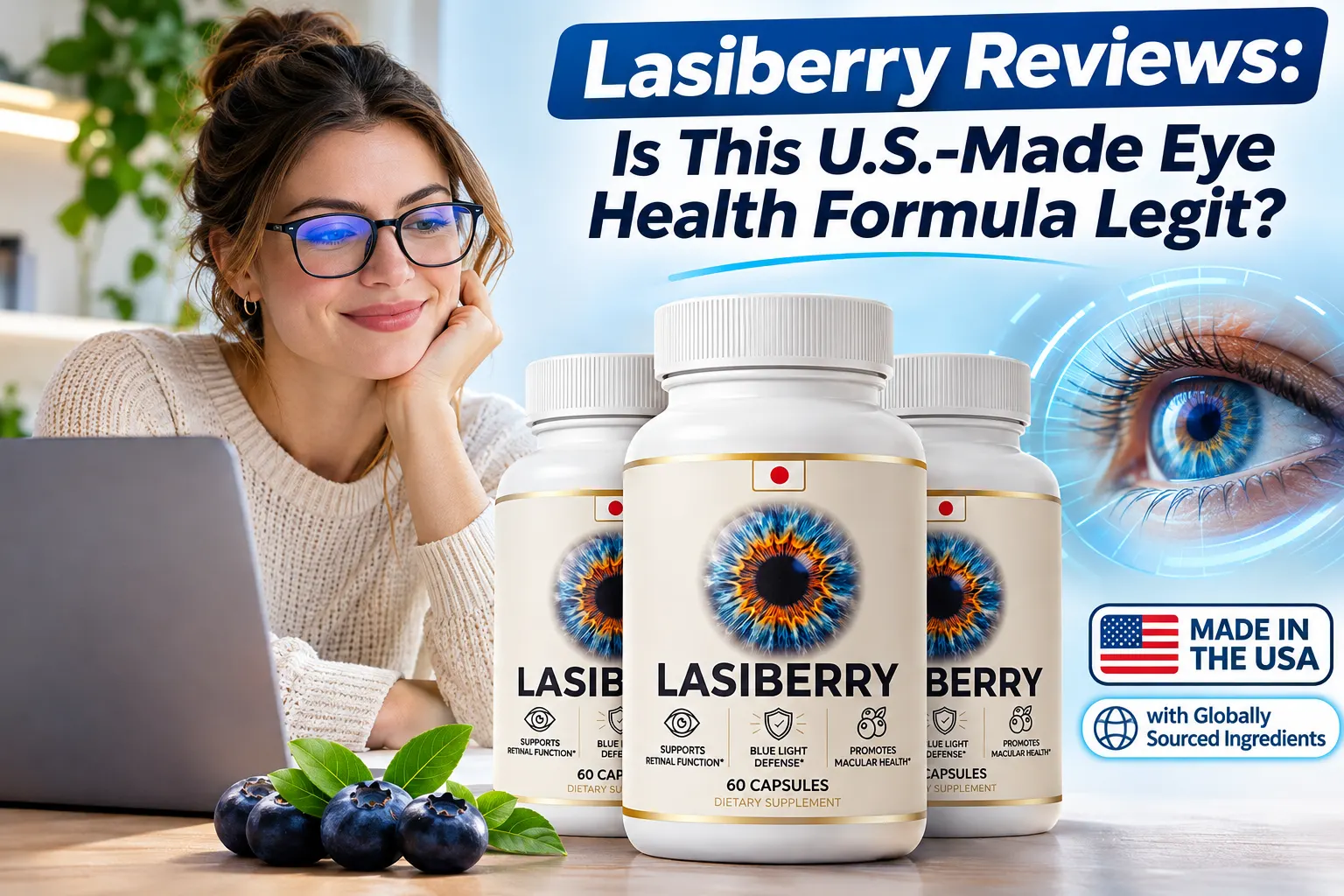
Eye health becomes increasingly important as people spend more time reading, working on computers, using smartphones, driving, and managing the visual demands of everyday life. Because of this, nutritional supplements designed around eye wellness have become increasingly popular among adults who want to support their vision as part of a broader healthy lifestyle.
Lasiberry is presented as a daily eye health supplement designed to complement nutritional and lifestyle habits that support overall eye wellness. The product is marketed as a U.S.-made formula and is positioned around ingredients associated with eye nutrition, antioxidant support, and visual wellness.
But a product being marketed for eye health deserves a closer look.
This Lasiberry Reviews guide examines the product from a practical and evidence-aware perspective. Rather than treating marketing statements as proof, we will separate what the product information says from what established eye-health research actually supports.
Lasiberry At a Glance
| Feature | Details |
|---|---|
| Product | Lasiberry™ |
| Category | Eye health dietary supplement |
| Form | Capsules |
| Suggested Use | 2 capsules daily according to the product information |
| Supply | 30 days per bottle |
| Main Focus | Eye health, vision wellness and nutritional support |
| Formula | Vitamins, minerals, carotenoids and botanical extracts |
| Key Eye-Nutrition Ingredients | Vitamin A, Vitamin C, Vitamin E, Zinc, Bilberry, Zeaxanthin, Lutein |
| Other Formula Components | B vitamins, minerals, Taurine, Grape Seed Extract, Eyebright, Alpha Lipoic Acid, Quercetin, Rutin and Lycopene |
| Manufacturing Claim | Made in the USA according to the product information |
| Product Positioning | Non-stimulant, non-GMO and gluten-free according to the supplied information |
| Guarantee | 60-day money-back guarantee |
| 2-Bottle Package | $79 per bottle |
| 3-Bottle Package | $69 per bottle |
| 6-Bottle Package | $49 per bottle |
| Target Audience | Adults interested in daily eye wellness |
| Purchase | Lasiberry Official Offer |
What Is Lasiberry?
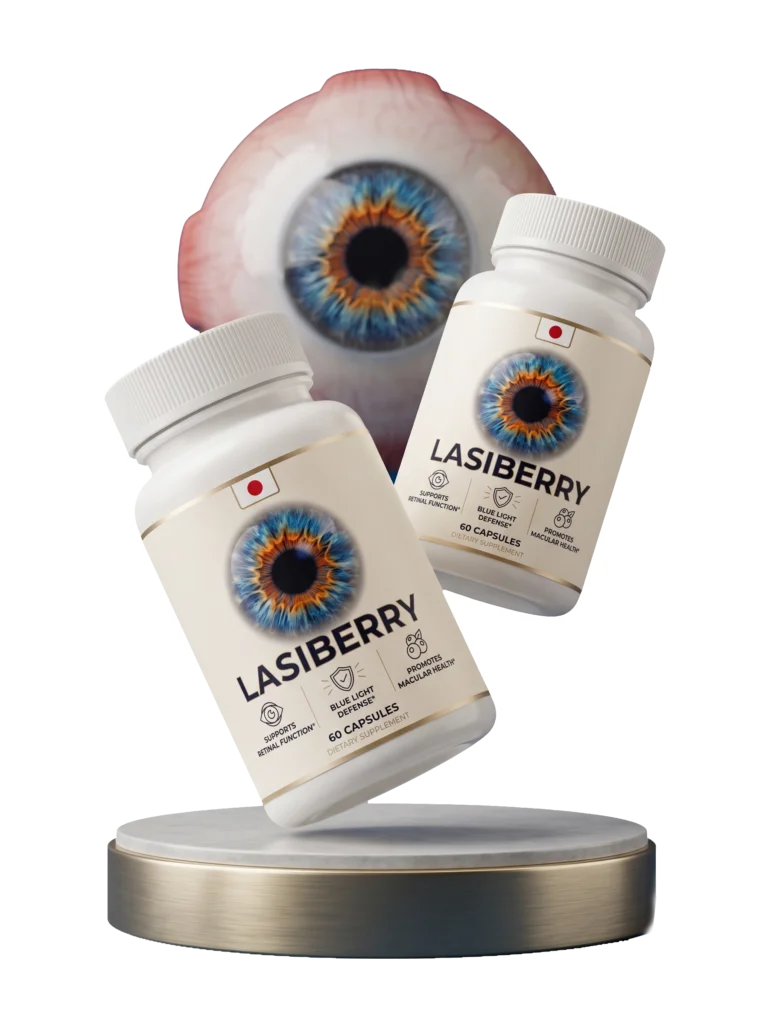
Lasiberry is presented as a daily dietary supplement for adults interested in supporting eye wellness through nutritional support.
The product information emphasizes that eye care should not be reduced to taking a supplement. Healthy nutrition, sufficient sleep, hydration, screen-time habits, appropriate eye protection and routine eye examinations are all described as important parts of a broader eye wellness routine.
That is a reasonable framework for evaluating an eye-health supplement.
A supplement can provide nutrients, but it cannot replace prescription glasses, treatment for an eye condition, regular eye examinations, or professional medical care.
Lasiberry is therefore best viewed as a nutritional supplement intended to complement an existing eye-care routine, rather than as a product designed to correct eyesight or treat an eye disease.
The supplied product information also states that Lasiberry is manufactured in the United States and describes quality-focused manufacturing practices.
However, one important distinction should always be made when evaluating supplement marketing: manufactured in an FDA-registered facility is not the same thing as FDA-approved. The FDA does not approve dietary supplements for safety and effectiveness before they are marketed.
What Does Lasiberry Claim to Support?
The product is positioned around several aspects of everyday eye wellness rather than one specific medical condition.
According to the supplied product information, Lasiberry is intended to complement:
- Daily eye nutrition
- General vision wellness
- Healthy lifestyle habits
- Responsible screen-time habits
- Balanced nutrition
- Long-term eye wellness goals
The product information specifically avoids presenting Lasiberry as a replacement for professional eye care or prescribed treatment.
This is an important distinction because changes in vision can have many causes. Blurry vision, persistent eye pain, flashes, new floaters, sudden vision changes, redness or other symptoms may require professional evaluation rather than nutritional supplementation.
Lasiberry Ingredients: What’s Inside the Formula?
The available Lasiberry formula information describes a combination of vitamins, minerals, carotenoids and plant-derived ingredients.
The published label information identifies 23 active ingredients per two-capsule serving, including vitamin A as beta-carotene, vitamins C and E, several B vitamins, minerals, taurine, grape seed extract, bilberry extract, eyebright, alpha-lipoic acid, quercetin, rutin, zeaxanthin, lutein and lycopene.
The formula includes several nutrients with established biological roles in normal eye function, although the presence of an ingredient does not automatically mean the finished Lasiberry product has been clinically proven to prevent or treat an eye disease.
Vitamin A
Vitamin A is one of the most important nutrients in the Lasiberry formula from a basic eye-function perspective.
The NIH Office of Dietary Supplements explains that vitamin A is essential for normal vision because it contributes to the function of rhodopsin, a light-sensitive protein in the retina. It also supports normal functioning of the cornea and other tissues.
Lasiberry’s formula lists vitamin A in the form of beta-carotene.
That makes vitamin A a relevant component of an eye-health nutritional formula, although getting sufficient vitamin A through a balanced diet is also important.
Vitamin C
Vitamin C is an antioxidant nutrient included in the formula.
Antioxidants are frequently discussed in connection with eye health because the retina has high metabolic activity and is exposed to oxidative processes.
However, it is important not to interpret the presence of vitamin C as proof that Lasiberry can prevent cataracts, macular degeneration or other eye diseases.
Clinical research involving specific eye-health formulations is much more precise than simply taking an individual antioxidant.
Vitamin E
Vitamin E is another antioxidant nutrient included in the formula.
Vitamin E appears in established eye-health research, particularly in the AREDS and AREDS2 formulations studied by the National Eye Institute.
But the amounts and combination of nutrients matter.
The AREDS2 formula, for example, contains specific amounts of vitamin C, vitamin E, zinc, copper, lutein and zeaxanthin. It is not simply a general multivitamin.
Therefore, Lasiberry should not be described as equivalent to an AREDS2 supplement unless its formulation and doses are shown to match the studied formula.
Zinc
Zinc plays several important roles in human health, including functions related to normal vision and cellular processes.
The NIH Office of Dietary Supplements notes that clinical trials of AREDS formulations found that zinc combined with antioxidants could slow progression to advanced age-related macular degeneration in people at high risk.
That research is significant, but it needs to be interpreted correctly.
The benefit demonstrated in AREDS was associated with a specific high-dose formulation used in people with particular stages and risk profiles for AMD. It should not be generalized to every zinc-containing eye supplement.
Lutein
Lutein is a carotenoid found naturally in foods such as leafy green vegetables.
It is particularly relevant to eye nutrition because lutein is concentrated in the retina.
The Lasiberry formula lists lutein, although the listed amount is lower than the 10 mg lutein amount used in the AREDS2 formulation.
That does not make the Lasiberry ingredient irrelevant. It simply means buyers should avoid assuming that a product containing lutein is automatically equivalent to the clinically studied AREDS2 formula.
Zeaxanthin
Zeaxanthin is another carotenoid associated with the macula and retina.
AREDS2 included 2 mg of zeaxanthin alongside lutein and other nutrients. The Lasiberry label information lists zeaxanthin as one of its ingredients.
The inclusion of both lutein and zeaxanthin gives Lasiberry a formula that is clearly oriented toward eye nutrition.
Again, however, the exact dose and overall combination matter when comparing a supplement with clinical trial formulations.
Bilberry Extract
Bilberry is a botanical source of anthocyanins and is commonly included in supplements marketed for eye wellness.
Lasiberry lists bilberry fruit extract among its ingredients.
The product information associates bilberry with circulation and antioxidant support, but claims about improved night vision or significant visual improvement should not be treated as established outcomes for Lasiberry itself without clinical evidence on the finished product.
Eyebright Extract
Eyebright is a traditional botanical that appears in the Lasiberry formula.
It is commonly associated with eye and respiratory herbal preparations.
However, traditional use should not be confused with strong clinical evidence for treating or reversing eye disease.
This is one of the ingredients where buyers should be particularly careful about separating marketing language from proven clinical outcomes.
Grape Seed Extract
Grape seed extract contains polyphenolic compounds and is commonly used in antioxidant-oriented supplements.
Its presence contributes to the overall antioxidant profile of the formula.
Still, evidence concerning an individual antioxidant ingredient does not establish that the finished supplement will improve eyesight.
Alpha-Lipoic Acid
Alpha-lipoic acid is an antioxidant compound involved in energy metabolism.
It is included in the Lasiberry formula, adding another component to the product’s broader nutritional approach.
Quercetin and Rutin
Quercetin and rutin are plant-derived flavonoid compounds.
They are generally associated with antioxidant and cellular functions, and both are included in Lasiberry’s broader formula.
Their presence may make the product appealing to consumers looking for a multi-ingredient nutritional approach, but the evidence for a specific vision improvement from these ingredients is not sufficient to promise a particular result.
Lycopene
Lycopene is a carotenoid commonly found in tomatoes and other foods.
It contributes to the antioxidant profile of the formula.
However, like the other supporting ingredients, it should be viewed as part of the overall nutritional composition rather than as proof of a specific eye-health outcome.
B Vitamins and Other Nutrients
The formula also includes several B vitamins, magnesium, selenium, copper, chromium and taurine.
These ingredients contribute to the broader nutritional profile of the supplement.
For consumers, one advantage of having the full ingredient list available is that they can compare it with other supplements they are already taking and identify possible overlaps.
That is particularly useful when taking multiple multivitamins or mineral supplements.
Does the Lasiberry Formula Match AREDS2?
This is one of the most important questions when evaluating any eye-health supplement.
The answer is no—not as a direct equivalent based on the available information.
The National Eye Institute’s AREDS2 formula contains:
- Vitamin C — 500 mg
- Vitamin E — 400 IU
- Zinc — 80 mg
- Copper — 2 mg
- Lutein — 10 mg
- Zeaxanthin — 2 mg
The formulation was studied specifically in people with intermediate or advanced AMD risk and was found to reduce the risk of progression to advanced AMD.
Lasiberry contains several overlapping nutrients, including vitamin C, vitamin E, zinc, lutein and zeaxanthin, but its overall formulation and doses are different.
That means consumers should not assume that taking Lasiberry provides the same evidence-based benefit as an AREDS2 product.
If an eye doctor has recommended AREDS2 because of AMD, the appropriate approach is to follow that professional recommendation rather than substituting another supplement based solely on overlapping ingredients.
How Does Lasiberry Work?
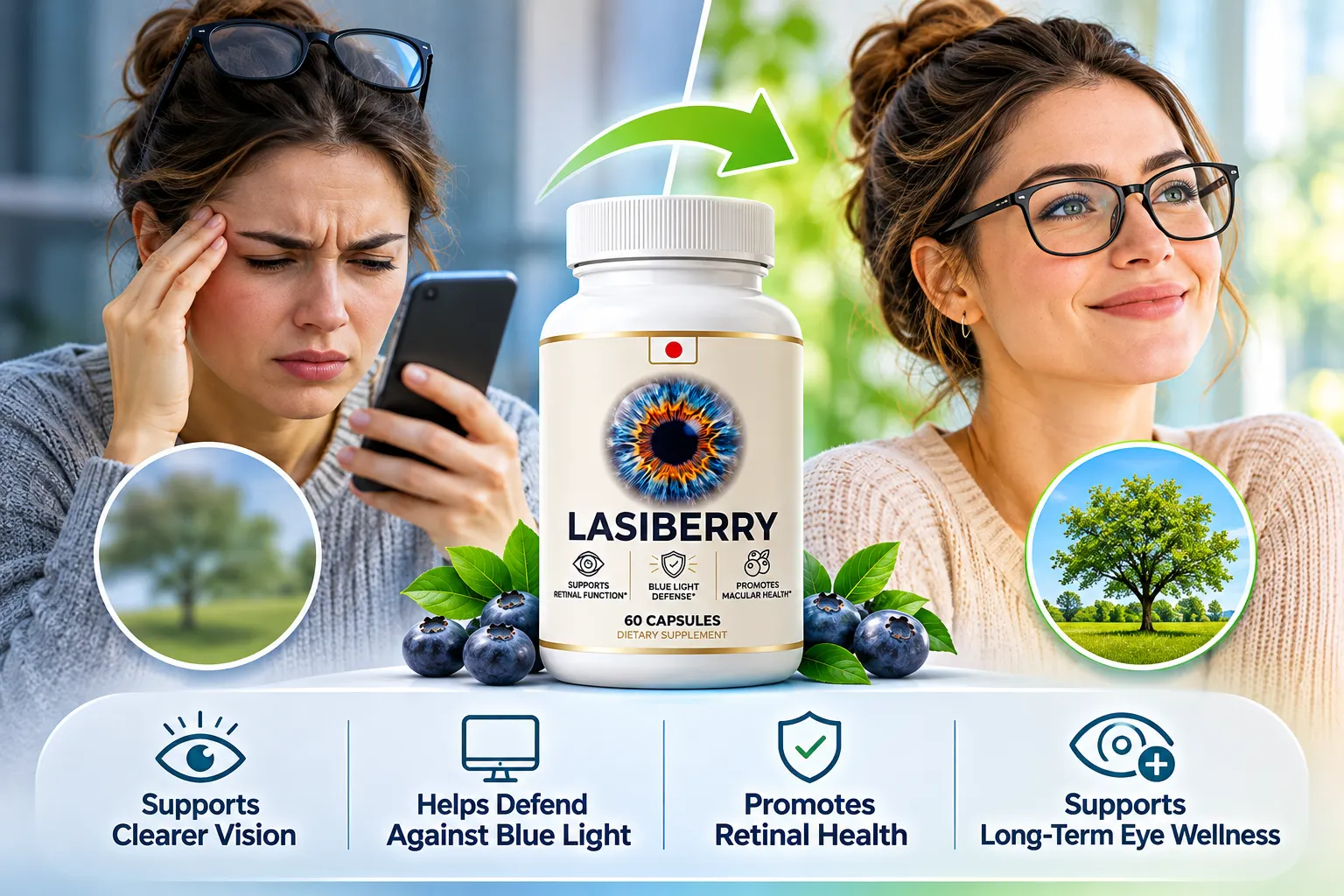
The product information describes Lasiberry as something that should work as part of a consistent nutritional and lifestyle routine rather than as an instant vision solution.
A reasonable way to understand the formula is through nutritional support.
The vitamins and minerals provide nutrients involved in normal physiological functions. Carotenoids such as lutein and zeaxanthin are relevant to the macular region of the eye. Botanical ingredients add additional compounds commonly associated with antioxidant or traditional wellness uses.
But this does not mean Lasiberry can regenerate retinal cells, reverse eye disease, remove the need for glasses, or restore lost eyesight.
Those would be medical claims that require much stronger evidence.
Lasiberry Benefits
Based on the product positioning and ingredient profile, potential areas of interest include:
Daily Eye Nutrition
The combination of vitamins, minerals and carotenoids makes Lasiberry relevant to adults looking for a nutritional supplement focused on eye wellness.
Antioxidant-Oriented Formula
Vitamin C, vitamin E, carotenoids and plant compounds contribute to the product’s antioxidant-focused profile.
Lutein and Zeaxanthin Support
The presence of both carotenoids makes the formula particularly relevant to consumers researching macular and retinal nutrition.
Convenient Routine
The product is designed around two capsules daily, making it relatively straightforward to incorporate into an established routine. The official product information recommends taking two capsules with water, preferably at a consistent time.
Broader Nutritional Approach
Instead of relying on a single ingredient, Lasiberry combines multiple nutrients and botanical extracts.
This may appeal to consumers who prefer a comprehensive formula.
Lasiberry and Screen Time
Modern screen use is one reason many people become interested in eye wellness.
However, it is important to distinguish temporary digital eye discomfort from permanent eye damage.
The American Academy of Ophthalmology explains that prolonged digital-device use can contribute to symptoms such as dry eyes, blurry vision and eye discomfort, but ordinary computer use does not permanently damage the eyes.
Practical habits can help.
These include:
- Taking regular breaks from screens
- Blinking regularly
- Adjusting screen brightness
- Reducing glare
- Keeping a comfortable viewing distance
- Looking at distant objects periodically
- Using appropriate lighting
A supplement should therefore be viewed as one possible part of an eye-wellness routine, not a solution for poor screen habits.
Lasiberry Customer Reviews
The supplied product material contains several customer-review examples describing positive experiences with the product.
Some of the testimonials discuss making eye nutrition a greater part of daily wellness, while other versions of the product website contain stronger personal claims about visual clarity.
These testimonials should be interpreted carefully.
A customer testimonial represents an individual experience. It does not establish that the same result will happen for the average buyer.
The product’s own website also states that testimonials and individual examples should not be interpreted as guarantees of typical results.
Therefore, Lasiberry reviews can be useful for understanding how the product is presented and how some customers describe their experience, but they should not substitute for clinical evidence.
Lasiberry Price and Packages
The supplied offer lists three main packages.
2-Bottle Package
The starter package is listed at:
$79 per bottle
The package provides a 60-day supply and includes free shipping according to the supplied product information.
3-Bottle Package
The most popular package is listed at:
$69 per bottle
The three-bottle option provides a 90-day supply and includes free shipping according to the supplied offer.
6-Bottle Package
The best-value package is listed at:
$49 per bottle
It provides a 180-day supply and is advertised with free shipping.
Promotional prices can change, so buyers should verify the current checkout price before purchasing.
Check the Current Lasiberry Offer
Lasiberry 60-Day Money-Back Guarantee
Lasiberry is promoted with a 60-day money-back guarantee.
The supplied product information states that customers have 60 days to decide whether the product is appropriate for their routine and can contact customer support if they decide it is not the right fit.
A guarantee can reduce the financial risk of trying a product, but buyers should still read the current refund terms carefully.
A money-back guarantee also does not mean that a supplement is medically proven or guaranteed to improve vision.
Is Lasiberry FDA Approved?
No.
This point deserves clarification because the product information refers to U.S. manufacturing and an FDA-registered facility.
The FDA states clearly that it does not approve dietary supplements for safety and effectiveness before they are marketed. Manufacturers are responsible for ensuring that their supplements comply with applicable requirements.
Therefore, Lasiberry should be described as a dietary supplement rather than an FDA-approved eye treatment.
The distinction between an FDA-registered manufacturing facility and an FDA-approved product is important when evaluating online supplement claims.
Is Lasiberry Safe?
The supplied product information recommends consulting a healthcare professional before use if someone has a pre-existing medical condition or takes medication.
That is sensible advice for a multi-ingredient supplement.
Anyone already taking a multivitamin or other eye-health supplement should also compare ingredient labels to avoid unnecessary duplication.
People with diagnosed eye conditions should discuss supplements with an ophthalmologist or other qualified healthcare professional.
This is particularly important if someone has AMD or another condition for which a specific evidence-based treatment or supplement formulation has been recommended.
The FDA likewise advises consumers to consult a doctor, pharmacist or other healthcare professional before deciding to use a dietary supplement, especially because supplements can interact with medications or other supplements.
Lasiberry Pros and Cons
| Pros | Cons |
|---|---|
| Broad eye-nutrition formula | Finished-product clinical evidence is not established in the supplied material |
| Contains lutein and zeaxanthin | Not equivalent to AREDS2 |
| Includes vitamins and minerals relevant to eye nutrition | Some botanical claims have limited clinical evidence |
| Two-capsule daily routine | Requires consistent use |
| Made in the USA according to product information | Marketing claims should be separated from clinical evidence |
| 60-day money-back guarantee | Promotional pricing may change |
| Multiple package options | Larger packages require more upfront spending |
| Non-stimulant positioning | Not intended to replace professional eye care |
Who Might Consider Lasiberry?
Lasiberry may be worth researching for adults who:
- Want to add nutritional support to their general eye-wellness routine.
- Prefer a multi-ingredient formula.
- Are interested in lutein and zeaxanthin.
- Want a supplement containing vitamins, minerals and botanical ingredients.
- Spend substantial time reading or using digital devices.
- Want a product with a stated money-back guarantee.
However, a person with a diagnosed eye disease should not use a supplement as a substitute for professional treatment.
Who Should Talk to a Doctor First?
Professional guidance is particularly important for people who:
- Have an existing eye condition.
- Have experienced a sudden change in vision.
- Are taking prescription medications.
- Already use several vitamin or mineral supplements.
- Are pregnant or nursing.
- Have questions about whether an eye supplement is appropriate for their specific condition.
Sudden vision changes, severe eye pain, new flashes of light or a sudden increase in floaters require prompt professional attention rather than waiting to see whether a supplement helps. The American Academy of Ophthalmology recommends seeking eye-care evaluation for these warning signs.
Lasiberry Reviews: Is It Legit?
Based on the available product information, Lasiberry is presented as a real dietary supplement with a defined formula, package options and money-back guarantee.
But whether a supplement is “legit” should involve more than simply asking whether a product exists.
A better evaluation includes:
Formula transparency: Lasiberry provides a multi-ingredient formula rather than relying on a completely undisclosed blend.
Relevant nutrients: The formula contains nutrients and carotenoids that are relevant to eye nutrition, including vitamin A, vitamin C, vitamin E, zinc, lutein and zeaxanthin.
Evidence: Some nutrients have meaningful eye-health research behind them, particularly in specific formulations and populations.
Finished-product evidence: The available information does not establish that Lasiberry itself has been tested in a large clinical trial demonstrating that it prevents or reverses an eye disease.
Marketing claims: Some product pages make stronger statements than the evidence can necessarily support. Buyers should separate ingredient research from product-specific proof.
Professional care: No supplement should replace eye examinations or treatment for a diagnosed condition.
Lasiberry Reviews: Is This U.S.-Made Eye Health Formula Legit?
Explore Lasiberry’s eye health formula, key ingredients, and advertised vision support claims before buying.
Final Verdict
So, are Lasiberry reviews enough to call the product legitimate?
Lasiberry appears to be a dietary supplement built around a combination of vitamins, minerals, carotenoids and botanical extracts, and its formula contains several ingredients relevant to eye nutrition. Its inclusion of lutein and zeaxanthin is particularly notable because these nutrients have been studied in the context of eye health and are components of the AREDS2 formulation.
At the same time, Lasiberry should not be confused with an AREDS2 supplement. The formulas and doses are different, and the clinical evidence for AREDS2 applies to a specific formulation and specific people at risk for advanced AMD.
The product’s U.S.-made positioning, two-capsule routine and 60-day guarantee may make it appealing to consumers interested in nutritional eye support.
The biggest point to keep in mind is expectations.
Lasiberry should be considered complementary nutritional support, not a replacement for glasses, eye examinations, medical treatment or an evidence-based supplement prescribed by an eye-care professional.
For someone looking for a broad eye-nutrition formula and who understands these limitations, Lasiberry may be worth considering.
View Lasiberry’s Current Offer
Frequently Asked Questions
What is Lasiberry?
Lasiberry is a dietary supplement marketed for daily eye health and visual wellness support. Its formula combines vitamins, minerals, carotenoids and botanical extracts.
What are the main Lasiberry ingredients?
The formula includes vitamin A, vitamin C, vitamin E, B vitamins, zinc, selenium, copper, chromium, taurine, grape seed extract, bilberry, eyebright, alpha-lipoic acid, quercetin, rutin, zeaxanthin, lutein and lycopene.
Does Lasiberry contain lutein?
Yes. Lutein is included in the Lasiberry formula.
Does Lasiberry contain zeaxanthin?
Yes. Zeaxanthin is also included.
Is Lasiberry the same as AREDS2?
No. Although Lasiberry contains several nutrients also found in AREDS2, the overall formula and doses are different. AREDS2 was clinically studied for people with specific stages and risks of AMD.
How should Lasiberry be taken?
The product information recommends two capsules daily with water, preferably at a consistent time.
Can Lasiberry cure vision problems?
No. Lasiberry is a dietary supplement and should not be considered a treatment or cure for vision disorders or eye disease.
Does Lasiberry have a money-back guarantee?
Yes. The supplied product information states that Lasiberry comes with a 60-day money-back guarantee.
How much does Lasiberry cost?
The supplied offer lists $79 per bottle for two bottles, $69 per bottle for three bottles and $49 per bottle for six bottles. Prices and promotions can change.
Can I take Lasiberry with other supplements?
Because the formula contains multiple vitamins and minerals, it is sensible to compare the label with other supplements you take. Ask a doctor or pharmacist if you are unsure about combining products.
Is Lasiberry FDA approved?
No dietary supplement should be described as FDA-approved. The FDA does not approve dietary supplements for safety and effectiveness before marketing.
References
- National Eye Institute — AREDS/AREDS2 Clinical Trials
National Eye Institute: AREDS/AREDS2 Clinical Trials - National Eye Institute — AREDS/AREDS2 Frequently Asked Questions
National Eye Institute: AREDS/AREDS2 FAQ - National Eye Institute — AREDS2 Supplements for AMD
National Eye Institute: AREDS2 Supplements - NIH Office of Dietary Supplements — Vitamin A and Carotenoids
NIH ODS: Vitamin A and Carotenoids - NIH Office of Dietary Supplements — Zinc
NIH ODS: Zinc Fact Sheet - American Academy of Ophthalmology — Computers, Digital Devices, and Eye Strain
American Academy of Ophthalmology: Digital Eye Strain - American Academy of Ophthalmology — Digital Devices and Your Eyes
American Academy of Ophthalmology: Digital Devices and Your Eyes - U.S. Food & Drug Administration — Questions and Answers on Dietary Supplements
FDA: Questions and Answers on Dietary Supplements
Medical Disclaimer
Lasiberry is a dietary supplement and is not intended to diagnose, treat, cure or prevent any disease. The information in this article is provided for educational purposes and should not replace professional medical advice, diagnosis or treatment. Anyone with an eye condition, sudden vision changes, or concerns about their eye health should consult a qualified eye-care professional.
Check the Current Lasiberry Offer
Affiliate Disclosure
This article may contain an affiliate link. If a purchase is made through the provided link, the publisher may receive a commission at no additional cost to the buyer. This does not change the editorial evaluation presented above.


Natural home remedies, skincare secrets, dental & eye health tips, and real product reviews to help you stay healthy the natural way.