

Choosing an eye supplement can be surprisingly confusing.
One formula may focus on lutein and zeaxanthin. Another may add vitamins, minerals, and botanical extracts. Some products are marketed around screen-time support, while others emphasize retinal or macular nutrition.
But what actually matters when comparing them?
The first step is to look beyond broad promises and examine the ingredients, intended nutritional role, formula, serving instructions, price, and what current eye-health research can—and cannot—tell us.
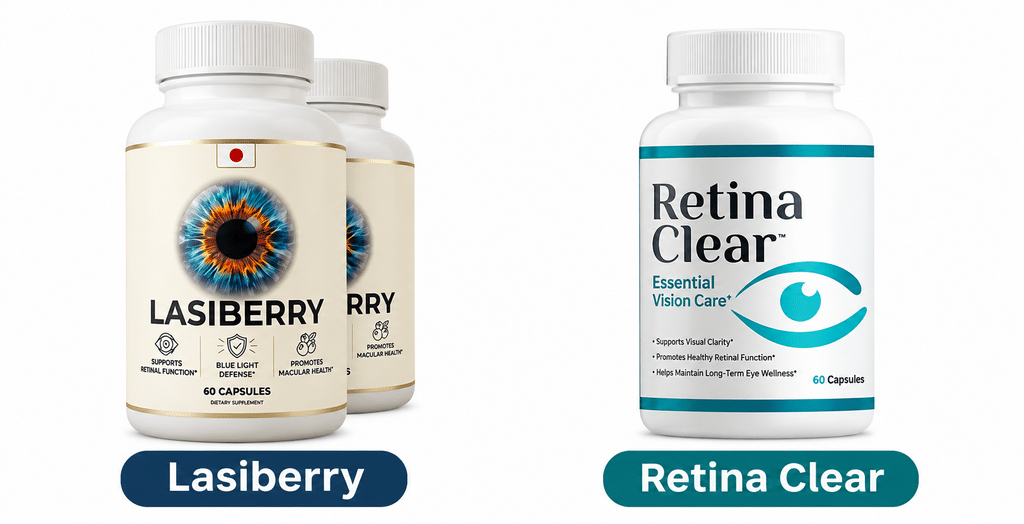
Two products that take slightly different approaches are Lasiberry and RetinaClear. Both are dietary supplements designed around nutrients and botanical ingredients associated with eye-health nutrition, but their formulas are not identical.
Lasiberry features five main ingredients: lutein, zeaxanthin, bilberry extract, eyebright extract, and vitamin A. RetinaClear uses a broader formula that includes lutein, zeaxanthin, bilberry, vitamin A, ginkgo biloba, zinc, vitamins C and E, astaxanthin, and other listed ingredients in its product information.
That makes this comparison useful for anyone searching for eye supplement, eye health support, or vision support and trying to understand what deserves attention before buying.
At a Glance: Lasiberry vs. RetinaClear
| Feature | Lasiberry | RetinaClear |
|---|---|---|
| Product type | Daily dietary supplement | Daily dietary supplement |
| Main focus | Everyday eye-health nutrition | Vision, retinal, macular and antioxidant support |
| Key carotenoids | Lutein + Zeaxanthin | Lutein + Zeaxanthin |
| Vitamin A | Yes | Yes |
| Bilberry | Yes | Yes |
| Additional botanicals | Eyebright | Ginkgo biloba and other botanical components |
| Other nutrients | — | Zinc, Vitamins C & E, Astaxanthin and other listed ingredients |
| Format | Capsule | Capsule |
| Lasiberry listed package options | 2, 3 or 6 bottles | 1, 3 or 6 bottles |
| Lasiberry starting listed price | $79/bottle | $69/bottle |
| Larger package pricing | Up to $49/bottle | Up to $49/bottle |
| Guarantee | 60 days | 60 days |
| Best suited to | People wanting a focused five-ingredient formula | People looking for a broader multi-nutrient formula |
The product information supplied for Lasiberry describes its formula as a combination of carotenoids, vitamin nutrition, and botanical extracts intended to complement everyday eye wellness, eye health support. RetinaClear presents a broader nutritional formula aimed at retinal, macular, antioxidant, and visual-support concerns.
What Really Matters in an Eye Supplement?
Before choosing between two products, it helps to know what you are actually buying.
An eye supplement should not be judged simply by the number of ingredients on the label.
A longer ingredient list does not automatically mean a better formula. At the same time, a shorter formula is not automatically superior either.
Instead, consider five things:
1. Which nutrients are included?
Lutein, zeaxanthin, vitamin A, vitamin C, vitamin E, and zinc have all been studied in relation to eye health in different contexts.
2. What are the actual amounts?
This is extremely important.
Research findings usually depend on particular amounts and formulations. Therefore, knowing that a product contains an ingredient is not enough to conclude that it provides the same benefits demonstrated in a clinical study.
3. What is the supplement intended to support?
A product marketed for general eye wellness is different from a clinically studied formula intended for a particular eye condition.
4. Does it replace professional eye care?
It should not.
Dietary supplements are not substitutes for eye examinations, prescription treatment, corrective lenses, or medical care.
5. Are the claims stronger than the evidence?
This may be the most important question of all.
The National Center for Complementary and Integrative Health notes that research on supplements varies considerably by eye condition. For example, AREDS/AREDS2 research supports specific formulations for certain people with age-related macular degeneration, but those findings should not automatically be applied to every commercial eye supplement.
Lasiberry: A Focused Five-Ingredient Formula
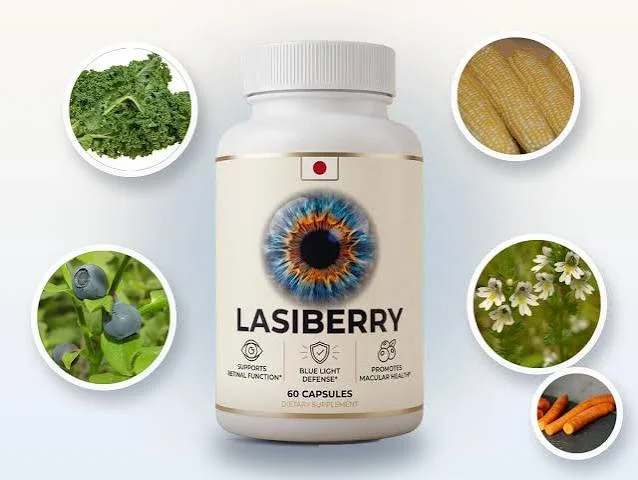
Lasiberry takes a relatively straightforward approach.
Its supplied product information identifies five featured ingredients:
- Lutein
- Zeaxanthin
- Bilberry Extract
- Eyebright Extract
- Vitamin A
The formula is positioned around everyday eye-health nutrition rather than as a replacement for professional eye care.
Lutein and Zeaxanthin
Lutein and zeaxanthin are carotenoids naturally found in the retina.
They are also present in foods such as leafy green vegetables.
These two nutrients are particularly interesting because they have been studied together in eye-health research, including the AREDS2 research program.
However, there is an important distinction.
AREDS2 was not a trial of Lasiberry. It investigated a specific formulation containing particular doses of nutrients in people with particular stages of age-related macular degeneration.
The National Eye Institute explains that AREDS2 used 10 mg of lutein and 2 mg of zeaxanthin in its formulation, along with other nutrients.
Therefore, seeing lutein and zeaxanthin in a commercial supplement does not mean that the supplement is equivalent to AREDS2.
That distinction is important when evaluating any eye-health product.
Vitamin A
Vitamin A has a well-established nutritional role in normal vision.
Lasiberry includes vitamin A alongside its carotenoids and botanical ingredients. The product information describes it as part of the formula’s overall nutritional approach to eye wellness.
Vitamin A is an essential nutrient, but more is not necessarily better. Supplements should be taken according to their label directions, and people should consider their total intake from food and other supplements.
Bilberry Extract
Bilberry contains naturally occurring compounds called anthocyanins.
It has a long history of traditional interest in relation to vision, particularly night vision. However, modern research is not strong enough to conclude that bilberry supplementation improves night vision in healthy people.
NCCIH reports that studies of bilberry and night vision have produced conflicting results and that the more rigorous studies have not demonstrated a clear benefit for healthy people.
This is a good example of why an ingredient can be interesting without being a guaranteed solution.
Eyebright Extract
Eyebright is a traditional botanical included in the Lasiberry formula.
The supplied product information presents it as an additional botanical component alongside lutein, zeaxanthin, bilberry, and vitamin A.
Because evidence for individual botanicals can vary considerably, buyers should avoid assuming that the presence of an ingredient automatically means that the finished product has been clinically proven.
Lasiberry’s Overall Approach
The main appeal of Lasiberry is its relatively focused formula.
Instead of attempting to include a very large number of vitamins, minerals, and plant extracts, it centers its formulation around five featured ingredients.
That may appeal to someone who prefers a simpler ingredient profile.
Check the current Lasiberry offer: Check Latest Lasiberry Offer
RetinaClear: A Broader Nutritional Formula
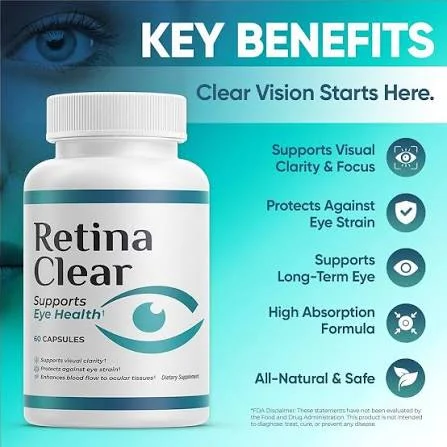
RetinaClear takes a more extensive approach.
Its product information lists lutein and zeaxanthin together with bilberry fruit extract, vitamin A, ginkgo biloba extract, zinc, vitamins C and E, and astaxanthin.
The product is marketed as a natural vision-support supplement with an emphasis on retinal, macular, antioxidant, and visual wellness.
Lutein and Zeaxanthin
Like Lasiberry, RetinaClear includes lutein and zeaxanthin.
This creates one of the clearest similarities between the two formulas.
These carotenoids are naturally concentrated in the retina and macula and have been investigated extensively in eye-health research.
Again, though, the important point is that the evidence applies to particular formulations and populations—not automatically to every supplement containing these ingredients.
Bilberry
RetinaClear also contains bilberry.
As with Lasiberry, this adds a botanical component to the formula.
But the evidence should be interpreted realistically. NCCIH notes that bilberry has not been clearly shown to be beneficial for a specific health condition, and evidence surrounding night vision is conflicting.
Vitamin A
RetinaClear includes vitamin A in the form of beta-carotene according to its product information.
Vitamin A has an important role in normal visual function.
The formula therefore combines an essential vitamin with carotenoids and other nutrients.
Zinc
Zinc is another significant difference between the two formulas.
RetinaClear includes zinc as part of its broader nutritional approach. Zinc is also included in the AREDS/AREDS2 formulations used in specific circumstances related to AMD.
However, the presence of zinc alone does not make RetinaClear an AREDS or AREDS2 formula.
The NEI specifically describes AREDS2 as a defined formulation containing zinc alongside specific amounts of vitamin C, vitamin E, lutein, zeaxanthin, and copper.
Vitamins C and E
RetinaClear also includes vitamins C and E.
These vitamins have antioxidant roles and are part of the broader nutritional approach used in certain eye-health research.
Importantly, NCCIH’s review of eye supplements makes clear that evidence differs by condition. For AMD, the AREDS formulation has evidence for slowing progression in certain people, whereas vitamin supplementation has not been shown to treat glaucoma.
Astaxanthin
Astaxanthin adds another carotenoid-type antioxidant component to the RetinaClear formula.
The product information identifies it as being sourced from microalgae and includes it as part of the broader antioxidant profile.
Lasiberry vs. RetinaClear: What’s the Difference?
The biggest difference is the breadth of the formulas.
Lasiberry centers on five featured ingredients:
Lutein + Zeaxanthin + Bilberry + Eyebright + Vitamin A
RetinaClear uses a broader combination that includes:
Lutein + Zeaxanthin + Bilberry + Vitamin A + Ginkgo Biloba + Zinc + Vitamins C & E + Astaxanthin, along with other listed formula components.
That does not automatically make one product better.
Instead, it gives buyers two different formula styles to consider.
| Comparison | Lasiberry | RetinaClear |
|---|---|---|
| Formula style | Focused | Broader |
| Lutein | Yes | Yes |
| Zeaxanthin | Yes | Yes |
| Bilberry | Yes | Yes |
| Vitamin A | Yes | Yes |
| Eyebright | Yes | No listed |
| Ginkgo biloba | No listed | Yes |
| Zinc | No listed | Yes |
| Vitamins C & E | No listed | Yes |
| Astaxanthin | No listed | Yes |
| Overall approach | Five selected nutrients/botanicals | Multi-nutrient and botanical formula |
The more useful question is therefore not simply “Which has more ingredients?”
It is:
“Which formula better matches what I am actually looking for?”
What Does Eye-Health Research Actually Say?
This is where buyers need to be careful.
Eye supplements are often marketed using terms such as “retinal protection,” “macular support,” “blue-light protection,” and “sharper vision.”
Some nutrients do have legitimate scientific research behind them, but that does not mean every commercial claim is clinically established.
AREDS and AREDS2
The Age-Related Eye Disease Studies are among the most important research programs to understand when discussing eye supplements.
According to the National Eye Institute, the original AREDS formula reduced the risk of progression to advanced AMD in people with certain stages of the disease.
AREDS2 later investigated replacing beta-carotene with lutein and zeaxanthin and found that the lutein/zeaxanthin formulation was an appropriate replacement, with particular safety advantages for smokers and former smokers compared with beta-carotene.
But this does not mean that every person should take an AREDS2 supplement.
The NEI specifically recommends discussing whether an AREDS/AREDS2 supplement is appropriate with an eye-care professional.
And neither Lasiberry nor RetinaClear should automatically be described as an AREDS2 replacement based simply on shared ingredients.
What About Blue Light and Screen Use?
This is another area where marketing can become confusing.
Long periods of computer or smartphone use can contribute to digital eye strain. Symptoms can include temporary blurry vision, dryness, discomfort, aching, or irritation.
The American Academy of Ophthalmology recommends practical measures such as taking regular breaks and following the 20-20-20 approach.
That means an eye-health routine should not begin and end with a supplement.
If you spend much of the day in front of screens, simple habits can matter too:
- Take regular visual breaks
- Blink frequently
- Keep the screen at a comfortable distance
- Adjust lighting
- Address persistent dryness
- Keep regular eye examinations
- Follow your eye-care professional’s recommendations
A supplement can be considered part of a broader wellness routine, but it should not be used as a substitute for these habits.
Which One Has the More Focused Formula?
If your preference is a shorter formula built around five featured nutrients and botanicals, Lasiberry may be the more straightforward option.
Its formula specifically highlights lutein, zeaxanthin, bilberry, eyebright, and vitamin A.
If you prefer a broader formula containing multiple vitamins, minerals, carotenoids, and botanical extracts, RetinaClear takes that approach.
Its listed formula includes lutein, zeaxanthin, bilberry, vitamin A, ginkgo biloba, zinc, vitamins C and E, and astaxanthin.
Neither approach is automatically superior.
The quality of the formulation, ingredient amounts, label transparency, manufacturing standards, price, and your individual needs are more meaningful considerations.
Lasiberry Price and Packages
The supplied Lasiberry information lists three primary package choices.
2 Bottles
- $79 per bottle
- 60-day supply
- $158 total
- Shipping added
- 60-day money-back guarantee
3 Bottles
- $69 per bottle
- 90-day supply
- $207 total
- Free U.S. shipping
- 60-day money-back guarantee
6 Bottles
- $49 per bottle
- 180-day supply
- $294 total
- Free U.S. shipping
- 60-day money-back guarantee
The supplied product page also lists four digital bonuses with the 3- and 6-bottle packages, including an eye-health recipe guide, a digital eye-defense guide, a 10-day challenge, and a personalized usage guide.
See Lasiberry pricing: View Lasiberry Offer
RetinaClear Price and Packages
The supplied RetinaClear information lists:
1 Bottle
- $69 per bottle
- 30-day supply
- Shipping fee applies
- Listed total of $78.99
3 Bottles
- $59 per bottle
- 90-day supply
- Free shipping
- $177 total
6 Bottles
- $49 per bottle
- 180-day supply
- Free shipping
- $294 total
The product information also states that RetinaClear comes with a 60-day money-back guarantee.
Because prices and promotional offers can change, buyers should confirm the current checkout price before ordering.
Check the latest RetinaClear offer: Check Latest RetinaClear Offer
Which Eye Supplement May Be Better for You?
There is no universal answer.
Lasiberry may appeal to you if:
- You prefer a focused five-ingredient formula
- You specifically want lutein and zeaxanthin
- You want vitamin A included
- You prefer a combination of carotenoids and botanical extracts
- You like the idea of a simpler ingredient profile
RetinaClear may appeal to you if:
- You prefer a broader nutritional formula
- You want lutein and zeaxanthin alongside additional nutrients
- You are interested in a formula containing zinc
- You want vitamins C and E included
- You prefer a formula with several botanical and antioxidant components
The key point is that more ingredients do not automatically equal better results.
Likewise, fewer ingredients do not automatically mean a product is less effective.
What to Check Before Buying Any Eye Supplement
Regardless of which product you choose, use this checklist.
Check the Supplement Facts Panel
The FDA explains that dietary supplement labels are required to provide information such as serving size, number of servings, dietary ingredients, and amounts per serving.
Don’t rely only on marketing copy.
Look at Ingredient Amounts
An ingredient name without an amount tells you very little about whether the product resembles the doses used in research.
Consider Your Existing Supplements
If you already take a multivitamin or other eye-health supplement, check for duplicate nutrients.
Consider Your Medical Situation
Some supplements can interact with medications or may not be appropriate for certain conditions.
FDA advises consumers to talk with a doctor, pharmacist, or other qualified healthcare professional before using dietary supplements when there are concerns about safety or interactions.
Don’t Confuse “Natural” With “Risk-Free”
Botanical ingredients can have biological effects and may interact with medications.
Don’t Expect a Supplement to Correct Every Vision Problem
Blurred vision, sudden vision changes, persistent eye pain, flashes, floaters, or other concerning symptoms require appropriate professional evaluation rather than self-treatment with supplements.
What About Customer Reviews?
Reviews can be useful for understanding how consumers perceive a product, but they should be interpreted carefully.
The Lasiberry source includes several “Everyday Eye Wellness Perspectives,” but importantly, the source itself identifies these as illustrative profiles rather than verified customer testimonials or actual product experiences.
RetinaClear’s supplied page contains customer testimonials describing experiences such as clearer vision, reduced eye fatigue, and improved night driving.
Those statements should be viewed as individual marketing testimonials rather than clinical evidence.
A testimonial cannot establish that a supplement will produce the same outcome for another person.
For that reason, ingredient transparency and independent evidence are more useful than relying on dramatic before-and-after stories.
Pros and Cons: Lasiberry
| Pros | Considerations |
|---|---|
| Five featured ingredients | Does not replace professional eye care |
| Includes lutein and zeaxanthin | Individual results can vary |
| Includes vitamin A | Ingredient amounts should be checked on the current label |
| Includes bilberry and eyebright | Not an AREDS2 formula simply because it contains shared ingredients |
| 60-day guarantee | Price and shipping should be confirmed before ordering |
| Multiple package options | Consult a healthcare professional when appropriate |
The supplied Lasiberry information itself emphasizes that the supplement should complement balanced eating and regular eye care rather than replace professional treatment.
Pros and Cons: RetinaClear
| Pros | Considerations |
|---|---|
| Broad multi-nutrient formula | More ingredients are not automatically better |
| Includes lutein and zeaxanthin | Product claims should be distinguished from established clinical evidence |
| Includes zinc | Exact formulation should be checked on the label |
| Includes vitamins C and E | Not automatically equivalent to AREDS2 |
| Includes botanical extracts | Some people may need professional advice before supplementation |
| 60-day guarantee | Price and promotional terms can change |
| Multiple package choices | Should not replace medical eye care |
Can an Eye Supplement Replace an Eye Exam?
No.
This is one of the most important points for anyone considering an eye-health supplement.
The NCCIH recommends comprehensive eye examinations and emphasizes following the advice of eye-care professionals when an eye condition is present.
Supplements can provide nutritional support, but they cannot diagnose conditions such as glaucoma, cataracts, retinal disease, diabetic eye disease, or other causes of vision changes.
Regular examinations can identify problems before symptoms become obvious.
A Better Everyday Eye-Health Routine
An eye supplement is only one possible part of an eye-health routine.
A broader approach can include:
Eat a Varied Diet
Leafy greens, colorful fruits and vegetables, eggs, fish, nuts, seeds, and other nutrient-rich foods can contribute to overall nutrition.
Take Screen Breaks
If you spend hours on digital devices, give your eyes regular breaks.
The AAO’s 20-20-20 approach is one practical option: every 20 minutes, look at something at least 20 feet away for at least 20 seconds.
Schedule Eye Exams
Don’t wait until vision problems become severe.
Protect Your Eyes Outdoors
Appropriate sunglasses can reduce exposure to bright sunlight and UV radiation.
Manage Existing Conditions
Conditions such as diabetes and high blood pressure can affect eye health, making regular medical care important.
Use Supplements Thoughtfully
If you decide to use a supplement, understand its ingredients and amounts rather than choosing solely because of a marketing claim.
Frequently Asked Questions
What is the best eye supplement?
There is no single best eye supplement for everyone. The right choice depends on the formula, ingredient amounts, individual needs, diet, medical history, and the reason someone is considering supplementation.
Are Lasiberry and RetinaClear the same?
No. Both contain lutein, zeaxanthin, bilberry, and vitamin A, but their formulas differ. Lasiberry focuses on five featured ingredients, while RetinaClear provides a broader combination of vitamins, minerals, carotenoids, and botanical extracts.
Which contains more ingredients?
Based on the supplied product information, RetinaClear has the broader listed formula.
Do both contain lutein and zeaxanthin?
Yes. Both products feature lutein and zeaxanthin.
Is lutein good for eye health?
Lutein is a carotenoid naturally found in the retina and has been extensively studied in eye-health research. AREDS2 included lutein and zeaxanthin in a specific formulation for people with certain stages of AMD.
Does that mean any lutein supplement treats AMD?
No. The AREDS2 findings apply to a specific formulation and specific patient groups. A commercial supplement containing lutein should not automatically be considered equivalent.
Can bilberry improve night vision?
Current evidence does not clearly support that claim. NCCIH reports that studies have produced conflicting results and that rigorous studies have not demonstrated improved night vision in healthy people.
Can an eye supplement reduce screen-related eye strain?
A supplement should not be considered a guaranteed treatment for digital eye strain. Regular breaks, appropriate screen positioning, blinking, lighting, and other practical measures can help manage discomfort associated with prolonged screen use.
Is RetinaClear FDA approved?
Dietary supplements are not FDA-approved for safety and effectiveness before being marketed in the way prescription drugs are. FDA explains that manufacturers are responsible for meeting applicable safety and labeling requirements.
Is Lasiberry a replacement for an eye doctor?
No. The Lasiberry product information specifically states that it does not replace regular eye exams or professional care.
How long does the money-back guarantee last?
Both product sources describe a 60-day guarantee.
Which one is cheaper?
At the listed larger-package pricing provided in the product sources, both Lasiberry and RetinaClear reach a listed $49-per-bottle price on their six-bottle options. Current prices should be confirmed before ordering.
Final Takeaway: What Really Matters?
If you are looking for an eye supplement, the most important thing is not finding the product with the biggest promise.
It is finding a formula you can understand.
Lasiberry and RetinaClear both include lutein and zeaxanthin, two carotenoids that have an established place in eye-health research. Both also include vitamin A and bilberry, while their remaining ingredients and overall formula approaches differ.
Lasiberry takes the more focused route with five featured nutrients and botanicals: lutein, zeaxanthin, bilberry, eyebright, and vitamin A.
RetinaClear takes a broader approach, adding ingredients such as zinc, vitamins C and E, ginkgo biloba, and astaxanthin to its listed formula.
Neither should automatically be labeled “better” simply because of ingredient count.
The strongest way to choose is to compare the actual Supplement Facts panel, ingredient amounts, intended use, price, guarantee, and your personal circumstances.
Most importantly, remember that nutritional supplements are only one part of eye wellness. A balanced diet, healthy lifestyle, appropriate screen habits, regular eye examinations, and professional treatment when needed remain important.
And if you have a diagnosed eye condition, don’t use an eye supplement as a replacement for treatment recommended by your eye-care professional. Current research supports some specific nutritional formulations for particular stages of AMD, but that evidence should not be generalized to every eye supplement on the market.
Ready to compare the two options?
Check Lasiberry’s Current Offer
Check RetinaClear’s Current Offer
References
- National Eye Institute — AREDS/AREDS2 Frequently Asked Questions
National Eye Institute: AREDS/AREDS2 - NCCIH — Dietary Supplements for Eye Conditions
NCCIH: Dietary Supplements for Eye Conditions - NCCIH — Dietary Supplements for Eye Conditions: What the Science Says
NCCIH: What the Science Says - NCCIH — 6 Things To Know About Dietary Supplements for Eye Conditions
NCCIH: Eye Supplements — 6 Things to Know - NCCIH — Bilberry: Usefulness and Safety
NCCIH: Bilberry - American Academy of Ophthalmology — Computers, Digital Devices, and Eye Strain
American Academy of Ophthalmology: Digital Eye Strain - American Academy of Ophthalmology — Eye Strain and Sleepy Eyes
American Academy of Ophthalmology: Eye Strain Tips - FDA — Information for Consumers on Using Dietary Supplements
FDA: Using Dietary Supplements Safely - FDA — FDA 101: Dietary Supplements
FDA: Dietary Supplements Regulation - FDA — Questions and Answers on Dietary Supplements
FDA: Dietary Supplement Questions and Answers

Natural home remedies, skincare secrets, dental & eye health tips, and real product reviews to help you stay healthy the natural way.