


If your throat feels scratchy every spring like clockwork, you’ve probably asked yourself the same question millions of Americans ask every allergy season: can allergies actually cause a sore throat, or is this just a cold that won’t quit? The short answer is yes — allergies sore throat is a real and very common combination, and once you understand why it happens, treating it becomes a lot less confusing.
In this guide, we’ll break down exactly how allergy sore throat symptoms develop, how to tell allergies vs cold symptoms apart, what an allergy cough sounds like, why pollen sore throat flare-ups happen, and — most importantly — how to actually feel better. We’ll also walk through a real-world case study, a pros and cons table of common remedies, a symptom comparison chart, and answers to the questions people search for most.
Can Allergies Really Cause a Sore Throat?
Yes. While most people associate sore throats with colds or the flu, an allergies sore throat is one of the most under-recognized symptoms of seasonal and year-round allergic reactions. According to the Mayo Clinic, allergic reactions to mold, dust, pollen, or pet dander can cause throat irritation. During spring allergies, tree and grass pollen levels often rise, increasing the risk of throat irritation. Mucus that builds up and drips down the back of the nose and throat—known as postnasal drip—can make an allergies sore throat even worse.
The main cause of an allergies sore throat is postnasal drip. When your immune system overreacts to harmless allergens such as ragweed pollen, dust mites, or pet dander, it produces extra mucus. This mucus flows down the back of your throat, causing irritation, inflammation, and discomfort. Unlike a sore throat caused by a viral or bacterial infection, an allergies sore throat is usually accompanied by sneezing, itchy eyes, and a runny nose rather than fever or severe body aches.
The Postnasal Drip Connection
Here’s the mechanism in plain language:
- Your nose detects an allergen (pollen, dust, mold, pet dander).
- Your immune system releases histamine to “fight it off.”
- Histamine triggers inflammation and extra mucus production in your nasal passages.
- That excess mucus has to go somewhere — and gravity sends a lot of it down the back of your throat.
- The constant drip irritates and inflames the throat tissue, leading to that raw, scratchy feeling.
Allergic reactions from pollen, dust mites, pets, or mold can cause mucus from your nose to drip down the back of your throat, and this postnasal drip can lead to a sore throat. Cleveland Clinic notes that this drainage can also cause your tonsils and throat tissue to swell, giving you the sensation of a lump in your throat, along with frequent throat clearing and a cough that’s worse at night.
So when people describe their allergy-related sore throat as feeling like “something is stuck back there,” they’re not imagining it — it’s inflamed tissue reacting to hours (or days) of mucus drainage.
This process explains why an allergy-related sore throat can show up even when you don’t feel “sick” in the traditional sense — there’s no virus involved, just inflammation caused by your own immune response.
Mouth Breathing Makes It Worse
There’s a second pathway too. When allergies clog your nose, you naturally start breathing through your mouth, especially while sleeping. Mouth breathing dries out the throat lining, and a dry throat is far more likely to feel raw and painful by morning. This combination — postnasal drip plus dry-mouth breathing — is why an allergy-related sore throat often feels worst right after waking up.
Allergies vs Cold Symptoms: How to Tell the Difference
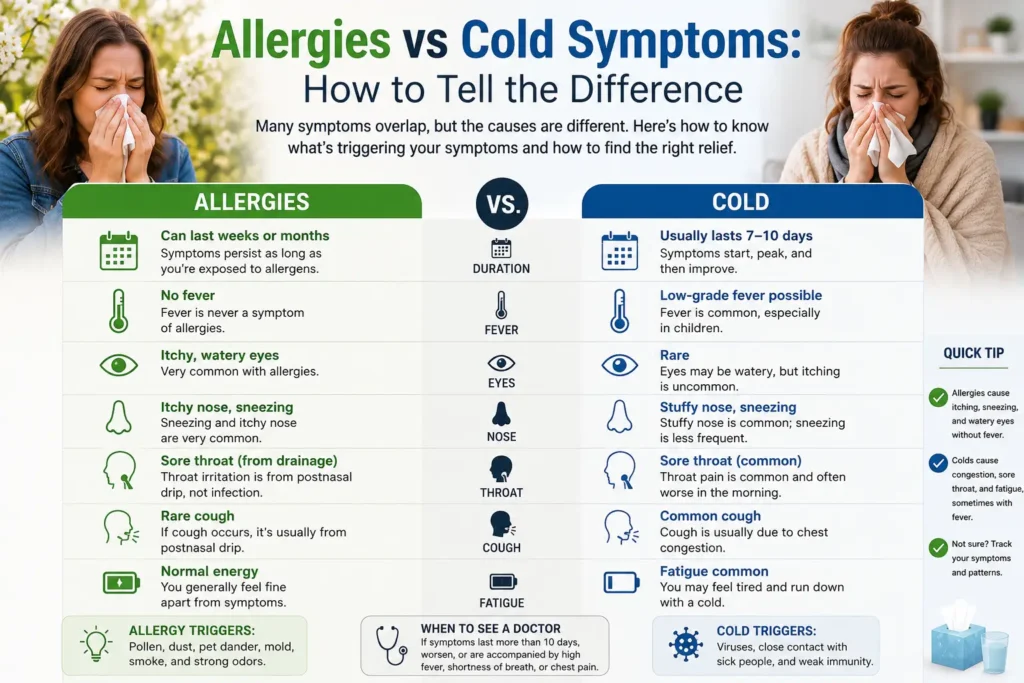
This is probably the question people ask most during allergy season: “Do I have a cold, or is this allergies?” The overlap in symptoms—congestion, sneezing, fatigue, and an allergies sore throat—can make it genuinely confusing. Fortunately, several reliable clues can help you tell the difference.
Understanding allergies vs. cold symptoms is often the fastest way to determine whether your allergies sore throat is caused by postnasal drip or if you simply need a few days of rest to recover from a viral infection. According to Mayo Clinic Health System, fever never occurs with allergies but may develop with a cold. Itchy, watery eyes are common with allergies but uncommon with a cold, while a sore throat is more frequently linked to colds. That said, an allergies sore throat is still very common and is usually caused by postnasal drainage irritating the throat rather than by an infection.
Allergies vs Cold Symptoms Comparison Table
| Symptom | Allergies | Common Cold |
|---|---|---|
| Onset | Sudden, right after exposure to a trigger | Gradual, over 1–3 days |
| Duration | Can last weeks (as long as the allergen is present) | Usually resolves in 7–10 days |
| Fever | Rarely | Common, especially early on |
| Itchy eyes/nose/throat | Very common — a hallmark sign | Uncommon |
| Nasal discharge | Clear and watery | Often starts clear, turns thick/yellow-green |
| Body aches | Rare | Common |
| Sore throat | Possible, usually from postnasal drip | Very common, often an early sign |
| Cough | Dry, tickly, tied to drainage | Can be dry or produce mucus |
| Seasonal pattern | Repeats at the same time every year | Can happen any time, especially cold weather months |
This head cold or allergies question often comes down to timing and symptoms. If your “cold” appears every spring with itchy eyes, sneezing, and an allergies sore throat, it’s more likely caused by seasonal allergies than a virus. Allergies usually return at the same time each year and last as long as the allergen is present, often two to three weeks per allergen. They commonly cause itchy eyes, a runny nose, sneezing, and an allergies sore throat due to postnasal drip. In contrast, a cold typically lasts about a week, causes less itching, and is more likely to include fever and body aches.
What Does an Allergy Cough Feel Like?
An allergy cough is usually dry, persistent, and tickly rather than deep or productive. It’s your body’s automatic response to One of the most common reasons for an allergies sore throat is mucus dripping into the throat (postnasal drip). This constant drainage irritates the throat, making your body try to clear the irritation with frequent coughing.
People with an allergies sore throat often describe symptoms such as:
- A tickling or scratchy throat that won’t go away, especially at night
- Coughing fits that get worse when lying down
- A cough that becomes worse in dusty rooms or during high-pollen days
- No fever, chills, or body aches, which are more common with infections
Because this type of allergies sore throat is caused by postnasal drip rather than an infection, symptoms often improve quickly once the drainage is controlled using allergy treatments such as antihistamines, saline nasal rinses, or by avoiding allergy triggers. This is different from a viral cough, which usually takes several days to resolve on its own.
Pollen Sore Throat: Why Allergy Season Hits So Hard
Seasonal allergy flare-ups are extremely common in the U.S. because pollen levels rise during specific times of the year—tree pollen in spring, grass pollen in early summer, and ragweed in late summer through fall. According to the American College of Allergy, Asthma & Immunology, pollen from trees, grasses, and weeds is one of the most common triggers of seasonal symptoms.
When pollen counts are high, your body releases more histamine, producing extra mucus and inflammation. This often leads to postnasal drip, which irritates the throat and causes an allergies sore throat. Symptoms may become worse on dry, windy days when pollen spreads easily through the air and often improve after rainfall, which temporarily reduces airborne pollen.
To help prevent an allergies seasonal flare-up and reduce an allergies sore throat, the Mayo Clinic recommends staying indoors on dry, windy days, keeping doors and windows closed during high-pollen seasons, showering after spending time outside, and wearing a pollen mask while mowing the lawn or doing yard work. These simple habits can reduce pollen exposure, ease throat irritation, and improve overall seasonal allergy symptoms.
Case Study: A Real Allergy Season in the U.S.
To make this practical, let’s look at a composite case based on common patient experiences reported by U.S. allergy clinics.
Background: Sarah, a 34-year-old marketing professional living in Atlanta, Georgia, started noticing a scratchy throat every April for three years in a row. Each time, she assumed she’d caught a cold at work. She’d take cold medicine, feel slightly better, but the sore throat and cough would linger for weeks — far longer than any cold should last.
What was actually happening: After tracking her symptoms with an allergist, Sarah realized her sore throat always appeared alongside itchy eyes, sneezing fits, and a runny nose with clear discharge — never a fever. Her symptoms also spiked on high-pollen days, which she confirmed using local pollen count trackers. This pattern matched allergic rhinitis with postnasal drip, not a viral infection.
What helped: Her allergist recommended a daily non-drowsy antihistamine, a saline nasal rinse each evening, and a nasal corticosteroid spray during peak tree pollen season. Within a week, her sore throat and allergy cough dramatically improved. She also started checking daily pollen forecasts and keeping windows closed during high-count days.
Takeaway: This case reflects what allergists across the U.S. consistently report — a huge number of “recurring colds” are actually undiagnosed allergies sore throat cases, and treating the allergies sore throat directly worked far better than repeated rounds of cold medicine. Recognizing the seasonal pattern was the key to finally getting the right treatment instead of repeatedly treating cold symptoms that were never really a cold.
How to Find Relief From an Allergy Sore Throat
The good news: relief for an allergies sore throat is very achievable once you address the actual cause — inflammation and drainage — rather than just numbing the pain. Most people find their allergies sore throat improves within days once they combine a few of the remedies below.
At-Home Remedies
- Saline nasal rinse or neti pot — flushes allergens and mucus out of the nasal passages before they drip down the throat
- Warm salt water gargle — reduces throat inflammation and soothes irritation
- Stay hydrated — thins mucus so it drains more easily and keeps the throat lining from drying out
- Use a humidifier, especially at night — adding moisture to dry air can ease throat irritation
- Honey and warm tea — coats and soothes irritated throat tissue
- Avoid known triggers — stay away from smoke, pollution, or strong smells that can worsen symptoms
- Shower and change clothes after being outdoors during high pollen days to stop tracking pollen indoors
- Elevate your head while sleeping to reduce nighttime postnasal drip
Over-the-Counter and Medical Options
- Oral antihistamines (like cetirizine, loratadine, or fexofenadine) to reduce histamine response
- Nasal corticosteroid sprays to calm inflammation at the source
- Decongestants for short-term relief of nasal congestion
- Throat lozenges for temporary soothing
- Allergy testing and immunotherapy (allergy shots) for people with recurring, severe symptoms — allergists may recommend allergy shots to desensitize the immune system so the body no longer reacts to pollen, dust, mold, and other allergens
Pros and Cons of Common Allergy Sore Throat Remedies
| Remedy | Pros | Cons |
|---|---|---|
| Saline nasal rinse | Drug-free, fast-acting, safe for daily use | Requires proper technique; some find it uncomfortable at first |
| Oral antihistamines | Convenient, widely available, treats multiple symptoms | Older versions cause drowsiness; doesn’t address nasal congestion as well as sprays |
| Nasal corticosteroid spray | Very effective for inflammation and drainage | Takes days to reach full effect; needs consistent daily use |
| Warm salt water gargle | Free, simple, immediate soothing | Only treats symptoms, not the underlying cause |
| Humidifier | Helps overnight symptoms, improves sleep | Needs regular cleaning to avoid mold growth |
| Allergy shots (immunotherapy) | Long-term, potentially lasting relief | Time commitment of months to years; requires clinic visits |
| Honey and herbal tea | Natural, gentle, low-risk | Temporary relief only; not suitable for children under 1 |
When to See a Doctor for an Allergies Sore Throat
Most allergies sore throat cases respond well to home care and OTC treatment, but you should check in with a healthcare provider if you notice:
- A sore throat lasting more than two weeks despite treatment
- Fever, chills, or severe body aches (signs pointing to infection rather than allergies)
- Difficulty swallowing or breathing
- White patches on the tonsils, which can indicate strep throat
- Symptoms that interfere with sleep or daily life for weeks at a time
If postnasal drip causes ongoing discomfort, a persistent sore throat, or interferes with your daily life, it’s a good idea to seek medical advice from a board-certified allergist.
Frequently Asked Questions
Can allergies cause a sore throat without a runny nose?
Yes. Postnasal drip can occur even when you don’t notice a runny nose, since the mucus is draining backward into the throat rather than forward out of the nostrils.
How long does an allergy sore throat usually last?
It typically lasts as long as you’re exposed to the allergen — often several weeks during pollen season — but it usually improves quickly once treatment starts and exposure is reduced.
Is it allergies or a cold if I have a sore throat and cough but no fever?
This pattern leans strongly toward allergies. People with seasonal allergies rarely have a sore throat or a cough that comes with a fever, while viral infections often do cause these symptoms alongside a fever.
Do antihistamines help an allergy cough and sore throat?
Yes, for most people. Antihistamines reduce the histamine response that drives mucus production, which in turn reduces postnasal drip, allergy cough, and the resulting sore throat.
Can pollen sore throat symptoms happen indoors?
Yes, since pollen can be tracked indoors on clothing, hair, and pets, and can also linger in the air through open windows or HVAC systems without proper filtration.
Is an allergy sore throat contagious?
No. Unlike a cold or the flu, allergies sore throat symptoms are an immune reaction to an allergen, not an infection, so they cannot spread to other people.
The Bottom Line
An allergies sore throat isn’t just “in your head” — it’s a well-documented result of postnasal drip, inflammation, and mouth breathing triggered by your immune system’s overreaction to pollen, dust, mold, or pet dander. Learning to spot the difference between allergies vs cold symptoms — no fever, itchy eyes, a seasonal pattern, and a dry allergy cough — can save you weeks of misdiagnosing yourself and reaching for the wrong treatment.
The most effective approach combines reducing your exposure to triggers, treating inflammation with antihistamines or nasal sprays, and soothing the throat directly with hydration, saline rinses, and humidified air. For people with recurring, severe pollen sore throat symptoms year after year, talking to an allergist about testing and long-term treatment options like immunotherapy can make a lasting difference.
If your sore throat keeps coming back at the same time every year, it’s worth asking your doctor the question at the heart of this whole article: is this really a cold, or has it been allergies sore throat all along?
Sources and Scientific References
- Mayo Clinic — Sore Throat: Symptoms & Causes
- Mayo Clinic — Cold or Allergy: Which Is It?
- Mayo Clinic Health System — Is It an Allergy or a Common Cold?
- Cleveland Clinic — Postnasal Drip: Symptoms & Causes
- Cleveland Clinic — Sore Throat (Pharyngitis)
- Asthma and Allergy Foundation of America (AAFA) — Nasal Allergies (Rhinitis)
- Healthline (medically reviewed) — What Is Postnasal Drip?
- Colgate/Oral Health Network — How to Manage a Sore Throat From Allergies
- Iowa Clinic Allergy & Immunology — Postnasal Drip
- Atlanta Allergy Doctor (Chacko Allergy) — How Allergies Contribute to Postnasal Drip
This article is for general educational purposes and is not a substitute for professional medical advice. If you have persistent or severe symptoms, please consult a licensed healthcare provider or board-certified allergist.

Natural home remedies, skincare secrets, dental & eye health tips, and real product reviews to help you stay healthy the natural way.